25 Fun Facts
25 Rabbit Facts: Surprising Secrets of Our Fluffy Friends
Soft, fluffy and full of personality, rabbits are among the world's most popular pets and best-known wild animals. But there's a lot more to them than twitching noses and floppy ears.
Here are 25 surprising facts about rabbits, from teeth that never stop growing to the 24 rabbits that changed a whole continent.
Rabbit Facts
Rabbits are not rodents. They belong to a group called lagomorphs, along with hares and pikas.
Unlike rodents, rabbits have a second pair of small, peg-like front teeth tucked behind their main ones.
A male rabbit is called a buck, a female is called a doe and a baby is called a kit.
Rabbits and hares are different animals. Baby rabbits are born blind and hairless, while baby hares are born furry with their eyes open.
All pet rabbits are descended from the wild European rabbit.
Around 50 rabbit breeds are recognised by the American Rabbit Breeders Association, and many more exist around the world.
The Netherland Dwarf is one of the smallest breeds, weighing around 1 kilogram, while the Flemish Giant can weigh more than 10 kilograms.
A rabbit's teeth never stop growing, so it must keep chewing on hay and plants to wear them down.
Adult rabbits have 28 teeth.
Two dozen rabbits took over Australia
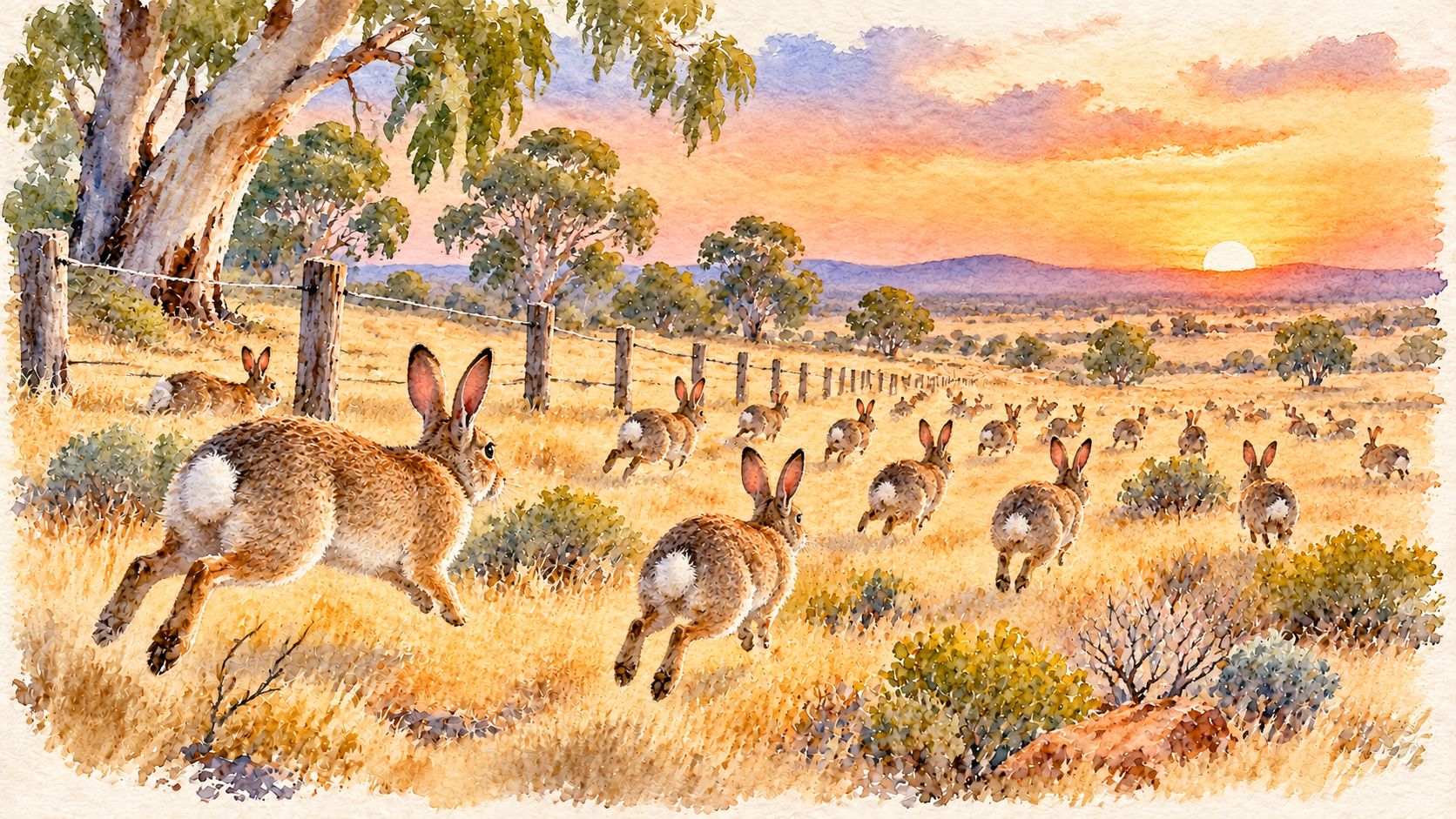
In 1859, a settler named Thomas Austin released 24 wild rabbits on his land in Victoria, Australia, so he could hunt them for sport. With no natural predators and plenty of food, they bred incredibly fast. Within a few decades, there were hundreds of millions of rabbits spreading across the continent, destroying crops and native plants. Australia even built thousands of kilometres of "rabbit-proof fence" in the early 1900s to try to stop them.
Rabbits have eyes high on the sides of their heads, giving them nearly 360-degree vision. Their only blind spot is just in front of their nose.
Rabbits are most active at dawn and dusk, when the light is low and it is safer to feed.
Rabbits can't vomit, so it's very important that they eat the right foods.
Rabbits eat some of their own droppings. These special soft pellets, called caecotropes, are full of nutrients the rabbit needs to digest a second time.
Hay should make up most of a rabbit's diet. Carrots are high in sugar and should only be an occasional treat.
Rabbits don't sweat. They release heat through their large ears, which are full of blood vessels.
A happy rabbit may leap into the air, twist its body and kick its feet. This joyful jump is called a "binky".
When a rabbit senses danger, it thumps its back feet on the ground to warn others.
A content rabbit may softly grind its teeth, a quiet sound often called "purring".
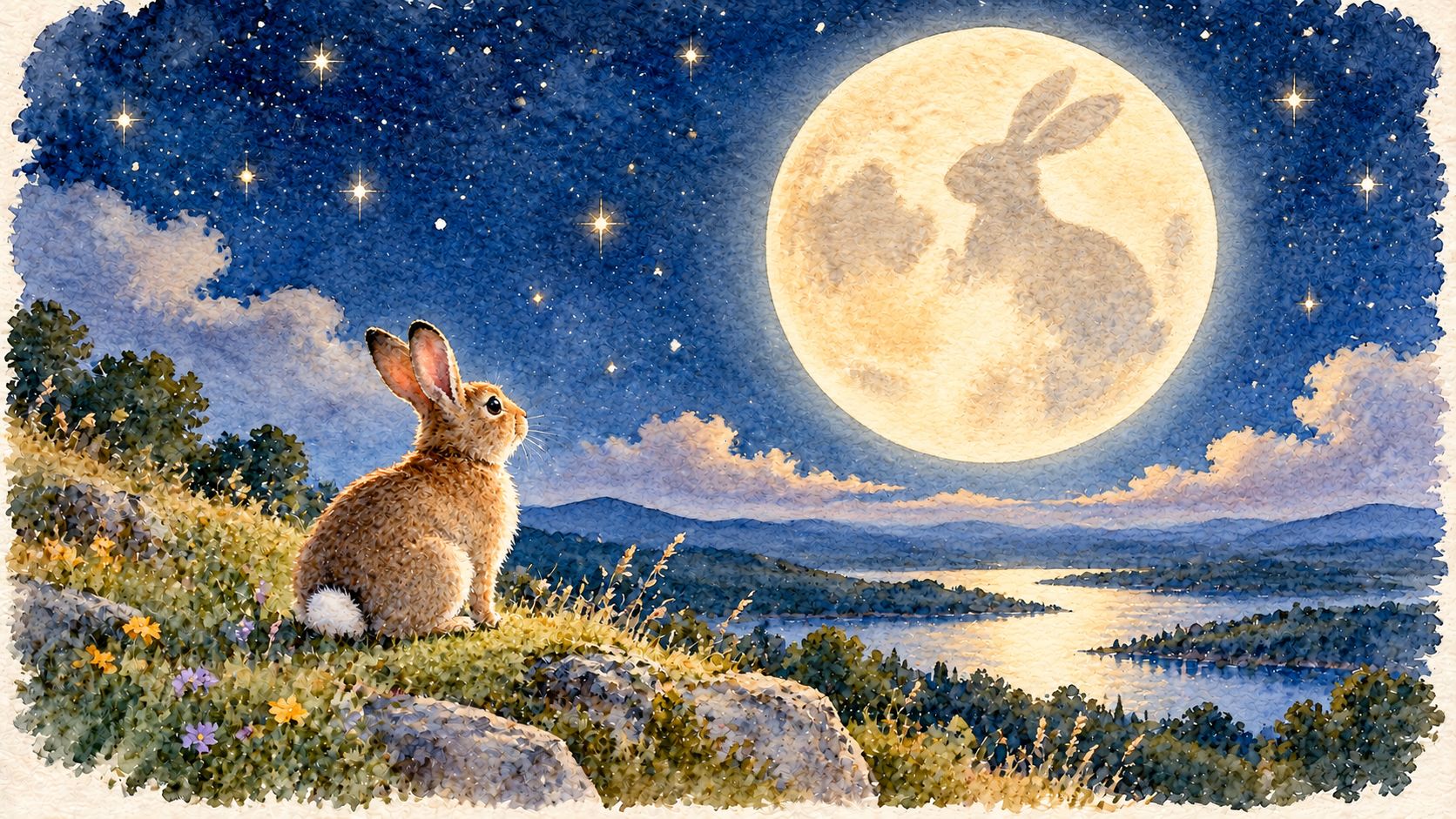
People in India and Asia see a rabbit on the Moon
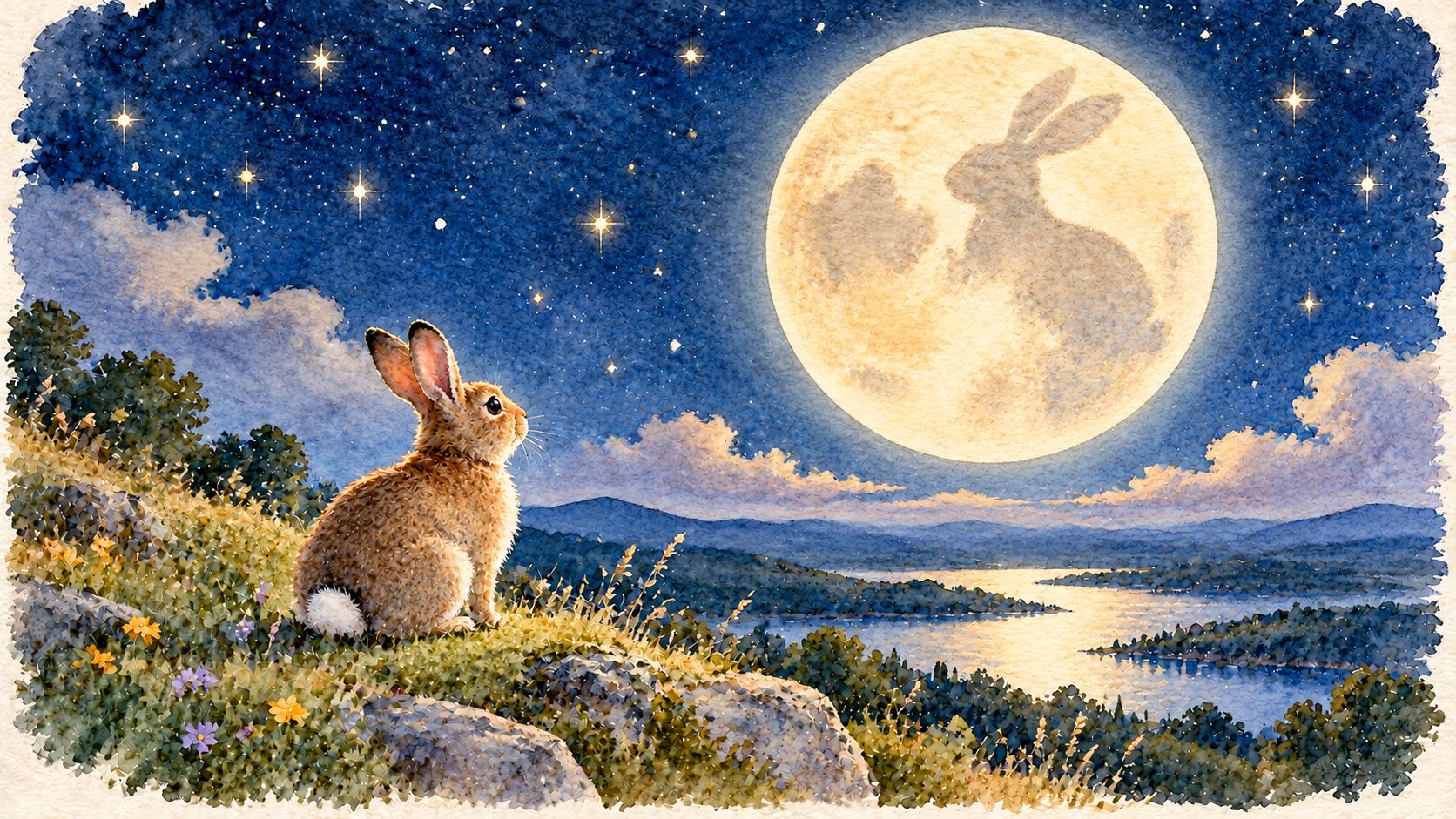
Look closely at the full Moon and you may spot the shape of a rabbit or hare in its dark patches. In India, a Buddhist Jataka tale tells of a selfless hare whose image was placed on the Moon as a reward for its kindness. The Sanskrit word "shashank", a name for the Moon, means "marked with a hare". In China, Japan and Korea, the Moon rabbit is said to pound rice cakes or the elixir of life.
Wild European rabbits live together in underground tunnel systems called warrens.
A mother rabbit usually feeds her babies only once or twice a day, for just a few minutes, because her milk is very rich.
Rabbits are pregnant for only about a month and can have large litters, often of four to twelve kits.
Pet rabbits can live for 8 to 12 years with good care, while wild rabbits usually live much shorter lives.
Rabbits are prey animals, and a sudden severe fright can send them into dangerous shock. That's why they need calm, quiet homes.
Sources and Further Reading
- RSPCA
- Royal Veterinary College
- American Rabbit Breeders Association
- National Museum of Australia
- Encyclopaedia Britannica
- National Geographic
Frequently asked questions
Are rabbits rodents?
No. Rabbits are lagomorphs, along with hares and pikas. Unlike rodents, they have a second pair of small front teeth behind their main incisors.
What is a baby rabbit called?
A baby rabbit is called a kit. A male rabbit is a buck and a female rabbit is a doe.
What should rabbits eat?
Hay should make up most of a rabbit's diet, along with fresh leafy greens and a small amount of pellets. Carrots and fruit should only be occasional treats.
Why do rabbits eat their own poop?
Rabbits eat special soft droppings called caecotropes, which are packed with nutrients. Digesting them a second time helps rabbits get the most out of their food.
What is a rabbit binky?
A binky is a happy leap in which a rabbit jumps into the air, twists and kicks its feet. It's a sign that the rabbit is feeling playful and content.
How long do pet rabbits live?
Pet rabbits can live for 8 to 12 years with good care, including a proper diet, space to exercise and regular vet checks.
More Fun Facts