25 Fun Facts
25 Firefly Facts: The Magical Glowing Beetles of Summer Nights
On warm summer evenings, tiny lights blink on and off above fields, forests and riversides. Those glowing sparks are fireflies, and every flash is part of a secret language of light.
Here are 25 fascinating facts about fireflies, from how they make their glow to the places where thousands flash together in perfect time.
Firefly Facts
Fireflies are not flies at all. They are beetles, and in many places they are also called lightning bugs.
There are more than 2,000 known species of firefly around the world.
Fireflies live on every continent except Antarctica.
They prefer warm, humid places such as meadows, forests, marshes and riverbanks, especially near water.
Their glow is a chemical reaction called bioluminescence. A chemical called luciferin reacts with oxygen, helped by an enzyme called luciferase, inside special light organs in the lower abdomen.
Firefly light is often called "cold light", because almost all the energy goes into making light rather than heat. An old-style light bulb, by comparison, wastes most of its energy as heat.
Fireflies switch their lights on and off by controlling how much oxygen reaches their light organs.
Depending on the species, firefly light can be yellow, green or orange.
The "blue ghost" firefly of the eastern United States gives off a steady bluish-white glow close to the forest floor instead of flashing.
Some fireflies flash in perfect time together
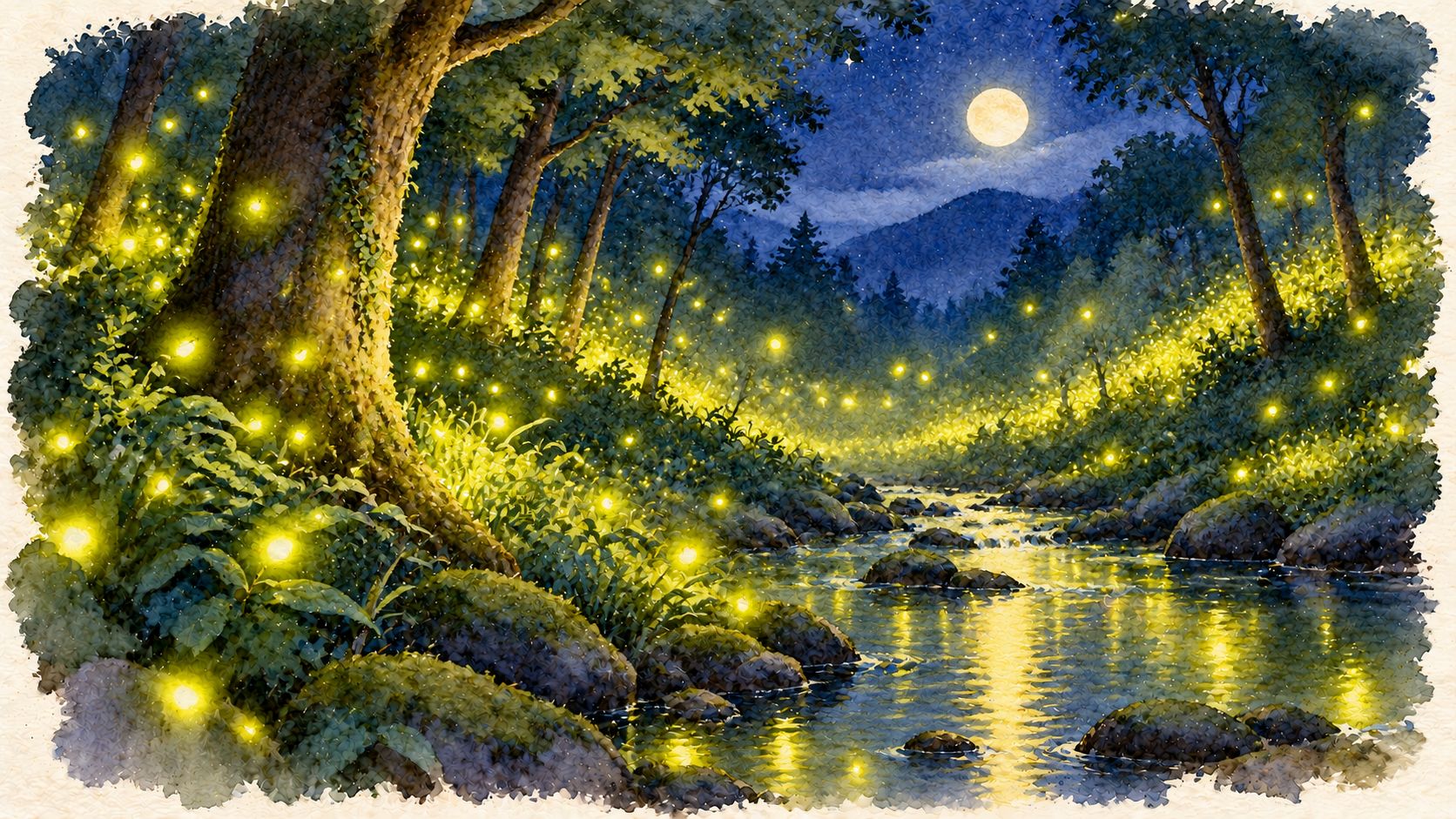
In a few special places, thousands of fireflies blink on and off at exactly the same moment, turning whole forests or riverbanks into pulsing waves of light. Famous examples include the Great Smoky Mountains in the United States and the mangrove rivers of Southeast Asia, where entire trees flash in rhythm. In India, firefly displays in parts of the Western Ghats in Maharashtra draw visitors every year before the monsoon. Scientists think flashing together helps males stand out to females.
Each firefly species has its own flash code, with a different pattern, colour and timing of flashes.
Usually, males fly around flashing their signal, while females wait on the ground or on plants and flash back if they are interested.
A female answers after a precise delay that matches her species, which helps males find the right partner.
Fireflies tend to flash faster on warmer nights and more slowly when it is cool.
In some species, firefly eggs glow faintly too.
Firefly larvae also glow, and they are often called glowworms.
Firefly larvae are fierce little hunters. They eat snails, slugs and worms, injecting them with juices that turn their insides to liquid.
Fireflies spend most of their lives as larvae, often one to two years, while adults usually live for only a few weeks.
Some adult fireflies never eat
Once they become adults, many fireflies don't eat at all. They survive on energy stored up while they were larvae and spend their short adult lives looking for a mate.
"Femme fatale" fireflies trick and eat other fireflies
Some female fireflies of the genus Photuris have learned to copy the flash replies of other firefly species. When a male of another species sees the familiar signal and flies down expecting to meet a mate, the female grabs and eats him instead. These "femme fatale" fireflies gain more than a meal. They also absorb defensive chemicals from their victims, which helps protect them from predators like spiders.
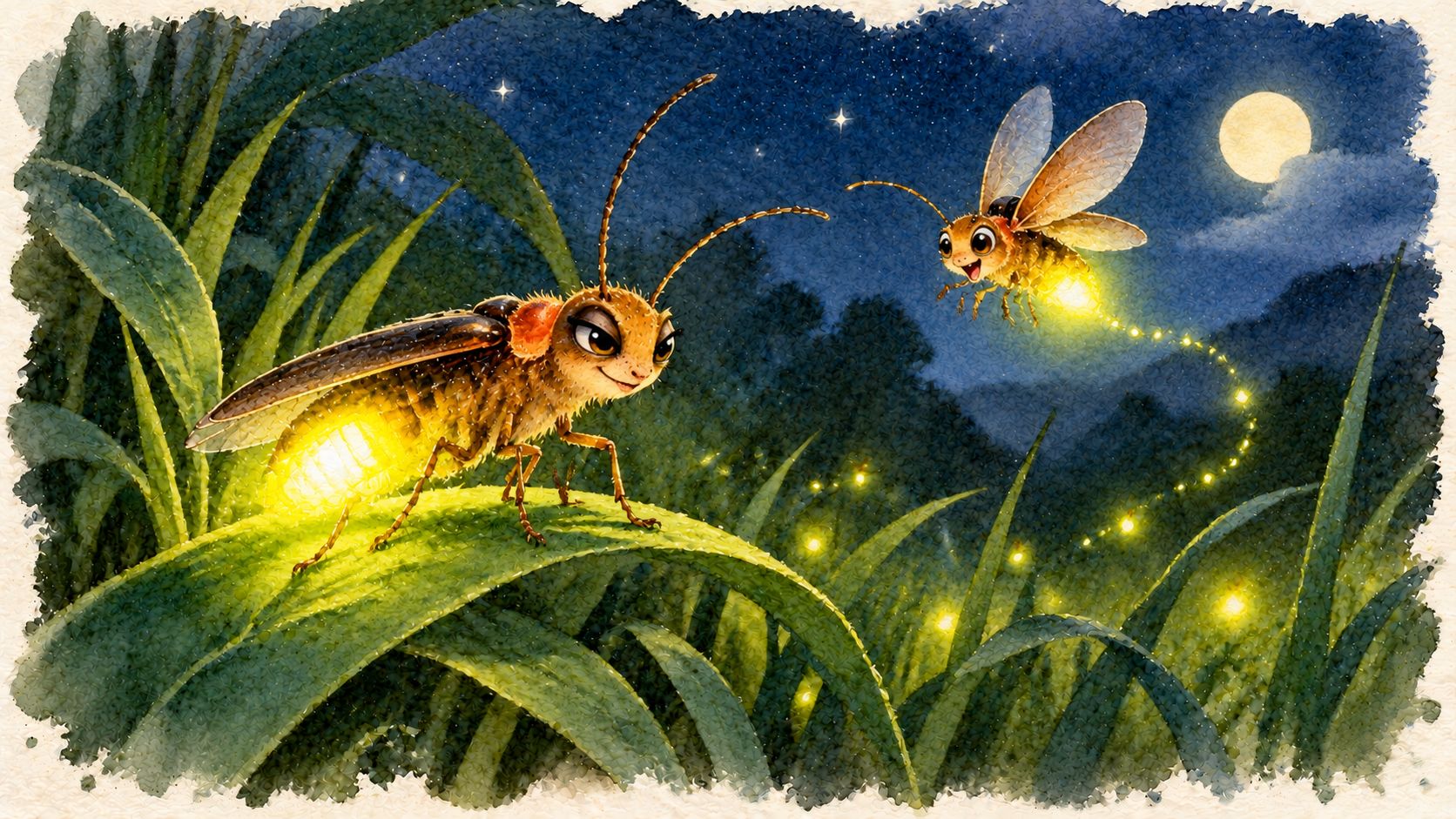
In some species, such as the European glow-worm, the females have no wings and look like larvae, glowing from the grass to attract flying males.
Fireflies taste bitter and contain chemicals that can make predators sick. Their light may serve as a warning to stay away.
When threatened, some fireflies release drops of bitter blood from their joints, a defence called reflex bleeding.
Fireflies have glowed for a very long time. Scientists have found a firefly preserved in amber that is about 100 million years old.
Light pollution, pesticides and the loss of wetlands and meadows are threatening fireflies in many places. Turning off outdoor lights at night can help them find each other.
Sources and Further Reading
- Encyclopaedia Britannica
- Smithsonian Institution
- National Park Service (USA)
- IUCN Firefly Specialist Group
- Xerces Society for Invertebrate Conservation
- National Geographic
Frequently asked questions
Are fireflies actually flies?
No. Fireflies are beetles. They are also known as lightning bugs in many parts of the world.
How do fireflies make light?
Fireflies make light through bioluminescence. A chemical called luciferin reacts with oxygen, helped by an enzyme called luciferase, inside light organs in their abdomen.
Why do fireflies flash?
Fireflies flash mainly to attract a mate. Each species has its own flash pattern, so males and females can recognise each other in the dark. The light can also warn predators that they taste bad.
Do fireflies bite?
No. Fireflies cannot bite or sting and are harmless to people, but they contain bitter chemicals that can be toxic to some pets, such as lizards, if eaten.
How long do fireflies live?
Fireflies spend most of their lives as larvae, often one to two years. As glowing adults, they usually live for only a few weeks.
Where can you see fireflies flash in sync?
Synchronised firefly displays happen in the Great Smoky Mountains in the United States, along mangrove rivers in Southeast Asia and in parts of the Western Ghats in India.
More Fun Facts