25 Fun Facts
25 Bat Facts: The Amazing Flying Mammals of the Night
Bats have a spooky reputation, but they are some of the most remarkable animals on the planet. They fly through pitch-black skies using sound, pollinate fruits we love and eat huge numbers of insects every night.
Here are 25 amazing facts about bats, from the tiny bumblebee bat to giant flying foxes and the surprisingly caring vampire bat.
Bat Facts
There are more than 1,400 species of bat, which makes up about one in every five mammal species on Earth.
Bats are the only mammals capable of true powered flight. Flying squirrels and other "flying" mammals can only glide.
A bat's wing is really a modified hand. Thin skin stretches between its long finger bones, which is why the scientific name for bats, Chiroptera, means "hand-wing".
Kitti's hog-nosed bat, also called the bumblebee bat, is one of the smallest mammals in the world. It weighs about 2 grams and lives in Thailand and Myanmar.
The largest bats are flying foxes. The giant golden-crowned flying fox of the Philippines can have a wingspan of up to about 1.7 metres.
A group of bats is called a colony, and a baby bat is called a pup.
Bats are not blind. Many see well, and fruit bats rely heavily on their eyesight and sense of smell.
Bats hang upside down without effort. Special tendons lock their claws in place, so they can even sleep hanging, and they take off simply by letting go and dropping into flight.
A bat's knees face backwards, which helps it hang upside down and crawl along cave walls.
Bats "see" with sound
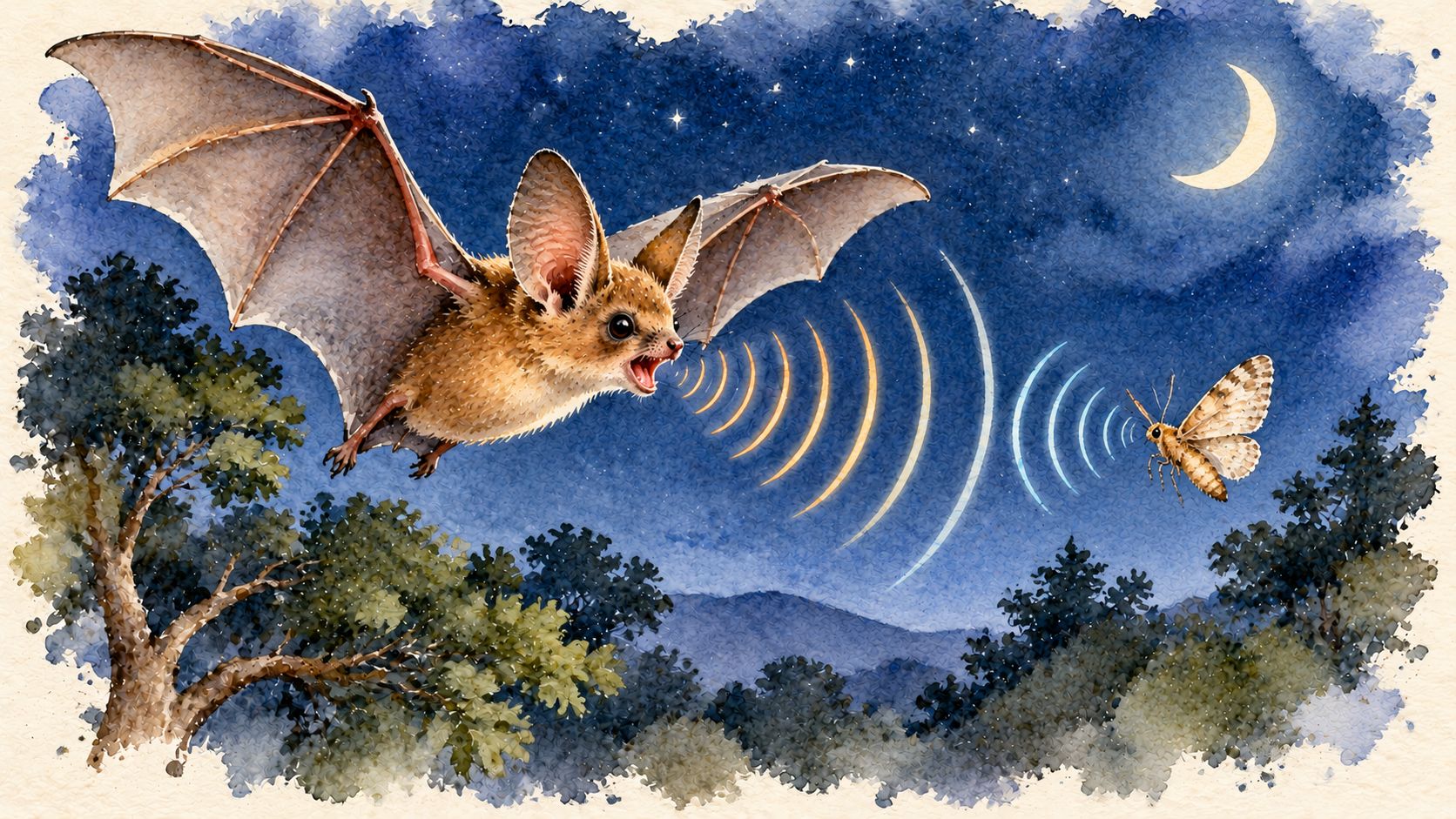
Most small bats find their way and catch insects in total darkness using echolocation. They send out rapid, high-pitched calls and listen for the echoes bouncing back off objects around them. From those echoes, a bat can work out the size, position and movement of a tiny moth in a fraction of a second. Some bat calls are among the loudest sounds made by any animal, but they are pitched too high for human ears to hear.
A single insect-eating bat can catch hundreds of insects in one hour, making bats a free, natural form of pest control for farmers.
Bats pollinate more than 500 plant species, including agave, which is used to make tequila, as well as durian and many wild bananas.
Fruit bats spread seeds as they fly, helping forests regrow after trees are cut down.
Bat droppings, called guano, are a rich fertiliser. In the past, guano was also used to make gunpowder.
Bracken Cave in Texas is home to the world's largest known bat colony, with around 15 million Mexican free-tailed bats in summer.
In 2016, scientists recorded Mexican free-tailed bats flying at about 160 kilometres per hour, the fastest level flight measured for any animal.
Around 1.5 million bats live under the Congress Avenue Bridge in Austin, Texas, the largest urban bat colony in North America. Thousands of visitors come to watch them fly out at dusk.
The greater bulldog bat, also called the fishing bat, skims over rivers and lakes and snatches fish from the water with its long, sharp claws.
The pallid bat of North America hunts scorpions on the ground and appears to be resistant to their painful sting.
Vampire bats share their dinner with hungry friends
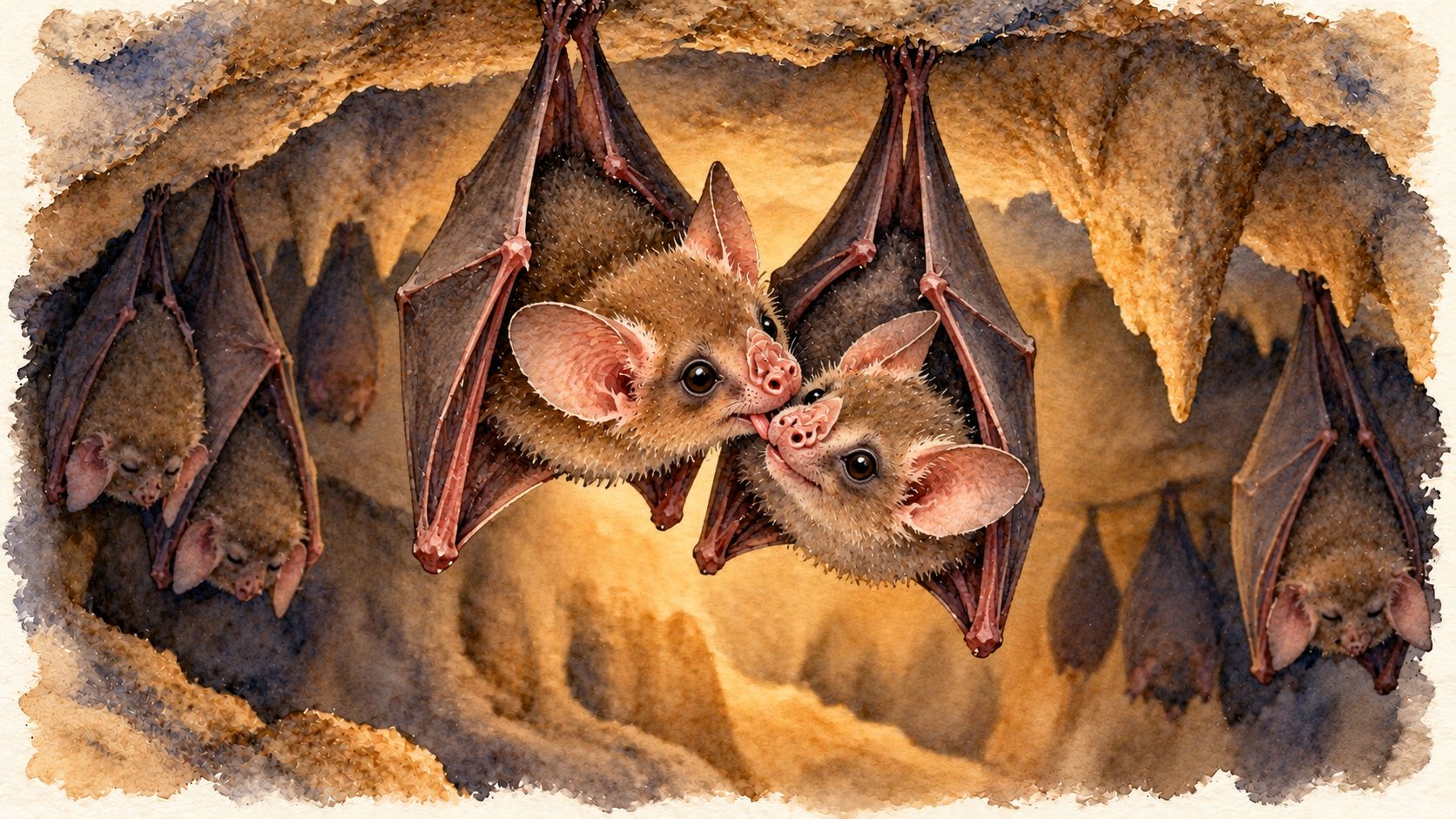
There are three species of vampire bat, all found in Central and South America, and they feed on the blood of animals, mainly livestock and birds. They don't suck blood. Instead, they make a tiny bite and lap up about a tablespoon of blood, helped by a substance in their saliva that stops it clotting. A vampire bat can starve if it goes two nights without a meal, so bats that fed successfully will bring up some blood to share with roost-mates who went hungry, and they remember who helped them in the past.
Most bats give birth to just one pup a year, and a newborn pup can weigh up to a quarter of its mother's weight.
In huge colonies, mother bats can find their own pup among thousands or even millions of others by recognising its call and scent.
During winter hibernation, some bats' heart rates drop from hundreds of beats per minute to just a few, and they can go weeks without breathing normally.
Bats live surprisingly long for their size. A Brandt's bat in Siberia was recorded living for at least 41 years.
Since 2006, a fungal disease called white-nose syndrome has killed millions of bats in North America, and scientists are working hard to protect the survivors.
Sources and Further Reading
- Bat Conservation International
- Bat Conservation Trust
- Encyclopaedia Britannica
- Smithsonian's National Zoo & Conservation Biology Institute
- U.S. Fish and Wildlife Service
- National Geographic
Frequently asked questions
How many species of bats are there?
There are more than 1,400 bat species, which makes up about one in every five species of mammal on Earth.
Are bats really blind?
No. "Blind as a bat" is a myth. Bats can see, and many fruit bats have excellent eyesight. Insect-eating bats also use echolocation to hunt in the dark.
What is the smallest bat in the world?
Kitti's hog-nosed bat, also called the bumblebee bat, is one of the smallest mammals on Earth. It weighs only about 2 grams.
Do vampire bats really drink blood?
Yes. The three species of vampire bat feed on blood, mainly from livestock and birds. They lap up about a tablespoon of blood from a tiny bite rather than sucking it.
Why do bats hang upside down?
Special tendons lock a bat's claws in place, so hanging takes almost no effort. It also lets bats take off quickly by simply letting go and dropping into flight.
How long do bats live?
Many bats live far longer than other mammals their size. Some live for 20 or 30 years, and one Brandt's bat was recorded living at least 41 years.
More Fun Facts