25 Fun Facts
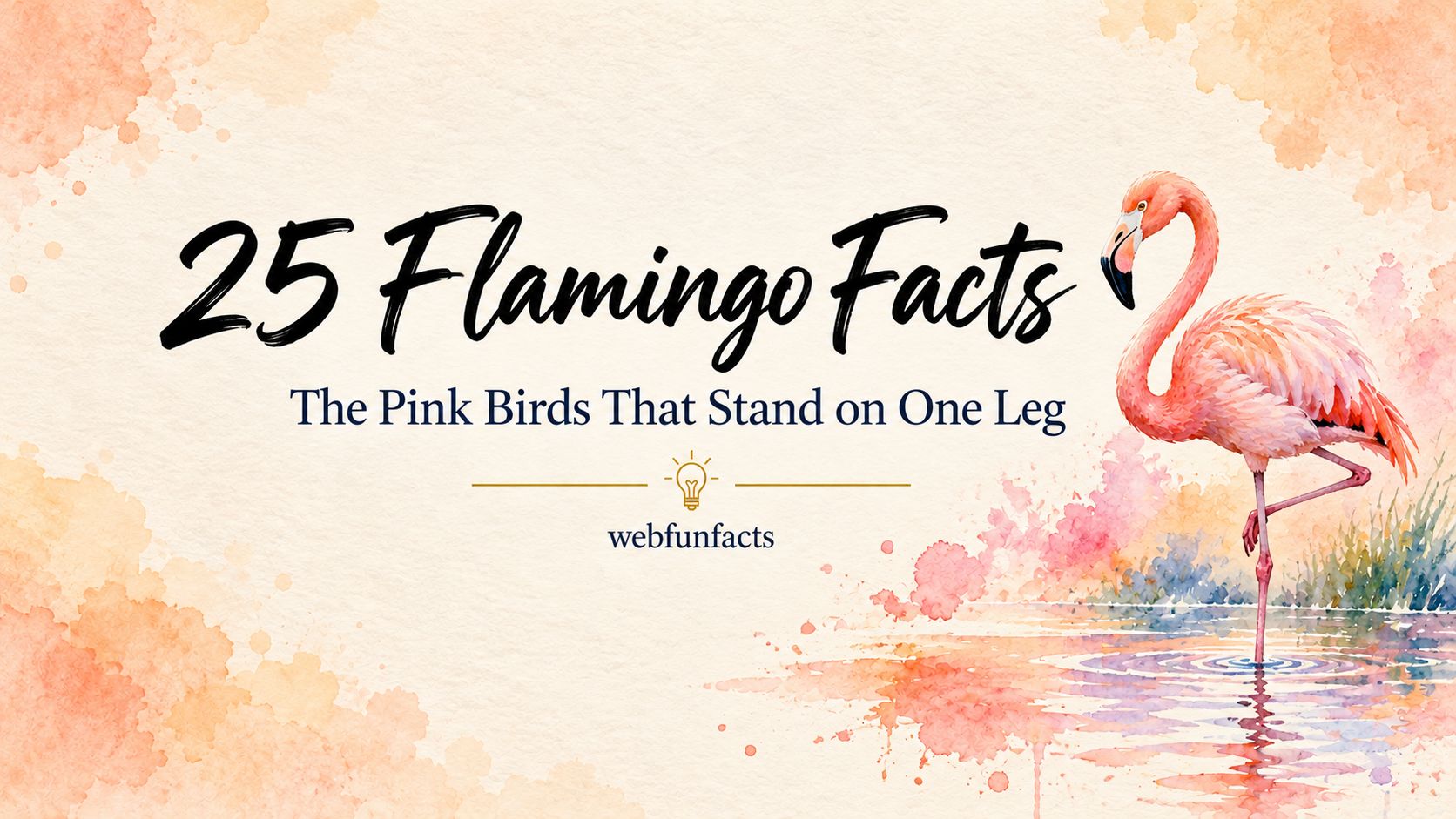
25 Flamingo Facts: The Pink Birds That Stand on One Leg
Bright pink, long-legged and often balanced on just one foot, flamingos are some of the most eye-catching birds on Earth. They live in salty lakes and lagoons where few other animals can survive, often gathering in flocks of thousands.
Here are 25 fabulous facts about flamingos, from the surprising source of their pink colour to the huge flocks that visit India every year.
Flamingo Facts
There are six species of flamingo: the greater, lesser, Chilean, Andean, James's and American flamingo.
The greater flamingo is the largest species and can stand about 1.5 metres tall.
The lesser flamingo is the smallest species, but it is also the most numerous, with millions living in Africa and India.
Flamingo chicks hatch with grey or white feathers and slowly turn pink over two to three years.
A flamingo's colour shows how healthy and well-fed it is, and brighter birds are more attractive to mates.
During the breeding season, greater flamingos rub pink-tinted oil from a gland near their tail onto their feathers, giving themselves a natural "make-up" to look even pinker.
What looks like a flamingo's backward-bending knee is actually its ankle. Its real knee is hidden higher up, under its feathers.
Flamingos have long, flexible necks with 19 vertebrae.
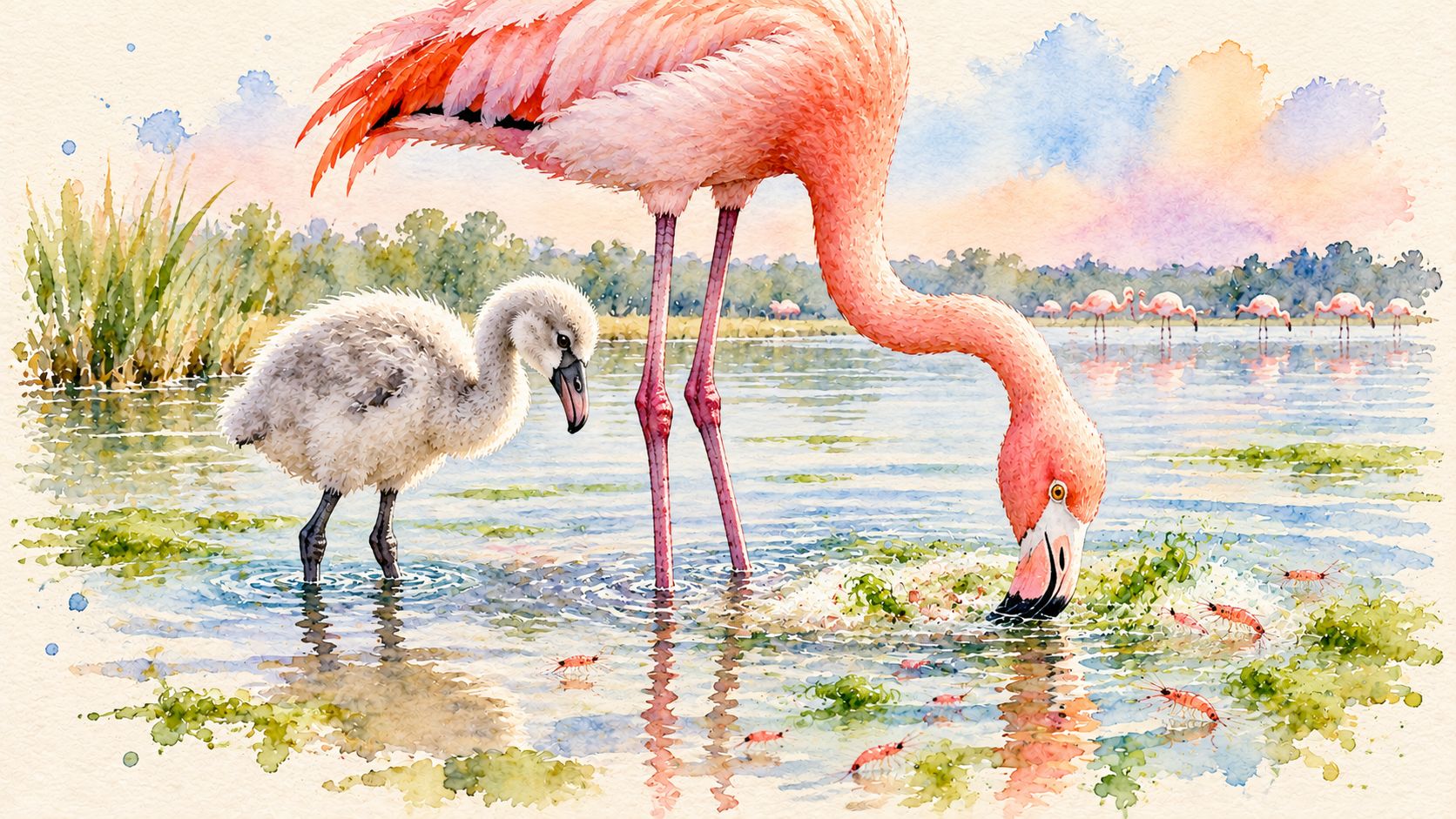
Flamingos feed with their heads upside down. They sweep their bills through the water and use comb-like plates inside to filter out tiny food.
Flamingos get their pink colour from their food
Flamingos aren't born pink. Their colour comes from natural pigments called carotenoids in the algae, tiny shrimp and other small creatures they eat. As the flamingo digests its food, these pigments are deposited in its skin and growing feathers, turning them shades of pink, orange and red. If a flamingo doesn't get enough of these pigments, its feathers gradually fade to a pale pink or even white. That's why zoos add special pigments to their flamingos' food.
Scientists think flamingos stand on one leg partly to save body heat, as less of their body is exposed to cold water.
A 2017 study found that standing on one leg takes almost no muscle effort for a flamingo, thanks to the way its leg joints lock into place.
Flamingos live in salty and alkaline lakes, lagoons and mudflats where few other animals can survive. They have special glands to get rid of the extra salt they take in.
Lake Natron in Tanzania is so caustic that it can burn the skin of most animals, yet it is the main breeding ground for the world's lesser flamingos.
Flamingos build cone-shaped nests out of mud and usually lay just one egg at a time.
Both parents feed their chick with a special red "crop milk" made in their throats. While feeding chicks, the parents often lose some of their own pink colour.
Young flamingos gather in large groups called crèches, and parents find their own chick among thousands by its unique call.
Flamingos perform group "dances", marching together, turning their heads from side to side and flashing their wings to find mates.
In flight, flamingos stretch their long necks out in front and their legs straight out behind, showing black feathers under their wings.
India has a "Flamingo City" in the Rann of Kutch
In the salt marshes of the Great Rann of Kutch in Gujarat, huge numbers of flamingos gather to breed after the monsoon rains, building thousands of mud nests across the flats. The site is known as "Flamingo City" and is one of the largest flamingo breeding grounds in Asia. Flamingos also visit many other Indian wetlands, including Mumbai's Thane Creek, Chilika Lake in Odisha and Pulicat Lake on the border of Andhra Pradesh and Tamil Nadu.
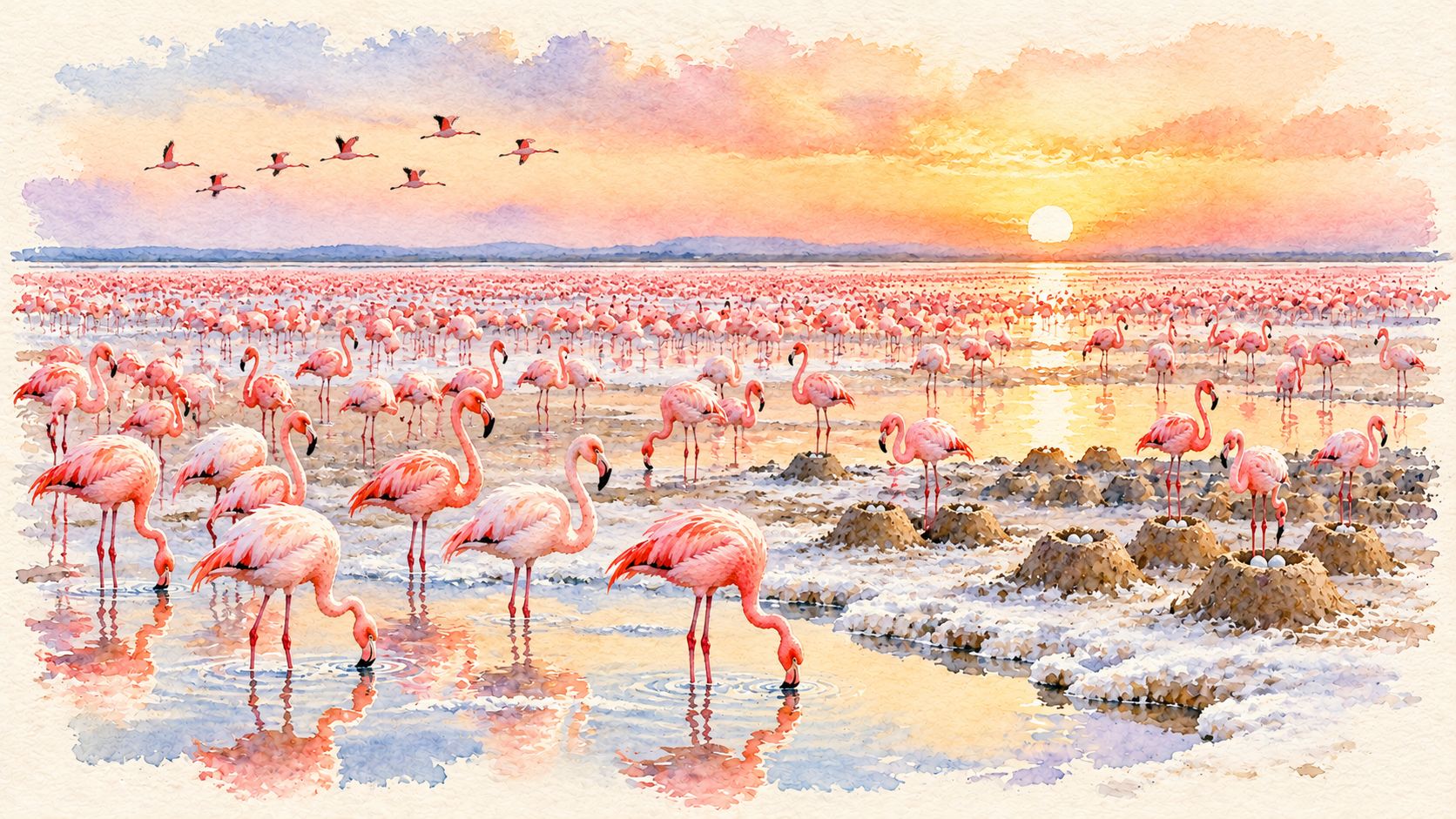
Every winter, tens of thousands of flamingos turn Mumbai's Thane Creek pink, and the area is now protected as a flamingo sanctuary.
Flamingos usually live for 20 to 30 years in the wild.
The oldest known flamingo, named Greater, lived at Adelaide Zoo in Australia from 1933 until 2014, making it at least 80 years old.
The word "flamingo" comes from the Portuguese and Spanish "flamengo", linked to the Latin word for flame.
In ancient Egypt, a hieroglyph of a flamingo was used to write the word for "red".
Sources and Further Reading
- Bombay Natural History Society (BNHS)
- Maharashtra Forest Department
- San Diego Zoo Wildlife Alliance
- Encyclopaedia Britannica
- BirdLife International
- National Geographic
Frequently asked questions
Why are flamingos pink?
Flamingos get their pink colour from carotenoid pigments in the algae and tiny shrimp they eat. Without these pigments in their food, their feathers fade to pale pink or white.
Why do flamingos stand on one leg?
Scientists think it helps them save body heat. A 2017 study also found that their leg joints lock into place, so standing on one leg takes almost no effort.
How many species of flamingo are there?
There are six species: the greater, lesser, Chilean, Andean, James's and American flamingo.
Where can you see flamingos in India?
Flamingos can be seen in the Rann of Kutch in Gujarat, Thane Creek in Mumbai, Chilika Lake in Odisha and Pulicat Lake on the Andhra Pradesh–Tamil Nadu border, mainly during the winter months.
How do flamingos eat?
Flamingos feed with their heads upside down in the water. They use comb-like plates inside their bills to filter out algae, tiny shrimp and other small creatures.
How long do flamingos live?
Flamingos usually live for 20 to 30 years in the wild. The oldest known flamingo lived at Adelaide Zoo for more than 80 years.
More Fun Facts