25 Fun Facts
25 Swan Facts: Graceful Giants of Lakes and Rivers
Gliding silently across a calm lake, a swan looks like the very picture of grace. But these elegant birds are also powerful flyers, fiercely protective parents and the stars of myths, ballets and even royal traditions.
Here are 25 fascinating facts about swans, from fluffy cygnets hitching rides to the black swans that once seemed impossible.
Swan Facts
Swans belong to the same bird family as ducks and geese.
There are six living species of swan: the mute, whooper, trumpeter, tundra, black and black-necked swan.
Swans are among the heaviest flying birds in the world. A large male mute swan can weigh up to about 15 kilograms.
The trumpeter swan of North America is the largest native waterfowl on the continent, with a wingspan that can reach close to 3 metres.
A male swan is called a cob, a female is called a pen and a baby swan is called a cygnet.
A group of swans on the water is called a bevy or a game, and a group flying in formation is called a wedge.
Swans have long, flexible necks with more than 20 vertebrae, while humans have just 7.
Despite its name, the mute swan isn't silent. It hisses, snorts and grunts, and its wings make a loud throbbing sound in flight.
Male mute swans usually have a bigger black knob at the base of their orange bill than females.
Baby swans ride on their parents' backs
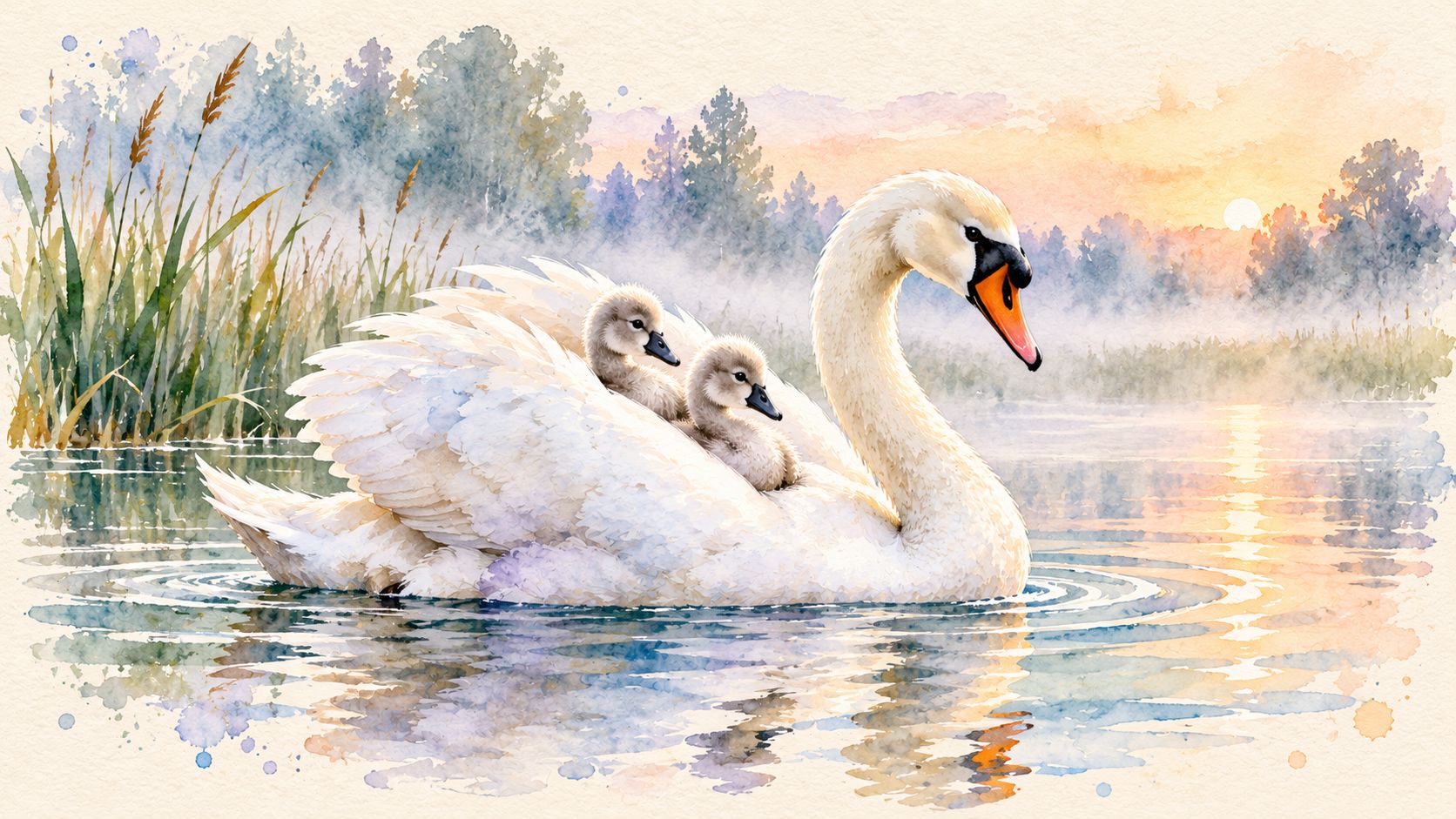
Cygnets hatch covered in soft grey or brown down, and they can swim within hours. When they are tired or cold, or danger is near, they climb onto a parent's back and snuggle between its folded wings, safe and warm above the water. Cygnets stay with their parents for several months, and it can take them a year or two to grow their bright white adult feathers.
Swans usually stay with the same partner for many years and often for life, although pairs occasionally split up, especially after failed nesting seasons.
A pair builds a large nest of reeds and plants near the water's edge, and the female usually lays around four to seven eggs.
The eggs hatch after about five to six weeks, with the male standing guard nearby.
Swans become very protective during the breeding season and will hiss, flap and charge at people, dogs or boats that come too close to their nest or young.
The popular claim that a swan can break a person's arm with its wing is a myth, although a strike can still hurt.
Swans feed mainly on underwater plants. They often upend, tipping their heads and long necks below the surface to reach roots, stems and leaves.
Bread is a poor food for swans. It fills them up without proper nutrition, so wildlife groups suggest feeding them grain, peas or chopped lettuce instead.
Swans need a running start, pattering their feet across the water, before they can take off.
Whooper swans fly from Iceland to Britain and Ireland every autumn, crossing about 800 kilometres of open sea.
The British monarch owns many of Britain's swans
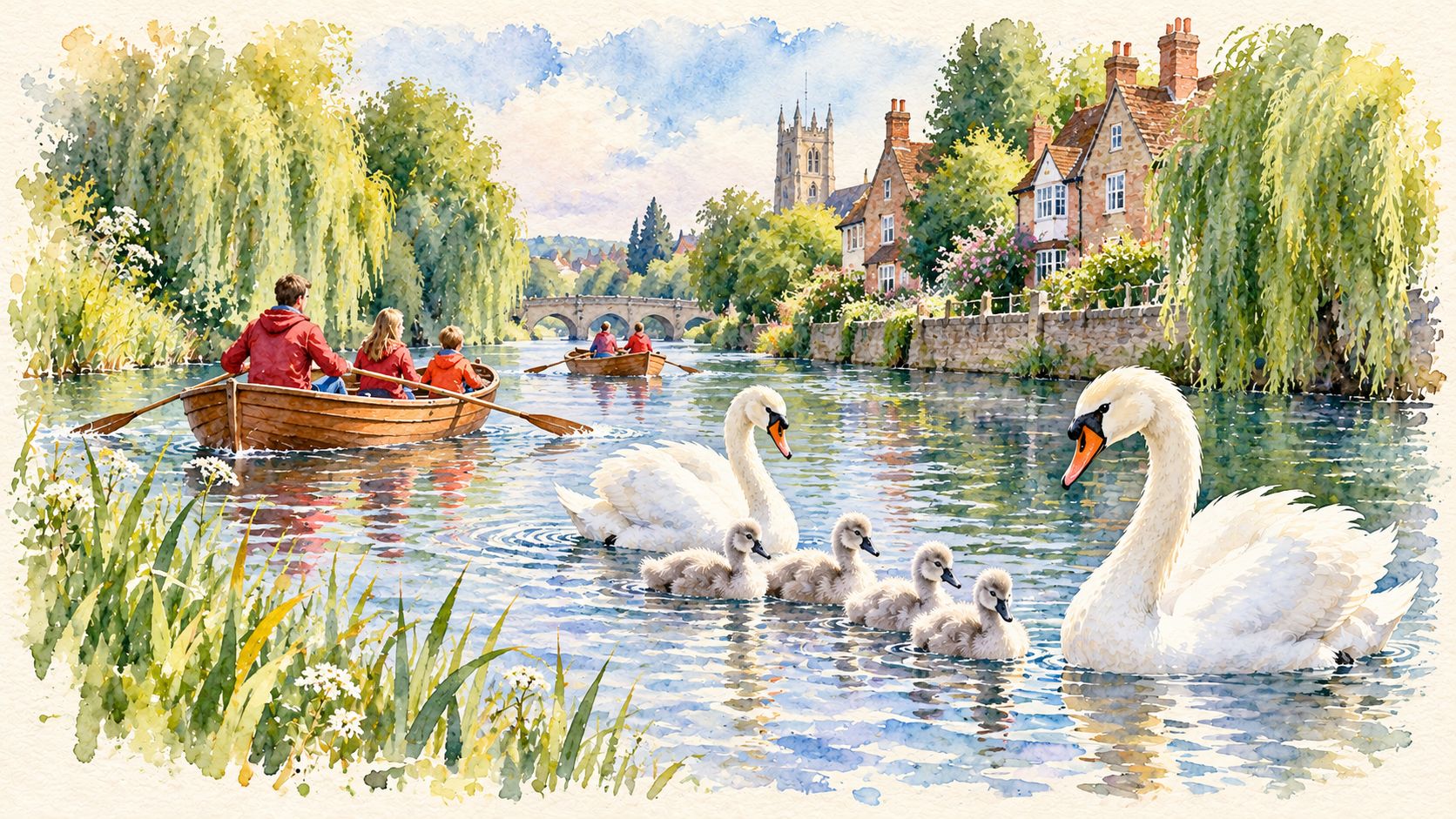
For centuries, swans were a valuable luxury food served at royal feasts. As a result, the British Crown claimed ownership of unmarked mute swans on open waters, sharing rights on parts of the River Thames with two old London trade guilds, the Vintners and the Dyers. Today, the tradition lives on in "Swan Upping", a ceremony held each July in which officials in rowing boats count, weigh and check the health of cygnets on the Thames. These days it is all about conservation, and mute swans are protected by law.
Black swans are native to Australia. They are the state bird of Western Australia, and Perth's Swan River is named after them.
For centuries, Europeans used the phrase "black swan" to describe something impossible, until Dutch explorers saw real black swans in Australia in 1697.
The legend that swans sing a beautiful "swan song" just before they die is a myth, but it gave us the phrase for a person's final performance.
In Indian tradition, the hamsa, a graceful swan-like bird, is the vehicle of the goddess Saraswati and is said to be able to separate milk from water, a symbol of wisdom.
Trumpeter swans were hunted almost to extinction, with fewer than 100 known in the United States outside Alaska in the 1930s. Thanks to conservation, there are now tens of thousands.
Sources and Further Reading
- Royal Society for the Protection of Birds (RSPB)
- The Royal Family (royal.uk)
- Wildfowl & Wetlands Trust
- The Trumpeter Swan Society
- Encyclopaedia Britannica
- National Geographic
Frequently asked questions
What is a baby swan called?
A baby swan is called a cygnet. Male swans are called cobs and female swans are called pens.
Do swans really mate for life?
Usually, yes. Most swans stay with the same partner for many years and often for life, though pairs sometimes separate after unsuccessful breeding seasons.
What do swans eat?
Swans mainly eat underwater plants, including roots, stems and leaves. They also eat grasses and some small water creatures.
Is it okay to feed swans bread?
Bread is not a good food for swans because it offers little nutrition. Wildlife groups suggest healthier options such as grain, peas or chopped lettuce.
Does the King own all the swans in Britain?
Not all of them. The British Crown has the right to claim unmarked mute swans on open water, and the tradition is marked each year with the Swan Upping ceremony on the River Thames.
Where do black swans come from?
Black swans are native to Australia. They have also been introduced to other countries, including New Zealand and parts of Europe.
More Fun Facts