25 Fun Facts
25 Dik-Dik Facts: All About Africa's Tiny Antelope
With big dark eyes, a twitchy little nose and legs as thin as pencils, the dik-dik looks more like a toy than a wild animal. Yet this tiny antelope survives in some of Africa's hottest, driest bushlands, surrounded by predators.
Here are 25 fascinating facts about the dik-dik, from how it got its funny name to why it hardly ever needs a drink of water.
Dik-Dik Facts
Dik-diks are small antelopes that live in the bushlands of eastern and south-western Africa.
An adult dik-dik stands only about 30 to 40 centimetres tall at the shoulder, roughly the height of a house cat.
Most dik-diks weigh just 3 to 6 kilograms.
Four species are usually recognised: Kirk's, Günther's, Salt's and the silver dik-dik.
Kirk's dik-dik is the largest and most widespread species. Besides East Africa, it has a separate population far away in Namibia and Angola.
The silver dik-dik, found in Somalia and Ethiopia, is the smallest of the four.
Dik-diks are among the smallest antelopes in the world, but the royal antelope of West Africa is smaller still.
Unusually for antelopes, female dik-diks are slightly larger than males.
Only males grow horns. These are short and ridged, up to about 7.5 centimetres long, and often half-hidden by a tuft of hair on the forehead.
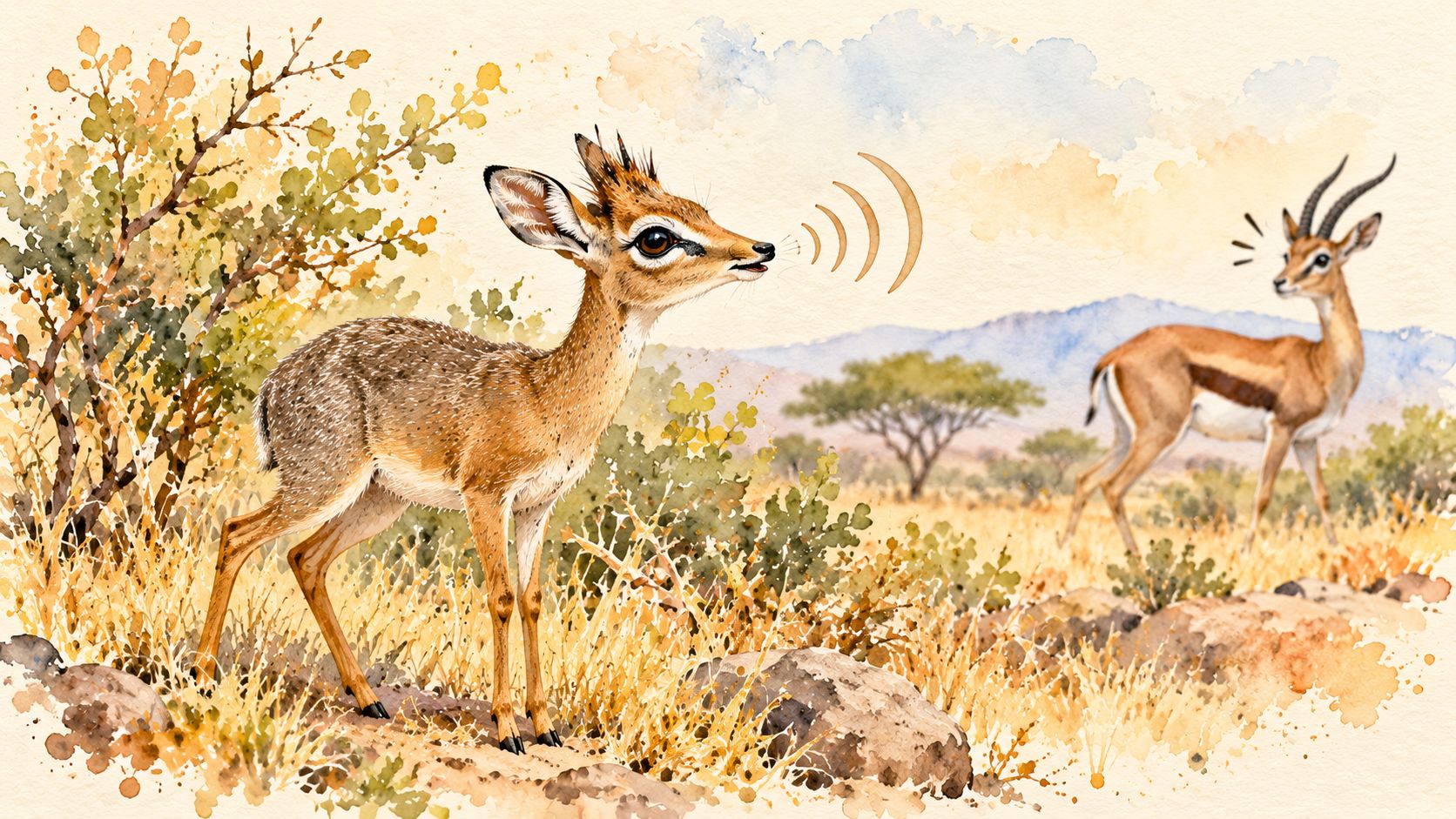
The dik-dik is named after its alarm call
When a dik-dik senses danger, especially a female, it gives a sharp, whistling "zik-zik" or "dik-dik" call through its nose as it dashes away. People named the animal after this sound. The call warns its partner, and other animals nearby, including larger antelopes, often take notice and run for cover too.
A dik-dik's long, bendy snout works like a built-in air conditioner. Muscles pump air through it, and moisture evaporating inside cools the blood before it flows to the brain.
Dik-diks rarely need to drink water. They get almost all the moisture they need from the leaves, shoots, fruits and berries they eat.
They are most active in the cooler hours of early morning, evening and night, and rest in the shade during the hottest part of the day.
Dik-diks are browsers rather than grazers, picking out tender leaves, buds and shoots instead of eating grass.
Like cows, dik-diks are ruminants. They have a four-chambered stomach and chew the cud to get the most nutrients out of tough plants.
Dik-diks have a dark, tear-shaped scent gland in front of each eye. They push grass stems and twigs into the gland to leave scent marks around their territory.
A pair of dik-diks shares a territory of around 5 hectares and patrols its borders together.
Dik-diks use shared dung piles called middens. The female goes first, then the male covers her droppings with his own and adds a scent mark, so neighbours know the female is taken.
When a dik-dik is excited or alarmed, it raises the crest of hair on its head.
Dik-diks usually pair up for life
Most antelopes live in herds, but dik-diks live in pairs, and a male and female usually stay together on the same territory for life. Scientists think this happened partly because the bushland is so thick that a male can't easily find another mate, so it pays to stay close to one female and guard her. Pairs spend much of their time within sight of each other, and rival dik-diks are chased away from their patch.
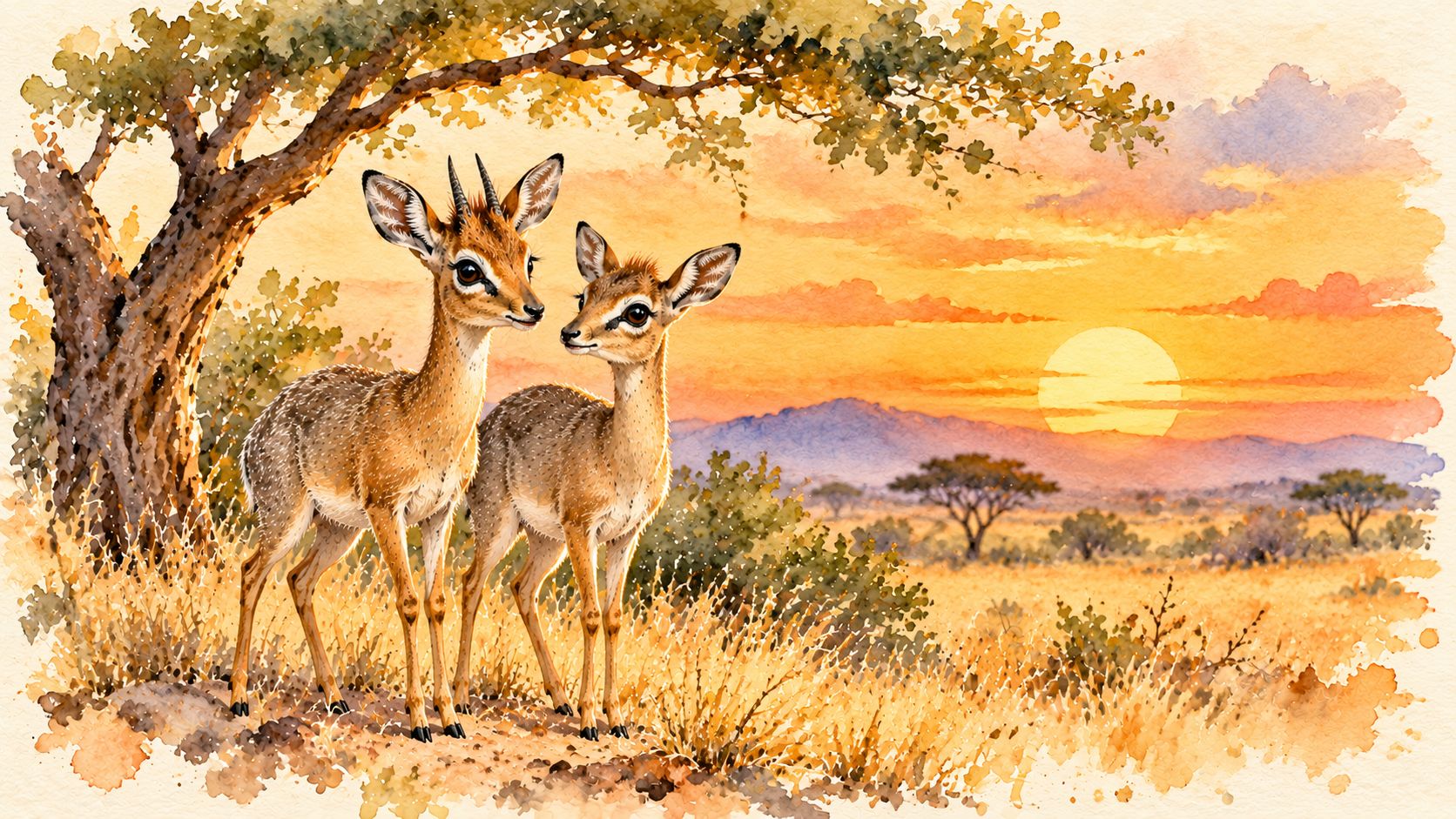
Female dik-diks are pregnant for about 5 to 6 months and give birth to a single fawn, often twice a year.
A newborn dik-dik weighs only around half a kilogram to 800 grams. It hides alone in thick bushes for its first few weeks while its mother returns to feed it.
By around 7 to 9 months old, young dik-diks are fully grown, and their parents chase them out of the territory to find their own.
When chased, a dik-dik escapes in a zigzag pattern and can reach about 42 kilometres per hour. That helps it dodge leopards, cheetahs, caracals, jackals, eagles and pythons.
In the wild, dik-diks usually live for up to about 10 years, and they can live longer in zoos.
Sources and Further Reading
- Encyclopaedia Britannica
- African Wildlife Foundation
- IUCN Red List of Threatened Species
- Smithsonian's National Zoo & Conservation Biology Institute
- San Diego Zoo Wildlife Alliance
- National Geographic
Frequently asked questions
What is a dik-dik?
A dik-dik is a tiny antelope that lives in the dry bushlands of eastern and south-western Africa. It stands about 30 to 40 centimetres tall at the shoulder and weighs just 3 to 6 kilograms.
Why is it called a dik-dik?
The name comes from the whistling "zik-zik" or "dik-dik" alarm call that females make through their noses when they sense danger.
Do dik-diks drink water?
They rarely need to. Dik-diks get almost all the moisture they need from the leaves, shoots, fruits and berries they eat, which helps them survive in very dry places.
Do dik-diks mate for life?
Yes, usually. A male and female dik-dik normally live together as a pair on the same territory for life, which is unusual among antelopes.
What eats dik-diks?
Dik-diks are hunted by leopards, cheetahs, caracals, jackals, eagles, pythons and other predators. They rely on hiding in thick bush and fast zigzag running to escape.
How long do dik-diks live?
In the wild, dik-diks usually live for up to about 10 years. In zoos, with no predators and regular food, they can live longer.
More Fun Facts