25 Fun Facts
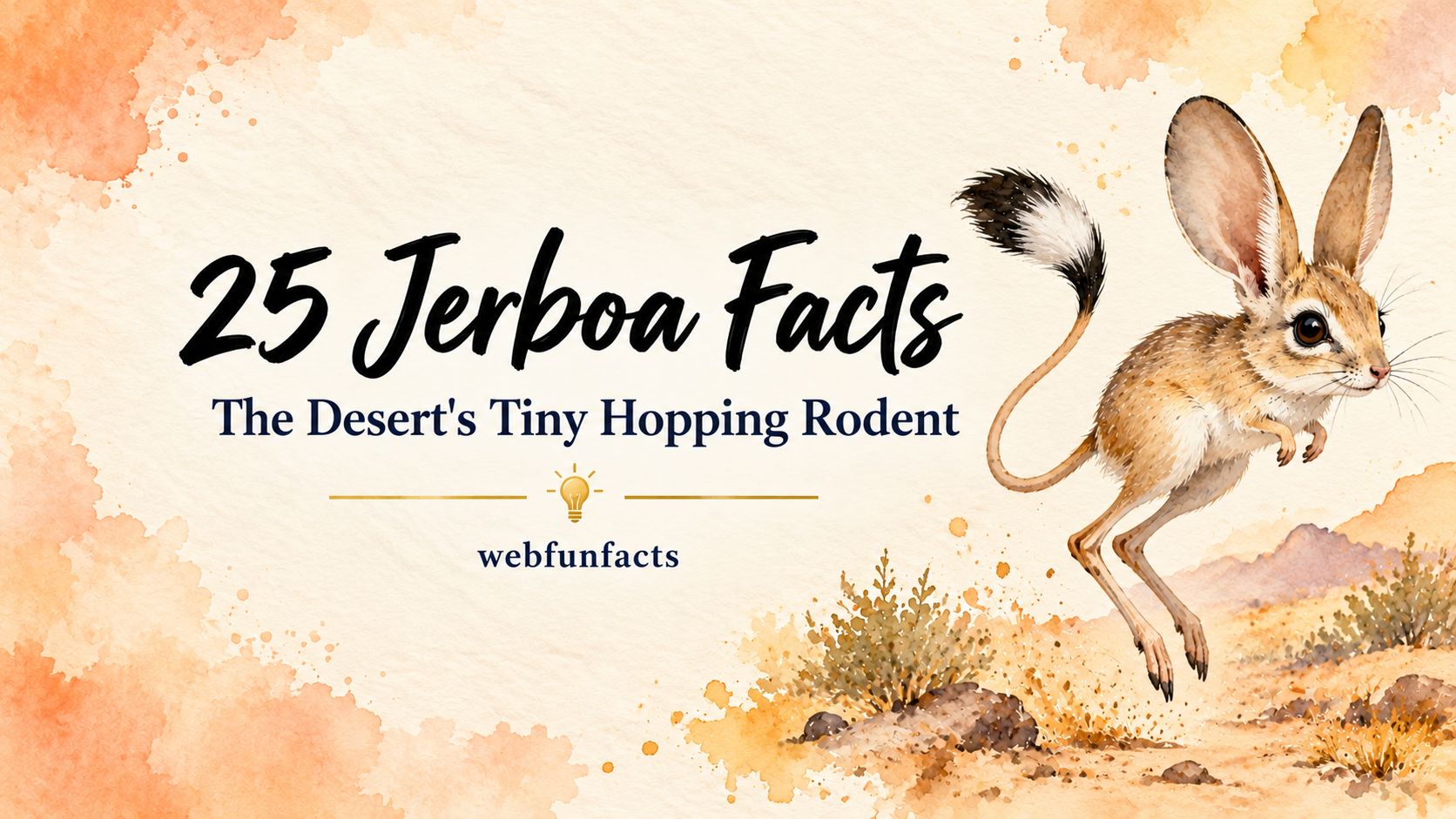
25 Jerboa Facts: The Desert's Tiny Hopping Rodent
Picture a mouse with the legs of a kangaroo, the tail of a lion and, in some cases, ears bigger than its head. That is the jerboa, a tiny desert rodent that bounces across the sand at night.
Here are 25 fascinating facts about jerboas, from their amazing jumps to the clever burrows that keep them cool in some of the hottest places on Earth.
Jerboa Facts
Jerboas are small hopping rodents that live in the deserts and dry grasslands of North Africa, the Middle East, Central Asia and northern China.
There are more than 30 species of jerboa.
The name "jerboa" comes from the Arabic word yarbū'.
Jerboas look a bit like mice, but they have very long back legs, tiny front legs and a long tail with a tuft at the tip.
Their back legs can be about four times longer than their front legs.
Jerboas move by hopping on their back legs. Their small front legs are used for holding food and digging, not for walking.
In many three-toed jerboas, the main bones of the foot are fused into one strong bone, which helps absorb the shock of landing.
Many jerboas have tufts of stiff hair on the soles of their feet, which work like snowshoes on loose sand.
Their long tufted tail helps them balance in mid-air and acts like a third leg when they stand upright.
Jerboas zigzag to escape predators
When a hungry owl or fox comes close, a jerboa doesn't just run away in a straight line. It bounces off in sudden, unpredictable zigzags, changing direction and the length of each jump, which makes it extremely hard to catch. A 2017 study of the lesser Egyptian jerboa found that this erratic hopping is one of its best defences. Some jerboas can reach speeds of around 24 kilometres per hour.
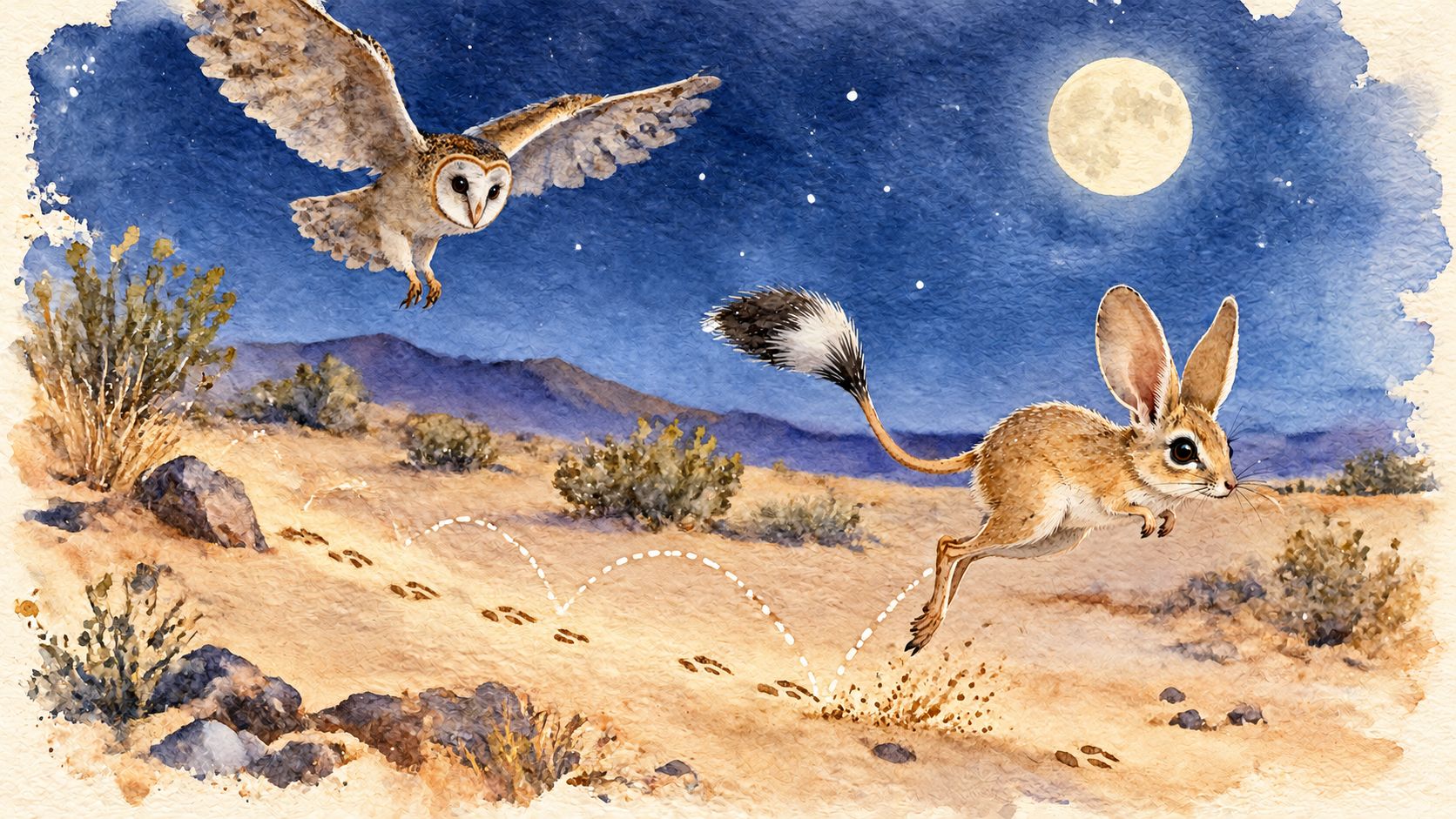
Some larger jerboas are reported to leap up to about 3 metres in a single bound, many times their own body length.
Jerboas are not closely related to kangaroo rats in North America or hopping mice in Australia, but all three evolved long legs and hopping for desert life.
Jerboas are nocturnal. They spend the hot day underground and come out at night to feed.
They have large eyes that help them see in the dark, and sharp hearing to detect predators.
Their fur is long, soft and silky, usually in sandy colours that blend in with the desert.
Jerboa diets vary by species. Many eat seeds and plants, some mainly eat insects, and others eat a mix of both.
Many jerboas get almost all the water they need from their food, so they rarely, if ever, drink.
Jerboas dig temporary burrows for quick shelter while out feeding, and deeper permanent burrows to live in.
During the day, jerboas plug the entrance of their permanent burrow with sand to keep out heat and predators and keep moisture in.
The long-eared jerboa has ears bigger than its head
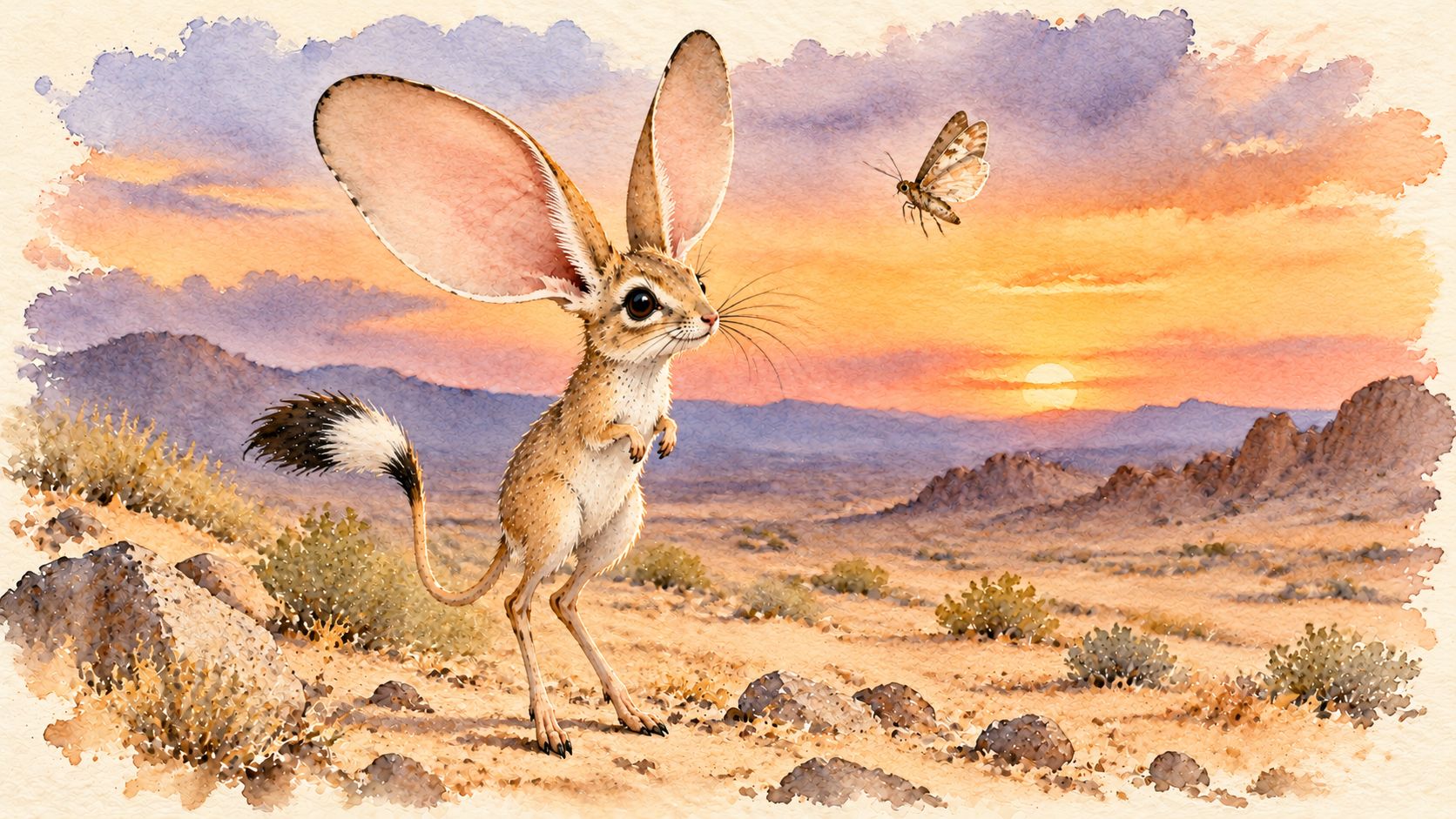
The long-eared jerboa lives in the deserts of Mongolia and northern China, and it has some of the biggest ears, compared with body size, of any mammal. Its ears are about a third larger than its head. These giant ears help it hear insects moving in the dark and may also help release heat. This rare, little-known animal was first filmed in the wild in 2007.
The Baluchistan pygmy jerboa is one of the smallest rodents in the world. Its body is only about 4 to 5 centimetres long, not counting its tail.
The fat-tailed jerboa stores fat in its thick tail, which gives it energy when food is scarce.
Jerboas that live in cold parts of Central Asia hibernate in their burrows during the winter.
Female jerboas usually give birth to about 2 to 6 babies after a pregnancy of roughly a month.
During the Second World War, the British 7th Armoured Division, the famous "Desert Rats", used a jerboa as its emblem.
Sources and Further Reading
- Encyclopaedia Britannica
- Zoological Society of London (ZSL)
- IUCN Red List of Threatened Species
- Nature Communications
- Animal Diversity Web, University of Michigan
- National Geographic
Frequently asked questions
What is a jerboa?
A jerboa is a small desert rodent with long back legs, tiny front legs and a long tufted tail. It hops on its back legs like a miniature kangaroo.
Where do jerboas live?
Jerboas live in the deserts and dry grasslands of North Africa, the Middle East, Central Asia, Mongolia and northern China.
How far can a jerboa jump?
Some larger jerboas are reported to leap up to about 3 metres in one bound. They also zigzag unpredictably to escape predators.
Do jerboas drink water?
Many jerboas get almost all the water they need from their food, such as seeds, plants and insects, so they rarely need to drink.
What do jerboas eat?
It depends on the species. Many eat seeds and plants, some mainly eat insects, and others have a mixed diet.
Why does the long-eared jerboa have such big ears?
Its huge ears, about a third larger than its head, help it hear insects in the dark and may help release body heat in the desert.
More Fun Facts