
25 Fun Facts
25 Duck Facts: Waterproof Wonders of Ponds and Lakes
Ducks are some of the most familiar birds in the world, paddling across ponds, lakes and rivers almost everywhere. But behind their cheerful quacks are some remarkable abilities, from waterproof feathers to sleeping with one eye open.
Here are 25 delightful facts about ducks, from brave ducklings that jump out of trees to a rare duck found in the forests of Assam.
Duck Facts
Ducks belong to the same bird family as geese and swans.
There are more than 100 species of duck around the world.
Ducks live on every continent except Antarctica.
A male duck is called a drake, a female is called a hen and a baby is called a duckling.
A group of ducks on the water is called a raft or a paddling.
Almost all domestic ducks are descended from the wild mallard. The main exception is the Muscovy duck.
In many species, including mallards, only the females make the loud, classic "quack". Males make quieter, raspier sounds.
You may have heard that a duck's quack doesn't echo. It's a myth. In 2003, scientists in the UK tested it and found that a quack does echo, but the echo is hard to hear.
The word "duck" comes from an old English word meaning "to dive" or "to duck under", describing how many ducks dip under the water.
Ducklings follow the first thing they see
Soon after hatching, ducklings form a strong bond with the first moving thing they see, which is usually their mother. This instant bond is called imprinting, and it helps the ducklings stay close to her for protection. In the 1930s, scientist Konrad Lorenz showed that young birds would imprint on him instead, and follow him around as if he were their parent. This is why it's important for ducklings to see their mother right away.
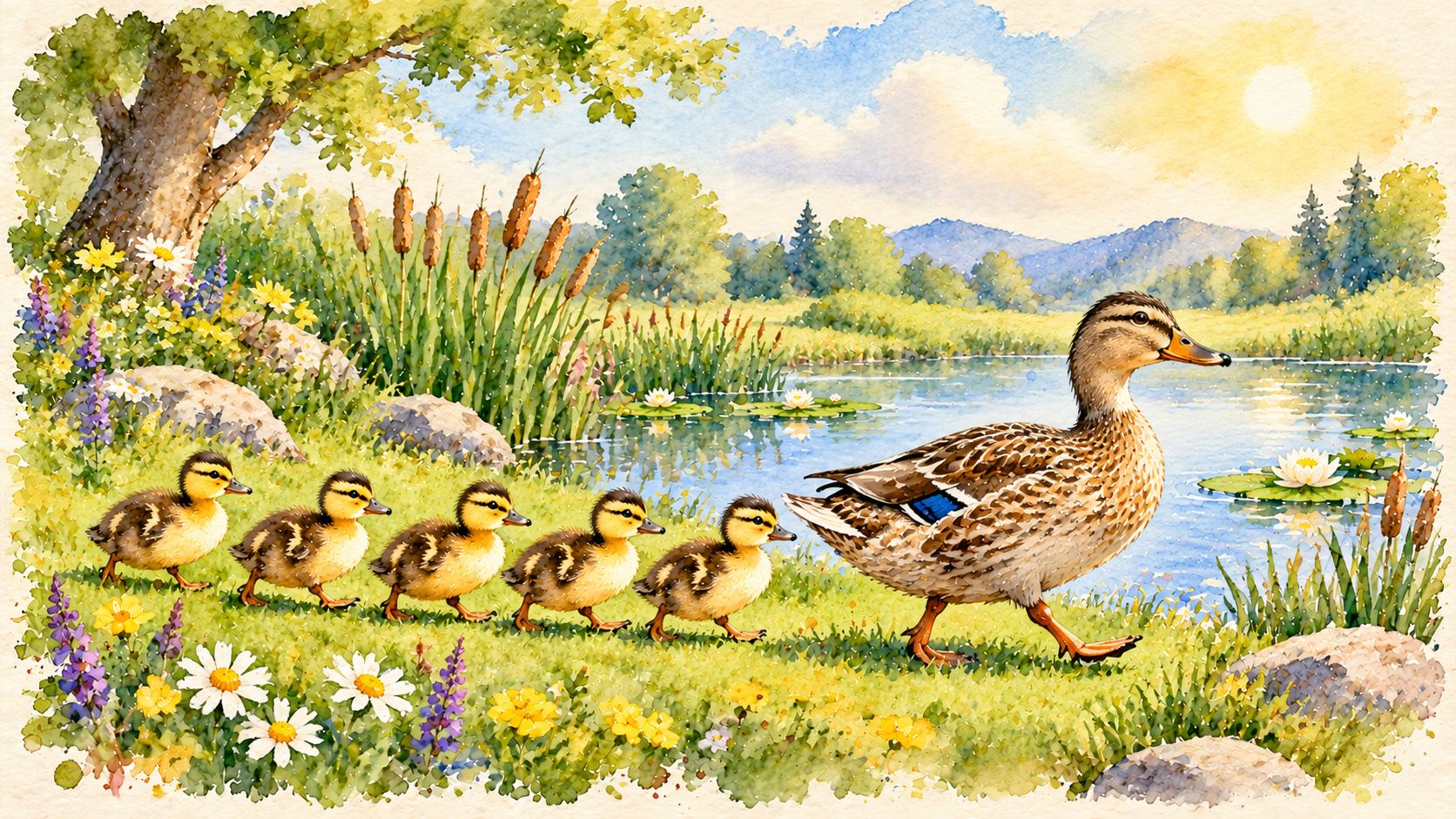
Ducklings hatch covered in fluffy down with their eyes open and can leave the nest within a day.
Wood duck and mandarin duck ducklings hatch in nests in tree holes, and just a day after hatching they leap out, sometimes from more than 15 metres high, without getting hurt.
Ducks have a special gland near their tail that produces oil. They spread it over their feathers when preening to keep them waterproof.
Ducks' feet stay warm in icy water because warm blood flowing down the legs heats the cold blood flowing back up, so little body heat is lost.
Many ducks can sleep with one eye open and half of their brain awake, especially those on the edge of a group, so they can watch for predators.
With eyes on the sides of their heads, ducks can see almost all the way around them.
Ducks have tiny comb-like edges on their bills, which help them filter food such as seeds and small creatures from the water.
Ducks swallow small stones and grit, which they keep in a muscular part of the stomach called the gizzard to help grind up their food.
"Dabbling" ducks, like mallards, tip forward to feed just below the surface, while "diving" ducks swim underwater to find food. Long-tailed ducks can dive around 60 metres deep.
Assam's state bird is one of the world's rarest ducks
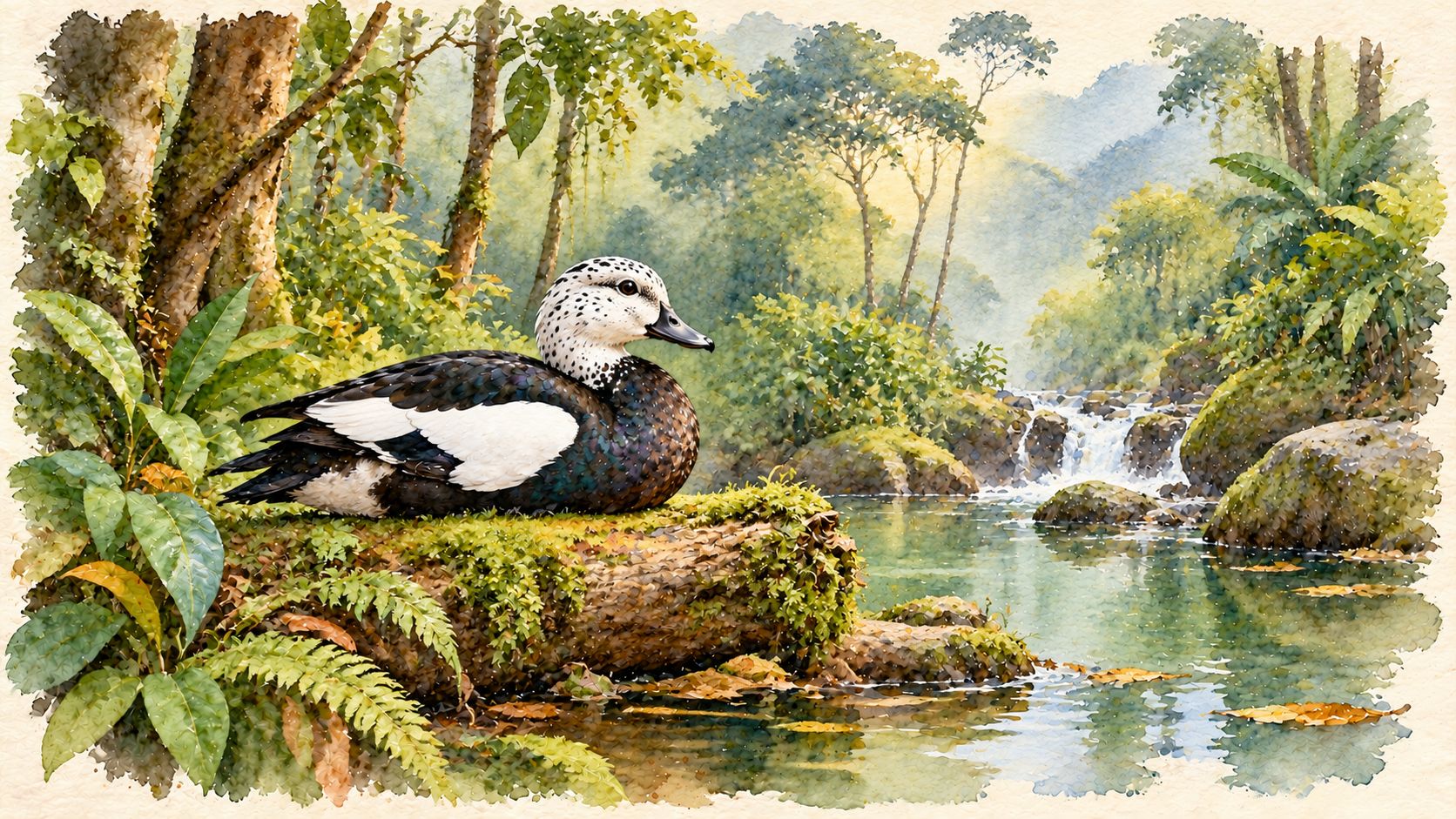
The white-winged wood duck is a large, beautiful duck with a white head and wings, found in the dense forests and swamps of northeast India and parts of Southeast Asia. It is the state bird of Assam and is listed as endangered, with only a few hundred left in the wild. It is shy and rarely seen, living in quiet forest pools and nesting in hollows high up in trees. Protecting the forests of Assam and Arunachal Pradesh is key to saving this rare duck.
Despite its name, the Indian Runner duck doesn't come from India. It comes from Indonesia. It stands upright like a bowling pin and runs rather than waddles.
Male ducks often have bright, colourful breeding feathers, but after mating season they moult into dull "eclipse" feathers that look much like the females'.
Once a year, many ducks lose all their flight feathers at the same time, leaving them unable to fly for a few weeks until the new ones grow.
The mandarin duck is one of the most colourful ducks in the world, and in China and Japan pairs of mandarin ducks are a symbol of love and loyalty.
A mallard is reported to have been hit by an aircraft at about 6,400 metres over Nevada in 1963, one of the highest duck flights ever recorded.
Sources and Further Reading
- Bombay Natural History Society (BNHS)
- Royal Society for the Protection of Birds (RSPB)
- Cornell Lab of Ornithology
- BirdLife International
- Encyclopaedia Britannica
- National Geographic
Frequently asked questions
What is a baby duck called?
A baby duck is called a duckling. A male duck is called a drake and a female duck is called a hen.
Does a duck's quack echo?
Yes. It's a myth that a duck's quack doesn't echo. A UK study in 2003 found that it does echo, but the echo is hard to hear.
Why don't ducks get wet?
Ducks have a special gland near their tail that produces oil. They spread it over their feathers while preening, which keeps them waterproof.
How do ducks keep their feet warm in icy water?
Warm blood flowing down to the feet heats the cold blood flowing back up, so very little body heat is lost through their feet.
Do all ducks quack?
No. In many species, only female ducks make the loud classic quack. Males and many other species whistle, grunt, coo or make raspy sounds.
Which duck is the state bird of Assam?
The white-winged wood duck is the state bird of Assam. It is an endangered duck that lives in the forests and swamps of northeast India.
More Fun Facts