25 Fun Facts
25 Chimpanzee Facts: Our Clever Closest Relatives
Chimpanzees use tools, solve problems, form close friendships and even laugh when they are tickled. Look into a chimp's eyes and it's easy to see why scientists call them our closest living relatives.
Here are 25 fascinating facts about chimpanzees, from their surprising intelligence to the chimp who flew into space before any American astronaut.
Chimpanzee Facts
Chimpanzees are great apes, not monkeys. Unlike monkeys, they have no tail.
Chimpanzees share about 98 to 99% of their DNA with humans.
Along with bonobos, chimpanzees are our closest living relatives.
Bonobos are a separate species of ape that live only south of the Congo River, while chimpanzees live to the north and east.
Chimpanzees live in the forests, woodlands and savannas of central and western Africa, across around 20 countries.
Chimpanzees are listed as endangered, threatened by habitat loss, hunting and disease.
Chimps live in communities that can range from around 20 to more than 150 members, splitting into smaller groups during the day.
Male chimps usually stay in the community where they were born, while females often move to a new group when they grow up.
Chimpanzees usually walk on all fours, leaning on the knuckles of their hands.
Chimpanzees taught scientists that humans aren't the only toolmakers
In 1960, a young British researcher named Jane Goodall was watching chimpanzees in Gombe, Tanzania, when she saw a chimp strip the leaves off a twig and poke it into a termite mound to "fish" out termites to eat. At the time, scientists believed only humans made and used tools. Her discovery changed how we think about animals and about ourselves. Since then, chimps have been seen using stones to crack nuts, leaves as sponges to soak up water and sharpened sticks to hunt small animals.
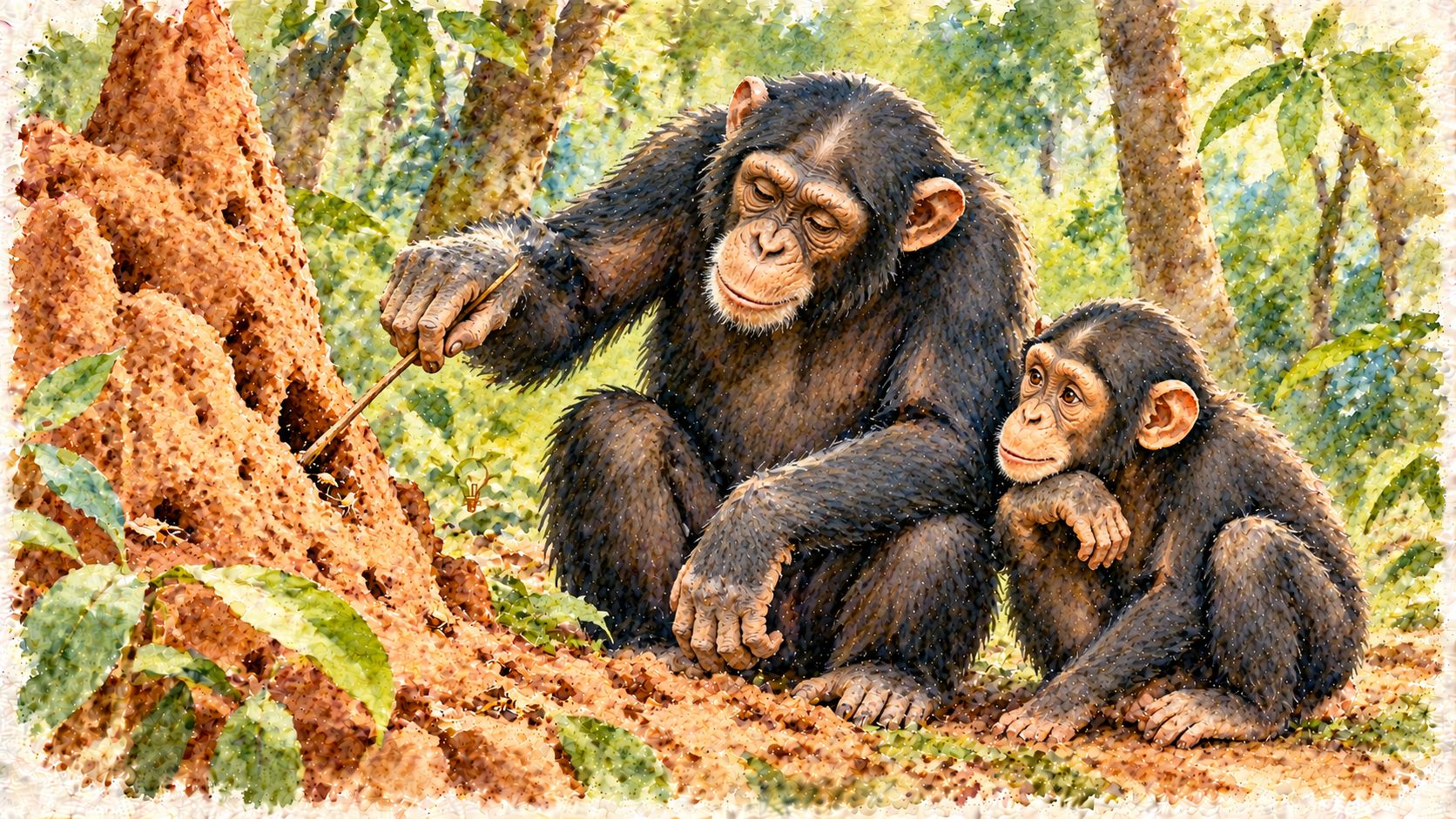
Different chimpanzee communities have their own traditions, such as particular ways of using tools, passed down from one generation to the next.
Chimpanzees seem to treat themselves when they're ill, chewing bitter plants or swallowing rough leaves that can help clear out parasites.
Chimps are omnivores. They mostly eat fruit, but also leaves, seeds, insects, eggs and sometimes meat.
Chimpanzees sometimes hunt monkeys as a team and then share the meat with others in their group.
Every night, each chimp builds a fresh sleeping nest of bent branches and leaves high up in the trees.
Chimps spend hours grooming each other, which helps keep them clean and builds strong friendships.
Chimpanzees communicate with a wide range of calls, facial expressions and dozens of different hand gestures.
Chimps laugh when they play or are tickled, making a breathy, panting sound.
Chimpanzees can recognise themselves in a mirror, a sign of self-awareness.
A chimpanzee flew into space before any American astronaut
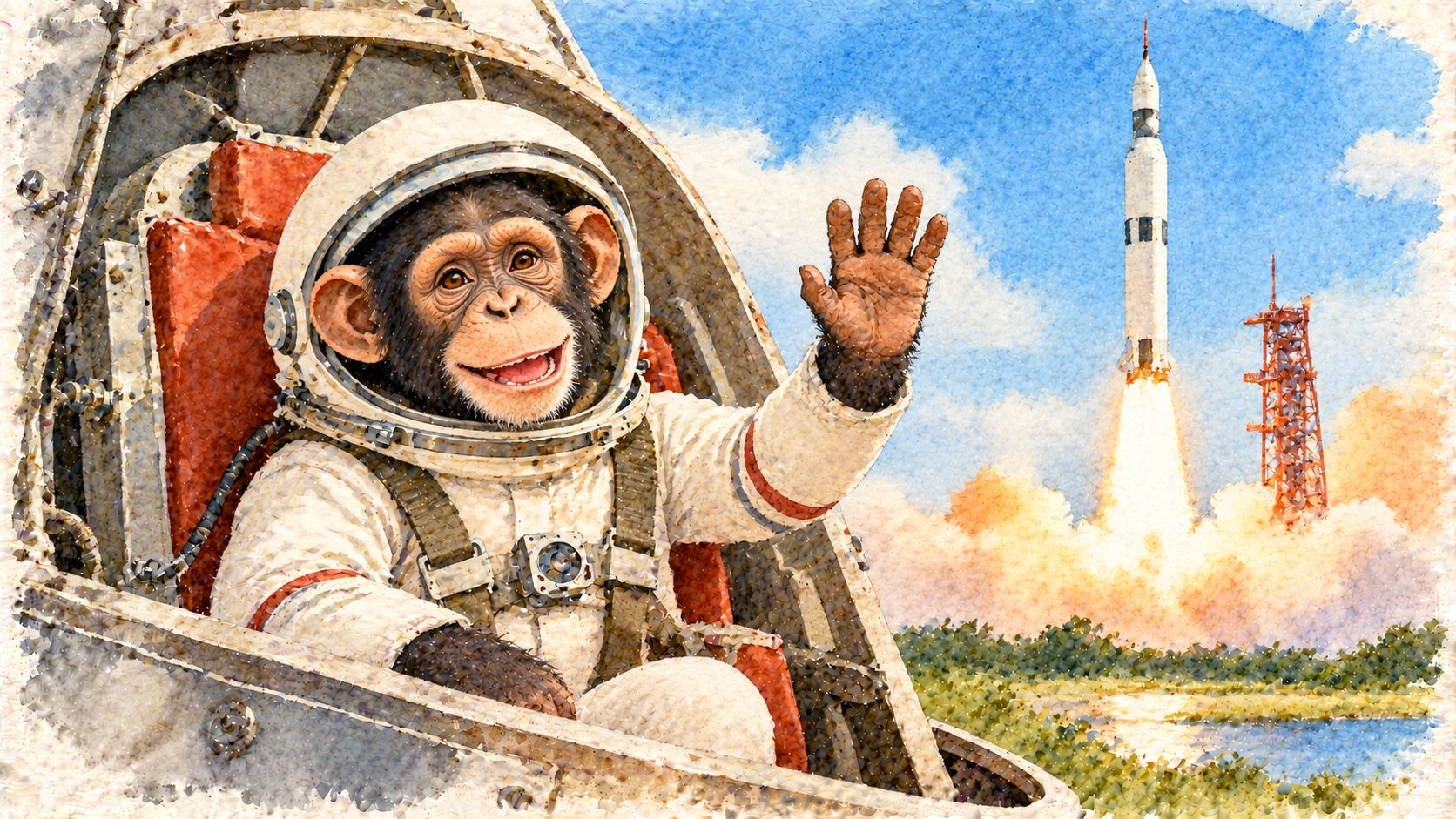
On 31 January 1961, a chimpanzee named Ham was launched into space by NASA in a Mercury capsule. During his 16-minute flight, he pulled levers when lights flashed, proving that tasks could be done in space, and he returned safely to Earth. His mission helped pave the way for Alan Shepard to become the first American in space just a few months later. Later that year, another chimp named Enos orbited the Earth before astronaut John Glenn did.
In memory tests in Japan, a young chimp named Ayumu remembered flashing numbers on a screen faster and more accurately than most humans.
A chimpanzee named Washoe learned to use around 350 signs from American Sign Language.
Chimpanzees are strong, but not as superhuman as often claimed. A 2017 study found their muscles are about one and a half times as powerful as a human's.
Baby chimps cling to their mother's belly, later ride on her back and stay close to her for many years.
Wild chimpanzees can live for around 40 years, and some in protected care have lived past 60.
Sources and Further Reading
- Jane Goodall Institute
- IUCN Red List of Threatened Species
- NASA
- Kyoto University Primate Research Institute
- Smithsonian's National Zoo & Conservation Biology Institute
- Encyclopaedia Britannica
Frequently asked questions
Are chimpanzees monkeys?
No. Chimpanzees are great apes, like gorillas, orangutans and bonobos. Unlike monkeys, they have no tail.
How much DNA do humans share with chimpanzees?
Humans and chimpanzees share about 98 to 99% of their DNA, making chimps and bonobos our closest living relatives.
Do chimpanzees use tools?
Yes. Chimpanzees use twigs to fish for termites, stones to crack nuts, leaves as sponges and even sharpened sticks for hunting.
What do chimpanzees eat?
Chimpanzees are omnivores. They mainly eat fruit, along with leaves, seeds, insects, eggs and sometimes meat from animals they hunt.
Was a chimpanzee really sent into space?
Yes. A chimpanzee named Ham flew into space on 31 January 1961, months before Alan Shepard became the first American in space.
Are chimpanzees endangered?
Yes. Chimpanzees are listed as endangered, mainly due to habitat loss, hunting and disease.
More Fun Facts