25 Fun Facts
25 Whale Facts: Gentle Giants of the Deep Ocean
Whales are the giants of the ocean. They include the largest animal that has ever lived, singers whose songs travel across entire oceans and deep divers that hunt giant squid in total darkness.
Here are 25 amazing facts about whales, from their land-walking ancestors to whales that may live for more than 200 years.
Whale Facts
Whales are mammals. They breathe air, are warm-blooded and feed their young milk.
Whales, dolphins and porpoises together form a group called cetaceans, with around 90 species.
Whales are divided into two groups: toothed whales, such as sperm whales and orcas, and baleen whales, such as blue whales and humpbacks.
Baleen whales have no teeth. Instead, they have long plates of baleen, made of keratin like our fingernails, which filter tiny food from the water.
Baleen whales have two blowholes, while toothed whales have just one.
A whale's spout is a cloud of warm breath and mist, and its shape can help experts identify the species from far away.
The closest living relative of whales is the hippopotamus.
Whales evolved from four-legged land mammals. One early ancestor, Pakicetus, lived around 50 million years ago in what is now Pakistan.
Some whales still have tiny hip bones hidden inside their bodies, left over from their land-dwelling ancestors.
Humpback whale songs spread like hit tunes
Male humpback whales sing long, complex songs made of moans, cries and whistles that can last for up to 20 minutes and be repeated for hours. All the males in a population sing the same song, but it slowly changes over time. Scientists have discovered that new songs can spread from one population to another across the ocean, almost like a catchy pop song going viral. Within a couple of years, whales across a whole region can switch to the new tune.
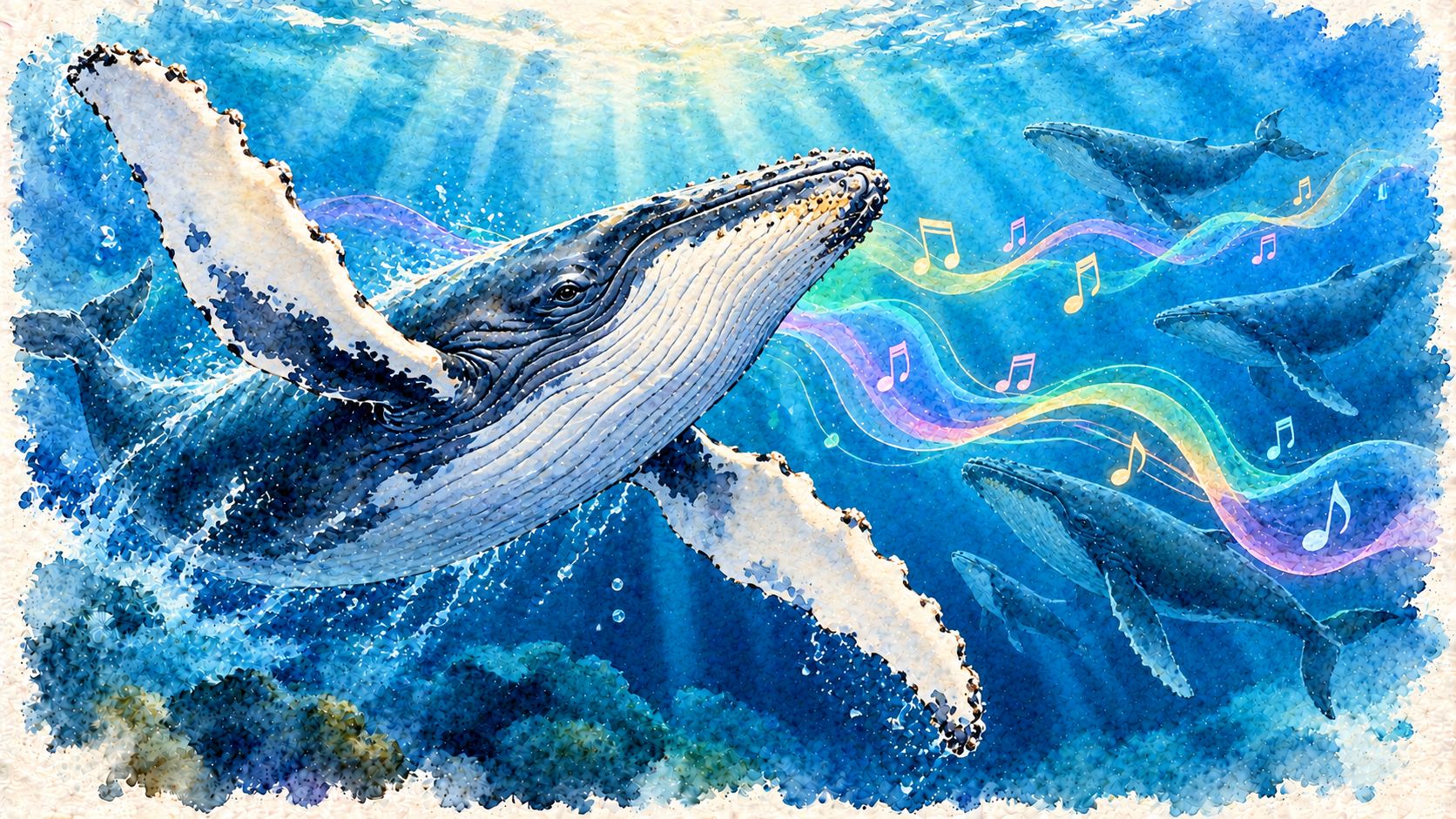
Humpback whales hunt together by blowing a ring of bubbles around a school of fish, trapping them in a "bubble net" before lunging up through the middle with mouths wide open.
Humpbacks make some of the longest migrations of any mammal, travelling thousands of kilometres between cold feeding grounds and warm breeding waters.
The blue whale is the largest animal known to have ever lived, reaching around 30 metres long.
A baby blue whale can drink hundreds of litres of milk a day and gain around 90 kilograms every single day.
Blue whales can eat several tonnes of tiny shrimp-like krill in a single day.
The sperm whale has the largest brain of any animal on Earth, weighing around 8 kilograms.
Sperm whales dive more than 2,000 metres deep to hunt squid, including the mysterious giant squid.
Sperm whales sleep upright in the water, floating vertically near the surface for short naps.
Ambergris, a rare waxy substance formed in the guts of some sperm whales, has been prized for centuries in making perfume.
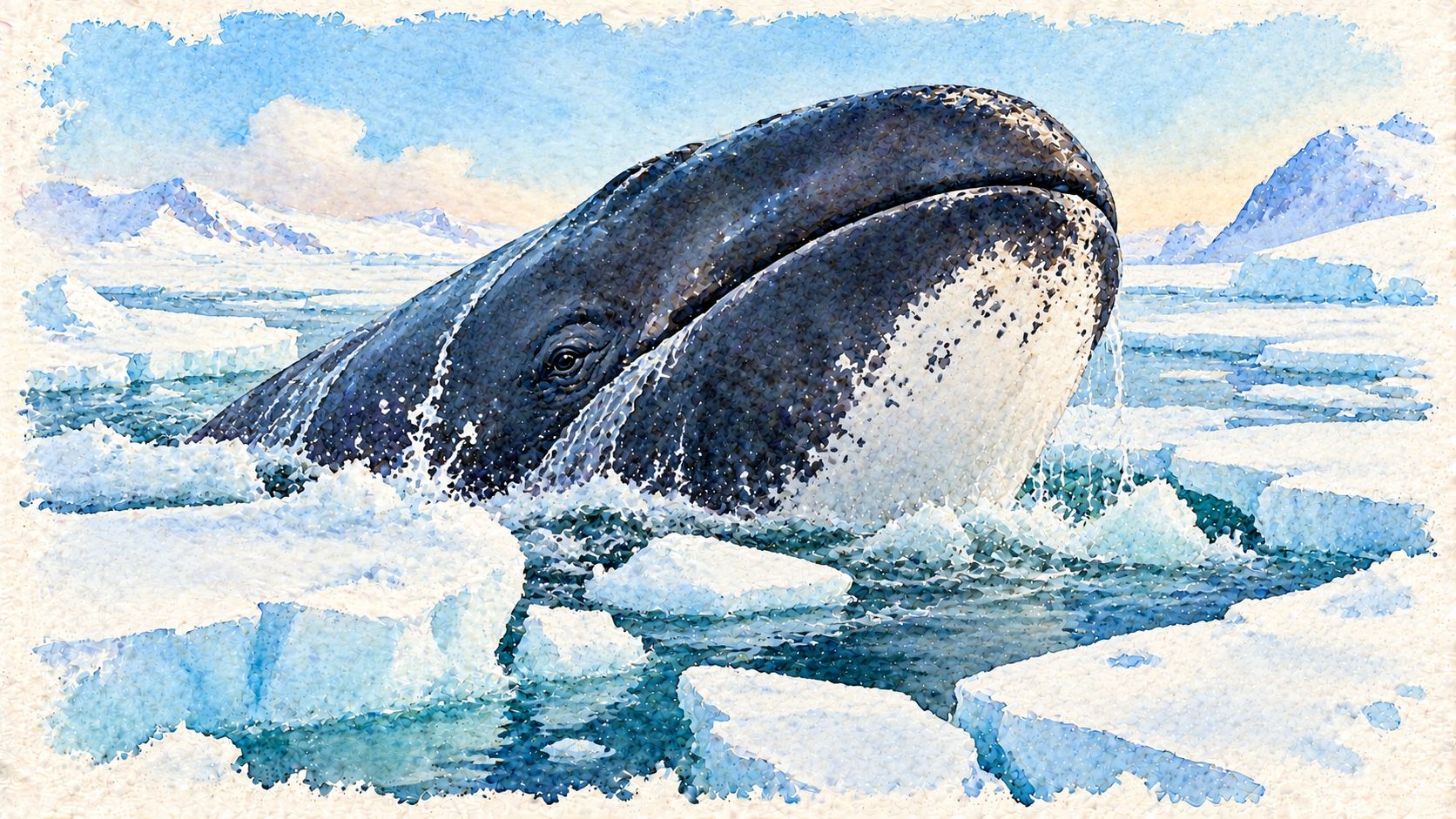
Bowhead whales can live for more than 200 years
The bowhead whale of the Arctic may be the longest-living mammal on Earth. Scientists studying chemical changes in the eyes of bowheads estimated that some were more than 200 years old. Old stone harpoon tips from the 1800s have even been found buried in living bowheads. These whales have the thickest blubber of any animal, up to about 50 centimetres, and can smash through sea ice with their massive heads to make breathing holes.
A narwhal's long spiral tusk is actually a tooth that grows through its upper lip, and it can reach around 3 metres long.
The white beluga whale is nicknamed the "canary of the sea" because of its chirps, whistles and clicks.
Orcas, or killer whales, are actually the largest members of the dolphin family, and different orca groups have their own hunting styles and "dialects".
Whale poop helps fertilise the ocean, feeding tiny plankton that produce oxygen and absorb carbon dioxide.
Since a worldwide ban on commercial whaling began in 1986, some whale populations, such as many humpbacks, have made a strong recovery.
Sources and Further Reading
- NOAA Fisheries
- International Whaling Commission
- Whale and Dolphin Conservation
- Smithsonian Ocean
- Encyclopaedia Britannica
- National Geographic
Frequently asked questions
Are whales fish or mammals?
Whales are mammals. They breathe air through blowholes, are warm-blooded and feed their babies milk.
What is the largest whale?
The blue whale is the largest whale and the largest animal known to have ever lived, reaching around 30 metres long.
Why do humpback whales sing?
Male humpback whales sing complex songs, mostly during the breeding season. Scientists think the songs help attract females or communicate with other males.
How long do whales live?
It depends on the species. Many whales live for several decades, and bowhead whales may live for more than 200 years.
What is a narwhal's tusk?
A narwhal's tusk is a long spiral tooth that grows through its upper lip. It can reach around 3 metres in length.
Is a whale shark a whale?
No. Despite its name, the whale shark is a fish, the largest fish in the world, not a whale.
More Fun Facts