25 Fun Facts
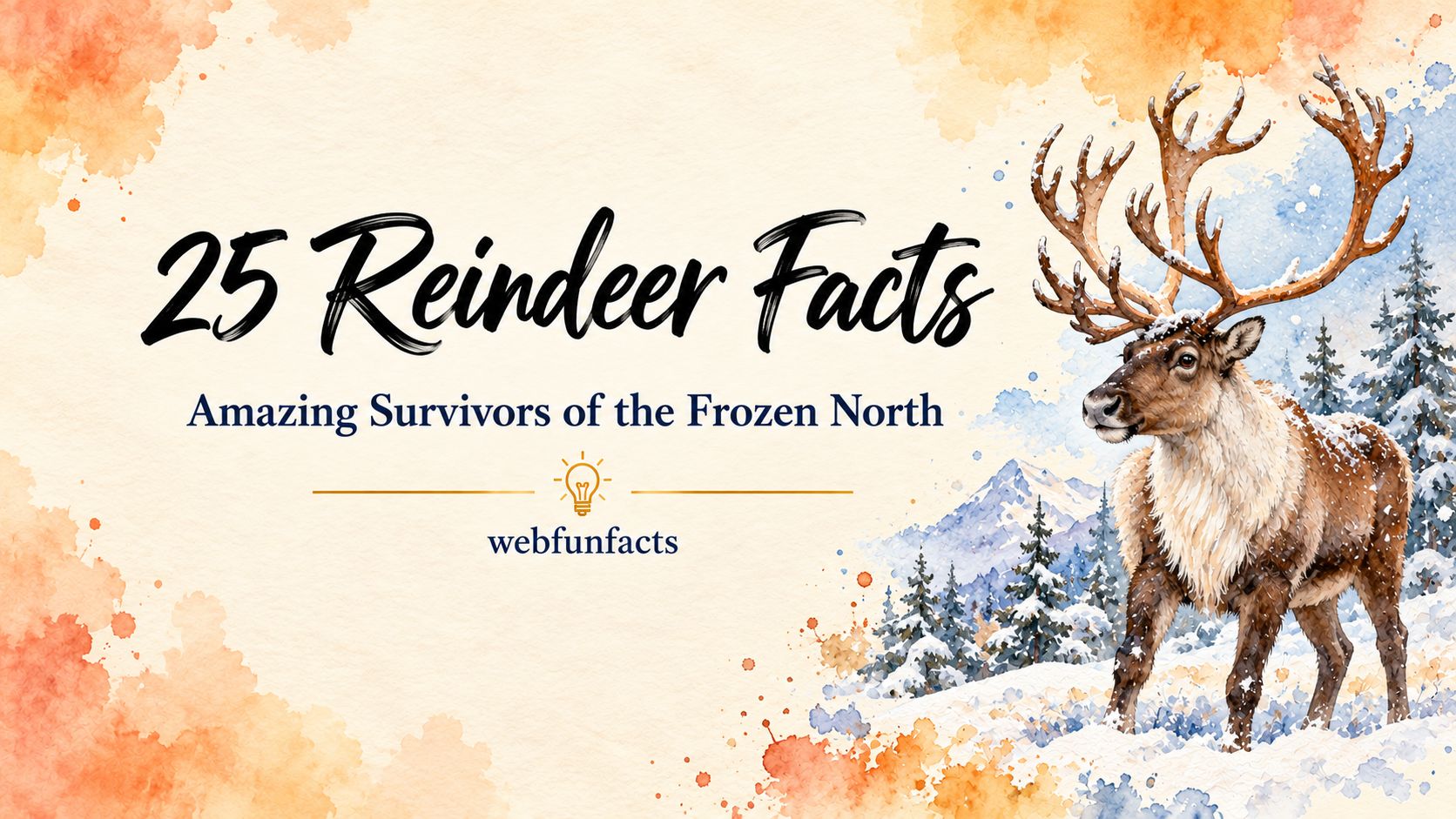
25 Reindeer Facts: Amazing Survivors of the Frozen North
Reindeer are famous for pulling Santa's sleigh, but the real animals are just as remarkable. They survive some of the coldest places on Earth, travel huge distances across the Arctic and have eyes that change colour with the seasons.
Here are 25 amazing facts about reindeer, from their super-warm coats to the surprising truth about Santa's reindeer.
Reindeer Facts
Reindeer live in the Arctic and sub-Arctic regions of Europe, Asia and North America.
In North America, wild reindeer are called caribou. Reindeer and caribou are the same species, Rangifer tarandus.
The word "caribou" is thought to come from a word in the Mi'kmaq language of eastern Canada, meaning "one who paws" or "snow shoveller", because they dig through snow to find food.
Reindeer are the only deer species in which both males and females usually grow antlers.
A reindeer's antlers fall off and grow back every year, and they are among the fastest-growing tissues of any animal.
While they grow, the antlers are covered in a soft, furry skin called velvet, which supplies them with blood.
Male reindeer use their antlers to fight rivals during the mating season, locking antlers and pushing against each other.
Adult male reindeer usually weigh around 160 to 180 kilograms, and the largest can top 300 kilograms. Females are smaller.
Reindeer have two layers of fur: a thick woolly undercoat and long outer hairs that are hollow and filled with air, trapping heat and helping them float when they swim.
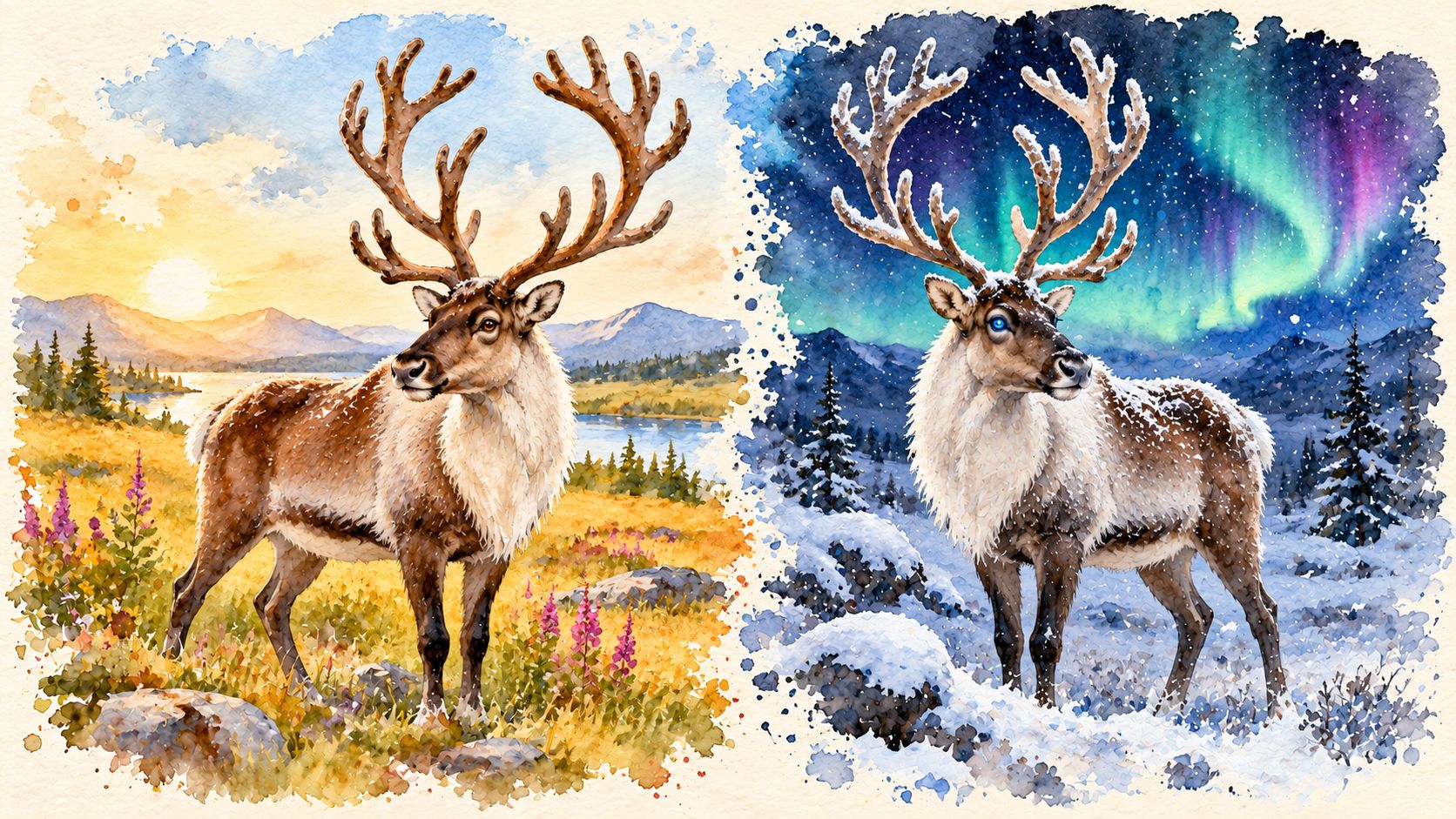
Reindeer eyes change colour with the seasons
In summer, when the Arctic has almost 24-hour daylight, the back of a reindeer's eye reflects golden light. In the long, dark winter, it changes to a deep blue. Scientists discovered that this blue layer scatters light inside the eye, helping reindeer see better in very low light. This helps them spot predators and find food during months when the Sun barely rises.
Reindeer can see ultraviolet light, which humans can't. This helps them spot lichen, their main winter food, and the white fur of wolves against the snow.
A reindeer's nose has a special structure that warms freezing air before it reaches the lungs.
Reindeer hooves change with the seasons. In summer, the footpads are soft and spongy for walking on wet ground. In winter, the pads shrink and harden, exposing the sharp hoof rim, which grips the ice.
Reindeer also use their wide hooves like shovels to dig through snow to find food.
When a reindeer walks, a tendon in its foot makes a clicking sound, which may help herds stay together in blizzards and darkness.
In winter, reindeer feed mainly on lichen, often called "reindeer moss", which few other large animals can digest.
Some caribou herds travel more than 1,000 kilometres a year, making some of the longest land migrations of any mammal.
Reindeer are strong swimmers and cross wide rivers and lakes during their migrations.
Reindeer can run at speeds of up to around 70 kilometres per hour.
Santa's reindeer are probably all female
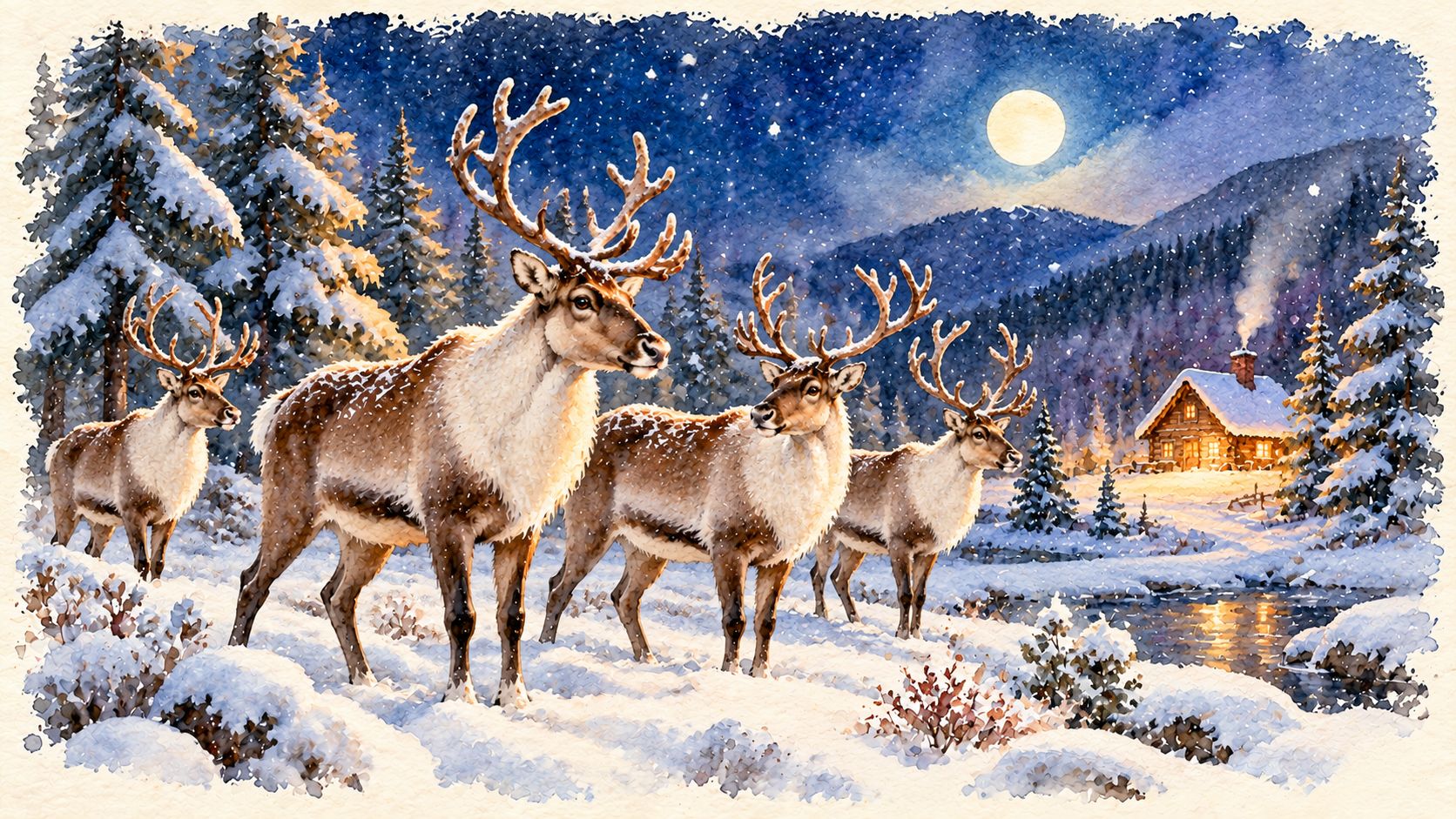
Male reindeer usually lose their antlers in late autumn or early winter, after the mating season ends. Female reindeer keep their antlers through the winter until their calves are born in spring, as the antlers help them defend food for their young. So any reindeer with a full set of antlers on Christmas Eve is most likely a female. That means Santa's team, from Dasher and Dancer to Rudolph, are probably all girls.
Reindeer calves can stand within about an hour of being born and can keep up with the herd within a day.
Reindeer have been herded for centuries by Arctic peoples such as the Sámi of northern Norway, Sweden, Finland and Russia, who rely on them for food, clothing and transport.
Svalbard reindeer, living on islands far north of Norway, are small, with short legs and thick coats, perfectly suited to the extreme cold.
Santa's reindeer were first named in the 1823 poem "A Visit from St. Nicholas". Rudolph was added much later, in a 1939 story.
Many wild caribou herds have declined sharply in recent decades, and the species is now listed as vulnerable.
Sources and Further Reading
- Norwegian Polar Institute
- IUCN Red List of Threatened Species
- University College London
- U.S. Fish and Wildlife Service
- Encyclopaedia Britannica
- National Geographic
Frequently asked questions
Are reindeer and caribou the same animal?
Yes. Reindeer and caribou are the same species. In North America, wild reindeer are called caribou, while in Europe and Asia they are called reindeer.
Do female reindeer have antlers?
Yes. Reindeer are the only deer species in which both males and females usually grow antlers.
What do reindeer eat?
Reindeer eat grasses, leaves and plants in summer. In winter, they mainly eat lichen, often called "reindeer moss", which they dig out from under the snow.
Why do reindeer eyes change colour?
The back of a reindeer's eye turns from gold in summer to deep blue in winter. The blue layer helps them see better in the long, dark Arctic winter.
Are Santa's reindeer male or female?
Probably female. Male reindeer lose their antlers in early winter, while females keep theirs until spring, so reindeer with antlers at Christmas are most likely female.
How far do reindeer migrate?
Some caribou herds travel more than 1,000 kilometres a year between their summer and winter grounds, among the longest land migrations of any mammal.
More Fun Facts