25 Fun Facts
25 Jellyfish Facts: Brainless, Boneless Wonders of the Ocean
Jellyfish have no brain, no heart and no bones, yet they have drifted through Earth's oceans for hundreds of millions of years. Some glow in the dark, some carry deadly venom, and one may even be able to cheat death.
Here are 25 fascinating facts about jellyfish, from the "immortal" jellyfish to the glowing jelly that helped win a Nobel Prize.
Jellyfish Facts
Jellyfish aren't fish at all. They belong to a group of animals called cnidarians, along with corals and sea anemones.
Jellyfish live in every ocean, from the surface to the deep sea, and a few species even live in fresh water.
Jellyfish have existed for more than 500 million years, long before dinosaurs and even before trees.
A jellyfish's body is about 95% water.
Jellyfish have no brain, heart, bones or blood. Instead, they have a simple net of nerves that senses touch, light and movement.
A jellyfish has just one opening, which it uses both to eat and to get rid of waste.
Jellyfish swim by squeezing and relaxing their bell-shaped bodies, and they are among the most energy-efficient swimmers in the ocean.
Most jellyfish drift with the currents, eating plankton, fish eggs, small fish and sometimes other jellyfish.
A large group of jellyfish is called a bloom, a swarm or a smack.
One jellyfish may be able to live forever
A tiny jellyfish called Turritopsis dohrnii, only a few millimetres across, has an astonishing trick. When it is injured, starving or old, it can turn itself back into a polyp, its earliest life stage, and start its life all over again. In theory, it can repeat this cycle again and again, which is why it is often called the "immortal jellyfish". In the wild, though, most are eventually eaten or killed by disease before they get the chance.
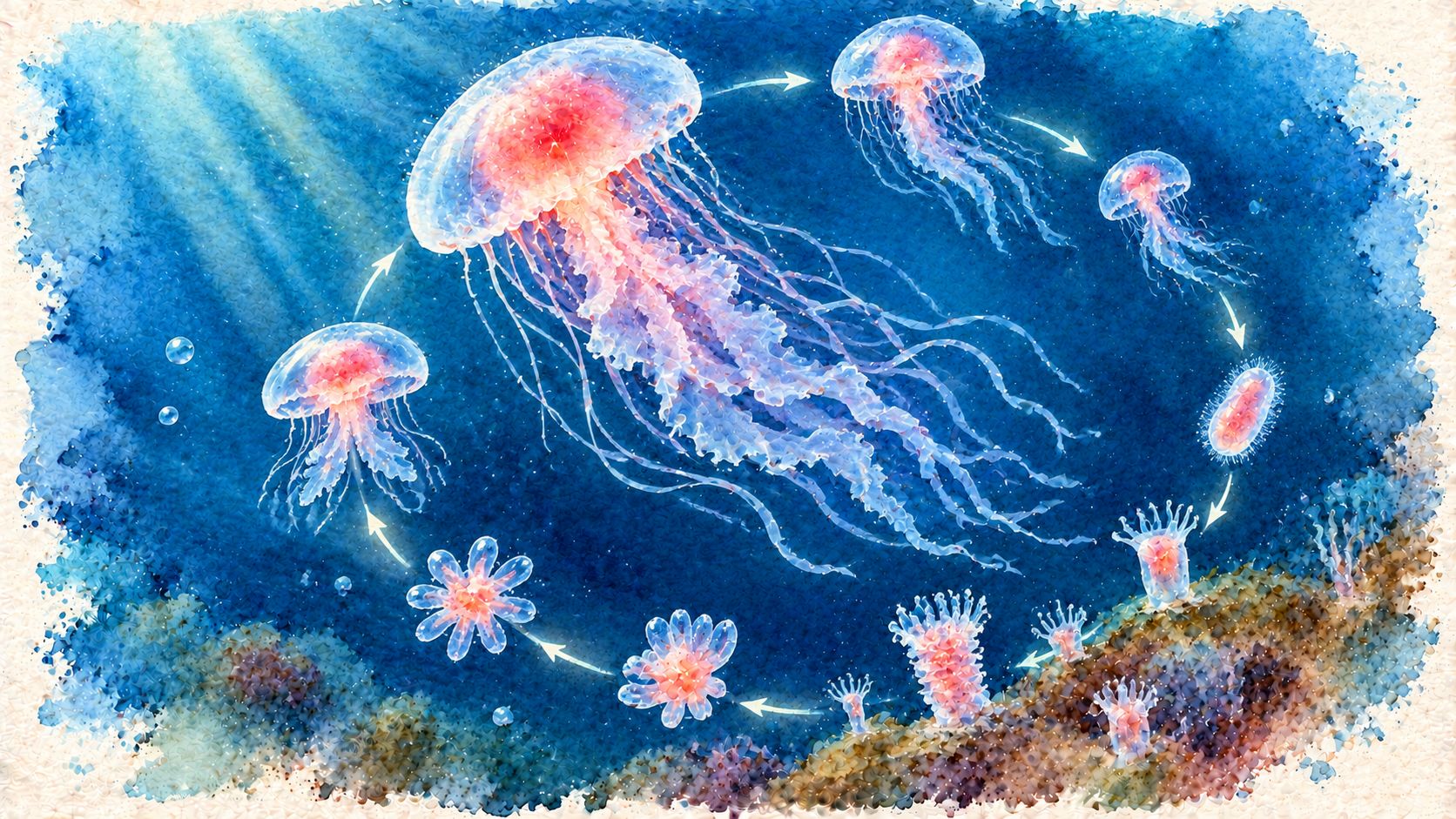
Jellyfish go through several life stages, starting as a tiny larva called a planula, then growing into a polyp attached to the seabed before becoming the familiar floating jellyfish.
Jellyfish sting using thousands of tiny cells called nematocysts, which fire like microscopic harpoons faster than almost anything else in nature.
Even a dead jellyfish washed up on the beach can still sting.
The box jellyfish has 24 eyes, and some of them even have lenses, like ours.
The Australian box jellyfish is one of the most venomous animals on Earth, and its sting can kill a person within minutes.
The tiny Irukandji jellyfish is only about the size of a fingernail, but its sting can cause severe pain and serious illness.
The lion's mane jellyfish is one of the longest animals in the world, with tentacles that can stretch more than 30 metres.
Comb jellies and salps look a lot like jellyfish, but they are actually completely different kinds of animals.
The upside-down jellyfish lies on the seabed with its tentacles facing up. In 2017, it became the first animal without a brain shown to sleep.
A glowing jellyfish helped win a Nobel Prize
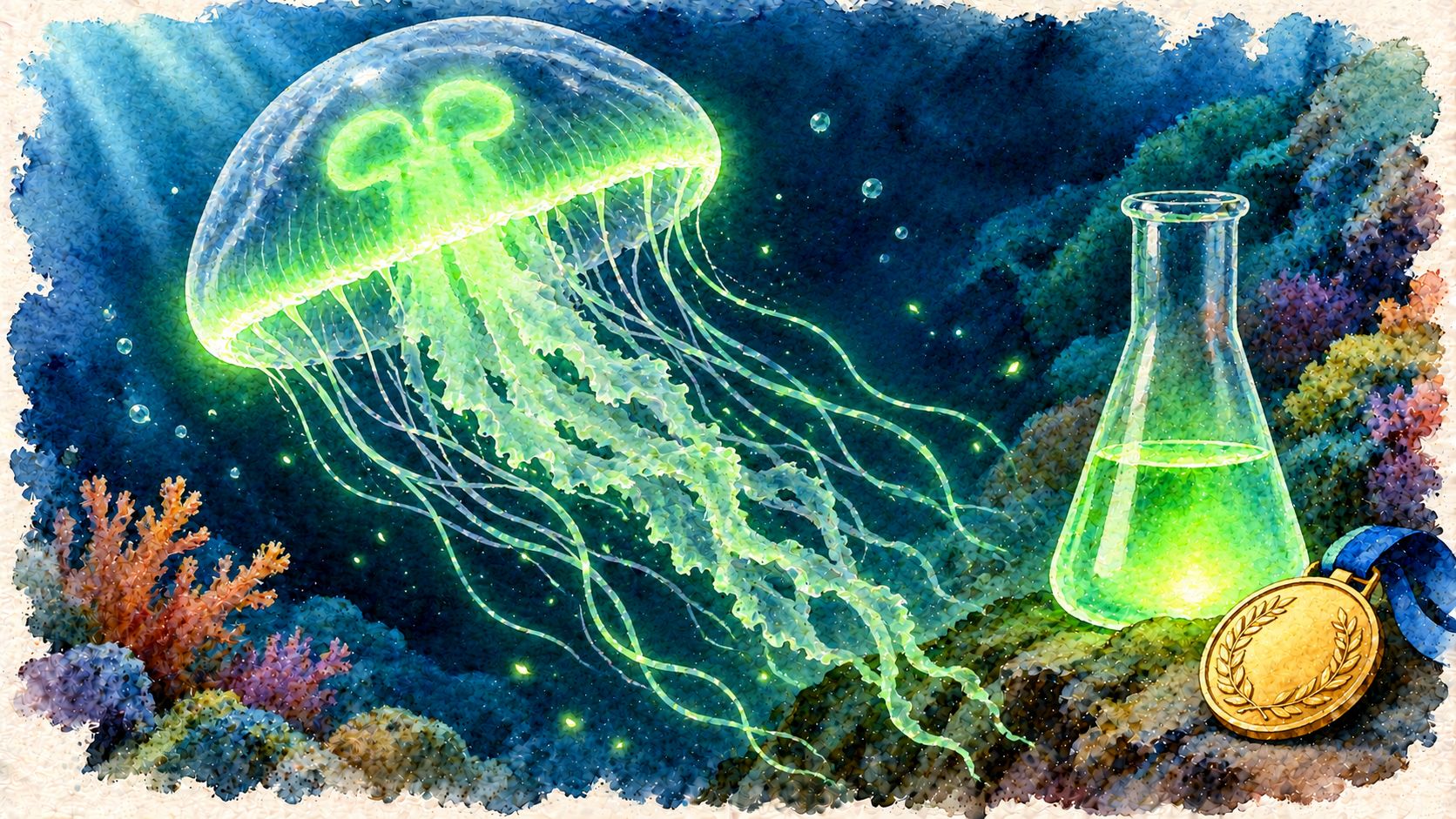
Many jellyfish can glow in the dark, a natural light called bioluminescence. The crystal jelly of the Pacific Ocean contains a special protein that glows green under blue light. Scientists learned how to use this "green fluorescent protein" to light up cells, genes and diseases inside living things, letting them watch processes they could never see before. In 2008, the scientists behind this discovery were awarded the Nobel Prize in Chemistry.
In 1991, thousands of tiny jellyfish polyps were sent into space aboard the Space Shuttle Columbia to study how weightlessness affects their development.
In Jellyfish Lake on the island of Palau, millions of golden jellyfish drift through the water, and their stings are so mild that people can swim among them.
Leatherback turtles and ocean sunfish feast on jellyfish, eating huge numbers of them.
In parts of Asia, including China, Japan and Korea, dried jellyfish is eaten as a delicacy.
Aquariums keep jellyfish in special round tanks that keep the water gently flowing, so the delicate jellies don't get trapped in corners or against the sides.
Sources and Further Reading
- Monterey Bay Aquarium
- Smithsonian Ocean
- NOAA Ocean Service
- Australian Institute of Marine Science
- The Nobel Prize (nobelprize.org)
- Encyclopaedia Britannica
Frequently asked questions
Are jellyfish actually fish?
No. Jellyfish are not fish. They are cnidarians, a group of simple animals that also includes corals and sea anemones.
Do jellyfish have brains?
No. Jellyfish have no brain, heart, bones or blood. They use a simple network of nerves to sense touch, light and movement.
Can jellyfish really live forever?
One species, Turritopsis dohrnii, can turn back into its earliest life stage when it is old or injured and start again. This is why it is called the "immortal jellyfish".
What is the most dangerous jellyfish?
The Australian box jellyfish is one of the most venomous animals in the world. Its sting can kill a person within minutes if not treated quickly.
Can a dead jellyfish sting you?
Yes. A jellyfish's stinging cells can still fire even after it has died, so it's best not to touch jellyfish washed up on the beach.
What is the largest jellyfish?
The lion's mane jellyfish is one of the largest, with tentacles that can stretch more than 30 metres long.
More Fun Facts