25 Fun Facts
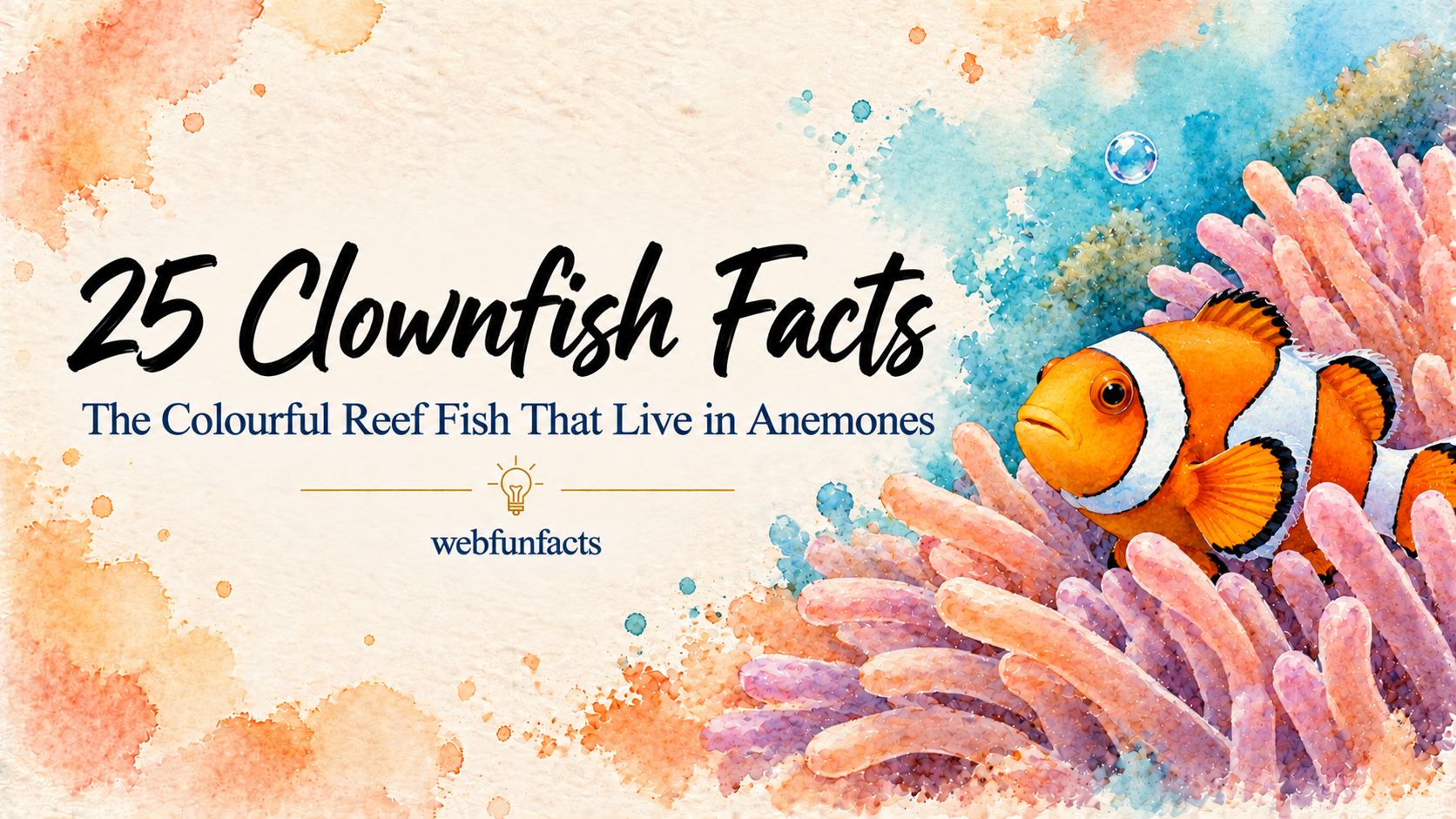
25 Clownfish Facts: The Colourful Reef Fish That Live in Anemones
Bright orange with bold white stripes, the clownfish is one of the most recognisable fish in the ocean. It lives where few other fish dare to go: right inside the stinging tentacles of a sea anemone.
Here are 25 fascinating facts about clownfish, from their clever partnership with anemones to the surprising way they can change from male to female.
Clownfish Facts
Clownfish are also known as anemonefish, because they live among sea anemones.
There are about 30 species of clownfish.
Clownfish belong to the damselfish family.
Not all clownfish are orange. Different species can be maroon, pink, yellow, brown or almost black.
The number of white bars on a clownfish varies by species, from none at all to three.
Clownfish live in the warm waters of the Indian and Pacific Oceans, including the Red Sea and Australia's Great Barrier Reef.
In India, clownfish can be found around the Andaman and Nicobar Islands, Lakshadweep and the Gulf of Mannar.
Clownfish are not found in the Atlantic Ocean or the Caribbean Sea.
Most clownfish grow only about 7 to 15 centimetres long.
Clownfish live safely among stinging anemones
Sea anemones have tentacles armed with stinging cells that can stun and catch small fish, but clownfish live among them without harm. A special layer of mucus on a clownfish's skin protects it from the stings. When a clownfish first moves into an anemone, it gently touches the tentacles bit by bit to get used to its new home. In return for this shelter, the clownfish chases away fish that try to eat the anemone, keeps it clean and helps feed it with scraps and nutrients from its waste.
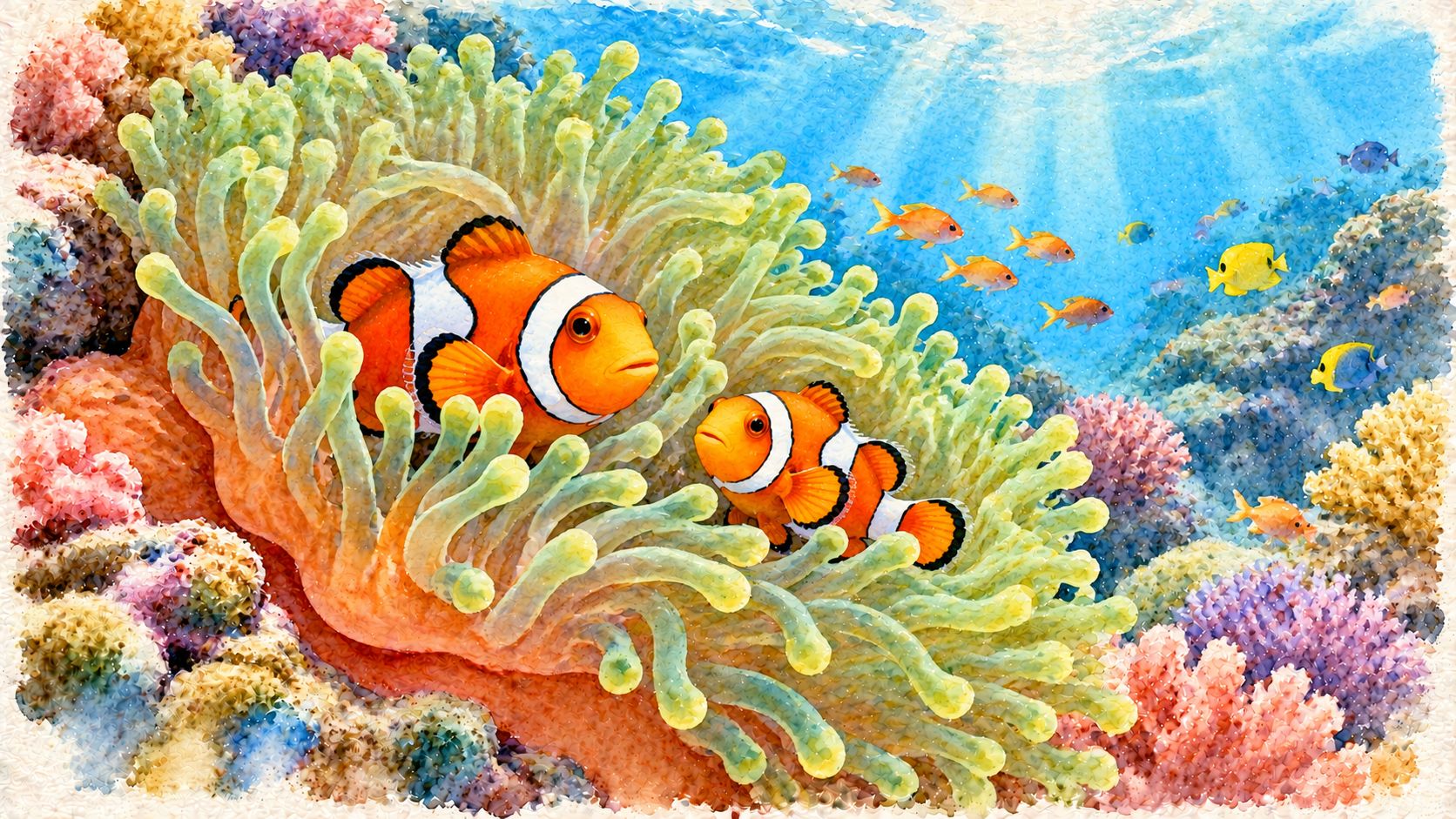
Only about ten species of sea anemone are known to host clownfish.
A clownfish rarely strays more than a few metres from its home anemone.
Without an anemone to hide in, a clownfish would be easy prey for larger fish.
At night, clownfish fan the anemone's tentacles with their fins, which may help bring it fresh, oxygen-rich water.
Clownfish eat plankton, algae and tiny crustaceans, as well as leftovers from the anemone's meals.
Clownfish make popping and clicking sounds, which they use to communicate and defend their territory.
A female clownfish lays hundreds of eggs at a time on a rock right next to the anemone.
The male guards the eggs and fans them with his fins to keep them clean and supplied with oxygen until they hatch, usually within one to two weeks.
After hatching, baby clownfish drift in the open ocean for a short time before using their sense of smell to find an anemone to live in.
Clownfish can change from male to female
All clownfish are born male. Each anemone is home to a group led by one large female and her breeding male partner, with smaller males below them. If the female dies, her male partner changes into a female and takes her place, and the next largest male becomes the new breeding male. This means that in real life, after Nemo's mother disappeared, his father Marlin would most likely have turned into a female.
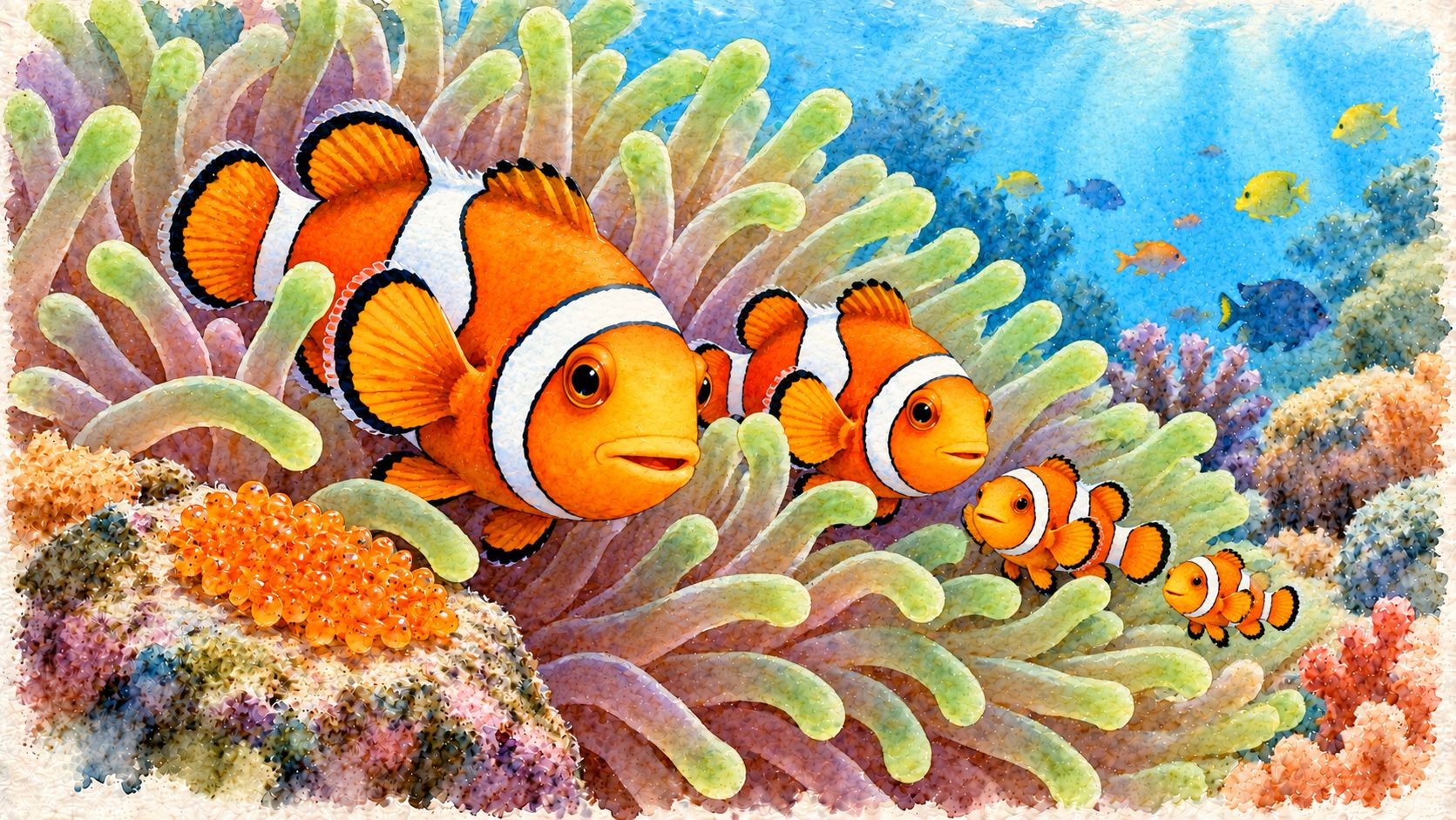
Clownfish groups have a strict size order, and smaller members can deliberately slow their growth to avoid challenging bigger fish and being driven out.
Wild clownfish usually live for around 6 to 10 years, but in aquariums they can live for more than 20 years.
The 2003 film Finding Nemo made clownfish hugely popular, which led to more being collected from the wild for home aquariums.
Clownfish were among the first marine fish to be bred successfully in captivity, and many aquarium clownfish today are captive-bred.
When warming seas cause anemones to bleach, the clownfish living in them can become stressed and lay fewer eggs.
Sources and Further Reading
- Encyclopaedia Britannica
- Australian Museum
- Great Barrier Reef Marine Park Authority
- Zoological Survey of India
- NOAA Ocean Service
- National Geographic
Frequently asked questions
Why don't clownfish get stung by anemones?
Clownfish have a special layer of mucus on their skin that protects them from the anemone's stinging cells. They also get used to their anemone by gently touching its tentacles.
Are all clownfish born male?
Yes. All clownfish are born male. If the dominant female in a group dies, her male partner changes into a female and the next largest male becomes the breeding male.
Where do clownfish live?
Clownfish live in warm coral reefs of the Indian and Pacific Oceans, including the Red Sea, the Great Barrier Reef and India's Andaman and Nicobar Islands and Lakshadweep.
What do clownfish eat?
Clownfish eat plankton, algae, tiny crustaceans and scraps of food left over from their anemone's meals.
How long do clownfish live?
Wild clownfish usually live for around 6 to 10 years. In aquariums, with good care, they can live for more than 20 years.
Is Nemo a real type of clownfish?
Yes. Nemo is based on the ocellaris clownfish, also called the false clown anemonefish, which is orange with three white bars.
More Fun Facts