25 Fun Facts
25 Turkey Facts: Surprising Secrets of a Bold, Bearded Bird
Turkeys are much more than a holiday meal. Wild turkeys can fly, sprint, change the colour of their heads and gobble loudly enough to be heard more than a kilometre away.
Here are 25 surprising facts about turkeys, from how they got their confusing name to the myth that Benjamin Franklin wanted them as America's national bird.
Turkey Facts
There are two species of turkey: the wild turkey of North America and the ocellated turkey of Mexico's Yucatán Peninsula and nearby Central America.
Turkeys belong to the same bird group as chickens, pheasants, quails and grouse.
All domestic turkeys come from wild turkeys that people in ancient Mexico domesticated more than 2,000 years ago.
An adult male turkey is called a tom or gobbler, a young male is a jake, a female is a hen and a baby is called a poult.
A group of turkeys is called a flock or, more unusually, a rafter.
The fleshy flap that hangs over a male turkey's beak is called a snood, and the flap under its chin is called a wattle.
A turkey's bare head can change colour, from red to white to blue, depending on its mood or level of excitement.
Female turkeys tend to prefer males with longer snoods, which can be a sign of good health.
Many male turkeys have a "beard", a tuft of stiff, hair-like feathers growing from the middle of their chest.
Turkeys are named after a country they don't come from
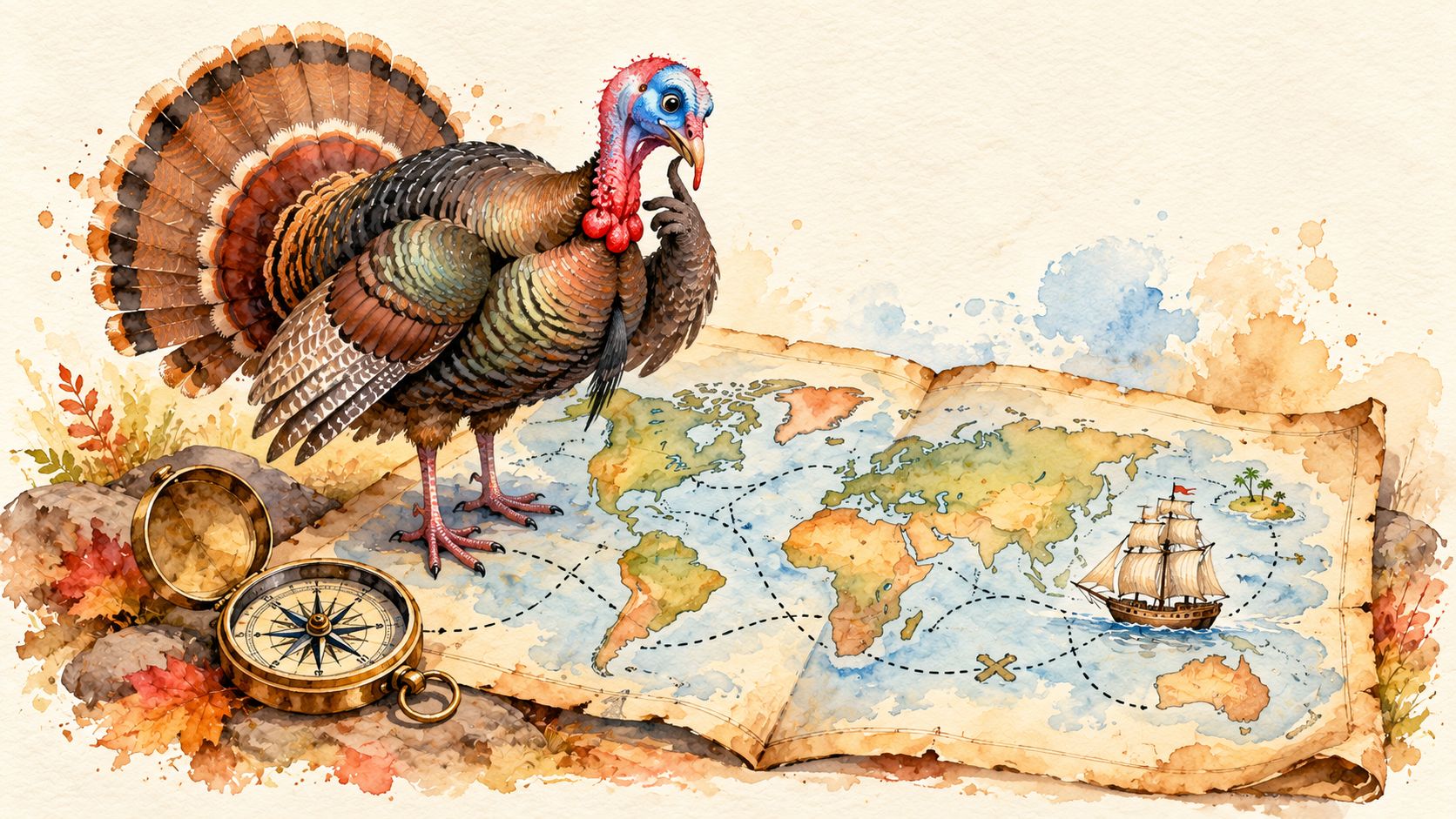
When turkeys were first brought to Europe from the Americas in the 1500s, people confused them with guinea fowl, which were imported through the Ottoman Empire and were known as "turkey birds". The name stuck to the new bird. Other countries got just as mixed up. In Turkish, the bird is called "hindi", meaning "from India". In French it is "dinde", which comes from "d'Inde" ("of India"). In many Indian languages, as well as Portuguese, it is called "peru", after another country it doesn't come from.
Only male turkeys gobble. Females make softer clucks, purrs and yelps.
A male turkey's gobble can be heard more than a kilometre away.
Turkeys have excellent eyesight. Their eyes on the sides of their heads give them a very wide field of view, and they can see in colour.
Wild turkeys can run at about 40 kilometres per hour.
Unlike most farm turkeys, wild turkeys can fly, reaching speeds of around 80 kilometres per hour in short bursts.
At night, wild turkeys fly up to roost in the branches of trees, where they are safer from predators.
An adult turkey has around 5,000 to 6,000 feathers.
Wild turkeys eat seeds, nuts, berries, leaves and insects, and sometimes even small lizards or frogs.
Male turkeys puff up their feathers, fan out their tails and strut around to impress females.
Benjamin Franklin didn't really want the turkey as America's national bird
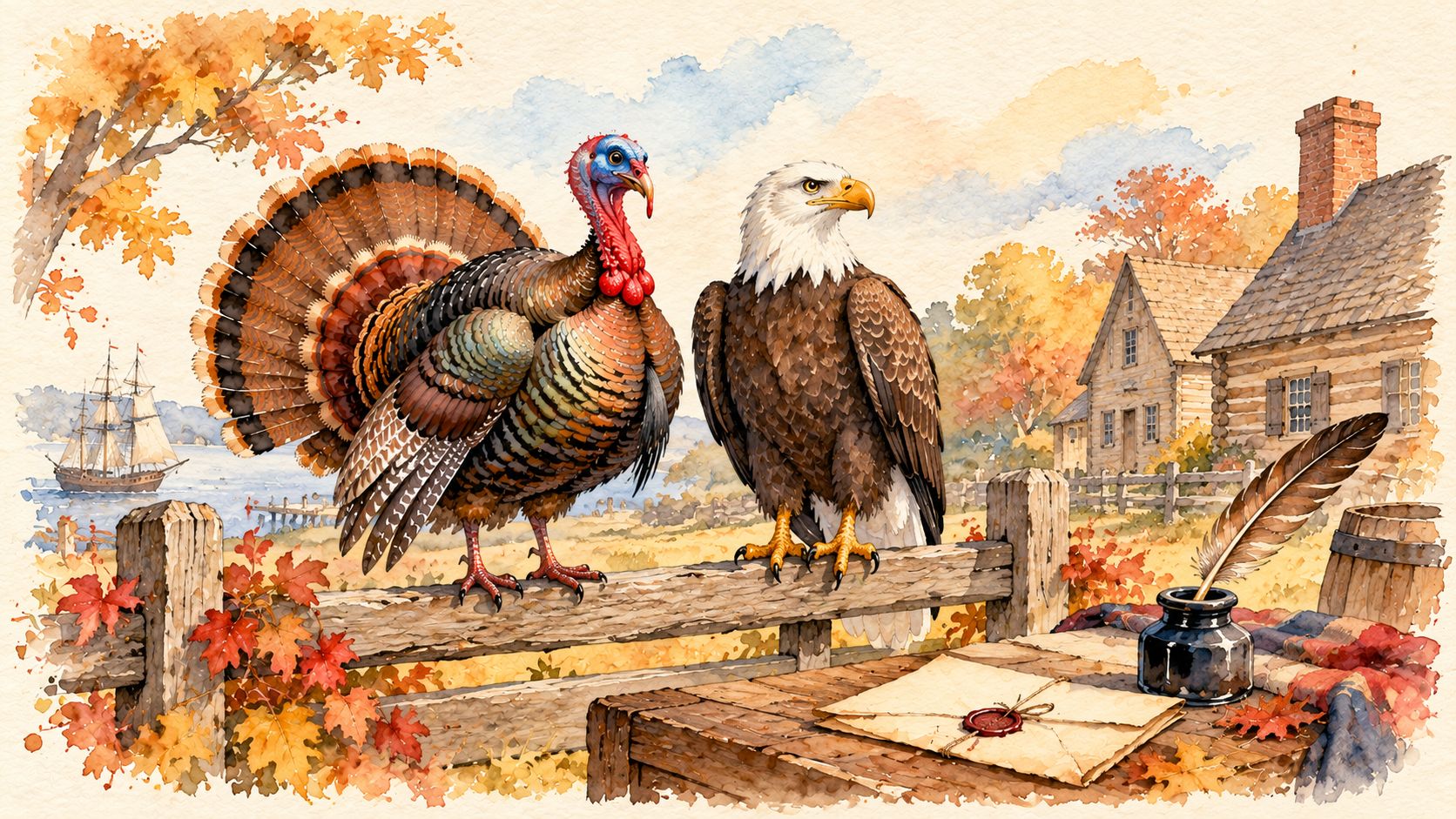
A popular story says that Benjamin Franklin wanted the turkey, not the bald eagle, to be the national bird of the United States. In reality, he never made that proposal. In a 1784 letter to his daughter, Franklin complained that the eagle on a new medal looked more like a turkey. He then joked that the turkey was "a much more respectable bird" than the eagle, which he called "a bird of bad moral character". The letter was private and playful, but it gave rise to a lasting myth.
The ocellated turkey has a bright blue head with orange bumps and colourful eye-like spots on its tail feathers, a bit like a peacock.
By the early 1900s, hunting and habitat loss had wiped out wild turkeys across much of North America. Conservation efforts have since brought their numbers back to millions.
A hen usually lays around 10 to 12 eggs, which hatch after about 28 days.
Baby turkeys can leave the nest and follow their mother to find food within a day of hatching.
In 1969, the Apollo 11 astronauts ate roast turkey from foil pouches as part of their first meal on the Moon.
Sources and Further Reading
- National Wild Turkey Federation
- Smithsonian Institution
- National Archives (USA)
- NASA
- Encyclopaedia Britannica
- National Geographic
Frequently asked questions
Why is a turkey called a turkey?
Europeans first confused the bird with guinea fowl, which were imported through the Ottoman Empire, then often called Turkey. The name "turkey bird" stuck to the new bird from the Americas.
Can turkeys fly?
Wild turkeys can fly short distances, reaching around 80 kilometres per hour. Most farm turkeys have been bred to be too heavy to fly.
What is a male turkey called?
An adult male turkey is called a tom or gobbler, and a young male is called a jake. Females are hens, and babies are called poults.
Why do turkeys gobble?
Male turkeys gobble mainly to attract females and announce their presence to other males. Their gobbles can be heard more than a kilometre away.
Did Benjamin Franklin want the turkey as the national bird?
No. That is a myth. In a private letter, Franklin joked that the turkey was more respectable than the bald eagle, but he never proposed it as the national bird.
How long do turkeys live?
Wild turkeys usually live for around 3 to 5 years, while domestic turkeys kept as pets or on small farms can live up to around 10 years.
More Fun Facts