25 Fun Facts
25 Wolf Facts: The Wild Ancestors of Our Dogs
Wolves have fascinated and frightened people for thousands of years. They appear in myths, fairy tales and legends, but the real animals are even more interesting: loyal family members, tireless travellers and the wild ancestors of every pet dog on Earth.
Here are 25 fascinating facts about wolves, from the truth about "alpha" wolves to India's own ancient wolves.
Wolf Facts
The grey wolf is the largest wild member of the dog family.
Its scientific name is Canis lupus.
All domestic dogs are descended from ancient wolves, which began living alongside humans more than 15,000 years ago.
Grey wolves once lived across more of the world than any other land mammal except humans, spreading across North America, Europe and Asia.
Adult grey wolves usually weigh between about 30 and 80 kilograms. Wolves in colder northern regions tend to be the largest.
The red wolf of the south-eastern United States is one of the world's most endangered wolves, with only a small number left in the wild.
The Ethiopian wolf, which lives high in the mountains of Ethiopia, is Africa's most endangered carnivore, with only around 500 left.
Wolf pups are born blind and deaf in an underground den, usually in litters of about four to six.
Wolf pups are born with blue eyes, which turn yellow or amber as they grow.
The "alpha wolf" idea is a myth
For decades, people believed wolf packs were ruled by fierce "alpha" wolves that fought their way to the top. This idea came largely from early studies of unrelated wolves kept together in captivity. Scientists who later studied wild wolves found that most packs are simply families: a mother and father with their pups from the past few years. The parents lead the pack because they are the parents, not because they won fights. Even the scientist who helped popularise the "alpha" term later asked people to stop using it.
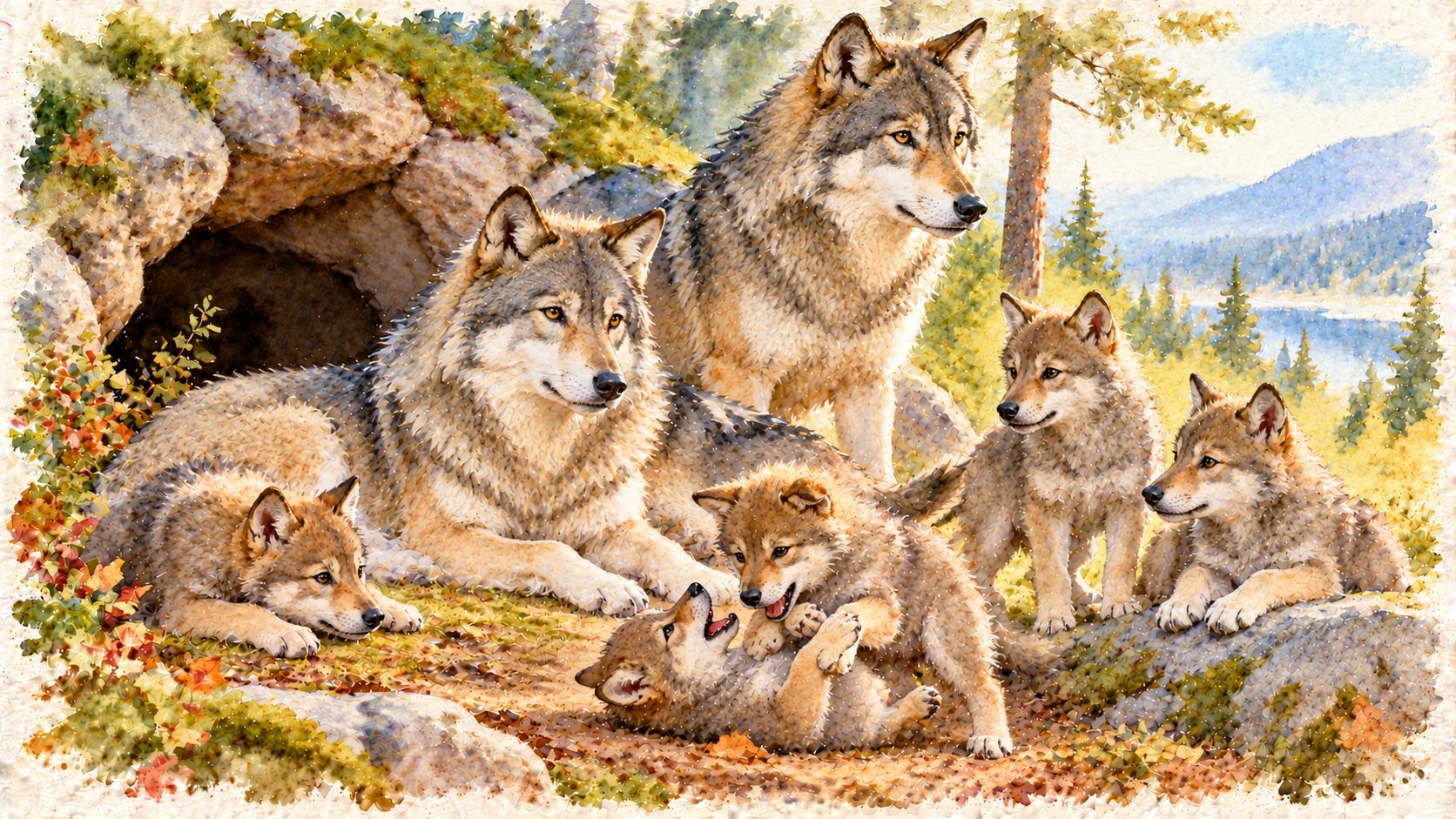
Most wolf packs have around 5 to 10 members, though some can grow to more than 20.
The whole family helps raise the pups, bringing them food and keeping watch.
Wolves howl to keep in touch with their pack, gather together and warn rival wolves to stay away.
A wolf's howl can be heard several kilometres away, especially on quiet nights in open country.
Despite the legend, wolves don't howl at the Moon. They simply point their heads up so their howl carries farther.
Wolves have an excellent sense of smell and can detect prey from a long way off.
Wolves mainly hunt large animals such as deer, elk and moose, working together as a team to bring them down.
A hungry wolf can eat up to about 9 kilograms of meat in one meal, which is where the phrase "wolfing down food" comes from.
Wolves can sprint at around 50 to 60 kilometres per hour in short bursts.
India is home to some of the world's oldest wolf lineages
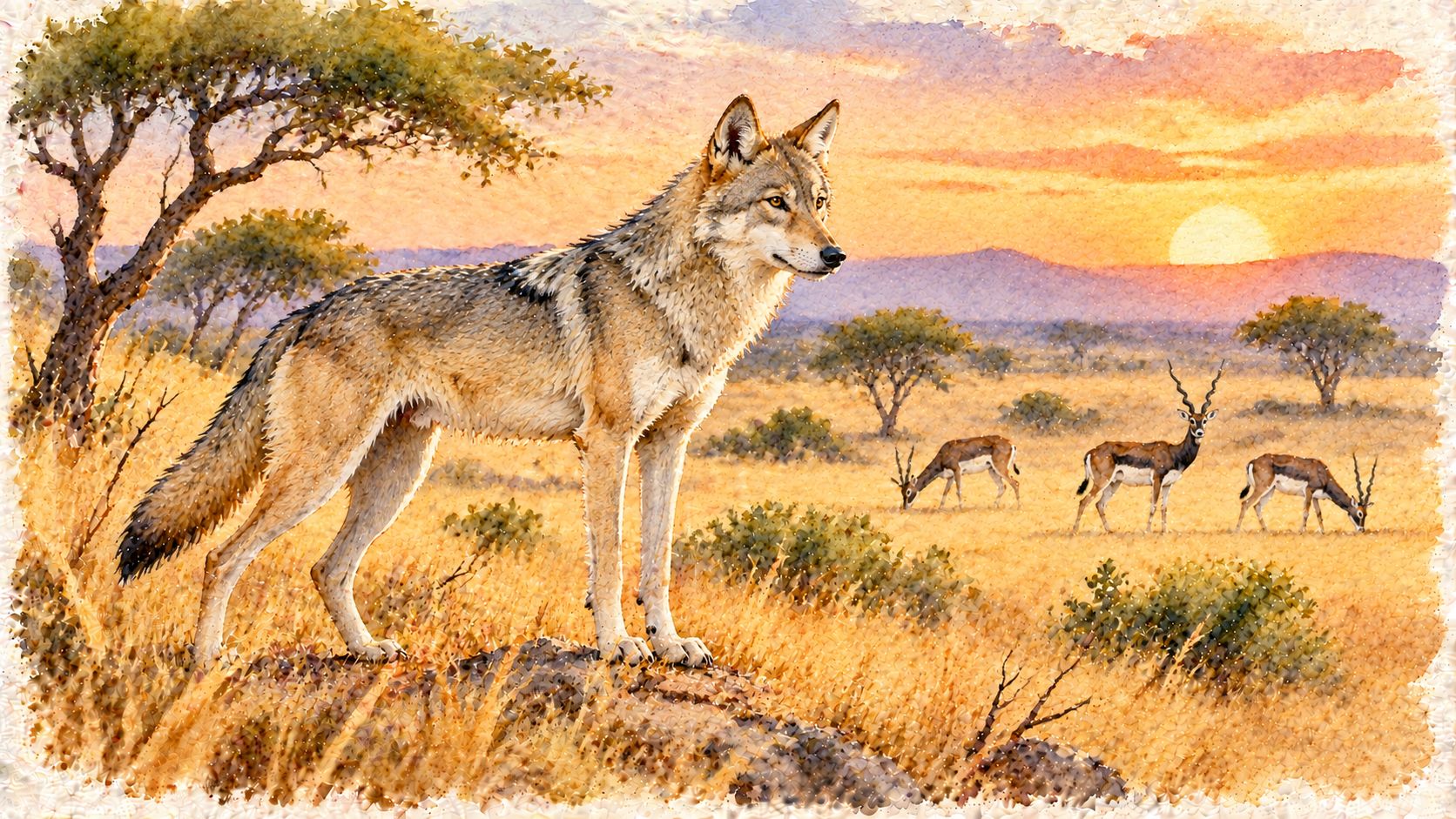
India has its own wolves, including the Indian grey wolf, which lives in the dry grasslands, scrublands and farmland of central and western India, and the Himalayan wolf of the high mountains. Studies suggest both belong to some of the oldest wolf lineages on Earth. The Indian wolf is smaller and lighter than wolves of colder climates, with a thinner coat suited to the heat. Places such as Velavadar Blackbuck National Park in Gujarat are among the best spots to see wild wolves in India.
In Rudyard Kipling's The Jungle Book, the boy Mowgli is raised by a family of wolves in the forests of central India.
In 2011, a young wolf known as OR-7 travelled more than 1,600 kilometres from Oregon into California, becoming the first wild wolf seen in California in decades.
When wolves were brought back to Yellowstone National Park in the United States in 1995, they helped change the whole ecosystem, keeping elk on the move and allowing trees along rivers to grow back.
Wild wolves often live for around 5 to 6 years, though some reach 10 or more.
Wolves usually avoid people, and attacks on humans are very rare.
Sources and Further Reading
- Wildlife Institute of India
- International Wolf Center
- U.S. National Park Service
- IUCN Red List of Threatened Species
- Encyclopaedia Britannica
- National Geographic
Frequently asked questions
Are dogs descended from wolves?
Yes. All domestic dogs descend from ancient wolves that began living alongside humans more than 15,000 years ago.
Is there really an alpha wolf?
Not in the way people once thought. Most wild wolf packs are families, led by the parents, rather than groups ruled by a dominant "alpha" that fought its way to the top.
Why do wolves howl?
Wolves howl to stay in touch with their pack, bring members together and warn rival wolves away from their territory. They do not howl at the Moon.
How big do wolves get?
Adult grey wolves usually weigh between about 30 and 80 kilograms. Wolves in colder northern regions are generally the largest.
Are there wolves in India?
Yes. India is home to the Indian grey wolf, found in grasslands and scrublands of central and western India, and the Himalayan wolf of the high mountains.
Are wolves dangerous to humans?
Wolves are wild animals and should be respected, but they usually avoid people. Attacks on humans are very rare.
More Fun Facts