25 Fun Facts
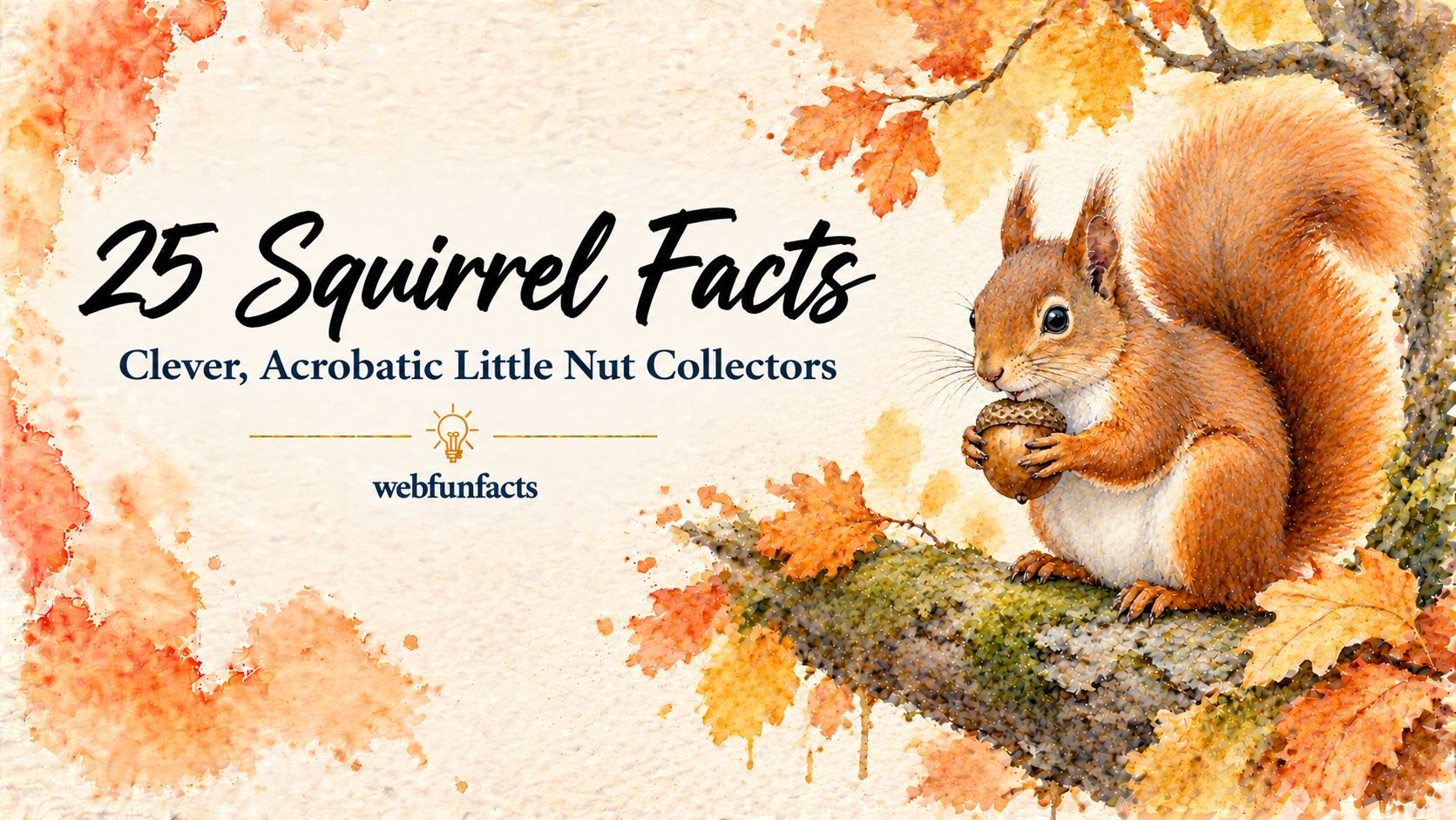
25 Squirrel Facts: Clever, Acrobatic Little Nut Collectors
Squirrels are among the most familiar wild animals in the world, darting up trees, leaping between branches and busily collecting food. But these lively little animals are also surprisingly clever, with some sneaky tricks and amazing abilities.
Here are 25 fun facts about squirrels, from their talent for fake hiding food to the giant, colourful squirrels of India's forests.
Squirrel Facts
There are around 280 species of squirrel in the world.
The squirrel family includes tree squirrels, flying squirrels and ground squirrels, as well as chipmunks, marmots and prairie dogs.
Squirrels are native to every continent except Australia and Antarctica.
A small population of Indian palm squirrels was introduced to Perth in Australia more than a century ago.
The word "squirrel" comes from an ancient Greek word meaning "shadow tail", because squirrels often sit in the shade of their own bushy tails.
Like other rodents, a squirrel's front teeth never stop growing, so it has to keep gnawing to wear them down.
Squirrels can turn their back feet around, which lets them climb down trees headfirst.
A squirrel can leap up to about ten times its own body length.
A squirrel's bushy tail helps it balance, acts as a parachute when it falls, shades it from the sun and keeps it warm like a blanket.
Squirrels pretend to bury food to fool thieves
Many squirrels store food for later by burying nuts in hundreds of different spots, which is called scatter hoarding. But other squirrels and birds often watch and try to steal these hidden snacks. Scientists have found that when a grey squirrel thinks it is being watched, it sometimes digs a hole and pretends to bury a nut, while secretly keeping it in its mouth. It then hides the real nut somewhere else. This clever trick is called deceptive caching.
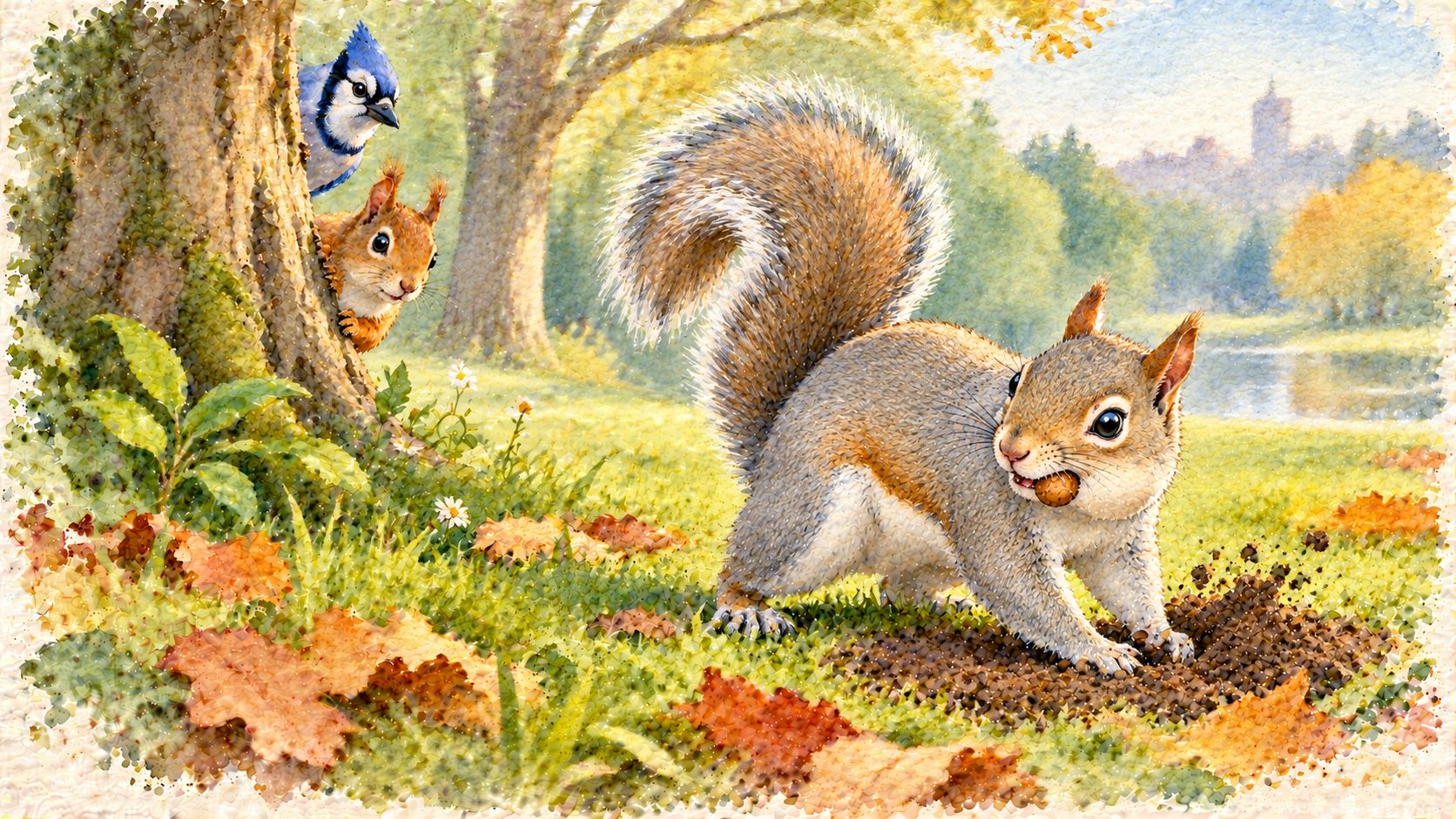
Squirrels remember where they hid many of their nuts using memory and smell, but they forget some of them.
The nuts squirrels forget can sprout into new trees, so squirrels help plant forests.
Some squirrels sort the nuts they bury by type, keeping similar nuts together, much like organising a cupboard.
Squirrels communicate with each other using chattering calls, squeaks and quick flicks of their tails.
Baby squirrels are born blind and hairless, and depend completely on their mother for the first few weeks.
Flying squirrels don't actually fly. They glide between trees using a furry flap of skin stretched between their front and back legs.
Large flying squirrels can glide for long distances, sometimes more than 100 metres in a single glide.
In 2019, scientists discovered that some North American flying squirrels glow pink under ultraviolet light.
During hibernation, the Arctic ground squirrel's body temperature can drop below freezing, the lowest recorded body temperature of any mammal.
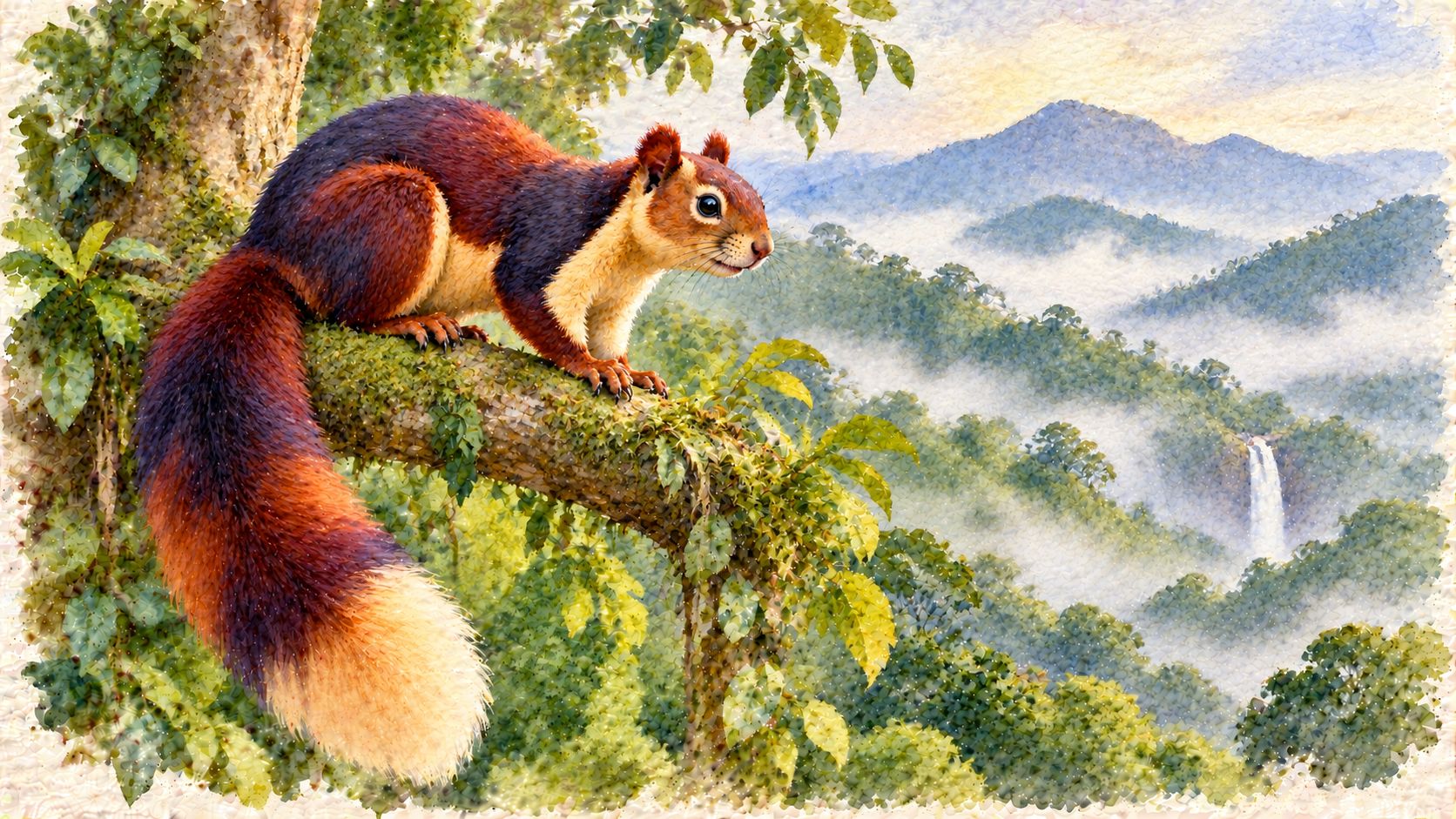
India is home to a giant rainbow-coloured squirrel
The Indian giant squirrel, also called the Malabar giant squirrel, lives in the forests of the Western Ghats, central India and parts of eastern India. Its fur comes in striking shades of maroon, purple, orange and cream, making it one of the most colourful mammals in the world. Including its long, fluffy tail, it can measure about a metre from head to tail tip. It can leap around 6 metres between trees, and it is the state animal of Maharashtra, where it is known as the "Shekru".
India's familiar three-striped palm squirrel is found in towns, gardens and parks across the country.
A popular Indian legend says Lord Rama gave the palm squirrel its stripes when he gently stroked its back, to thank it for helping build a bridge to Lanka.
Grey squirrels from North America were brought to Britain in the 1870s, and they have since replaced native red squirrels in many areas.
Squirrels can run at around 20 to 25 kilometres per hour.
Wild squirrels usually live for only a few years, although they can live much longer in protected settings.
Sources and Further Reading
- Maharashtra Forest Department
- Bombay Natural History Society (BNHS)
- University of California, Berkeley
- Smithsonian's National Zoo & Conservation Biology Institute
- Encyclopaedia Britannica
- National Geographic
Frequently asked questions
How many types of squirrels are there?
There are around 280 species of squirrel, including tree squirrels, flying squirrels, ground squirrels, chipmunks, marmots and prairie dogs.
Do squirrels remember where they bury their nuts?
Squirrels remember many of their hiding spots using memory and smell, but they forget some. The forgotten nuts can grow into new trees.
Can flying squirrels really fly?
No. Flying squirrels glide between trees using a furry flap of skin stretched between their front and back legs.
What is the biggest squirrel in India?
The Indian giant squirrel, or Malabar giant squirrel, is the biggest. It can measure about a metre from head to tail tip and is the state animal of Maharashtra.
Why does the Indian palm squirrel have stripes?
Scientifically, its stripes help it blend in among branches and leaves. A popular Indian legend says Lord Rama gave the squirrel its stripes by stroking its back.
How do squirrels climb down trees headfirst?
Squirrels can rotate their back feet so their claws point backwards, letting them grip the bark as they climb down headfirst.
More Fun Facts