25 Fun Facts
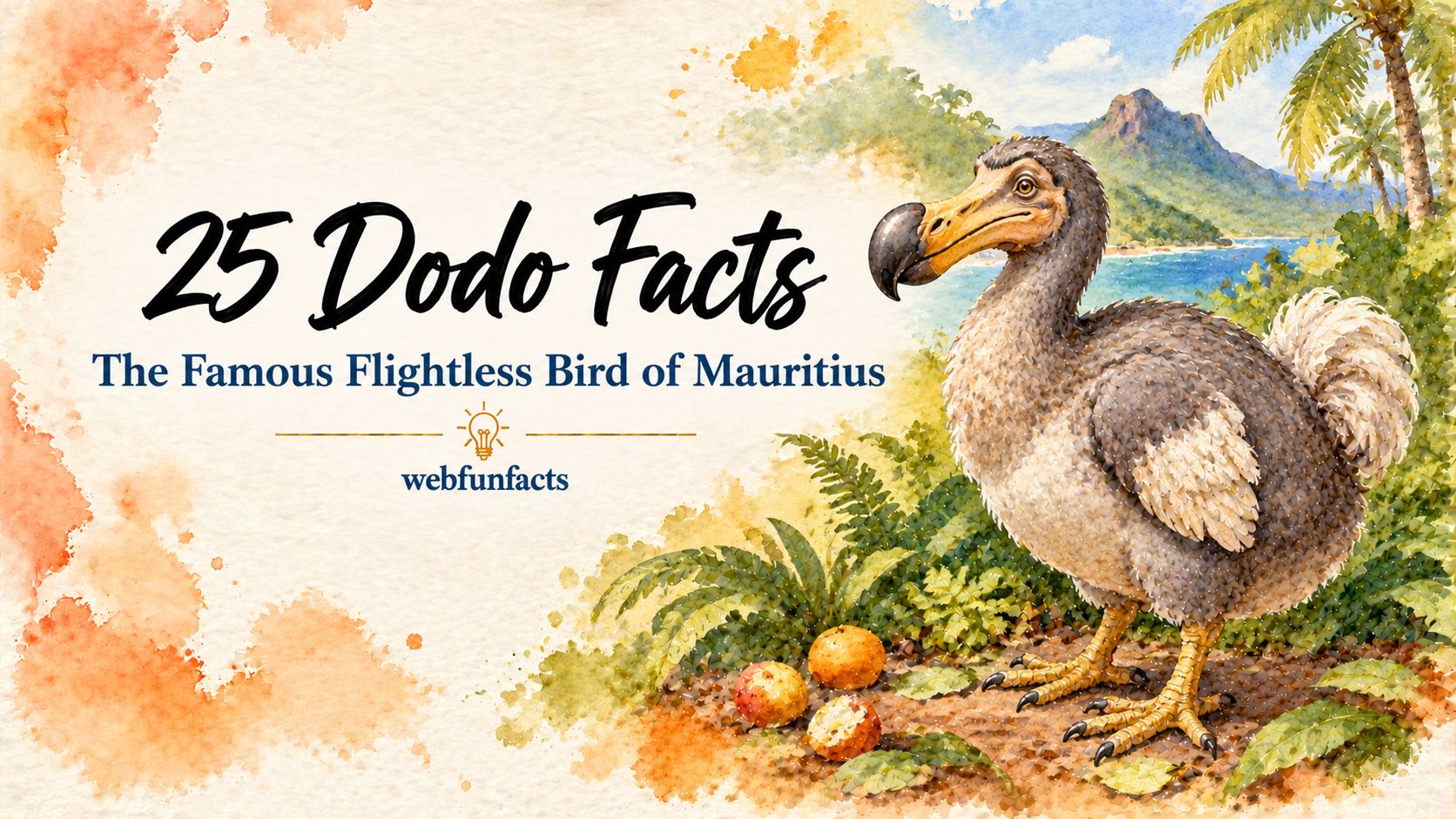
25 Dodo Facts: The Famous Flightless Bird of Mauritius
The dodo is one of the most famous extinct animals in the world. This large, flightless bird lived peacefully on a remote island until humans arrived, and within less than a century it was gone forever.
Here are 25 fascinating facts about the dodo, from its surprising relatives to a rare painting made at a Mughal emperor's court.
Dodo Facts
The dodo lived only on Mauritius, an island in the Indian Ocean, east of Madagascar.
It was a large, flightless bird that stood about 1 metre tall.
Scientists now think a wild dodo weighed around 10 to 18 kilograms. Many old drawings show much fatter birds, probably because they were based on overfed captive dodos.
The dodo had grey-brown feathers, a big hooked beak, strong yellow legs and a small tuft of curly tail feathers.
Over thousands of years, with no predators on the island, the dodo's ancestors lost the ability to fly.
The dodo was a giant relative of pigeons and doves.
Its closest extinct relative was the Rodrigues solitaire, another flightless bird from a nearby island, which also died out.
Dodos mainly ate fallen fruits, seeds and nuts, and swallowed stones to help grind up tough food in their stomachs.
A dodo laid a single egg in a simple nest on the ground.
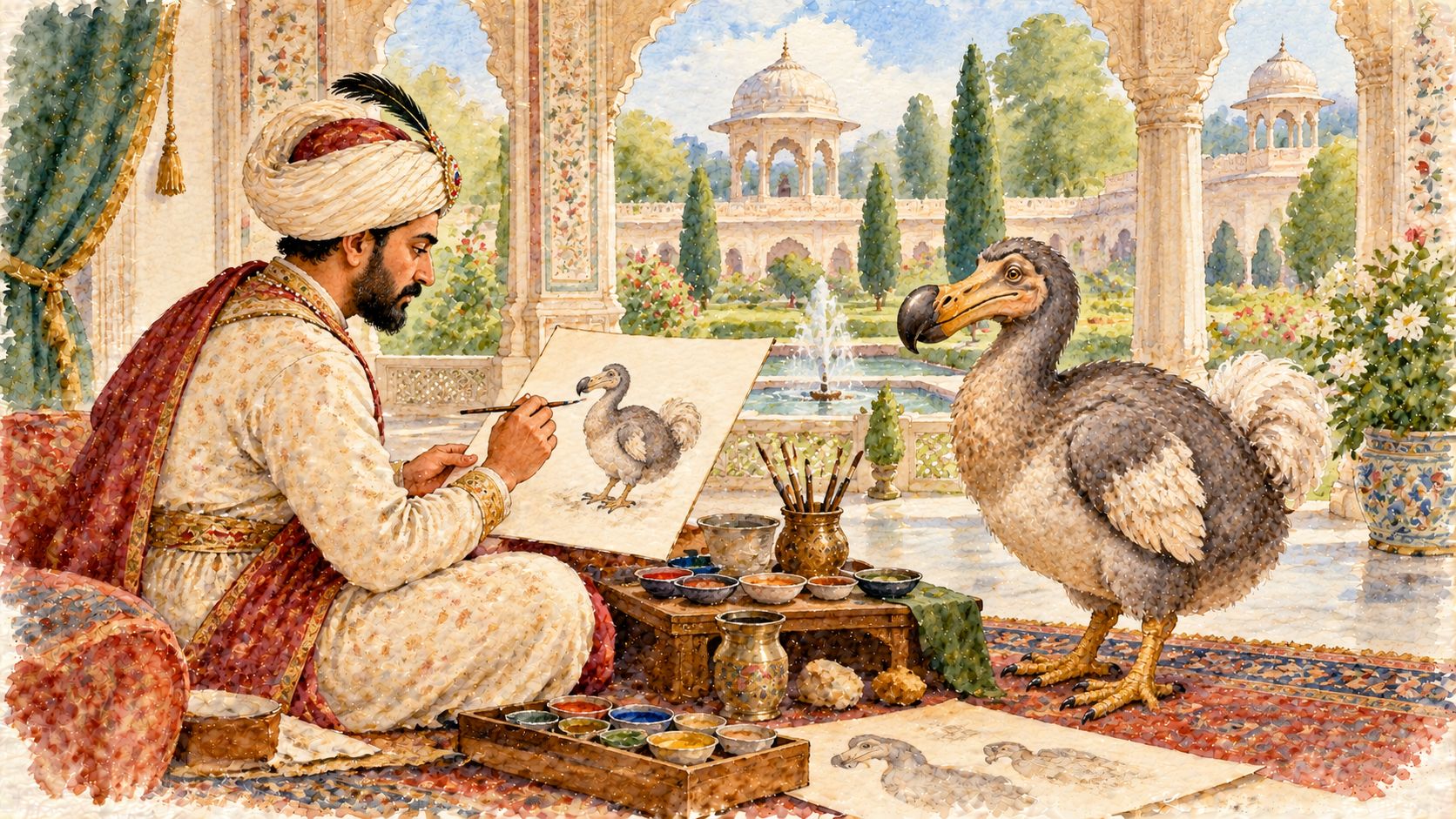
A Mughal artist painted one of the best pictures of a dodo
In the early 1600s, a few live dodos were taken from Mauritius on ships, and at least one reached the court of the Mughal emperor Jahangir in India, probably through the port of Surat. Around 1625, the famous court painter Ustad Mansur, known for his detailed paintings of animals and birds, painted it. His colourful painting is considered one of the most accurate pictures of a living dodo ever made. Today, it is kept in a museum in St Petersburg, Russia.
Dutch sailors made the first clear written record of the dodo in 1598, when they landed on Mauritius.
Dodos had never seen humans before, so they weren't afraid of people and were easy to catch.
The Dutch sailors called the dodo "walghvogel", meaning "disgusting bird", because they found its meat tough and unpleasant.
The origin of the name "dodo" isn't certain. It may come from a Dutch word meaning "sluggard" or "fat bottom", or from the Portuguese word "doudo", meaning "fool".
Humans hunted dodos, but the biggest threat came from the animals they brought with them. Pigs, rats, dogs and monkeys ate dodo eggs and chicks.
Forests on Mauritius were also cut down, destroying much of the dodo's home.
The last widely accepted sighting of a dodo was in 1662, less than 70 years after it was first recorded.
The dodo is one of the first animals known to have been wiped out by human activity, which made it a symbol of extinction.
The phrase "as dead as a dodo" means something is completely gone or out of date.
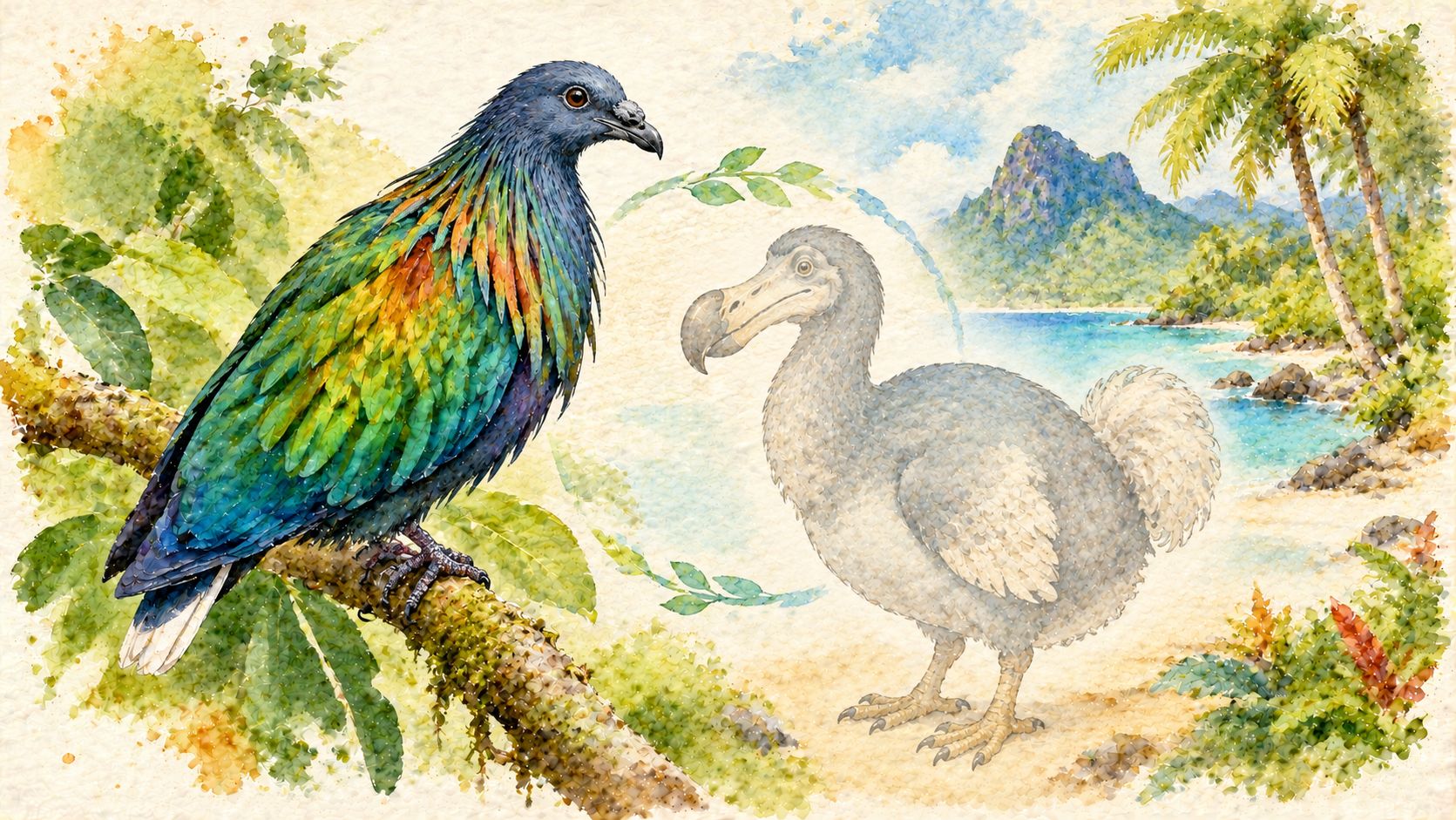
The dodo's closest living relative lives in India's Nicobar Islands
DNA studies have shown that the dodo's closest living relative is the Nicobar pigeon. This beautiful bird has shimmering green and copper feathers and lives on small islands across Southeast Asia, including India's Andaman and Nicobar Islands. The two birds look very different, but they share a common ancestor. Scientists think the dodo's ancestors were pigeons that flew across the ocean to Mauritius millions of years ago, then grew larger and lost the ability to fly.
The only surviving soft tissue from a dodo, a dried head and foot, is kept at the Oxford University Museum of Natural History in England.
In 1865, many dodo bones were found in a swamp in Mauritius called Mare aux Songes, helping scientists rebuild complete skeletons.
A dodo appears as a character in Lewis Carroll's 1865 book Alice's Adventures in Wonderland. It's thought that Carroll, whose real name was Charles Dodgson, saw himself in the dodo.
The dodo appears on the coat of arms of Mauritius and is the country's national symbol.
A popular idea that a Mauritian tree needed dodos to help its seeds grow has been questioned by later studies, and scientists no longer think the tree depended on the dodo.
Sources and Further Reading
- Natural History Museum, London
- Oxford University Museum of Natural History
- Mauritian Wildlife Foundation
- Smithsonian Institution
- Encyclopaedia Britannica
- National Geographic
Frequently asked questions
Where did the dodo live?
The dodo lived only on Mauritius, an island in the Indian Ocean east of Madagascar.
When did the dodo become extinct?
The last widely accepted sighting of a dodo was in 1662, less than 70 years after Dutch sailors first recorded it in 1598.
Why did the dodo go extinct?
Humans hunted dodos, but the main causes were animals they brought to Mauritius, such as pigs, rats, dogs and monkeys, which ate dodo eggs and chicks, along with the destruction of its forest home.
What is the dodo's closest living relative?
The dodo's closest living relative is the Nicobar pigeon, which lives on islands across Southeast Asia, including India's Andaman and Nicobar Islands.
Could the dodo fly?
No. The dodo was a flightless bird. Its ancestors lost the ability to fly because there were no predators on Mauritius.
Is there a painting of a real dodo?
Yes. Around 1625, Ustad Mansur, a court artist of the Mughal emperor Jahangir, painted a live dodo. His painting is considered one of the most accurate pictures of a living dodo.
More Fun Facts