25 Fun Facts
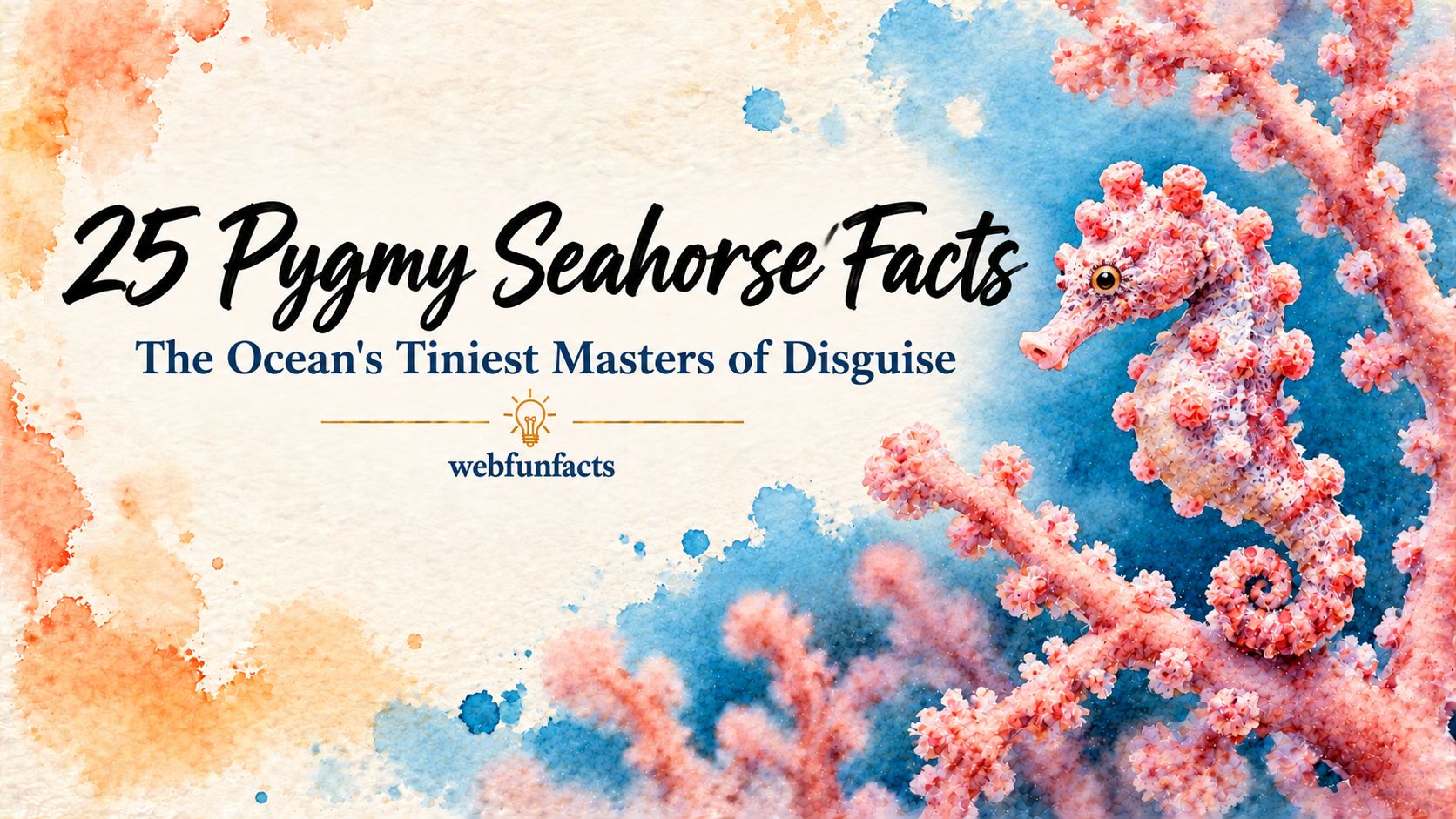
25 Pygmy Seahorse Facts: The Ocean's Tiniest Masters of Disguise
Pygmy seahorses are so tiny and so perfectly camouflaged that scientists didn't even know they existed until 1969. Smaller than a fingernail, they spend their lives clinging to coral, blending in so well that even experienced divers can swim right past them.
Here are 25 amazing facts about pygmy seahorses, from their accidental discovery to the dads that carry the babies.
Pygmy Seahorse Facts
Pygmy seahorses are among the smallest seahorses in the world. Most are under about 2.5 centimetres long.
Satomi's pygmy seahorse, found in Indonesia, is one of the tiniest of all, at only about 1.4 centimetres long, smaller than a fingernail.
There are several species of pygmy seahorse, and new ones are still being discovered.
Pygmy seahorses live mainly in the warm coral reefs of the western Pacific, especially the "Coral Triangle" around Indonesia, the Philippines and Papua New Guinea.
Despite their horse-like heads, seahorses are true bony fish. They belong to the same family as pipefish and sea dragons.
The scientific name for seahorses, Hippocampus, comes from Greek words meaning "horse" and "sea monster".
Pygmy seahorses usually live at depths of around 15 to 40 metres.
Most pygmy seahorses spend nearly their whole lives clinging to just one coral or sea fan.
They hold on tightly using their curly, grasping tails, which can wrap around branches like a monkey's tail.
The first pygmy seahorse was discovered by accident
In 1969, a scientist named Georges Bargibant was collecting a sea fan coral off New Caledonia in the South Pacific for a museum. Only after he brought it to the surface and studied it closely did he notice two tiny seahorses clinging to the branches. They matched the coral's colour and bumpy texture so perfectly that no one had noticed them before. The species was named Bargibant's pygmy seahorse in his honour.
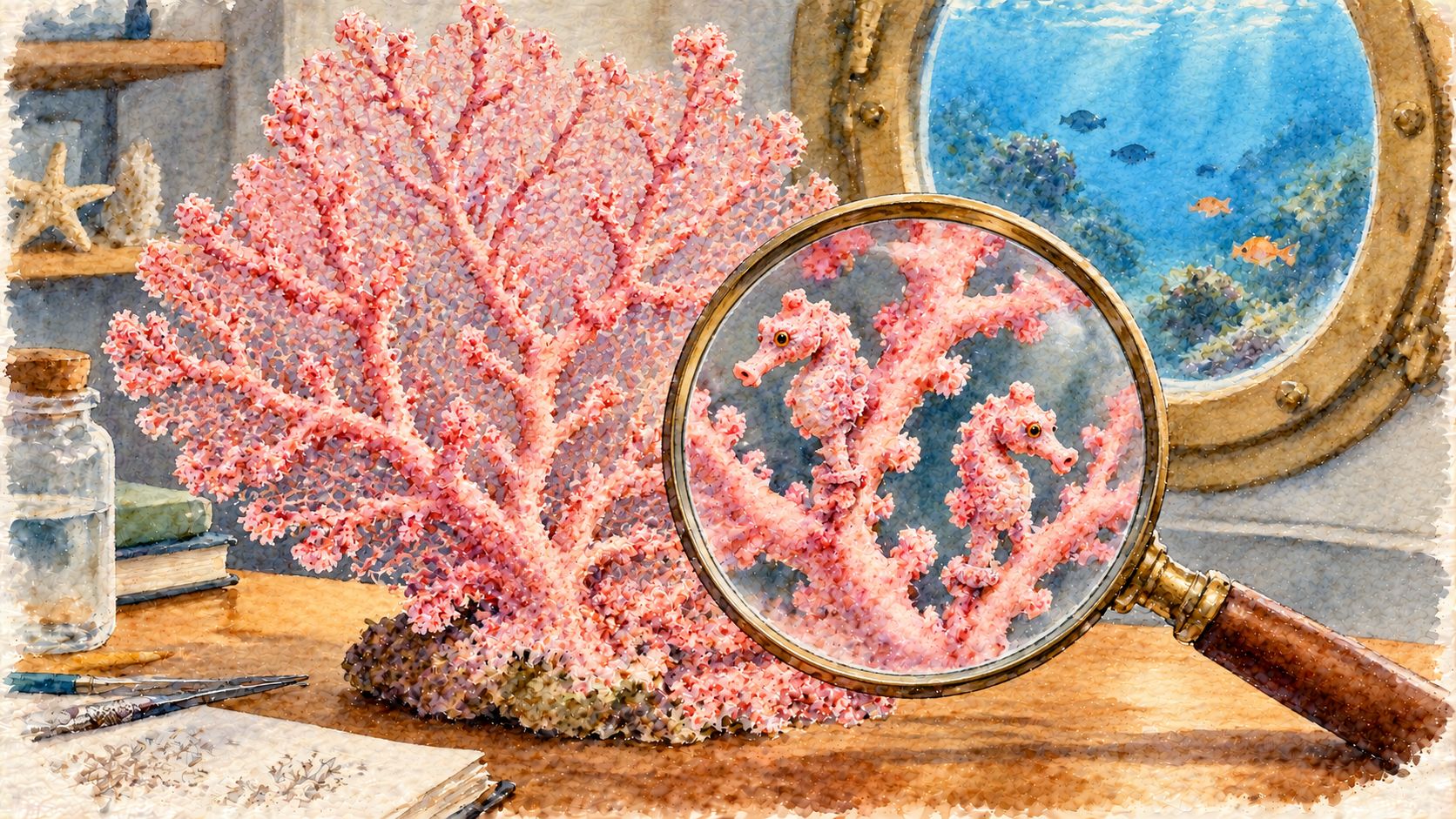
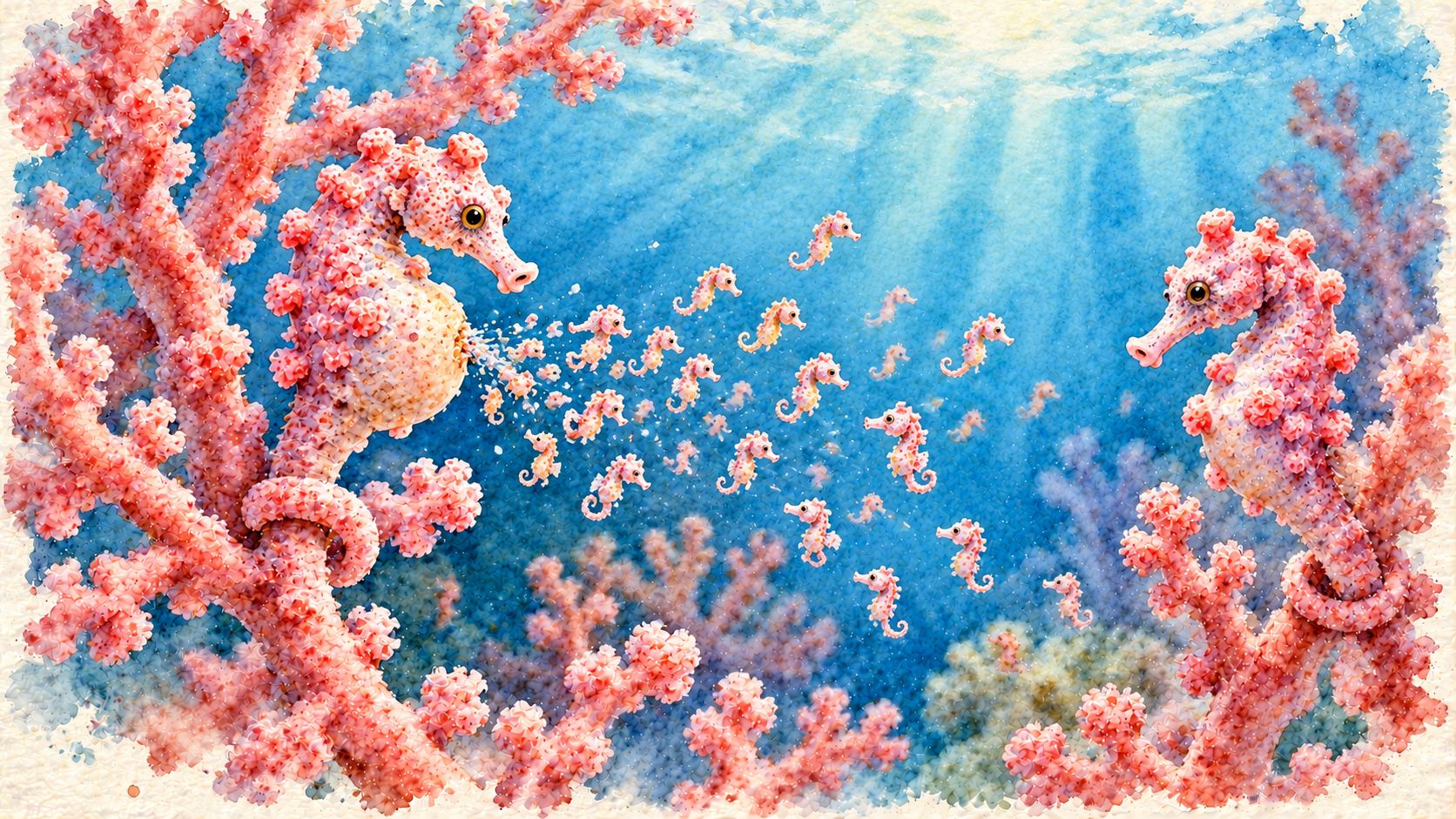
Bargibant's pygmy seahorse lives on gorgonian sea fans and is usually grey or purple with pink bumps, or yellow with orange bumps, matching the coral it lives on.
Their bodies are covered in small rounded bumps called tubercles, which look just like the polyps on their coral home.
Their camouflage is so good that many pygmy seahorses have been discovered only after divers spotted them in their own underwater photographs.
Pygmy seahorses swim upright, slowly pushing themselves along with a small fin on their back.
Their eyes can move independently, so they can look in two directions at once.
Pygmy seahorses feed on tiny crustaceans and plankton, sucking them up through their tube-shaped snouts.
Seahorses don't have a true stomach, so food passes through them quickly and they need to eat almost all the time.
A single sea fan can be home to several pygmy seahorses at once.
Pygmy seahorses often live in pairs, staying close to their partner on the same coral.
Pygmy seahorse dads give birth
Like other seahorses, pygmy seahorses have a role reversal when it comes to babies. The female places her eggs into a special pouch on the male's body, where he fertilises them and carries them until they hatch. In pygmy seahorses, this pouch is on the male's belly area rather than the tail. After about two weeks, the father gives birth to tiny, fully formed babies, which drift away into the ocean.
In 2018, a new pygmy seahorse was discovered off Japan. Its nickname, japapigu, comes from Japanese words meaning "Japan pig", because it looks a bit like a tiny piglet.
In 2020, scientists described Hippocampus nalu from South Africa, the first pygmy seahorse found in the Indian Ocean waters off Africa.
Its name, "nalu", means "here it is" in local languages, because it had been there all along waiting to be found.
Pygmy seahorses are very hard to keep in aquariums because they depend so closely on their particular coral homes.
Coral reef damage from warming seas, pollution and destructive fishing is one of the biggest threats to pygmy seahorses.
Sources and Further Reading
- Australian Museum
- Project Seahorse
- Zoological Society of London (ZSL)
- IUCN Red List of Threatened Species
- Encyclopaedia Britannica
- National Geographic
Frequently asked questions
How small is a pygmy seahorse?
Most pygmy seahorses are under about 2.5 centimetres long. The smallest, Satomi's pygmy seahorse, is only about 1.4 centimetres long, smaller than a fingernail.
Where do pygmy seahorses live?
Pygmy seahorses live mainly in warm coral reefs of the western Pacific, especially around Indonesia, the Philippines and Papua New Guinea. Some species are found off Japan, Australia and South Africa.
Who discovered the pygmy seahorse?
The first pygmy seahorse was discovered in 1969 by Georges Bargibant, who noticed two tiny seahorses on a sea fan he had collected off New Caledonia.
Are seahorses fish?
Yes. Seahorses, including pygmy seahorses, are true bony fish. They belong to the same family as pipefish and sea dragons.
Do male pygmy seahorses really give birth?
Yes. The female places her eggs in the male's pouch, and he carries them for about two weeks before giving birth to tiny babies.
How do pygmy seahorses hide?
Their colour and the small bumps on their bodies match the coral they live on almost perfectly, making them very hard to spot.
More Fun Facts