25 Fun Facts
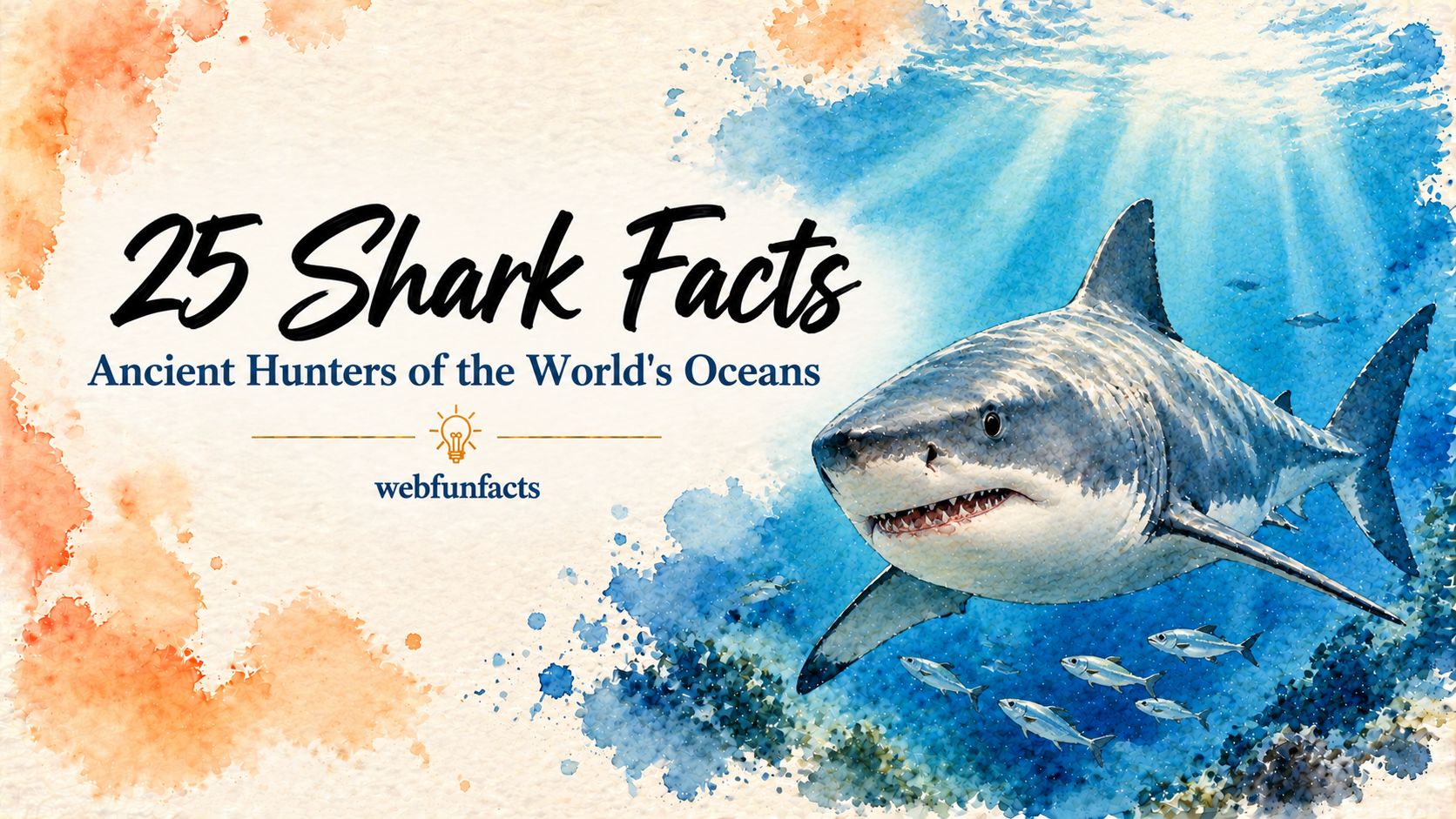
25 Shark Facts: Ancient Hunters of the World's Oceans
Sharks have a fearsome reputation, but they are some of the most fascinating and important animals in the ocean. They have survived for hundreds of millions of years, and they have senses so sharp they can detect the tiny electric signals of a hidden fish.
Here are 25 amazing facts about sharks, from their ancient origins to the gentle giants that visit India's coast.
Shark Facts
There are more than 500 species of shark, living in oceans all around the world.
A shark's skeleton is made of cartilage, the same flexible material found in your nose and ears, rather than bone.
Sharks don't have a swim bladder like most fish. Instead, they have a large, oily liver that helps them stay afloat.
Shark skin is covered in tiny tooth-like scales called denticles, which make it feel rough like sandpaper and help sharks swim smoothly.
Sharks constantly lose and replace their teeth, and some can go through tens of thousands of teeth in a lifetime.
Shark teeth come in many shapes. Some are sharp and jagged for cutting, others are flat for crushing shells, and filter-feeding sharks have tiny teeth they barely use.
Sharks have special sensors on their snouts called ampullae of Lorenzini, which detect the tiny electric fields given off by other animals.
A line of sensors along each side of a shark's body, called the lateral line, lets it feel vibrations in the water.
Sharks have an excellent sense of smell, which helps them track down food from far away.
Sharks are older than trees
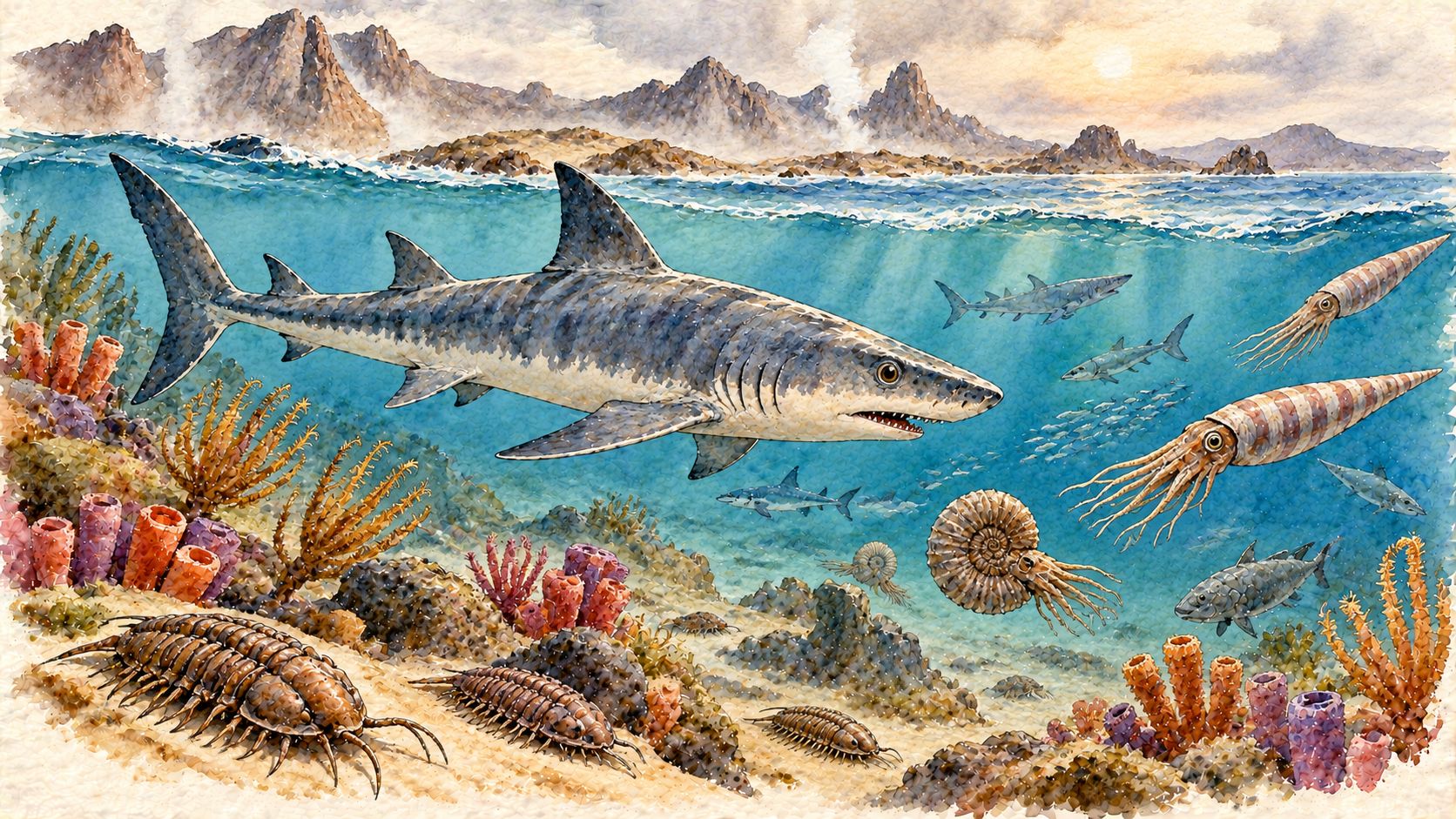
Sharks first appeared in Earth's oceans more than 400 million years ago. That means they were swimming in the seas before the first trees grew on land, and around 200 million years before the first dinosaurs. They have survived several mass extinctions that wiped out most life on Earth. Their simple yet highly effective body design has changed surprisingly little, which is why they are sometimes called living fossils.
The whale shark is the largest fish in the world and can grow to around 12 to 18 metres long, but it feeds mainly on tiny plankton.
The dwarf lanternshark is one of the smallest sharks, at only around 20 centimetres long, and it can glow in the dark.
The shortfin mako is the fastest shark, reaching speeds of around 70 kilometres per hour in short bursts.
The great white shark is the largest predatory fish in the world, growing to around 6 metres long.
Many sharks must keep swimming so that water flows over their gills and they can breathe, while others, like nurse sharks, can rest on the seabed and pump water over their gills.
Tiger sharks will eat almost anything, and all sorts of strange objects, from tyres to licence plates, have been found in their stomachs.
A hammerhead shark's wide head spreads out its eyes and electric sensors, helping it scan a large area of seabed for prey.
Bull sharks can live in both salt water and fresh water, and sometimes swim far up large rivers.
India's rare Ganges shark is a river shark found in parts of India and Bangladesh, and it is critically endangered.
Gentle whale sharks visit the coast of Gujarat
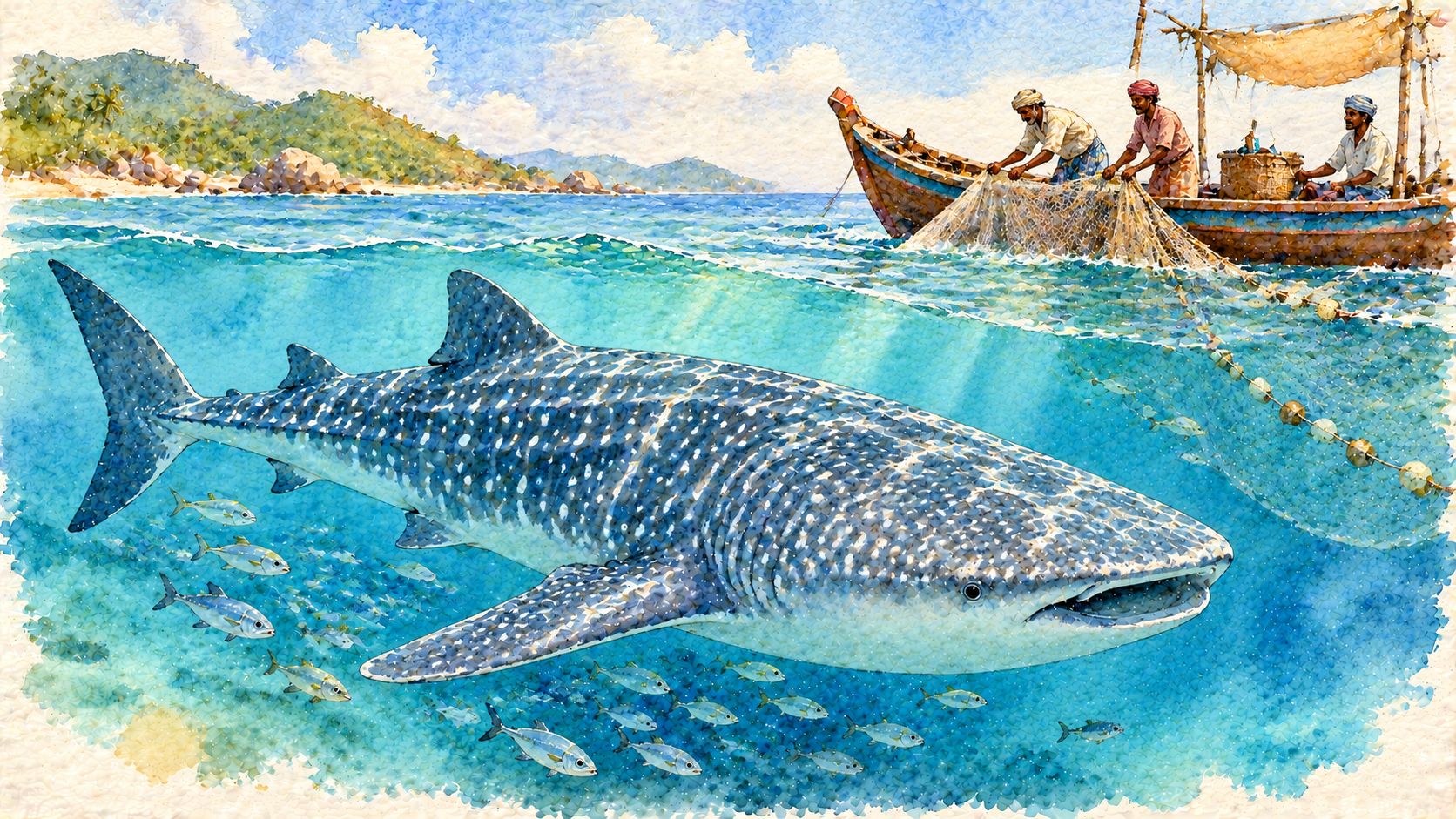
Every year, whale sharks, the largest fish on Earth, come to the coast of Saurashtra in Gujarat to feed and breed. In the past, many were caught for their meat and oil. In 2001, India became one of the first countries to give the whale shark full legal protection, and in 2004 a campaign by local fishermen, religious leaders and conservationists encouraged people to see the whale shark as a welcome guest. Today, fishermen in Gujarat cut their own nets to free whale sharks that get trapped.
Some sharks give birth to live pups, while others lay eggs in tough cases often called "mermaid's purses".
Before they are born, the strongest sand tiger shark babies eat their smaller siblings inside their mother.
The epaulette shark of Australia can "walk" on its fins across shallow reefs and survive in low-oxygen tide pools.
Shark attacks on people are very rare. Worldwide, there are usually fewer than 100 unprovoked bites each year.
Humans are a far bigger threat to sharks than sharks are to humans. Tens of millions of sharks are killed every year, and many species are now endangered.
Sources and Further Reading
- Wildlife Trust of India
- Florida Museum of Natural History (International Shark Attack File)
- IUCN Red List of Threatened Species
- NOAA Fisheries
- Smithsonian Ocean
- Encyclopaedia Britannica
Frequently asked questions
How long have sharks been around?
Sharks have existed for more than 400 million years, making them older than trees and dinosaurs.
Do sharks have bones?
No. A shark's skeleton is made of cartilage, the same flexible material found in human noses and ears.
What is the largest shark?
The whale shark is the largest shark and the largest fish in the world, growing to around 12 to 18 metres long. It feeds mainly on plankton.
Are there sharks in India?
Yes. Many sharks live in Indian waters, including whale sharks off Gujarat and the rare Ganges shark, a critically endangered river shark.
How dangerous are sharks to humans?
Shark attacks are very rare. Worldwide, there are usually fewer than 100 unprovoked shark bites each year, and most sharks pose no threat to people.
Why are sharks endangered?
Sharks are threatened mainly by overfishing, shark finning and being caught accidentally in fishing nets. Tens of millions are killed every year.
More Fun Facts