25 Fun Facts
25 Cheetah Facts: The Fastest Land Animal on Earth
Built for speed from nose to tail, the cheetah is the fastest land animal on Earth. In just a few seconds it can go from standing still to racing faster than cars on a highway.
Here are 25 fascinating facts about cheetahs, from the secrets behind their speed to their remarkable return to India's forests.
Cheetah Facts
The cheetah's scientific name is Acinonyx jubatus.
The name "cheetah" comes from the Sanskrit word "chitraka", meaning "spotted" or "speckled".
Cheetahs are the fastest land animals, reaching speeds of around 100 kilometres per hour in short bursts.
A cheetah can accelerate faster than many sports cars, reaching top speed in just a few seconds.
A cheetah's sprint usually lasts only about 20 to 30 seconds before it has to stop and rest.
At full speed, a cheetah covers around 7 metres in a single stride, and for a moment in each stride all four feet are off the ground.
Cheetahs have a lightweight body, long legs and a very flexible spine that stretches and bends like a spring as they run.
Large nostrils, lungs and a big heart help cheetahs take in plenty of oxygen during a chase.
Unlike most cats, cheetahs can't fully pull in their claws. Their claws grip the ground like the spikes on a sprinter's shoes.
A cheetah's tail works like a rudder
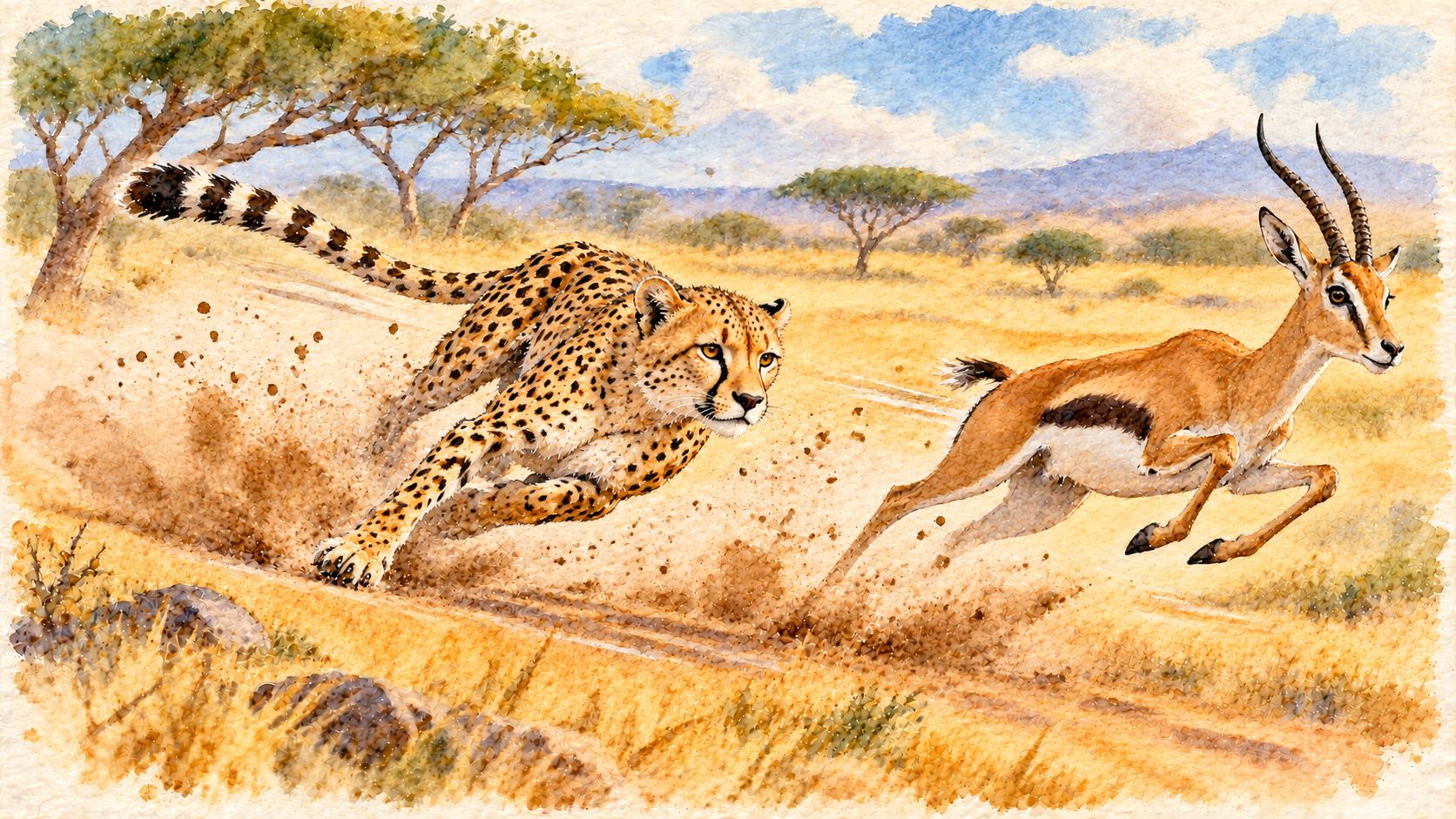
When a cheetah chases a gazelle or impala, its prey often twists and swerves to escape. The cheetah's long, muscular tail acts like a boat's rudder, swinging from side to side to help it balance and make sharp turns without losing speed. Its flattened tail and powerful back muscles let it change direction suddenly at high speed, which is what makes it such a successful hunter.
Adult cheetahs usually weigh between about 35 and 65 kilograms, much lighter than lions and leopards.
The black "tear marks" running from a cheetah's eyes to its mouth may help reduce glare from the sun and help it focus on its prey.
Cheetahs can't roar. Instead, they purr, hiss, growl and even make high-pitched chirps that sound like a bird.
Unlike most big cats, cheetahs hunt mainly during the day, especially in the early morning and late afternoon, which helps them avoid lions and hyenas.
Cheetahs often lose their kills to stronger predators such as lions and hyenas, so they usually eat quickly.
Cheetahs trip their prey with a swipe of the paw, then hold its throat until it stops breathing.
The rare "king cheetah" has large blotches and stripes instead of spots. It isn't a separate species, just a rare coat pattern caused by a gene and still found in southern Africa.
Cheetah cubs have a long, smoky-grey mane along their backs, which may help them look like fierce honey badgers to scare off predators.
Mother cheetahs raise their cubs alone and move them to new hiding places every few days to keep them safe.
Cheetahs returned to India after 70 years
Cheetahs once lived across large parts of India, and Mughal emperors are said to have kept hundreds of them to help hunt deer. But hunting and habitat loss wiped them out, and the cheetah was declared extinct in India in 1952. Seventy years later, on 17 September 2022, eight cheetahs from Namibia were released into Kuno National Park in Madhya Pradesh, followed by more from South Africa in 2023. Since then, cheetah cubs have been born on Indian soil for the first time in decades.
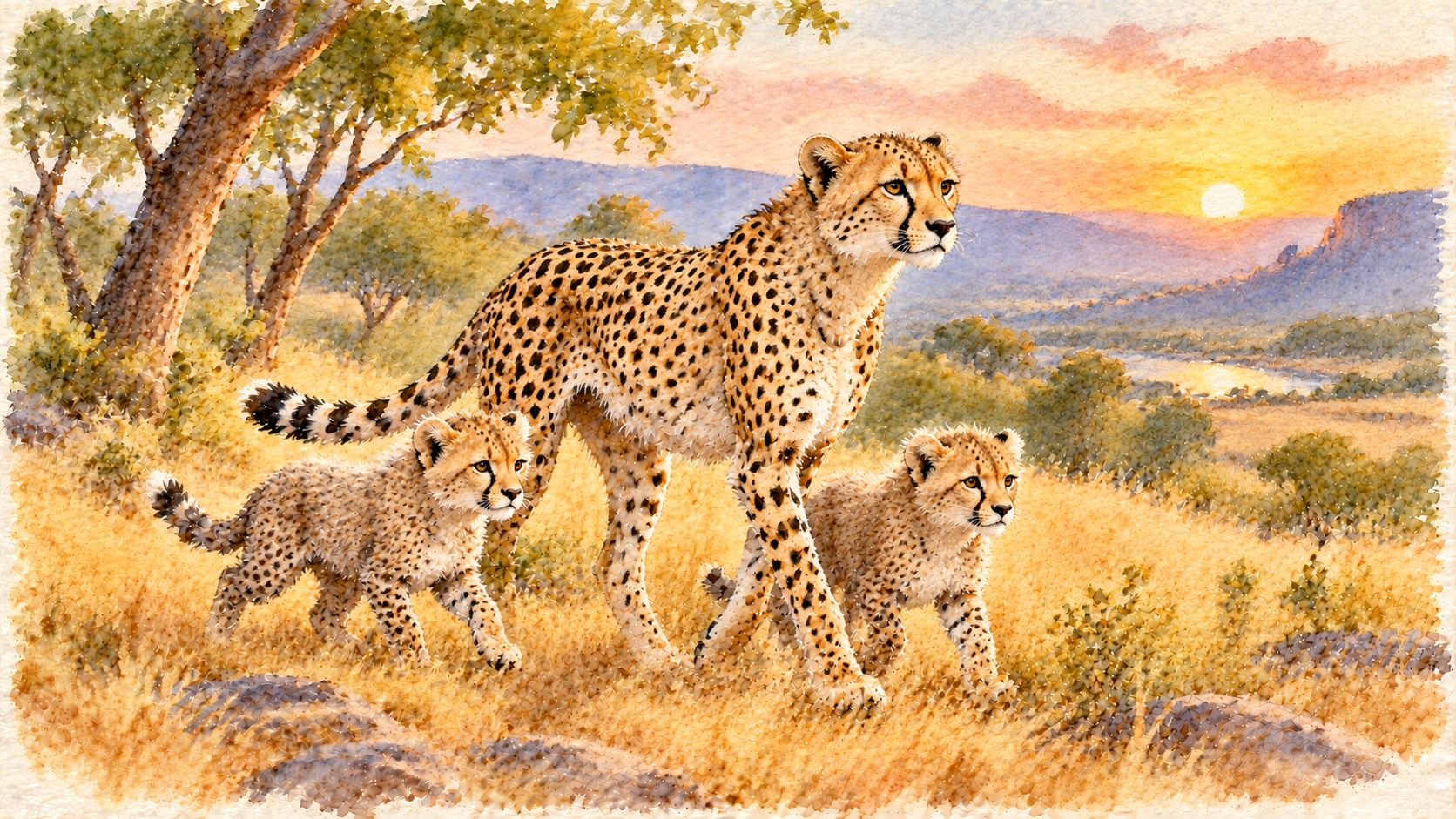
Female cheetahs usually live alone, while males often live in small groups called coalitions, usually made up of brothers.
A female cheetah usually gives birth to around three to five cubs, but sadly many cubs don't survive to adulthood in the wild.
Wild cheetahs usually live for around 10 to 12 years.
All cheetahs alive today are very closely related, so they have very little genetic variety. This can make them more vulnerable to disease.
There are only around 7,000 adult cheetahs left in the wild, and the species is listed as vulnerable.
Sources and Further Reading
- National Tiger Conservation Authority (Project Cheetah)
- Wildlife Institute of India
- Cheetah Conservation Fund
- IUCN Red List of Threatened Species
- Smithsonian's National Zoo & Conservation Biology Institute
- Encyclopaedia Britannica
Frequently asked questions
How fast can a cheetah run?
Cheetahs can reach speeds of around 100 kilometres per hour in short bursts, making them the fastest land animals on Earth.
Can cheetahs roar?
No. Cheetahs can't roar. Instead, they purr, hiss, growl and make bird-like chirping sounds.
Are there cheetahs in India?
Yes. Cheetahs were declared extinct in India in 1952, but they were brought back in 2022 when cheetahs from Namibia were released into Kuno National Park in Madhya Pradesh.
What is a king cheetah?
A king cheetah is a cheetah with a rare coat pattern of large blotches and stripes. It isn't a separate species and is still found in southern Africa.
Why do cheetahs have tear marks?
The black tear marks may help reduce glare from the sun and help cheetahs focus on their prey while hunting.
How many cheetahs are left in the wild?
There are only around 7,000 adult cheetahs left in the wild, and the species is listed as vulnerable.
More Fun Facts