25 Fun Facts
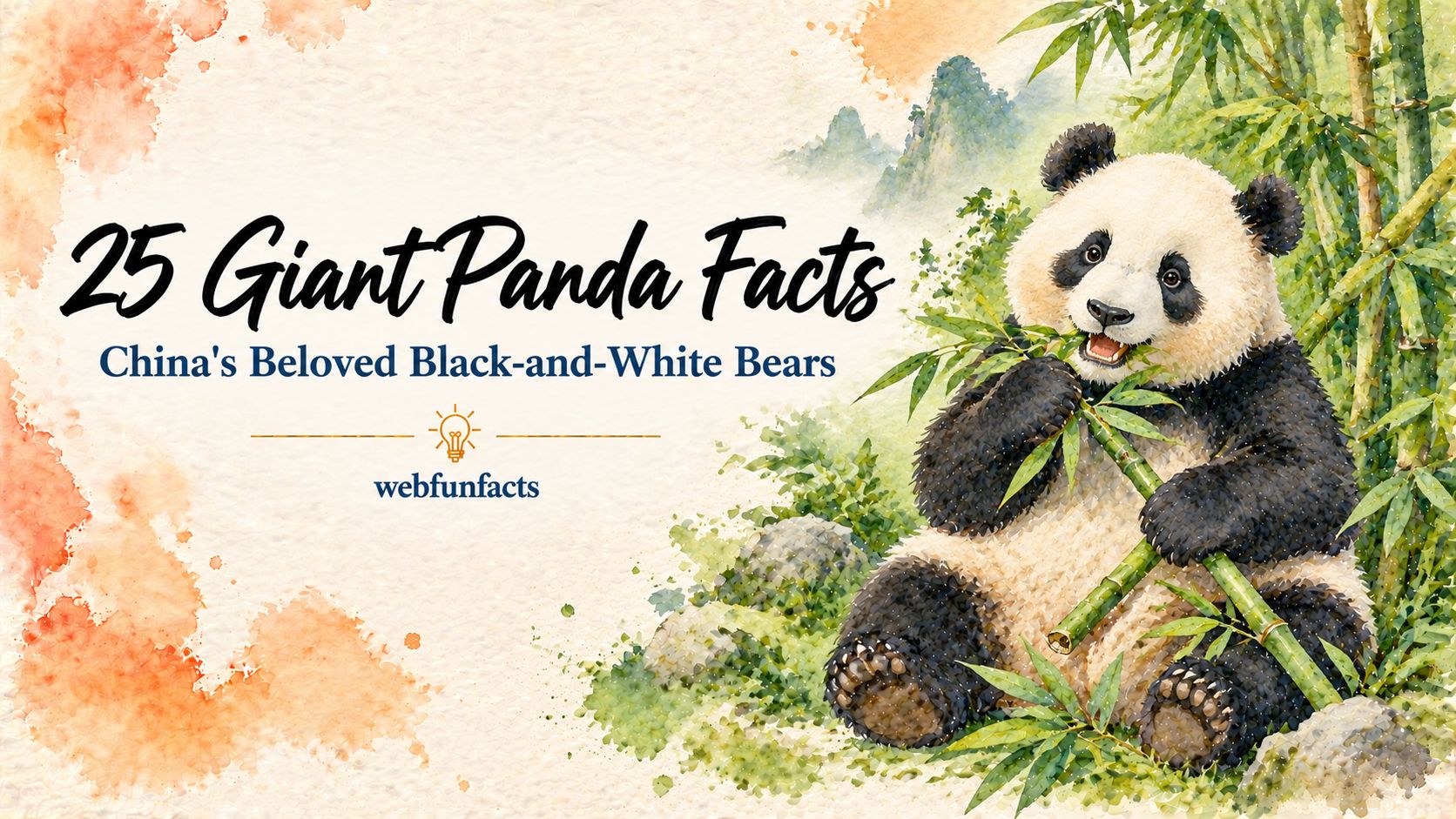
25 Giant Panda Facts: China's Beloved Black-and-White Bears
With their round faces, black eye patches and fondness for bamboo, giant pandas are among the most loved animals in the world. Once on the edge of extinction, they have become a symbol of wildlife conservation everywhere.
Here are 25 fascinating facts about giant pandas, from their surprisingly tiny babies to the red panda of India that had the name "panda" first.
Giant Panda Facts
The giant panda's scientific name is Ailuropoda melanoleuca, meaning "black and white cat-footed animal".
In Chinese, the giant panda is called "da xiong mao", which means "giant bear cat".
Giant pandas live only in the cool, misty mountain forests of central China, in Sichuan, Shaanxi and Gansu provinces.
Giant pandas are true bears, belonging to the same family as brown bears and polar bears.
Adult giant pandas are around 1.2 to 1.9 metres long and usually weigh between 70 and 125 kilograms. Males are larger than females.
Bamboo makes up about 99% of a giant panda's diet.
A panda can spend 10 to 16 hours a day eating, and may munch through 12 to 38 kilograms of bamboo daily.
Pandas still have the digestive system of a meat-eater, so they only digest a small part of the bamboo they eat. That's why they need to eat so much.
Every now and then, giant pandas eat meat, such as small animals or carrion.
A newborn panda is about 900 times smaller than its mother
When a giant panda is born, it is pink, hairless, blind and weighs only about 100 to 200 grams, roughly the size of a stick of butter. That's around 1/900th of its mother's weight, one of the smallest newborns of any mammal compared with its mother. The tiny cub is completely helpless and stays cuddled close to its mother for warmth. It starts to grow its black-and-white fur after a few weeks and opens its eyes at around six to eight weeks old.
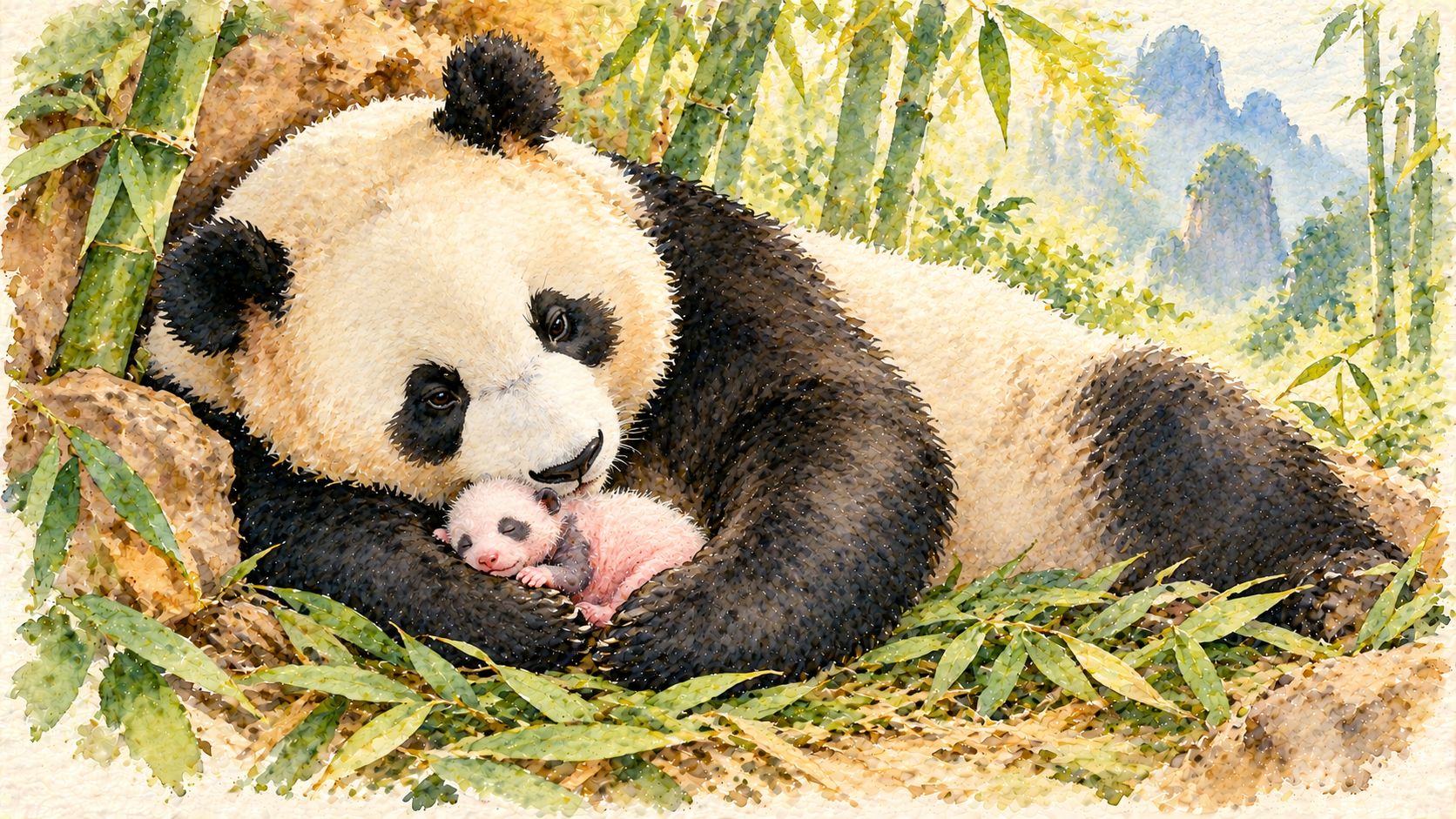
Pandas often give birth to twins, but in the wild a mother usually raises only one cub.
Female giant pandas can only become pregnant for about two to three days each year, which is one reason pandas are hard to breed.
Giant pandas have a special "pseudo-thumb", an enlarged wrist bone that works like a sixth finger to help them grip bamboo.
Scientists think a panda's white fur helps it blend into snowy areas, while the black parts help it hide in the shade. The black ears and eye patches may also help pandas recognise each other.
Unlike many bears, giant pandas don't hibernate. In winter, they move to lower, warmer slopes where bamboo is still available.
Giant pandas are good climbers, and cubs often climb trees to rest or stay safe.
Giant pandas don't roar. They communicate with bleats, honks, squeals and barks.
Male pandas mark their territory with scent, and some even do handstands to leave their scent as high up a tree as possible.
Giant pandas usually live for about 15 to 20 years in the wild and up to around 30 years in zoos.
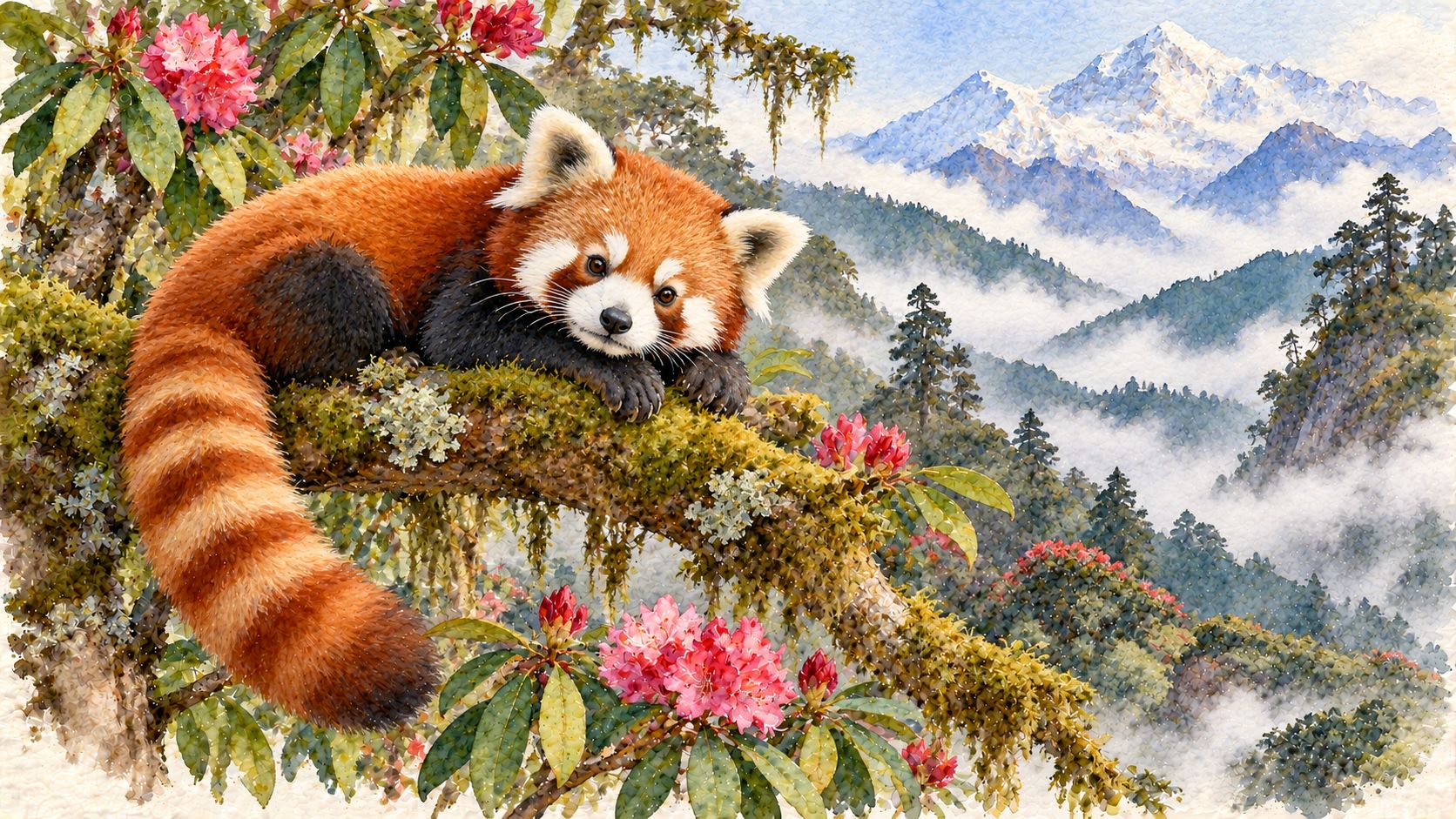
The red panda had the name "panda" first, and it lives in India
The name "panda" was first given to the red panda, a small, fluffy, reddish-brown animal with a ringed tail. The giant panda was only named later, when people thought the two were closely related. In fact, they're not. The red panda belongs to its own separate family. Red pandas live in the forests of the eastern Himalayas, including Sikkim, Darjeeling and Arunachal Pradesh in India, and the red panda is the state animal of Sikkim.
In 1972, after US President Richard Nixon visited China, China gave two giant pandas, Ling-Ling and Hsing-Hsing, to the United States. Sharing pandas like this became known as "panda diplomacy".
The famous WWF panda logo, created in 1961, was inspired by a giant panda named Chi Chi who lived at London Zoo.
Fewer than 2,000 giant pandas live in the wild, but thanks to conservation their numbers have grown in recent decades.
In 2016, the giant panda's status was improved from endangered to vulnerable, a major conservation success story.
China has set up dozens of protected nature reserves for giant pandas, including a huge Giant Panda National Park created in 2021.
Sources and Further Reading
- WWF
- Smithsonian's National Zoo & Conservation Biology Institute
- IUCN Red List of Threatened Species
- San Diego Zoo Wildlife Alliance
- Encyclopaedia Britannica
- National Geographic
Frequently asked questions
Where do giant pandas live?
Giant pandas live only in the cool mountain forests of central China, in Sichuan, Shaanxi and Gansu provinces.
What do giant pandas eat?
Bamboo makes up about 99% of a giant panda's diet. They eat 12 to 38 kilograms of bamboo a day and sometimes eat small animals or carrion.
Are giant pandas bears?
Yes. Giant pandas are true bears and belong to the same family as brown bears and polar bears.
How many giant pandas are left in the wild?
Fewer than 2,000 giant pandas live in the wild. Their numbers have grown thanks to conservation, and in 2016 their status improved from endangered to vulnerable.
Are red pandas and giant pandas related?
Not closely. Despite the shared name, red pandas belong to their own separate family. Red pandas live in the eastern Himalayas, including parts of India.
How big is a baby panda?
A newborn giant panda weighs only about 100 to 200 grams, around 1/900th of its mother's weight. It is born pink, hairless and blind.
More Fun Facts