25 Fun Facts
25 Snake Facts: Fascinating Truths About Legless Reptiles
Snakes have no legs, no eyelids and no outer ears, yet they are some of the most successful hunters on Earth. They slither, swim, climb and even glide, using senses we can barely imagine.
Here are 25 fascinating facts about snakes, from the nest-building king cobra to a giant prehistoric snake discovered in Gujarat.
Snake Facts
There are around 4,000 species of snake in the world.
Snakes live on every continent except Antarctica, but there are no native land snakes in Ireland, Iceland or New Zealand.
Only around 600 snake species are venomous, and only about 200 of these can seriously harm humans.
Snakes "smell" with their forked tongues. Each flick collects scent particles and carries them to a special organ in the roof of the mouth.
Because their tongues are forked, snakes can tell which direction a smell is coming from.
Snakes have no outer ears. They sense vibrations through their jawbones and bodies.
Snakes have no eyelids. Instead, each eye is covered by a clear protective scale.
Snakes shed their skin several times a year, often in one complete piece.
Snakes don't dislocate their jaws. Their lower jaw bones are joined by stretchy ligaments, letting them swallow prey much wider than their heads.
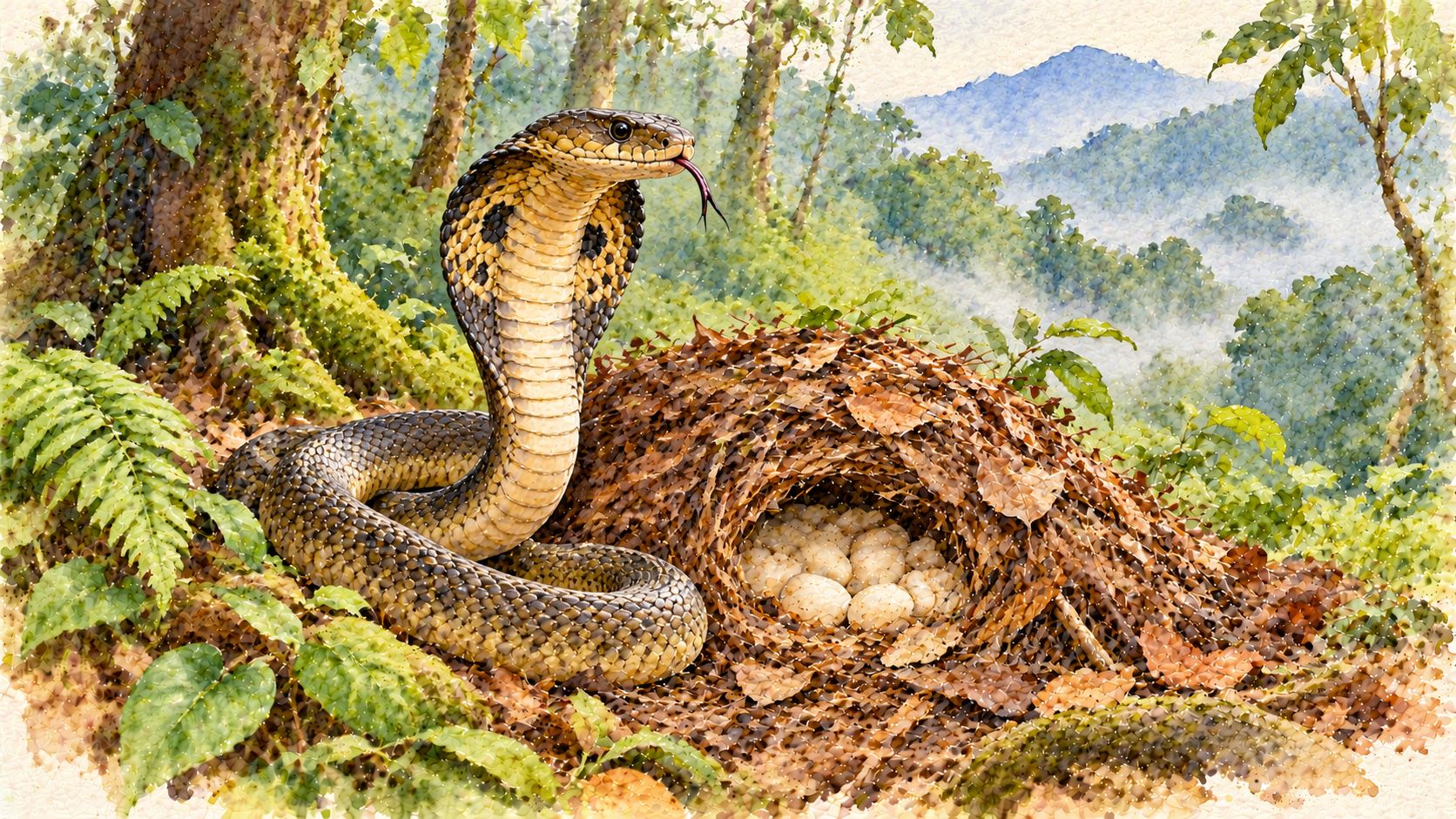
The king cobra is the only snake that builds a nest
The king cobra, found in India's forests from the Western Ghats to the northeast, is the world's longest venomous snake, growing up to about 5.5 metres long. It is the only snake known to build a nest. The female gathers leaves and twigs into a mound using her body, lays her eggs inside, then stays nearby to guard them for weeks. King cobras mainly eat other snakes, including venomous ones. Agumbe in Karnataka is famous for its king cobra research.
Pythons and boas still have tiny bony spurs near their tails, leftovers of the back legs their ancestors once had.
Pythons and pit vipers have special heat-sensing pits on their faces that let them "see" the body heat of warm-blooded prey in the dark.
India's ornamental flying snake can glide from tree to tree by flattening its body and wriggling through the air.
Spitting cobras can spray venom at the eyes of a threat from about 2 metres away.
The reticulated python is the longest snake in the world, and can grow more than 6 metres long.
The green anaconda of South America is the heaviest snake.
The Barbados threadsnake is one of the smallest snakes, only about 10 centimetres long.
Most snakes lay eggs, but some, including many vipers and sea snakes, give birth to live young.
Large snakes like pythons can survive for weeks or even months between meals.
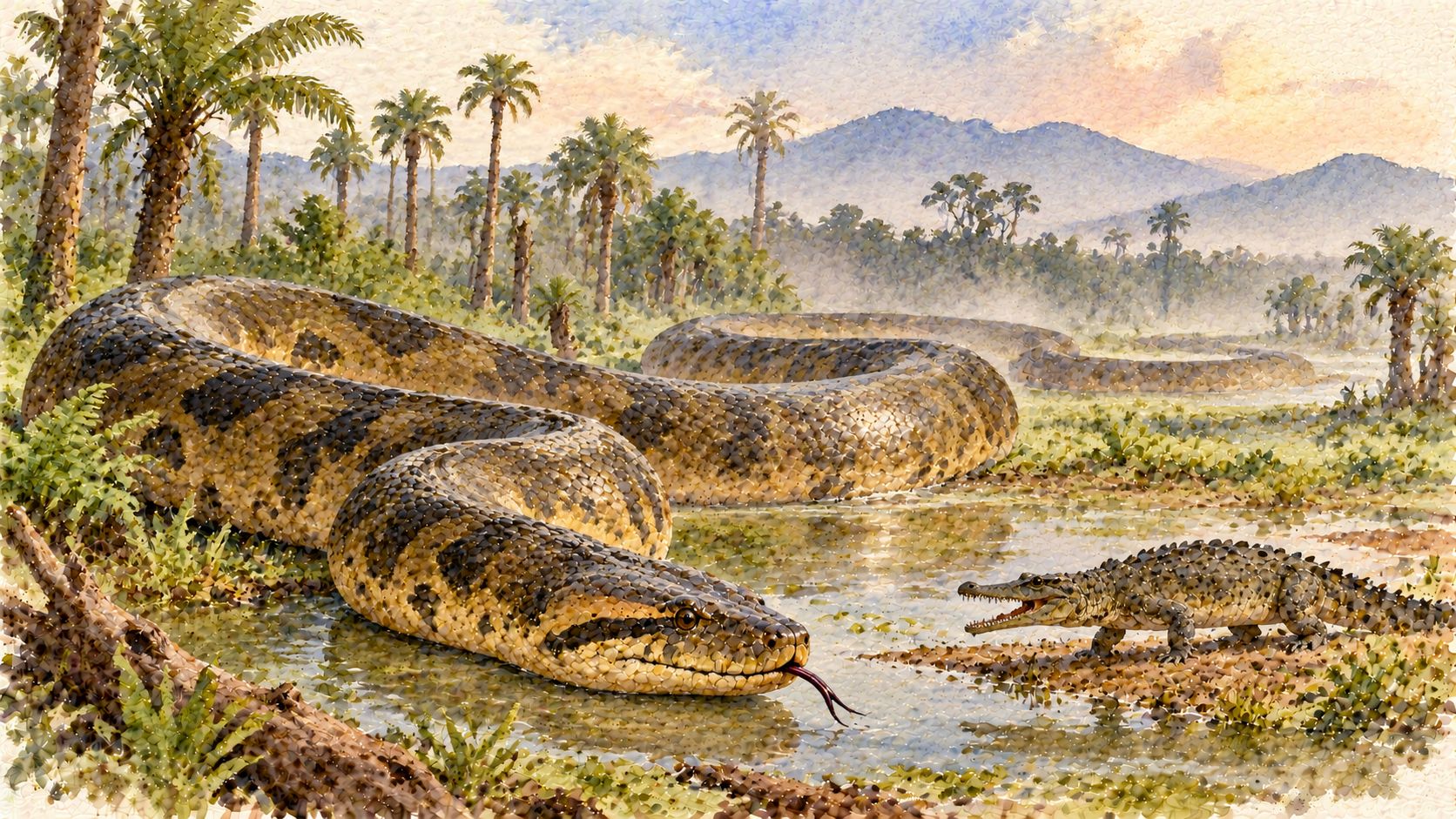
A giant prehistoric snake was discovered in Gujarat
In 2024, scientists from IIT Roorkee announced the discovery of fossils of an enormous ancient snake in a mine in Kutch, Gujarat. Named Vasuki indicus, after the mythical snake king Vasuki around Lord Shiva's neck, it lived around 47 million years ago. Scientists estimate it may have been around 11 to 15 metres long, making it one of the largest snakes that ever lived, possibly rivalling the giant Titanoboa of South America.
India has more snakebite deaths than any other country, mainly caused by the "Big Four": the Indian cobra, common krait, Russell's viper and saw-scaled viper.
Antivenom is made by giving horses tiny, safe doses of venom so they produce antibodies. In Tamil Nadu, the Irula community's snake catchers collect much of the venom used.
Mongooses aren't completely immune to snake venom, but they are highly resistant to some venoms and are very quick fighters.
On Nag Panchami, snakes are worshipped in many parts of India, but feeding them milk can harm them, as snakes don't naturally drink milk.
Snakes keep growing throughout their lives, although more slowly as they get older.
Sources and Further Reading
- Indian Institute of Technology (IIT) Roorkee
- Agumbe Rainforest Research Station
- World Health Organization (WHO)
- Madras Crocodile Bank Trust
- The Reptile Database
- Encyclopaedia Britannica
Frequently asked questions
How do snakes smell?
Snakes smell with their forked tongues. They collect scent particles from the air and ground and carry them to a special organ in the roof of the mouth.
Do snakes have ears?
Snakes have no outer ears, but they have inner ears and can sense vibrations through their jawbones and bodies.
What is the longest venomous snake?
The king cobra is the longest venomous snake, growing up to about 5.5 metres long. It is found in forests across India and Southeast Asia.
Which snakes cause the most snakebites in India?
The "Big Four" are the Indian cobra, common krait, Russell's viper and saw-scaled viper, which together cause most serious snakebites in India.
Do snakes drink milk?
No. Snakes don't naturally drink milk, and feeding them milk, for example during Nag Panchami, can make them sick.
What was Vasuki indicus?
Vasuki indicus was a giant prehistoric snake whose fossils were found in Kutch, Gujarat. Announced in 2024, it may have been 11 to 15 metres long.
More Fun Facts