With its thick wolf-like coat, broad head, gentle brown eyes and a plumed tail that waves over its back, the Alaskan Malamute looks like it stepped straight out of a snowy Arctic adventure. And in a way, it did. The Malamute is one of the oldest sled dog breeds in the world, developed to haul heavy loads across frozen landscapes long before modern roads or engines reached the far north.
Despite its powerful build and serious working history, the Alaskan Malamute is a famously friendly, affectionate and dignified companion. It loves its people, enjoys being part of every family activity and greets almost everyone with a happy, wagging tail. In this complete Alaskan Malamute dog breed guide, you will learn everything you need to know before welcoming one into your home, including its size, temperament, grooming needs, exercise requirements, common health concerns, diet tips and fascinating history.
Alaskan Malamute at a Glance
| Trait | Details |
|---|---|
| Breed group | Working (AKC) |
| Height | About 23 to 25 inches (58 to 64 cm) |
| Weight | About 75 to 85 pounds (34 to 39 kg) |
| Life expectancy | Around 10 to 14 years |
| Coat | Thick, coarse double coat, medium length |
| Colors | Light gray to black, sable to red, all white (usually with white markings) |
| Shedding | Heavy; seasonal coat "blows" |
| Energy level | Moderate to high; built for endurance |
| Temperament | Friendly, loyal, dignified, playful, strong-willed |
| Good for | Active families, cold climates, homes with secure yards |
| Origin | Alaska, United States |
What Is an Alaskan Malamute?
The Alaskan Malamute is a large, strong, heavy-boned working dog from the Arctic. It belongs to the spitz family of dogs, which share features such as pricked ears, thick double coats and tails that curl over the back. The breed was developed to pull heavy sleds and carry supplies over long distances, so it was built for strength and stamina rather than speed.
Today, the Malamute is a member of the American Kennel Club's Working Group. While many Malamutes still enjoy sledding, weight pulling and backpacking, most live as cherished family companions. Owners love their big, goofy personalities, their loyalty and their striking good looks. It is also the official state dog of Alaska, a fitting honor for a breed so closely tied to the region's history.
People often confuse the Alaskan Malamute with the Siberian Husky. The two breeds share a similar look and northern heritage, but the Malamute is noticeably larger and heavier. A Husky was bred to pull lighter loads at higher speeds, while the Malamute was the heavy hauler of the Arctic.
Alaskan Malamute Size and Appearance
The Alaskan Malamute is a big, solidly built dog with a deep chest and powerful shoulders. According to the breed standard, males typically stand about 25 inches (64 cm) tall at the shoulder and weigh around 85 pounds (39 kg), while females usually stand about 23 inches (58 cm) and weigh around 75 pounds (34 kg). Individual dogs can fall above or below these figures, and some Malamutes are larger than the standard describes.
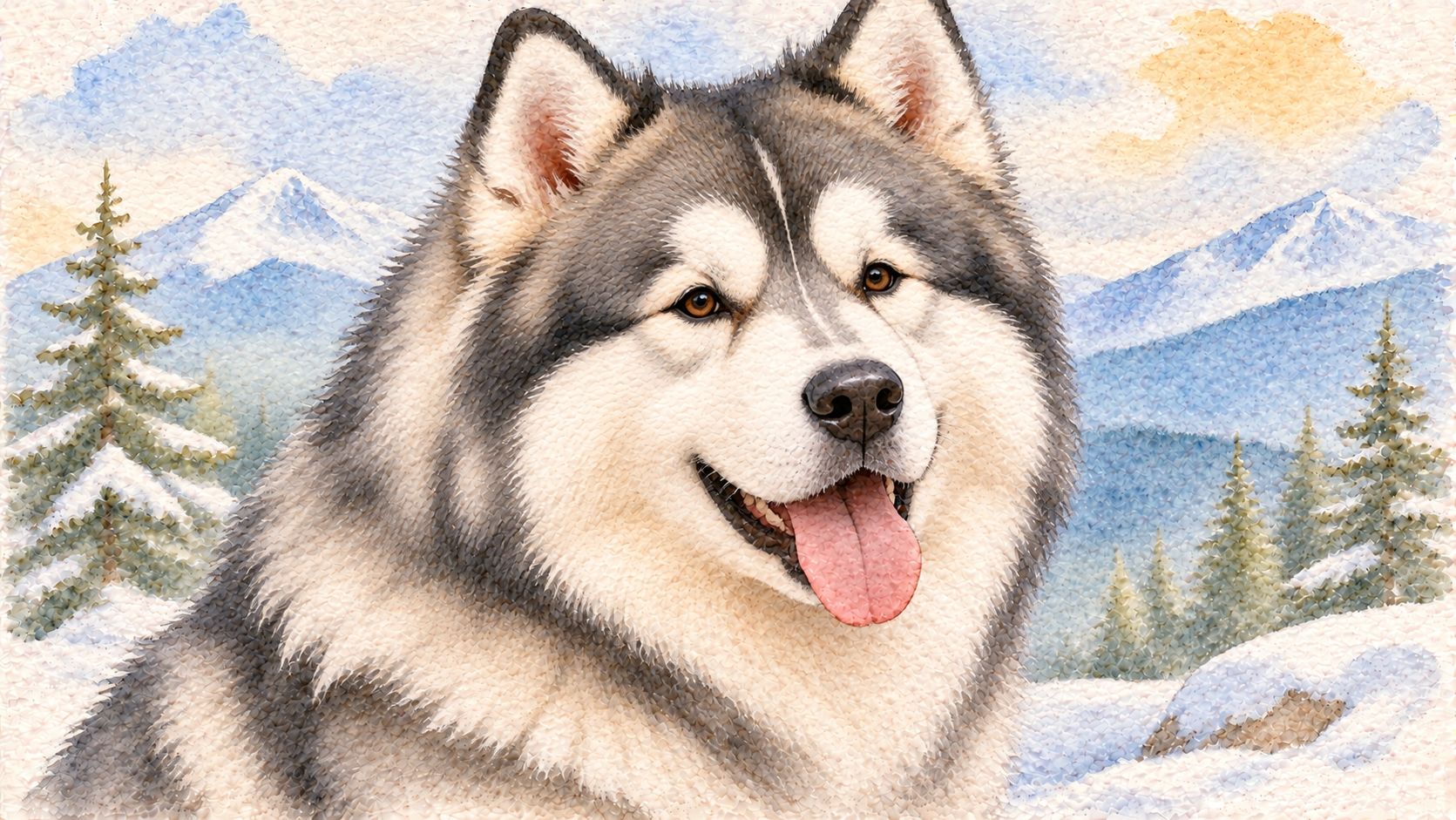
The breed's head is broad with a bulky muzzle, and its triangular ears stand upright when the dog is alert. The almond-shaped eyes are brown and give the Malamute a soft, warm expression that contrasts nicely with its rugged frame. Its large, snowshoe-like feet have tough pads and thick fur between the toes, helping the dog travel over snow and ice. The bushy tail is carried over the back like a waving plume, and a resting Malamute often curls it over its nose to stay warm.
Coat and Colors
The Alaskan Malamute wears a thick, coarse double coat designed for brutal Arctic weather. The outer guard hairs are rough and stand off the body, while the dense, woolly undercoat traps warmth and is often slightly oily to help repel moisture. The coat is generally longer around the neck, shoulders, back and tail, and it is usually shorter in warmer months.
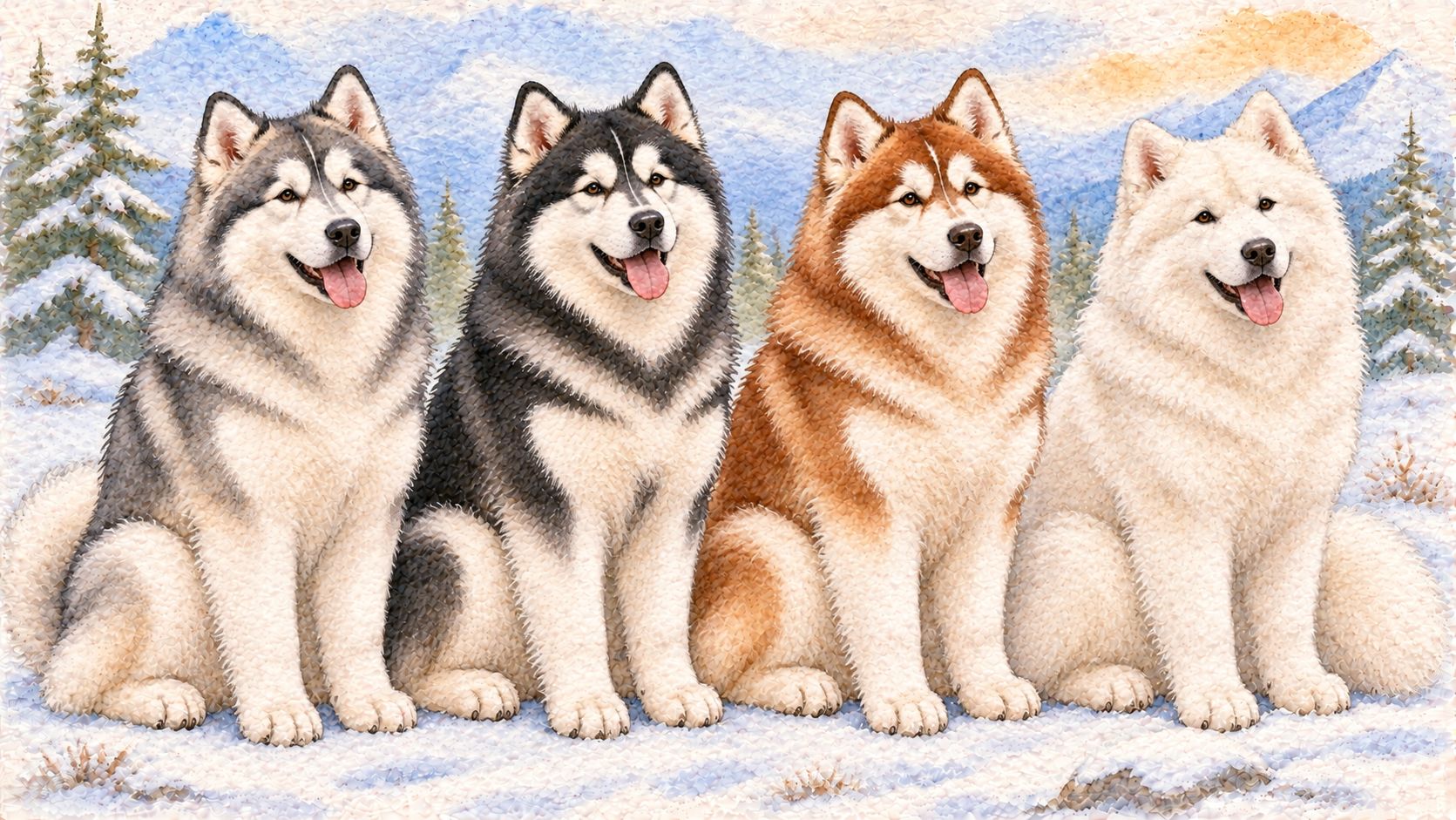
Malamutes come in shades of light gray through black, shades of sable to red, and all white. Most dogs have white on the underbody, legs, feet and part of the face. Many also have a cap or mask on the face, which adds to the breed's distinctive, wolf-like look.
Alaskan Malamute Temperament and Personality
The Alaskan Malamute combines a dignified presence with a warm, playful heart. This breed is known for being:
- Friendly: Malamutes tend to love people, including strangers, and usually greet visitors with enthusiasm rather than suspicion.
- Loyal and devoted: They form deep bonds with their families and want to be included in daily life.
- Intelligent: Malamutes are clever problem-solvers that learn quickly, though they like to decide for themselves whether a task is worth doing.
- Strong-willed: Bred to work with independence in harsh conditions, they can be stubborn and need confident, consistent guidance.
- Playful: Even adult Malamutes keep a fun, puppy-like spirit and enjoy games, digging and romping in the snow.
- Vocal: Rather than barking a lot, many Malamutes "talk" with howls, woos and grumbles that owners find charming.
Because the Malamute is so friendly with people, it is not usually a good guard dog. It is far more likely to welcome a stranger than to scare one away. However, its large size can still make a strong impression on visitors.
Is the Alaskan Malamute Good With Kids and Other Pets?
The Alaskan Malamute can be an affectionate, patient companion for children, especially in an active household that enjoys outdoor time. Because the breed is big and boisterous, it may accidentally knock over small children during play, so supervision is always important. Teaching kids how to interact calmly and respectfully with dogs helps everyone stay safe.
With other dogs, Malamutes can do well, particularly when they are raised together and socialized early. Some can be selective about other dogs of the same sex, so careful introductions are wise. The breed also has a strong prey drive, which means it may chase cats, rabbits, squirrels and other small animals. Some Malamutes live peacefully with a family cat they grew up with, but small pets should always be supervised.
Early socialization is essential. Introducing your Malamute puppy to a wide range of people, animals, sounds and places will help it grow into a well-mannered, confident adult.
Training an Alaskan Malamute
Alaskan Malamutes are highly intelligent and pick up new ideas quickly. However, they also have a strong independent streak, which can make training a test of patience. A Malamute may understand exactly what you are asking and still decide that it has a better idea. The key to success is consistency, clear boundaries and plenty of positive reinforcement.
Here are a few training tips for Alaskan Malamute owners:
- Start early. Begin basic training, leash manners and socialization as soon as your puppy comes home, before it grows too big and strong.
- Keep it interesting. Malamutes get bored with endless repetition. Short, varied sessions with games and rewards work best.
- Use positive methods. Praise, play and treats motivate this breed far better than harsh corrections.
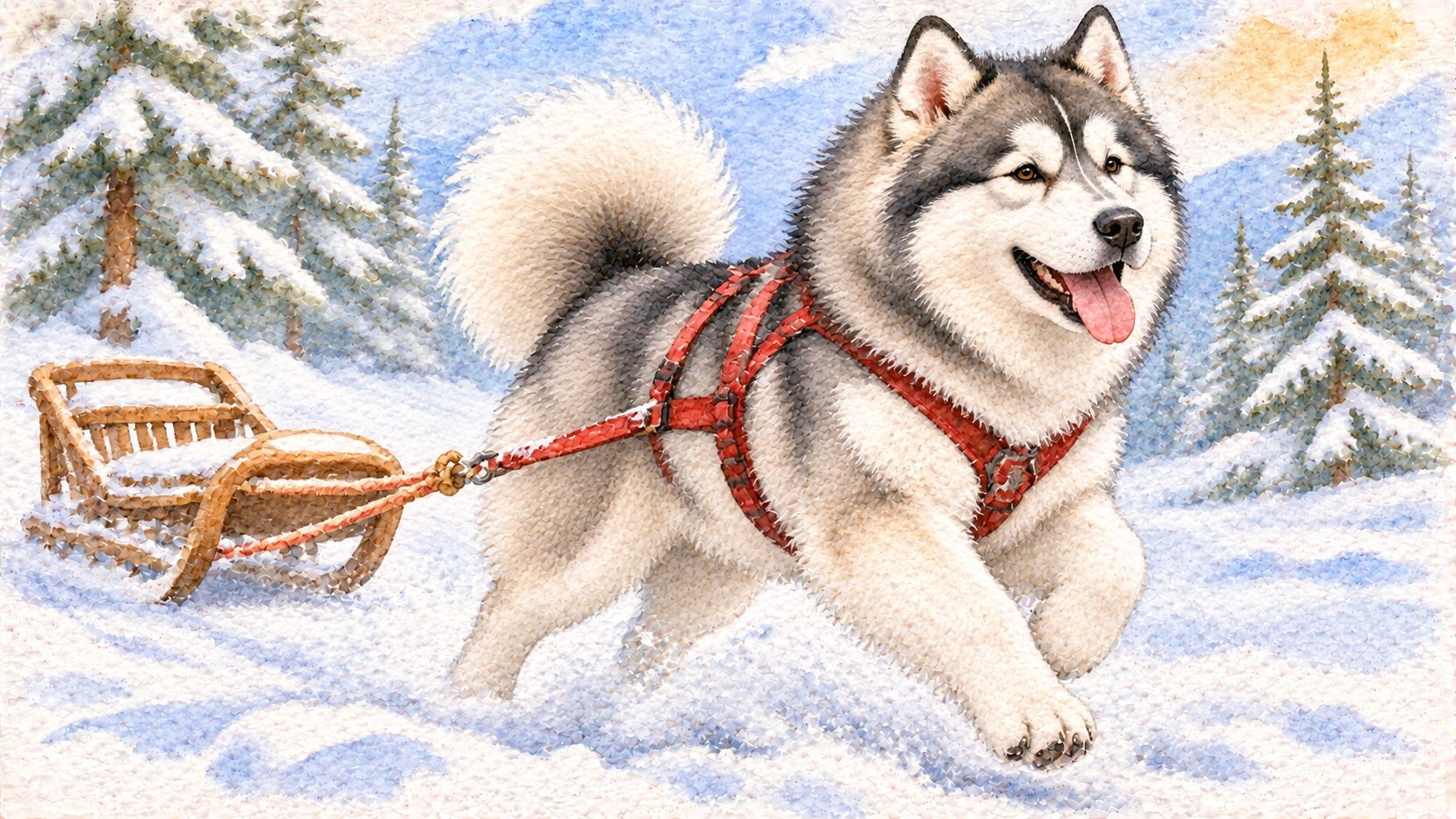
- Teach loose-leash walking. A Malamute was born to pull, so polite leash walking takes time and practice. A well-fitted harness can help.
- Try dog sports. Many Malamutes enjoy sledding, skijoring, carting, weight pulling, agility and backpacking, all of which channel their natural drive in a positive way.
Recall training deserves extra attention. Many Malamutes have an independent, wandering nature and a strong urge to chase, so most owners keep them on a leash or in a securely fenced area at all times.
Exercise Needs
The Alaskan Malamute is a highly athletic dog built for endurance. It needs daily exercise to stay fit, happy and well behaved. Long walks, hikes, jogs in cool weather and active play sessions are all good options. Many owners aim for at least an hour or more of activity each day, adjusted to their dog's age and health.
Malamutes especially love outdoor adventures in cold weather. Snowy days often bring out their most joyful side. In hot weather, however, their thick coat makes them prone to overheating, so exercise should be limited to early mornings and evenings, with plenty of shade and fresh water available.
Mental stimulation matters just as much as physical activity. A bored Malamute may find its own entertainment by digging holes, chewing furniture or escaping the yard. Puzzle toys, scent games and training sessions help keep its clever mind busy. A tall, secure fence is a must, and some owners bury wire along the base of the fence to discourage digging.
Because of its size and energy, the Alaskan Malamute is generally better suited to a house with a yard than to a small apartment.
Grooming an Alaskan Malamute
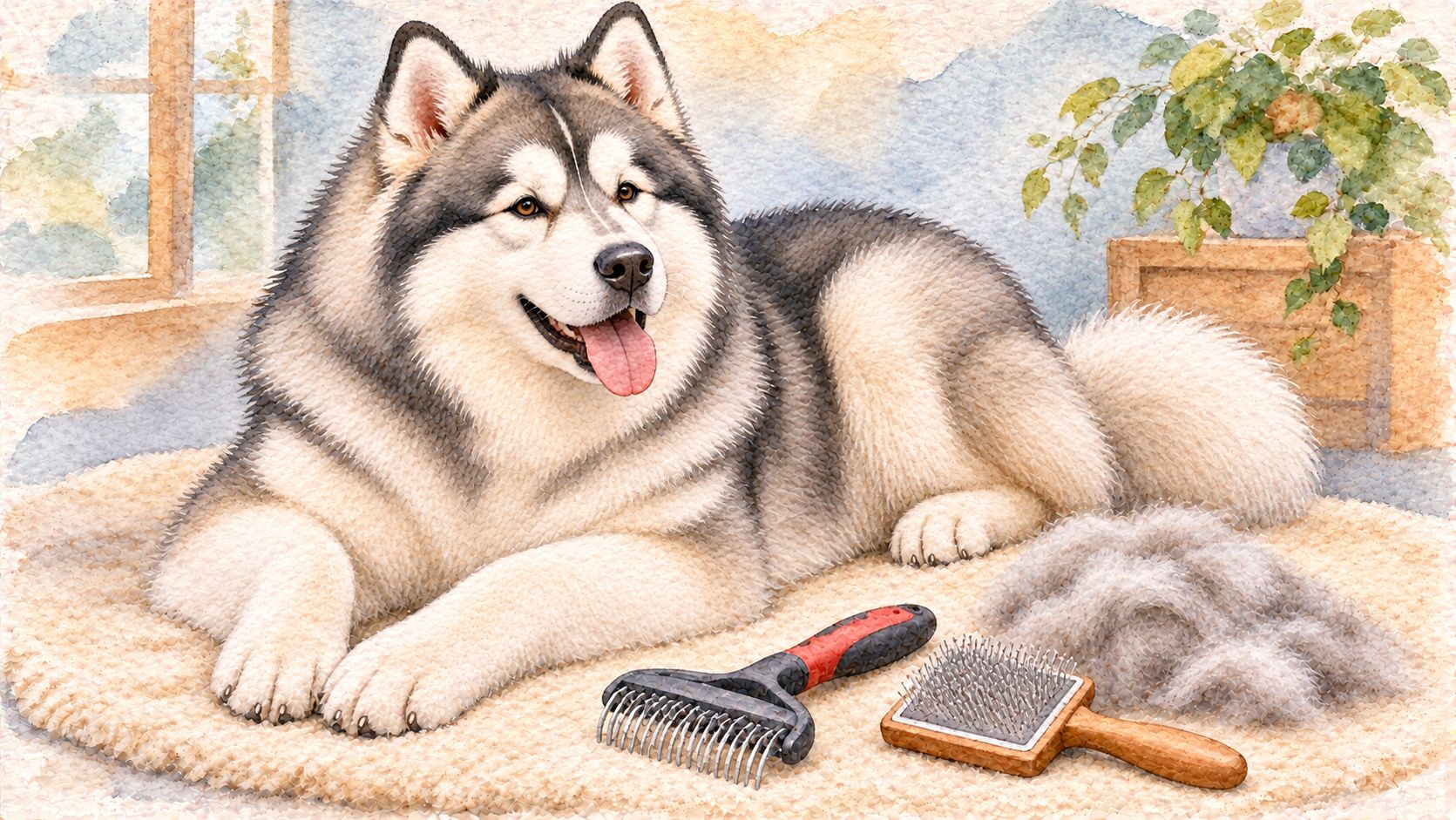
The Alaskan Malamute's thick double coat is beautiful, but it comes with plenty of hair. The breed sheds steadily throughout the year and typically "blows" its undercoat once or twice a year, releasing large clumps of fur over several weeks. During these periods, you may be amazed at how much hair one dog can produce.
Grooming Routine
- Brushing: Regular brushing is important, and daily brushing helps keep the coat healthy and loose hair under control. An undercoat rake and a slicker brush are useful tools.
- Shedding season: Expect to brush more often during coat blows to remove dead undercoat and prevent mats.
- Bathing: Malamutes need only occasional baths. Their coat naturally resists dirt and odor, and bathing too often can strip its natural oils.
- No shaving: The double coat helps insulate the dog in both cold and warm weather, so shaving is generally not recommended.
- Nails: Trim nails every few weeks if they are not worn down naturally through activity.
- Teeth: Brush your dog's teeth several times a week to support good dental health.
- Ears and paws: Check ears weekly for dirt or redness, and look over the paw pads for cuts, ice buildup or debris after outdoor adventures.
The Malamute is not considered a hypoallergenic breed, so people with allergies should spend time with the breed before deciding.
Alaskan Malamute Health and Lifespan
The Alaskan Malamute is generally a sturdy breed, with a typical life expectancy of around 10 to 14 years. Like all breeds, however, it can be prone to certain conditions. Responsible breeders screen their dogs for common concerns, which may include:
- Hip dysplasia: An abnormal formation of the hip joint that can lead to stiffness or arthritis.
- Eye conditions: Some Malamutes may develop eye problems, so regular eye checks are recommended.
- Thyroid issues: An underactive thyroid can affect energy levels, coat and weight.
- Inherited conditions: The breed may be affected by certain genetic conditions, and many breeders use available DNA tests to help reduce the risk.
Because the Malamute is a large, deep-chested breed, owners should learn about bloat, a serious condition that can affect big dogs, and discuss prevention with their veterinarian.
The breed can also gain weight easily if it does not get enough exercise. Extra pounds put stress on the joints, so daily activity and careful portion control are important. Always work with your veterinarian to set up a routine of checkups, vaccinations and preventive care.
Feeding and Nutrition
As a large breed, the Alaskan Malamute does best on a high-quality dog food formulated for large dogs. Large-breed formulas are designed with the needs of bigger bodies and joints in mind.
Puppies should eat a food made specifically for large-breed puppies, which helps support steady, healthy growth. Portion sizes depend on your dog's age, weight and activity level, so follow the feeding guidelines on the food package and ask your veterinarian for advice. Interestingly, many Malamutes eat less than people expect for their size, a trait that may come from their history as efficient working dogs. Treats are useful for training, but they should make up only a small part of your dog's daily calories.
Some Malamutes can be enthusiastic about food and may guard their bowls or try to raid the kitchen counter, so feeding in a calm, consistent spot and keeping food out of reach is a smart habit.
History of the Alaskan Malamute
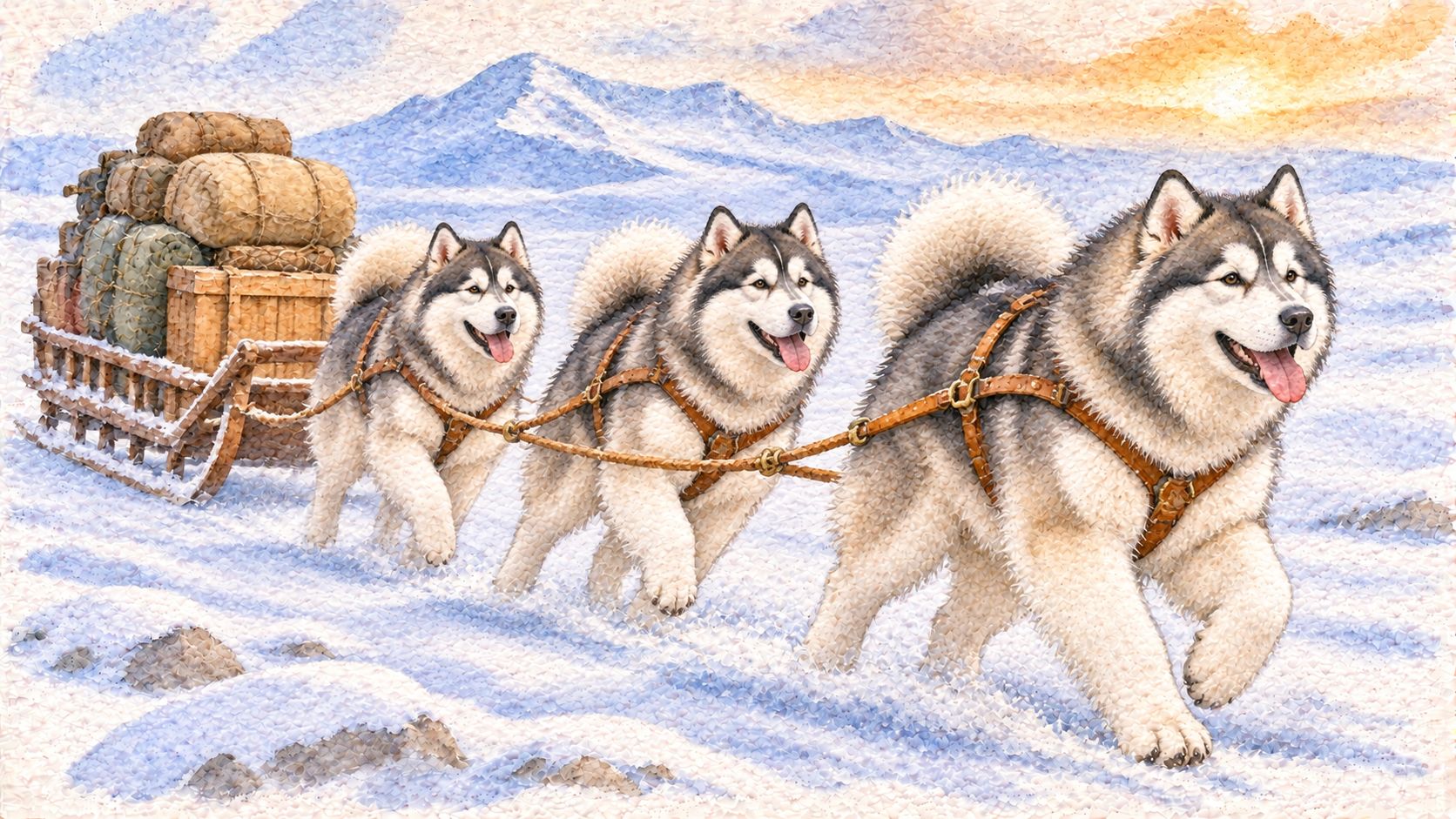
The Alaskan Malamute is one of the oldest Arctic sled dogs. Its story is closely tied to the Mahlemut people, an Inuit group that settled in northwestern Alaska. The breed takes its name from them. The Mahlemuts relied on these strong, hardy dogs to haul heavy loads, help with hunting and travel across vast distances of snow and ice. In such a harsh environment, the dogs were valued partners for survival.
The breed's fortunes changed during the Klondike Gold Rush of the late 1890s. Prospectors flooded into the region and needed strong dogs to pull sleds and carry supplies. Many native dogs were crossbred with other breeds during this time, putting the pure Malamute type at risk.
In the early 1900s, dedicated breeders worked to preserve the traditional Malamute. Their efforts paid off, and the American Kennel Club officially recognized the Alaskan Malamute in 1935.
Malamutes went on to serve in remarkable ways. They hauled supplies on polar expeditions, including Admiral Richard Byrd's journeys to Antarctica, and served during World War II in roles such as search and rescue and transporting freight. In 2010, the Alaskan Malamute was named the official state dog of Alaska, honoring its deep roots in the region.
Is an Alaskan Malamute Right for You?
An Alaskan Malamute could be a wonderful match if you:
- Lead an active, outdoorsy lifestyle and want a dog to share it
- Live in a cooler climate or can keep your dog comfortable in hot weather
- Have a house with a tall, secure fence
- Can handle regular brushing and a lot of shedding
- Have the patience for consistent, positive training
- Want a friendly, affectionate family companion
An Alaskan Malamute may not be the best fit if you:
- Live in a small apartment with little outdoor space
- Want a dog that is always eager to obey commands
- Keep small pets such as rabbits or guinea pigs
- Prefer a tidy home free of dog hair
- Need a watchdog that is wary of strangers
Finding an Alaskan Malamute Puppy
Look for a reputable breeder who health-tests their dogs, raises puppies in a home environment and is happy to answer your questions about the breed. A good breeder will also ask about your lifestyle to make sure a Malamute is the right fit. You can also check with breed clubs and rescue groups, as adult Malamutes sometimes need new homes, often because previous owners underestimated their size, energy or shedding.
Fun Facts About the Alaskan Malamute
- The Alaskan Malamute is named after the Mahlemut people of northwestern Alaska.
- It is one of the oldest Arctic sled dog breeds.
- The Malamute is the official state dog of Alaska.
- Malamutes helped haul supplies on Admiral Byrd's Antarctic expeditions.
- Instead of barking much, many Malamutes "talk" with howls and woo-woo sounds.
- A resting Malamute often wraps its bushy tail over its nose to keep warm in the snow.
Frequently Asked Questions
How big do Alaskan Malamutes get?
Adult males typically stand about 25 inches (64 cm) tall and weigh around 85 pounds (39 kg), while females stand about 23 inches (58 cm) and weigh around 75 pounds (34 kg). Some individual dogs may be larger.
What is the difference between an Alaskan Malamute and a Siberian Husky?
Both are northern sled dogs, but the Malamute is larger and heavier and was bred to haul heavy loads. The Husky is smaller and lighter, bred to pull lighter loads at faster speeds. Malamutes usually have brown eyes, while Huskies may have blue, brown or mixed eyes.
Do Alaskan Malamutes shed a lot?
Yes. Malamutes shed throughout the year and typically blow their undercoat once or twice a year. Regular brushing helps manage the loose hair.
Are Alaskan Malamutes good family dogs?
They can be loving, playful family companions for active households. Because of their size and energy, supervision around young children is important, and small pets may trigger their prey drive.
How long do Alaskan Malamutes live?
The average Alaskan Malamute lifespan is around 10 to 14 years with good care, a healthy diet and regular veterinary checkups.
Can Alaskan Malamutes live in warm climates?
Malamutes are built for the cold, but many live in warmer areas with extra care. Owners should provide air-conditioning, shade and water, and limit exercise to the coolest parts of the day.
Final Thoughts
The Alaskan Malamute is a true Arctic legend, combining incredible strength with a warm, friendly heart. This loyal, playful and dignified breed brings centuries of history, a spectacular coat and endless enthusiasm to the right home. If you can offer daily exercise, patient training, regular brushing and a secure yard, an Alaskan Malamute may become the most devoted adventure partner you have ever had.