25 Fun Facts
25 Camel Facts: Amazing Survivors of the Desert
Camels are perfectly built for life in the world's harshest deserts. They can go for days without water, cope with scorching heat and freezing nights, and carry heavy loads across hot sand that few other animals could cross.
Here are 25 amazing facts about camels, from the truth about their humps to India's colourful camel fairs and the two-humped camels of Ladakh.
Camel Facts
There are two main types of domestic camel: the dromedary, or Arabian camel, with one hump, and the Bactrian camel, with two humps.
A third species, the wild Bactrian camel, lives in remote deserts of China and Mongolia and is critically endangered, with only around 1,000 left.
There are around 35 to 40 million camels in the world, most of them dromedaries.
A camel's hump doesn't store water. It stores fat, which the camel can use for energy when food is scarce.
Camels are born without humps. Their humps develop as they grow and start eating solid food.
A very thirsty camel can drink more than 100 litres of water in just a few minutes.
Camels can lose around a quarter of their body water without getting seriously ill. Most other mammals would be in danger after losing much less.
Camels' red blood cells are oval-shaped, unlike the round cells of other mammals. This helps their blood keep flowing even when they are very dehydrated.
A camel's body temperature can rise during the hot day and fall at night, so it sweats less and saves water.
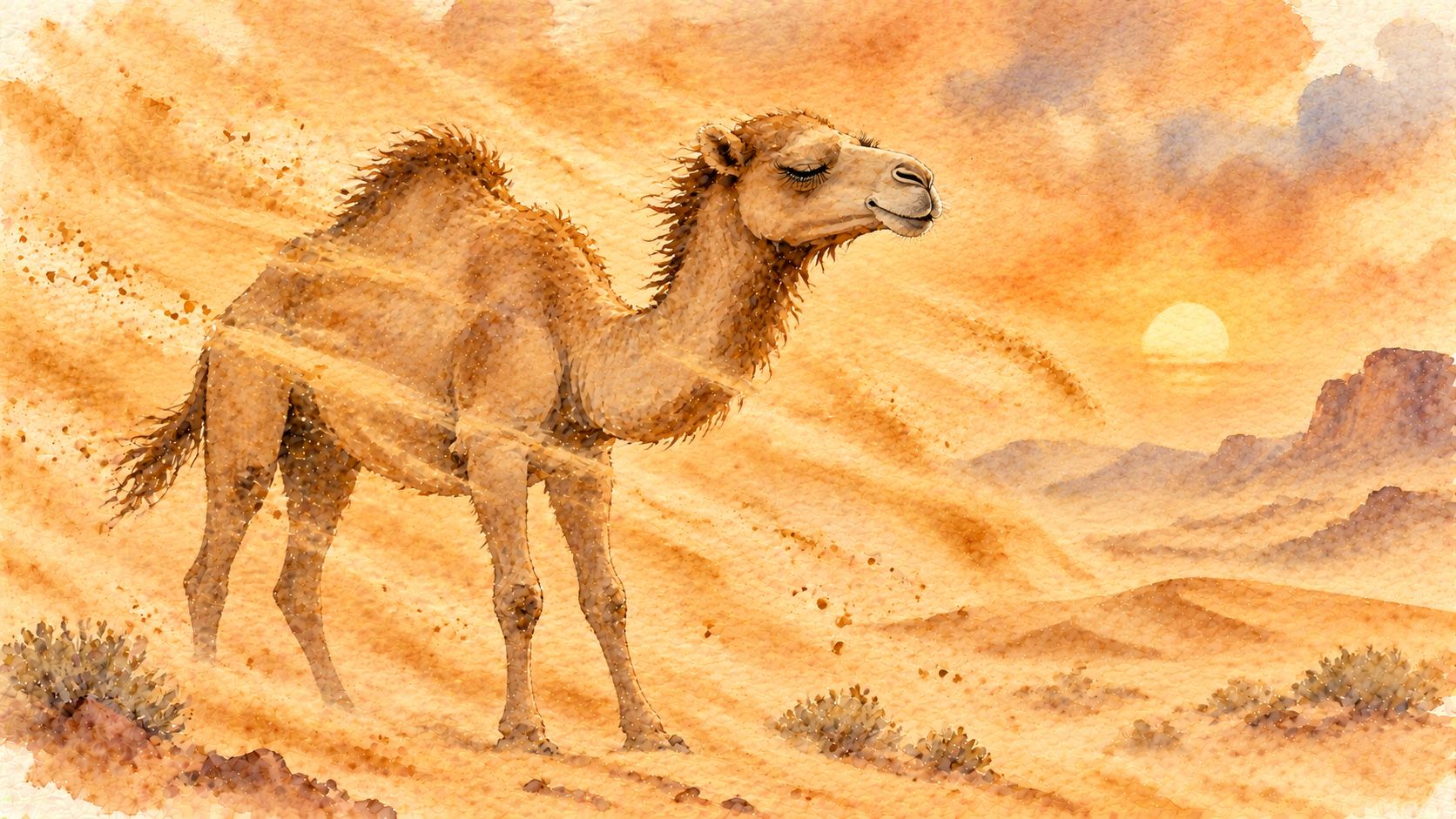
A camel is built to beat sandstorms
Camels have several clever features that protect them in desert sandstorms. Their eyes are shielded by two rows of very long eyelashes, and they have a thin, see-through third eyelid that wipes sand away while still letting them see. They can close their nostrils to keep sand out. Their small, hairy ears also help block blowing sand. Combined with their wide, padded feet, which stop them sinking into soft sand, camels are perfectly designed for life in the dunes.
Camels have tough, leathery mouths and split upper lips, so they can eat thorny desert plants that other animals avoid.
A camel's thick coat reflects sunlight and helps keep its body cool during the day and warm at night.
Camels can run at around 65 kilometres per hour in short bursts and keep up a steady pace over long distances.
When a camel "spits", it's actually bringing up some of its stomach contents mixed with saliva, usually when it feels threatened.
Camels can carry heavy loads, often more than 150 kilograms, across the desert for long distances.
Camels usually live for around 40 years.
Camels first evolved in North America around 40 to 50 million years ago, before spreading to Asia and Africa. Fossils of ancient giant camels have even been found in the Canadian Arctic.
Australia has the world's largest population of wild dromedary camels. They descend from camels brought there in the 1800s to help explore the outback.
In 1855, the US government spent $30,000 to bring camels to America for the army. The experiment was eventually abandoned.
India has camel fairs, camel soldiers and two-humped camels
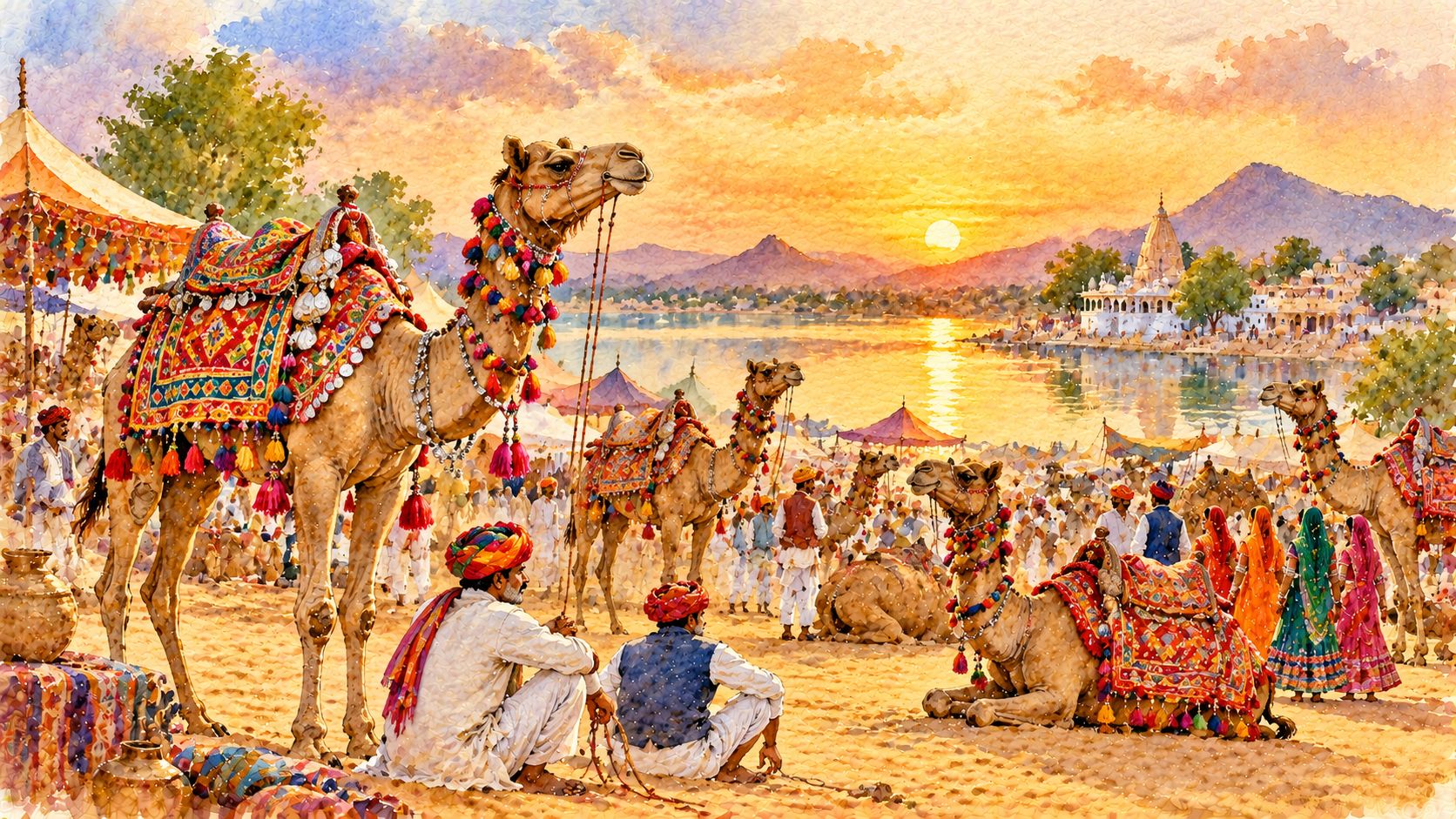
The camel is the state animal of Rajasthan, where camels have long been used for farming, transport and trade. Every year, the Pushkar Camel Fair in Rajasthan brings together thousands of camels, along with traders, races, decorated camels and cultural shows. India's Border Security Force uses camels to patrol the desert along the border, and its colourful camel contingent rides in the Republic Day parade in New Delhi. Far to the north, in the cold Nubra Valley of Ladakh, visitors can ride double-humped Bactrian camels, descendants of the camels that once carried goods along the ancient Silk Road.
India has a national research centre on camels in Bikaner, Rajasthan, which studies camel breeding, health and milk.
Camel milk contains more vitamin C than cow's milk and is used to make products like chocolate, ice cream and cheese in India and the Middle East.
In Arabic, there are dozens of different words for camels, describing their age, colour and type.
Wild Bactrian camels in China's Gobi Desert can survive by drinking salty water that other mammals couldn't drink.
The number of camels in India has fallen sharply in recent decades, as fewer people use them for transport and farming.
Sources and Further Reading
- ICAR-National Research Centre on Camel, Bikaner
- Rajasthan Tourism
- Border Security Force (BSF)
- Food and Agriculture Organization of the United Nations (FAO)
- IUCN Red List of Threatened Species
- Encyclopaedia Britannica
Frequently asked questions
What do camels store in their humps?
Camels store fat in their humps, not water. They can use this fat for energy when food and water are scarce.
How long can a camel go without water?
Camels can go for days, and sometimes weeks in cooler weather, without drinking, depending on the heat and how much moisture they get from plants.
What is the difference between a dromedary and a Bactrian camel?
A dromedary, or Arabian camel, has one hump, while a Bactrian camel has two humps. Bactrian camels are suited to colder deserts.
Why is the camel important in Rajasthan?
The camel is Rajasthan's state animal and has long been used for farming, transport and trade in the Thar Desert. It is celebrated at the famous Pushkar Camel Fair.
Are there two-humped camels in India?
Yes. Double-humped Bactrian camels live in the Nubra Valley of Ladakh, descended from camels that once travelled the ancient Silk Road.
Why do camels spit?
Camels "spit" when they feel threatened. It's actually stomach contents mixed with saliva, which they use to surprise or distract a threat.