25 Dingo Facts: Australia's Wild Dog
With its ginger coat, pointed ears and bushy tail, the dingo looks a lot like a pet dog, but it's a wild hunter that has roamed Australia for thousands of years. It's Australia's largest land predator and an important part of the country's wildlife and history.
Here are 25 fascinating facts about dingoes, from their mysterious arrival in Australia to the giant fence built to keep them out.
Dingo Facts
The dingo is Australia's wild dog and its largest land predator.
The name "dingo" comes from the Dharug language spoken by Aboriginal people around Sydney. Dingoes are also sometimes called "warrigals".
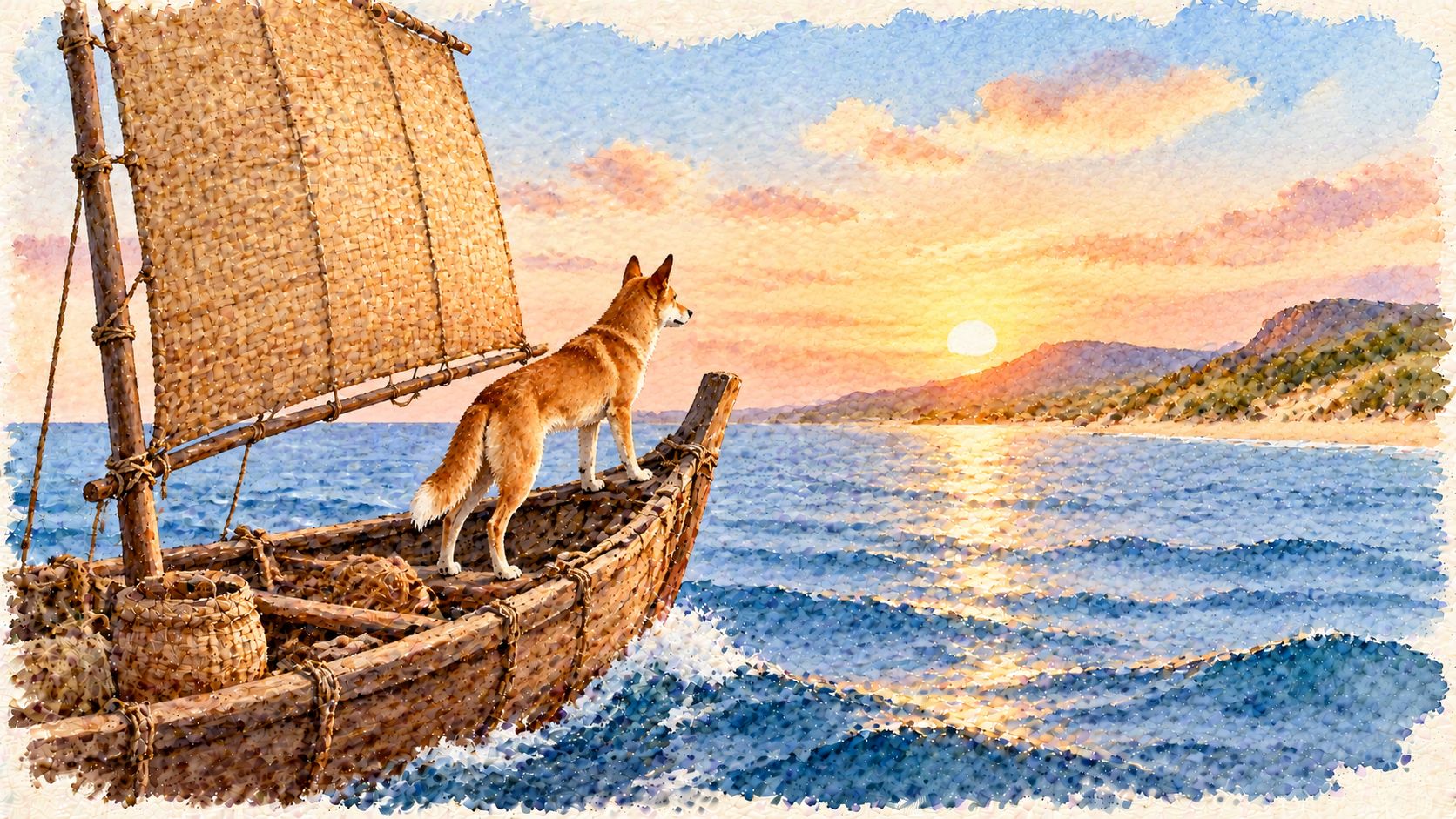
Dingoes aren't native to Australia in the long term. They arrived around 3,500 to 4,000 years ago, most likely brought by seafaring people from Asia.
The dingo's closest living relative is the New Guinea singing dog.
Dingoes are about the size of a medium dog, usually weighing around 13 to 20 kilograms.
Most dingoes are a sandy or ginger colour, often with white feet and a white tail tip, but some are black-and-tan or pale cream.
Dingoes rarely bark. Instead, they howl, yelp, whine and growl.
Dingoes have very flexible wrists, which let them turn their paws to climb, dig and grip prey.
Dingoes also have very flexible necks, helping them look all around while hunting.
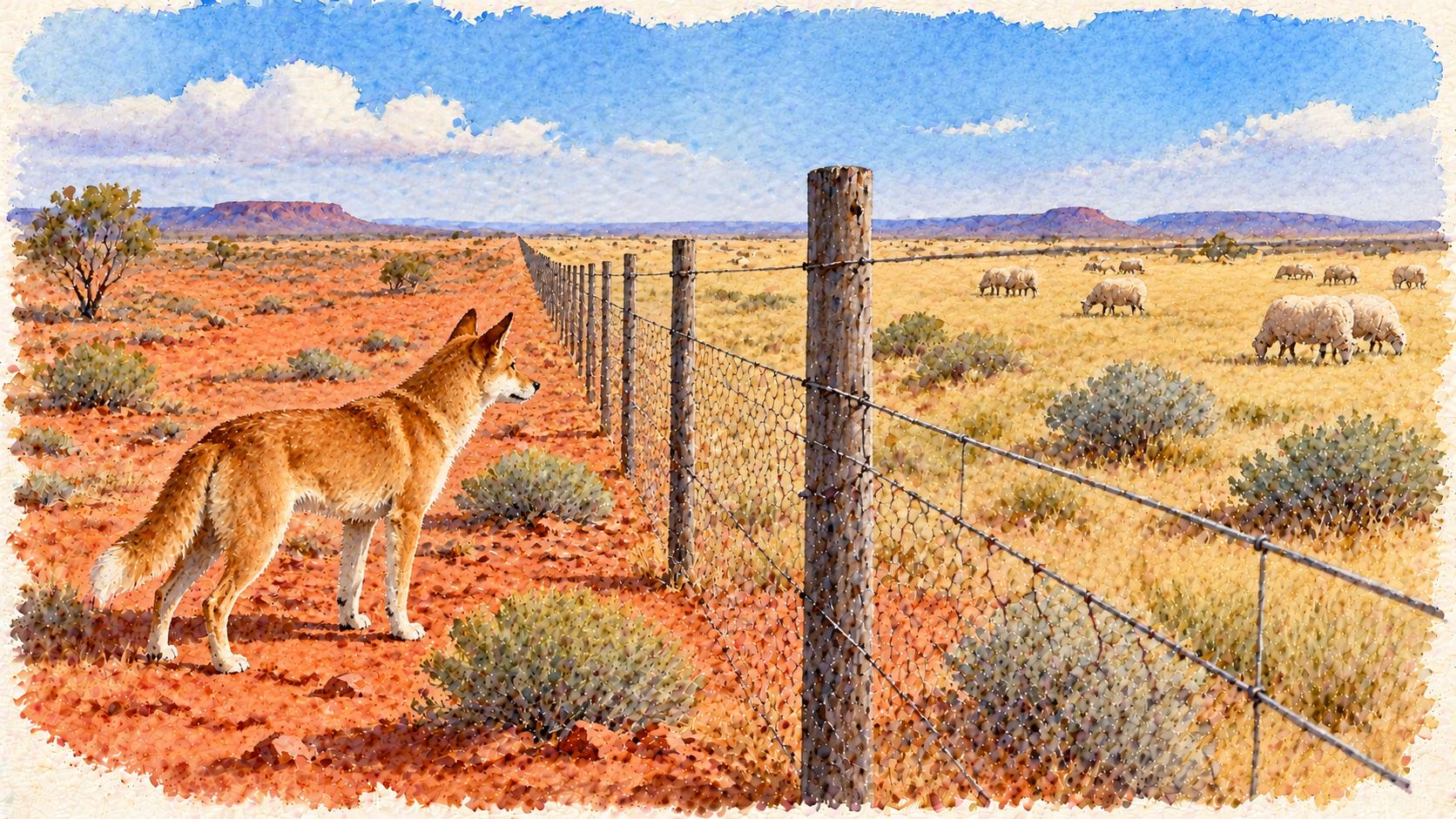
Australia built one of the world's longest fences to keep dingoes out
In the late 1800s and early 1900s, Australia built a huge fence to keep dingoes away from the sheep farms of the south-east. Today, the Dingo Fence stretches for more than 5,000 kilometres across Queensland, New South Wales and South Australia, making it one of the longest structures in the world. Scientists have found that on the side with dingoes, there are often fewer foxes and feral cats, which may help protect small native animals.
Dingoes usually live in family packs led by a dominant male and female.
Unlike pet dogs, which can breed twice a year, female dingoes usually breed only once a year.
A dingo litter usually has around four to six pups, and other pack members help look after them.
Dingoes hunt alone or in packs. Working together, they can catch animals as large as kangaroos.
They eat a wide range of food, including rabbits, wallabies, rodents, birds, lizards and even insects.
Dingoes often bury extra food so they can come back and eat it later.
Dingoes are found across most of mainland Australia, from deserts to forests and mountains.
The dingoes of K'gari, formerly called Fraser Island, are thought to be some of the purest dingoes in Australia.
Dingoes can breed with domestic dogs, but a 2023 DNA study found that most wild dingoes still have mostly dingo ancestry.
Dingoes may share a link with ancient India
Scientists still debate exactly how and when dingoes reached Australia. A 2013 genetic study found evidence that people from India mixed with Aboriginal Australians around 4,000 years ago, around the same time dingoes first appear in Australia's fossil record. This led some scientists to suggest that these travellers may have brought dingoes with them, although other studies point to Southeast Asia. Dingoes are also similar in many ways to ancient free-ranging dogs of Asia, including India's own indigenous dog, sometimes called the INDog.
Dingoes play an important role in Aboriginal culture and appear in many Dreaming stories.
Aboriginal people sometimes kept dingoes as companions and for help with hunting.
The Australian cattle dog, a famous herding breed, has dingo ancestry.
Dingoes usually avoid people, and attacks on humans are rare.
Wild dingoes usually live for around 5 to 10 years, and some live longer in captivity.
Sources and Further Reading
- Australian Museum
- Proceedings of the National Academy of Sciences (PNAS)
- University of New South Wales
- Queensland Government
- Encyclopaedia Britannica
- National Geographic
Frequently asked questions
Is a dingo a dog?
Dingoes are wild dogs. They are closely related to domestic dogs but have lived wild in Australia for thousands of years.
How did dingoes get to Australia?
Dingoes arrived around 3,500 to 4,000 years ago, most likely brought by seafaring people from Asia. The exact route is still debated by scientists.
Do dingoes bark?
Dingoes rarely bark. They mainly communicate by howling, yelping, whining and growling.
What is the Dingo Fence?
The Dingo Fence is a barrier more than 5,000 kilometres long across eastern Australia, built to keep dingoes away from sheep farms.
Are dingoes related to Indian dogs?
Dingoes are similar to ancient free-ranging dogs of Asia, including India's indigenous dog, and some scientists think travellers from India may have helped bring them to Australia.
Are dingoes dangerous?
Dingoes usually avoid people, and attacks on humans are rare, but they are wild animals and shouldn't be fed or approached.
More Fun Facts