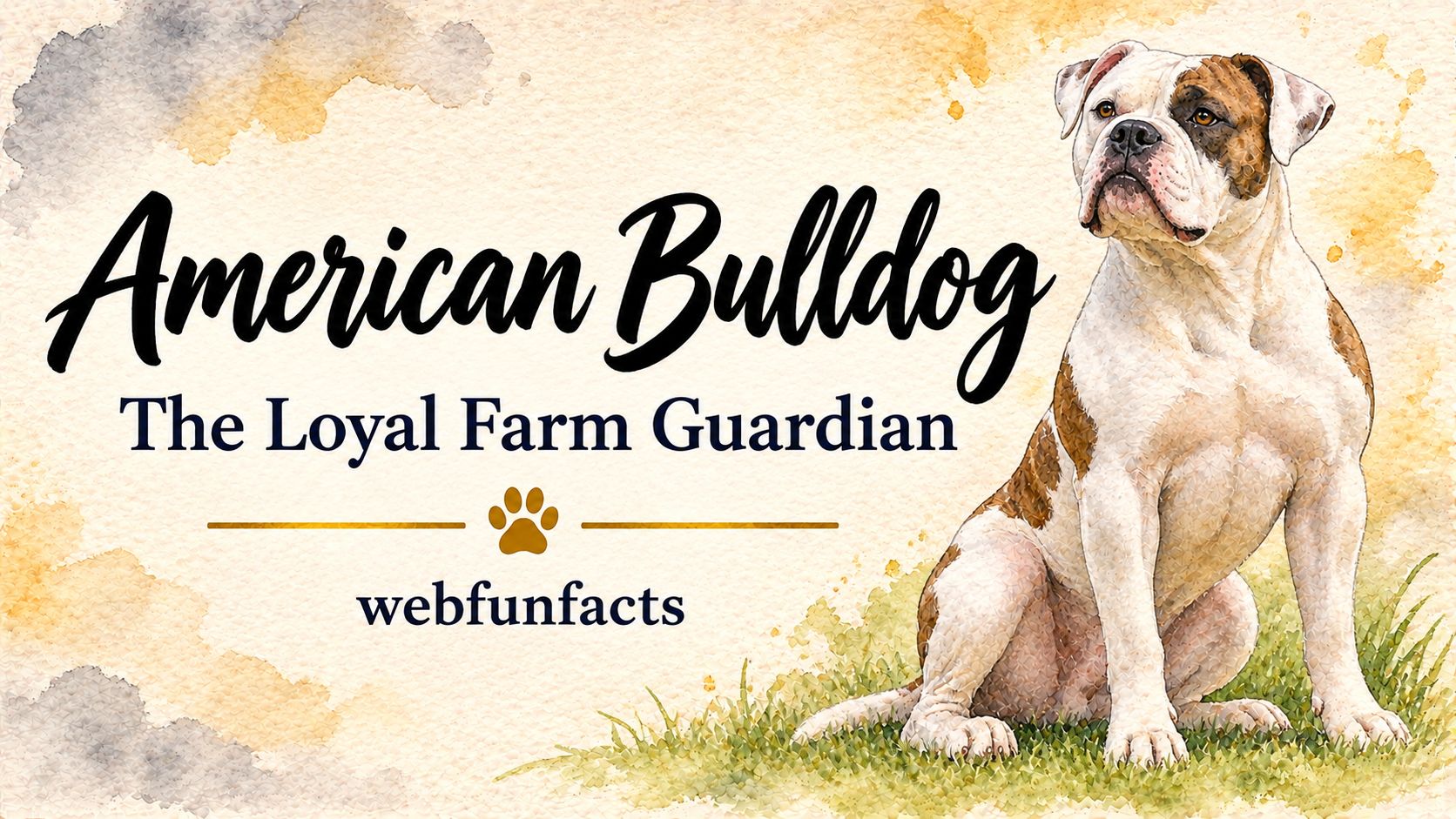
Broad-chested, powerful and surprisingly light on its feet, the American Bulldog is the hard-working country cousin of the familiar English Bulldog. Where the English Bulldog is famous for its low, rolling walk and love of the sofa, the American Bulldog is taller, leaner and far more athletic. For generations, it earned its keep on farms and ranches in the southern United States, helping to round up livestock and guard the homestead.
Behind that muscular frame is a loyal, affectionate and often goofy companion that adores its family. In this complete American Bulldog dog breed guide, you will learn everything you need to know before bringing one home, including its size, temperament, training needs, exercise requirements, grooming routine, common health concerns, diet tips and fascinating history.
American Bulldog at a Glance
| Trait | Details |
|---|---|
| Breed group | Not AKC recognized (Foundation Stock Service); UKC Guardian Dog Group |
| Height | Roughly 20 to 27 inches (51 to 69 cm) |
| Weight | Males 75 to 100 pounds (34 to 45 kg); females 60 to 80 pounds (27 to 36 kg) |
| Life expectancy | About 10 to 12 years |
| Coat | Short, close-lying, soft to slightly stiff |
| Colors | White with black, brown, brindle or tan markings |
| Shedding | Moderate |
| Energy level | Moderate to high |
| Temperament | Loyal, athletic, friendly, sensitive, goofy |
| Good for | Experienced owners, active households, suburban or rural homes |
| Origin | United States (descended from early English bulldogs) |
What Is an American Bulldog?
The American Bulldog is a large, muscular working breed that developed in the United States from the old-style bulldogs brought over by European settlers. Unlike the modern English Bulldog, which was gradually bred into a shorter, heavier companion, the American Bulldog stayed true to its practical roots. Farmers valued it as an all-purpose helper that could catch and hold stray livestock, protect property and keep wild animals away from the farm.
Today, the American Bulldog is mainly a family companion, though many still enjoy work and sports. It is recognized by the United Kennel Club (UKC) as a member of its Guardian Dog Group. The American Kennel Club (AKC) has not granted full recognition, but the breed is listed in the AKC Foundation Stock Service, a program for breeds that are developing toward possible future recognition.
American Bulldog Size and Appearance
The American Bulldog is a large, sturdy dog with a compact and muscular build. Males usually weigh 75 to 100 pounds (34 to 45 kg), while females are lighter at around 60 to 80 pounds (27 to 36 kg). Most adults stand somewhere between about 20 and 27 inches (51 to 69 cm) tall at the shoulder, with males generally taller than females.
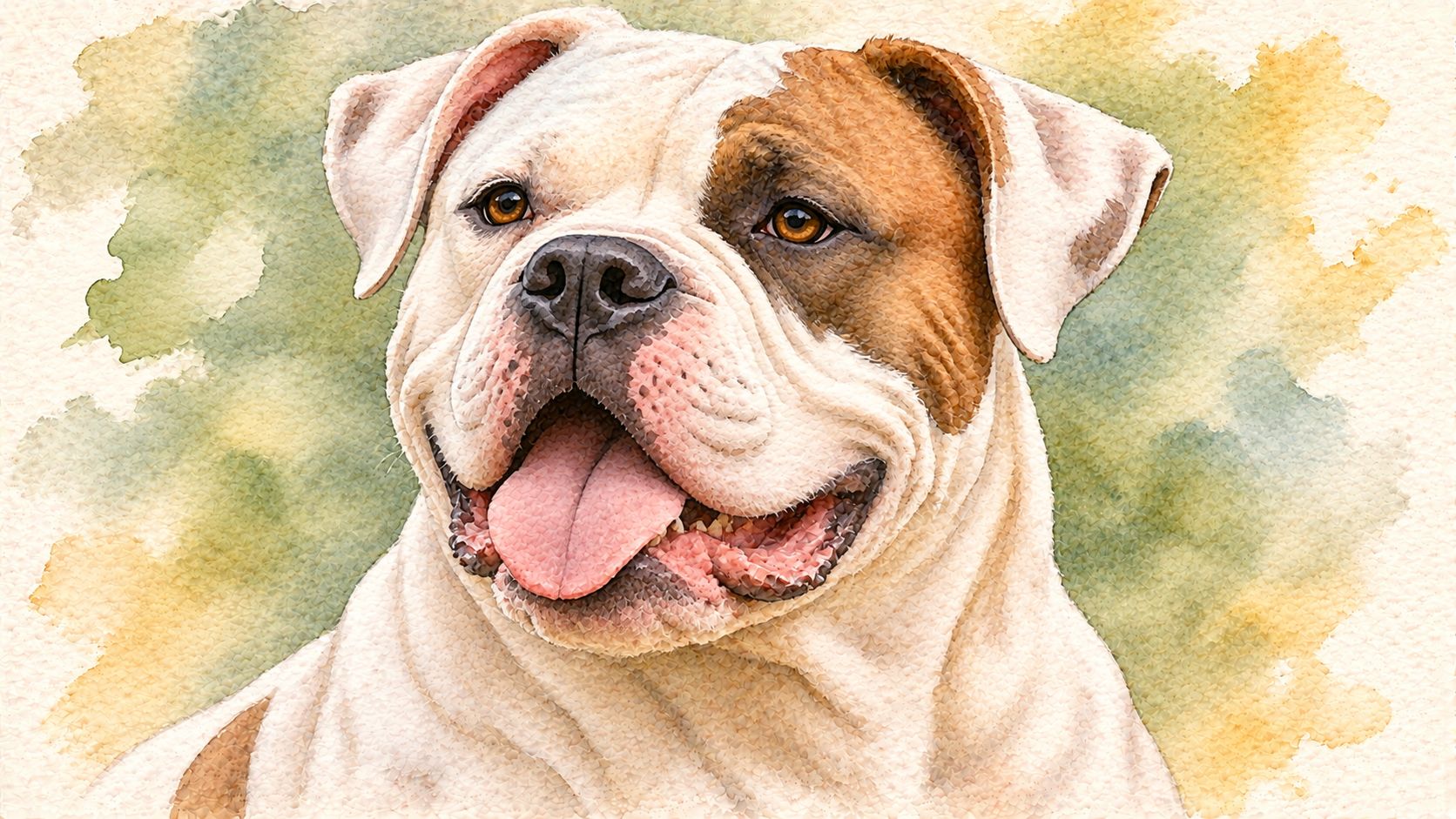
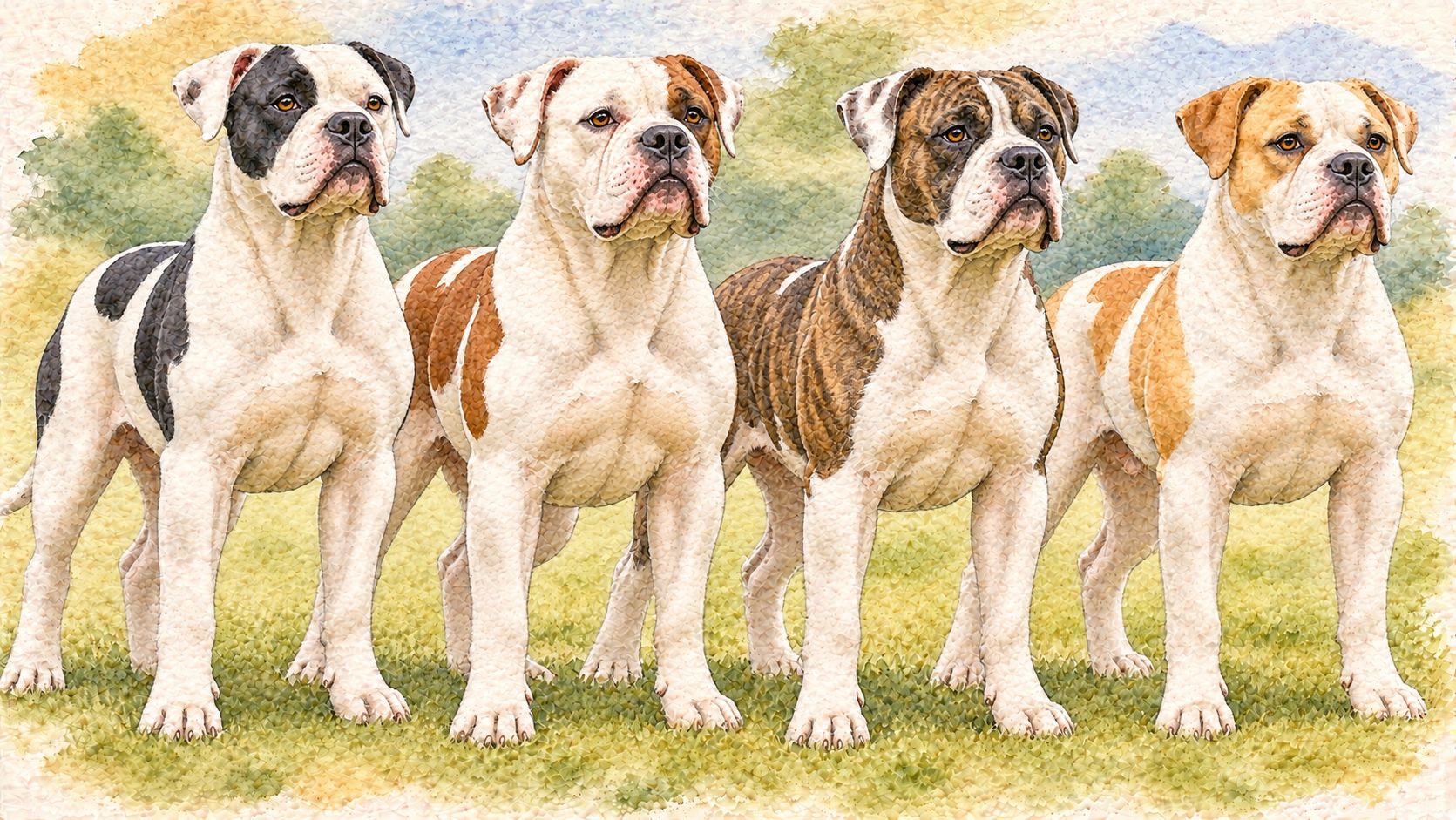
The breed has a broad head, a strong jaw, a wide chest and powerful legs that give it impressive speed and agility for its size. Its face may show some wrinkles, and its ears can be folded, semi-pricked or rose-shaped. Within the breed, you may notice two general looks. Some dogs are bulkier with a broader head and shorter muzzle, while others are leaner and more athletic with a slightly longer muzzle. Breeders and fans sometimes call these the "bully" and "standard" types, and many dogs fall somewhere in between.
Coat and Colors
The American Bulldog has a short coat that lies close to the body. Depending on the individual dog, the hair can feel soft or a little stiff to the touch. The coat is easy to care for and suits mild climates well.
The breed is usually white with patches or markings in black, brown, brindle or tan. Many dogs are mostly white with a few colored patches on the head and body, while others carry larger areas of color. Any combination of white with these shades is possible.
American Bulldog Temperament and Personality
The American Bulldog combines strength and confidence with a soft, people-loving heart. With good training and socialization, this breed is known for being:
- Loyal: American Bulldogs form deep bonds with their families and like to stay close to the people they love.
- Athletic: They are strong, quick and agile, and they enjoy having a job or activity to focus on.
- Friendly: A well-socialized American Bulldog is usually warm and easygoing with the people it knows.
- Sensitive: Despite their tough look, they respond best to gentle, encouraging handling and can be upset by harsh treatment.
- Goofy: Many owners describe a clumsy, playful streak that gives the breed a sweet and comical charm.
- Alert: American Bulldogs will bark to let you know when someone approaches, making them natural watchdogs.
Because the breed was developed to guard and work with livestock, it can be watchful and protective of its home. Early and frequent socialization helps an American Bulldog learn the difference between real threats and normal everyday visitors. The breed also loves company and can be prone to separation anxiety and excessive barking if it is left alone for long periods.
Is the American Bulldog Good With Kids and Other Pets?
American Bulldogs can be affectionate and patient family dogs, but their size and enthusiasm need to be considered. Puppies and young adults in particular can be bouncy and clumsy, which means they may accidentally knock over a small child or an elderly relative. For this reason, the breed is often a better match for homes with older, dog-savvy children. Adults should always supervise interactions between dogs and kids.
With other pets, results vary from dog to dog. Many American Bulldogs live happily with other animals, especially when raised alongside them. However, some can be selective about other dogs, particularly dogs of the same sex, and some have a noticeable prey drive toward small animals. Careful introductions, steady training and early socialization go a long way toward building good manners.
Training an American Bulldog
The American Bulldog is intelligent and eager to please the people it trusts, but that intelligence works both ways. These dogs can pick up bad habits just as quickly as good ones, so clear rules and consistent routines are important from day one. The breed is also sensitive, which is why positive reinforcement such as praise, play and treats works far better than harsh corrections.
Because of its strength and protective background, the American Bulldog tends to do best with experienced, patient owners who are committed to ongoing training. Here are a few tips:
- Start early. Begin training and socialization as soon as your puppy comes home, while it is still small and easy to guide.
- Socialize often. Introduce your puppy to many people, places, sounds and friendly dogs so it grows into a confident and relaxed adult.
- Teach leash manners. An adult American Bulldog is very strong, so polite leash walking is an essential skill to build while your dog is young.
- Use rewards. Keep sessions upbeat and reward the behavior you want to see. This sensitive breed thrives on encouragement.
- Build alone-time skills. Practice short, calm separations and use crate training to help prevent separation anxiety.
- Try dog sports. Many American Bulldogs enjoy obedience, agility, weight pulling and other activities that use their strength and focus.
Exercise Needs
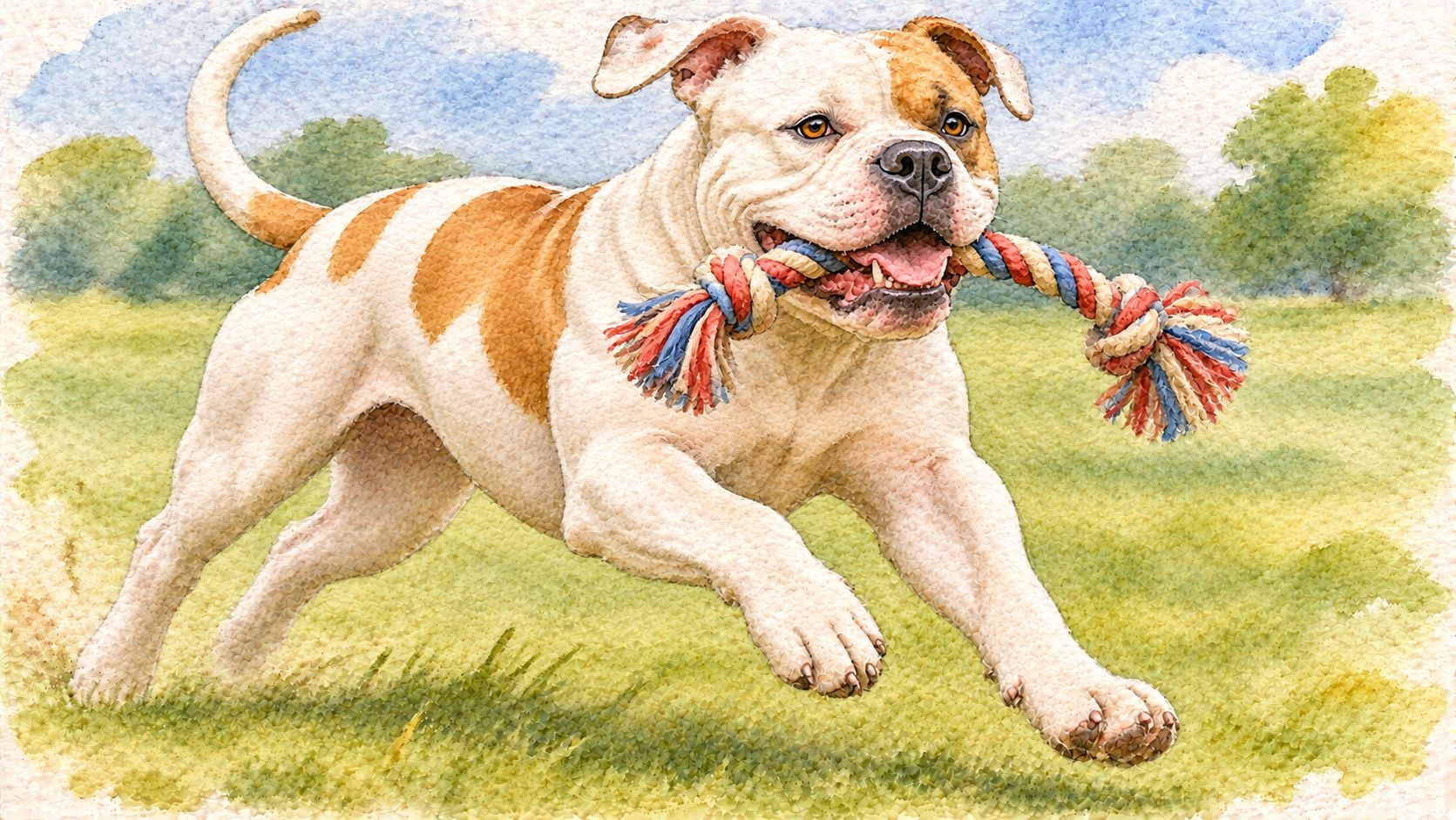
The American Bulldog is much more energetic than its English cousin. It loves to be active and needs daily exercise to stay fit and content. Long leash walks, play sessions in a securely fenced yard and chances to run and explore all help burn off energy.
Mental exercise matters just as much as physical activity. Training games, puzzle toys and interactive play give this clever breed something to think about and can help prevent boredom-related behaviors such as chewing or barking.
The American Bulldog usually does best in a suburban or rural home with outdoor space. It does not need a huge farm, but it does appreciate room to stretch out and roam safely. Keep in mind that puppies should get gentle, low-impact exercise until their joints are fully developed. Avoid long runs or repetitive jumping with young dogs, and ask your veterinarian when it is safe to increase activity.
This breed also does best in mild, temperate weather. Very hot or very cold conditions can be hard on it, so plan walks for the cooler parts of the day in summer and limit time outside during extreme weather.
Grooming an American Bulldog
The American Bulldog's short coat is fairly low-maintenance, but this breed does shed, and it has a few special grooming needs, especially around the face and skin.
Grooming Routine
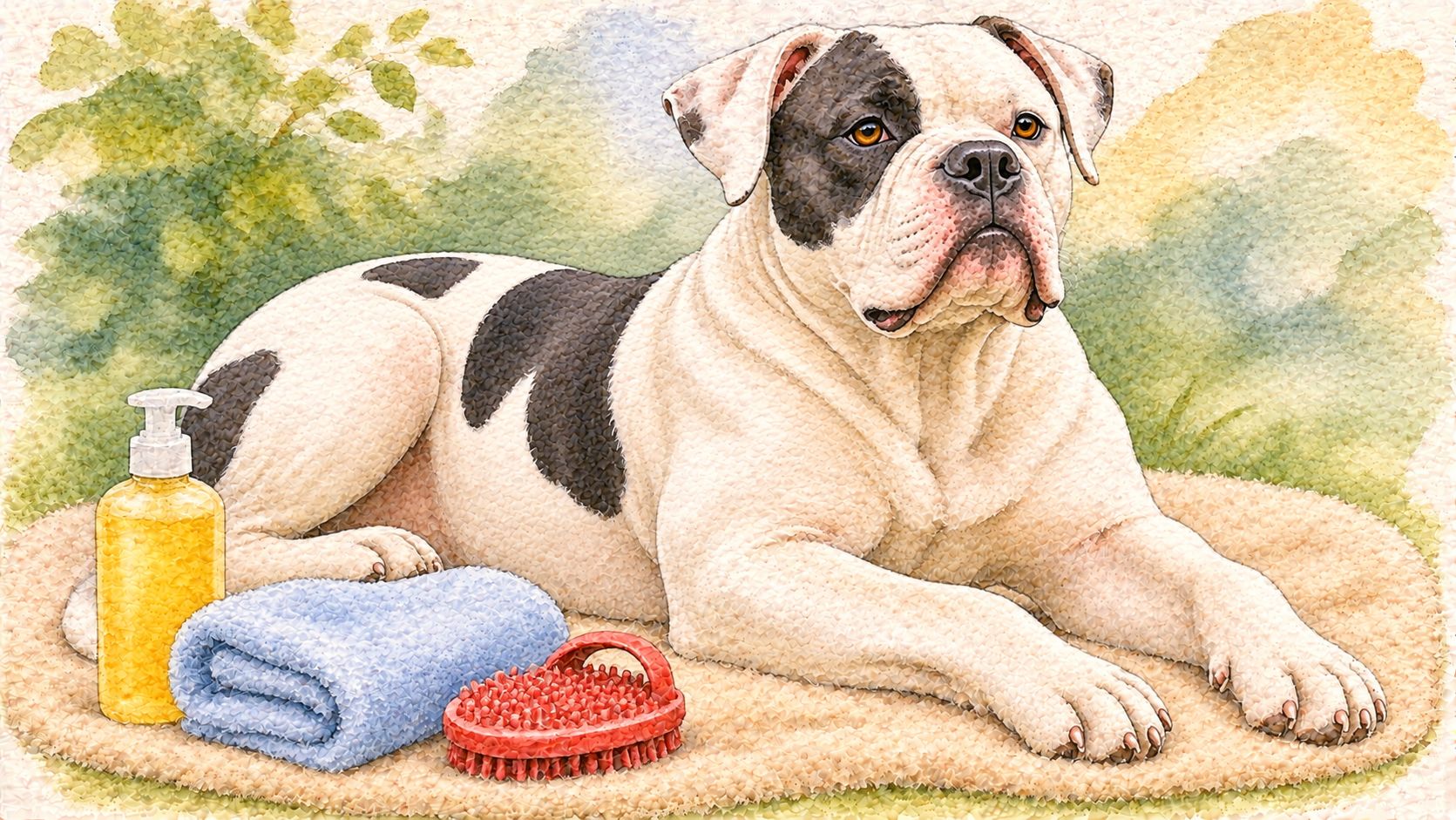
- Brushing: Brush the coat regularly, about once or twice a week, to remove loose hair and keep the coat shiny. A rubber curry brush or soft bristle brush works well.
- Bathing: Bathe your dog occasionally or when it gets dirty, using a gentle dog shampoo. Many American Bulldogs have sensitive skin.
- Skin folds: Wipe and dry any facial wrinkles regularly so moisture and dirt do not build up.
- Ears: Check and clean the ears regularly to keep them free of wax and debris.
- Paws and nails: Look over the paws for cuts or scrapes, and trim the nails every few weeks.
- Teeth: Brush your dog's teeth regularly to support good dental health.
- Anal glands: Watch for scooting, licking or a strong odor, and contact your veterinarian if you notice these signs.
American Bulldog Health and Lifespan
The American Bulldog has a typical lifespan of about 10 to 12 years. Like all breeds, it can be prone to certain health conditions. Responsible breeders screen their dogs for common concerns, which may include:
- Hip dysplasia: An abnormal formation of the hip joint that is common in large, heavy breeds.
- Respiratory issues: Some dogs, particularly those with shorter muzzles, may have trouble breathing in heat or during heavy exercise.
- Allergies and skin irritation: Sensitive skin and allergies are fairly common in the breed.
- Cataracts: A clouding of the lens of the eye that can affect vision.
- Sensitive stomach: Some American Bulldogs have delicate digestion and do best on a consistent diet.
Regular veterinary checkups help catch problems early. Work with your veterinarian to set up a routine of vaccinations, parasite prevention and dental care, and to discuss spaying or neutering. As your dog gets older, your vet can also help you decide when to move to a senior diet and whether any supplements might be helpful.
Feeding and Nutrition
As a large, muscular breed, the American Bulldog does best on a high-quality dog food formulated for large breeds. Large-breed formulas are designed with the needs of bigger dogs in mind and often include nutrients such as glucosamine and omega-3 fatty acids to support joints, skin and coat. Because many American Bulldogs have sensitive stomachs or skin, a formula made for sensitive dogs can also be a good option.
Most owners feed their American Bulldog on a regular schedule, usually twice a day, rather than leaving food out all day. Portion sizes depend on your dog's age, weight and activity level, so follow the feeding guide on the package and ask your veterinarian for advice. Puppies should eat a large-breed puppy food to support steady, healthy growth. Treats are great for training, but they should make up no more than about 10 percent of your dog's daily calories.
History of the American Bulldog
The American Bulldog's roots go back to the working bulldogs of England. When settlers traveled to North America, many brought these sturdy dogs with them. Over time, the bulldogs that stayed in England were bred into the shorter, heavier dog we know today as the English Bulldog. In America, however, farmers kept breeding for usefulness rather than looks.
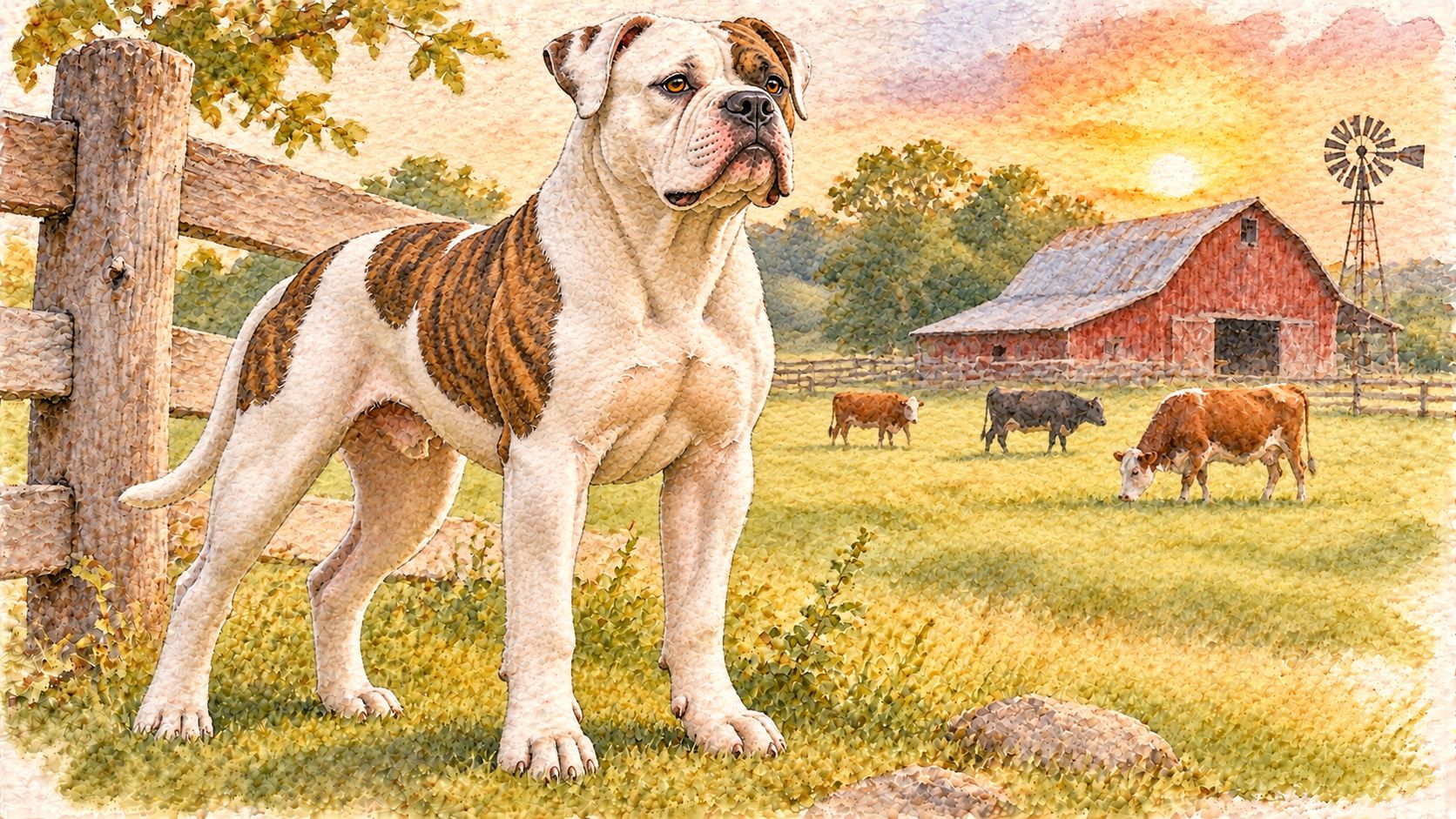
On the farms and ranches of the American South, these bulldogs became true all-purpose workers. They helped catch and hold semi-wild cattle and hogs, guarded the property and kept unwanted animals away. Because their value came from their skills, the dogs remained tall, strong and athletic.
By the middle of the 1900s, the breed had become rare. A small group of dedicated breeders, including John D. Johnson and Alan Scott, worked to rebuild and preserve the old working bulldog. Their efforts helped shape the different types of American Bulldog seen today.
The United Kennel Club recognized the American Bulldog in 1999, and the breed was later added to the AKC Foundation Stock Service. The breed also gained fame on the big screen when an American Bulldog played Chance, the playful young dog in the 1993 family film Homeward Bound: The Incredible Journey.
Is an American Bulldog Right for You?
An American Bulldog could be a wonderful match if you:
- Want a loyal, affectionate and athletic large dog
- Have experience training dogs, or are committed to learning
- Live in a suburban or rural home with secure outdoor space
- Can provide daily exercise, play and mental stimulation
- Are home often and enjoy plenty of time with your dog
- Have adults or older, dog-savvy children in the household
An American Bulldog may not be the best fit if you:
- Have toddlers or frail relatives who could be knocked over
- Live in a small apartment with no outdoor space
- Are away from home for long hours most days
- Want a very quiet dog, since the breed barks to alert you
- Live in a very hot or very cold climate
Some cities and housing providers have rules that apply to certain large or bulldog-type breeds, so it is a good idea to check local regulations before bringing one home.
Finding an American Bulldog Puppy
Look for a reputable breeder who health-tests their dogs, raises puppies in a home environment and is happy to answer your questions. A good breeder will also ask about your lifestyle to make sure the breed is the right fit. Adoption is another great option. Breed rescue groups and sites such as Petfinder often list American Bulldogs and bulldog mixes looking for new homes.
Fun Facts About the American Bulldog
- The American Bulldog is much taller and more athletic than the English Bulldog.
- The breed worked on southern farms catching and holding livestock.
- An American Bulldog played Chance in the 1993 film Homeward Bound: The Incredible Journey.
- The United Kennel Club recognized the breed in 1999.
- Many American Bulldogs are surprisingly agile and can jump impressively high for their size.
- Despite their tough look, they are known as sensitive and often goofy companions.
Frequently Asked Questions
How big do American Bulldogs get?
Males usually weigh 75 to 100 pounds (34 to 45 kg) and females about 60 to 80 pounds (27 to 36 kg). Most stand roughly 20 to 27 inches (51 to 69 cm) tall at the shoulder.
What is the difference between an American Bulldog and an English Bulldog?
Both share early English bulldog ancestors, but the American Bulldog is taller, leaner and much more active. The English Bulldog is shorter, heavier and more laid-back.
Are American Bulldogs good family dogs?
They can be loving, loyal family dogs with proper training and socialization. Their size and clumsiness make them a better fit for homes with older children rather than toddlers.
Do American Bulldogs shed?
Yes. Their short coat sheds moderately throughout the year. Brushing once or twice a week helps control loose hair.
How long do American Bulldogs live?
The typical American Bulldog lifespan is about 10 to 12 years with good care, a healthy diet and regular veterinary checkups.
Is the American Bulldog recognized by the AKC?
Not fully. The breed is part of the AKC Foundation Stock Service and is fully recognized by the United Kennel Club, which accepted it in 1999.
Final Thoughts
The American Bulldog is a strong, loyal and big-hearted breed with a proud working history. It shines in active homes where it gets daily exercise, consistent positive training and plenty of time with its people. If you have the space, experience and energy to match this athletic farm dog, an American Bulldog can become a devoted and delightfully goofy companion for many years.