
The Australian Shepherd is a brilliant, athletic herding dog famous for its striking merle coat, bright eyes and seemingly endless supply of energy. Fans often call it simply the "Aussie," and few breeds are as eager to learn, work and play alongside their people. Whether it is moving sheep on a ranch or racing through an agility course, this dog loves having a job to do.
Despite the name, the breed's story actually unfolded in the American West, not Australia. In this complete Australian Shepherd dog breed guide, you will learn about its size, temperament, training, exercise needs, grooming, health, feeding and colorful history, so you can decide whether an Aussie is the right match for your home.
Australian Shepherd at a Glance
| Trait | Details |
|---|---|
| Breed group | Herding (AKC) |
| Height | About 20 to 23 inches (51 to 58 cm) for males; 18 to 21 inches (46 to 53 cm) for females |
| Weight | About 35 to 70 pounds (16 to 32 kg) |
| Life expectancy | 12 to 15 years |
| Coat | Medium length, weather-resistant double coat |
| Colors | Black, blue merle, red, red merle, with or without white and tan markings |
| Shedding | Heavy; especially during seasonal coat changes |
| Energy level | High |
| Temperament | Intelligent, hardworking, lively, loyal, even-tempered |
| Good for | Active owners, families with older kids, homes with yards |
| Origin | United States (with European herding roots) |
What Is an Australian Shepherd?
The Australian Shepherd is a medium-sized working dog developed to herd and guard livestock. It belongs to the American Kennel Club's Herding Group, and its strong instincts, quick mind and stamina made it a favorite of ranchers across the western United States.
Today, the Aussie is just as likely to live in a suburban home as on a farm. It has become one of the most popular breeds in America, prized by active families, dog sport competitors and working handlers. Its intelligence and drive also make it a natural fit for roles such as therapy work, search and rescue and detection work.
Australian Shepherd Size and Appearance
This is a well-balanced, medium-sized dog with a body that is slightly longer than it is tall. It has a sturdy frame, moderate bone and a smooth, easy stride that lets it work all day without tiring.
How Big Do Australian Shepherds Get?
Most adult Australian Shepherds weigh roughly 35 to 70 pounds, with males usually larger and heavier than females. Males typically stand about 20 to 23 inches tall at the shoulder, while females usually measure around 18 to 21 inches.
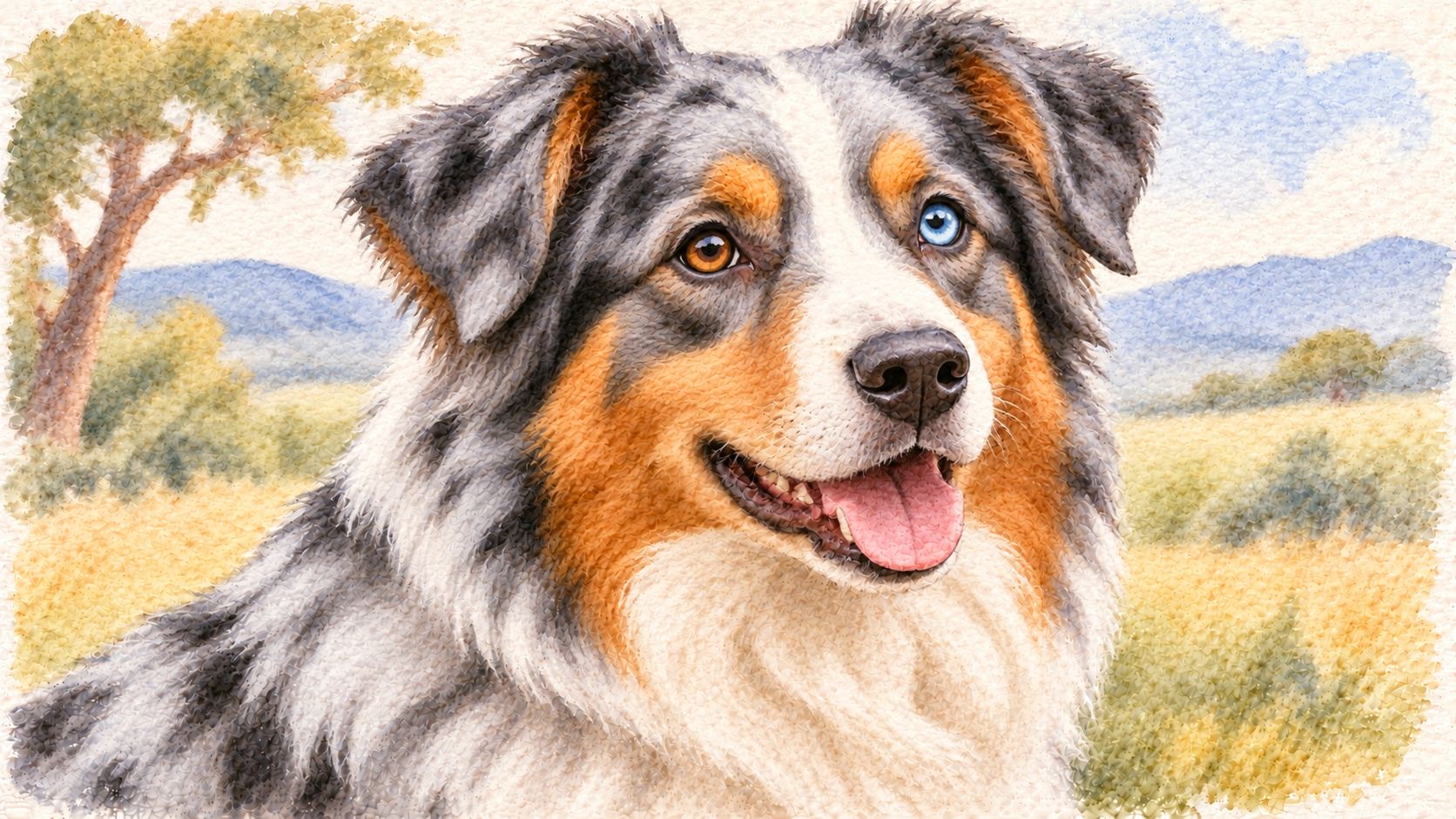
The breed's head is clean and in proportion to its body, with triangular ears that fold forward and eyes that may be brown, amber, blue or a mix. Many Aussies have one blue eye and one brown eye, or eyes with flecks of more than one color. Some are born with a naturally short tail, while others have a full-length tail.
Coat and Colors
The breed wears a medium-length double coat that can be straight or slightly wavy. The outer coat is weather-resistant, and the dense undercoat helps protect the dog from heat, cold and rain. Males often grow a more noticeable mane and frill around the neck and chest.
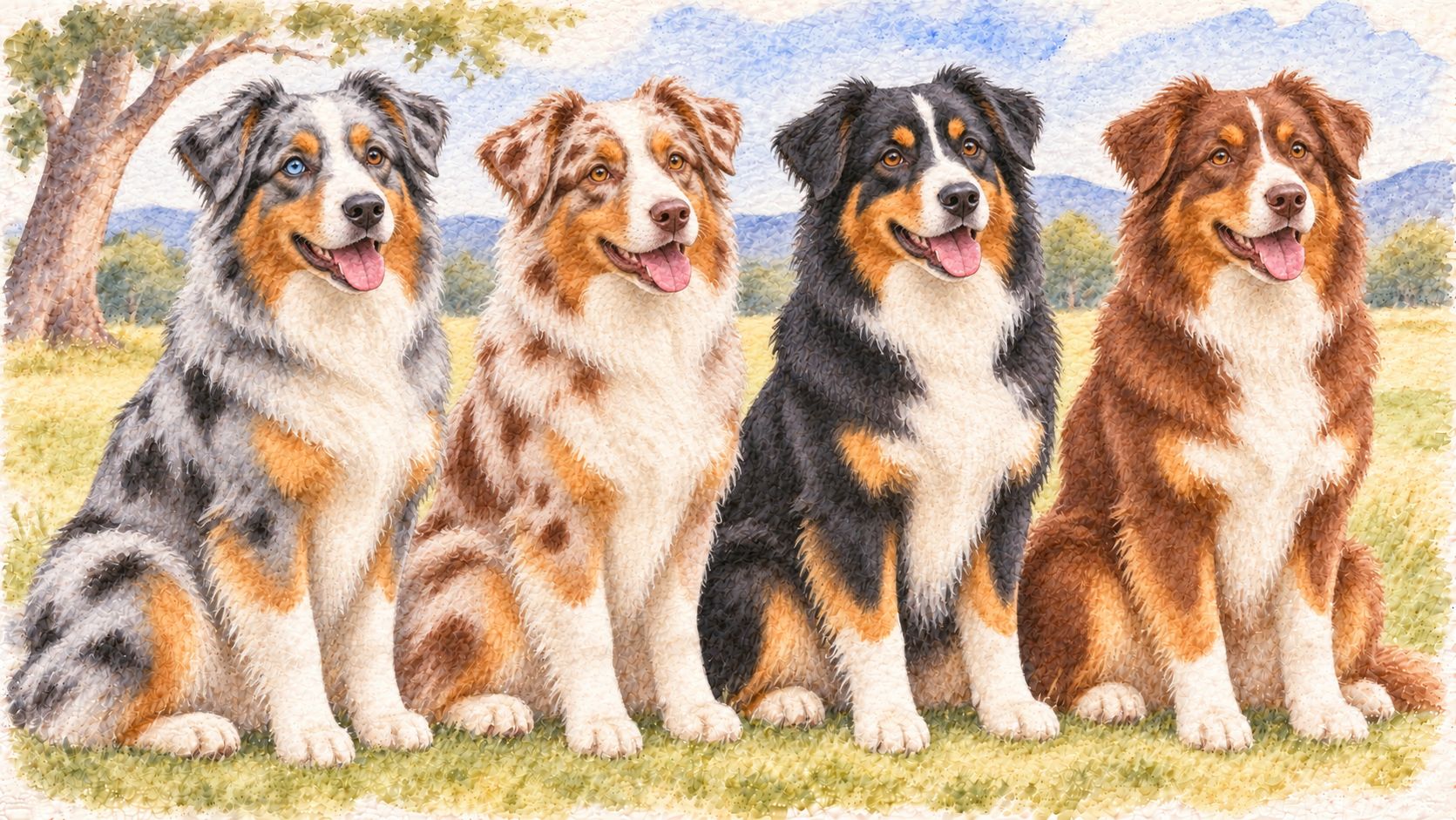
The four main coat colors are black, blue merle, red and red merle. Any of these may come with white markings, copper or tan points, or both. The blue merle Australian Shepherd, with its marbled gray, black and white pattern, is one of the most recognizable looks in the dog world. An interesting detail is that the coat color often darkens a little as the dog matures.
Australian Shepherd Temperament and Personality
The Australian Shepherd temperament combines brains, drive and devotion. Owners who understand its working background tend to find it an incredibly rewarding companion. This breed is known for being:
- Intelligent: Aussies learn quickly and enjoy solving problems, which makes them stars in training and dog sports.
- Hardworking: Bred to herd livestock all day, they are happiest when they have a task to focus on.
- Lively and playful: They bring enthusiasm to every game of fetch, hike or training session.
- Loyal: Aussies bond closely with their families and often like to follow their favorite person from room to room.
- Watchful: Their guarding instinct makes them alert to strangers, though they are usually friendly once properly introduced.
Because of its strong herding instinct, an Aussie may try to herd anything that moves, including children, other pets, birds or even cars. This behavior is natural, but it needs to be guided with training. An Aussie that lacks enough exercise or mental work can become bored, restless and destructive.
Are Australian Shepherds Good Family Dogs?
Yes, Aussies can be wonderful family dogs for active households that have time for daily exercise and training. They are affectionate and protective with their people, and they often form close friendships with respectful children.
That said, their herding instinct can lead them to nip at heels or circle running kids. This tends to work best with older children who understand how to behave around dogs, and adults should always supervise play. Teaching kids not to run away screaming during games can also help.
Are Australian Shepherds Good With Other Pets?
Many Aussies get along well with other dogs, especially when they are raised together and socialized early. They may try to herd cats or smaller pets, so introductions should be slow and supervised.
Early socialization is essential for every Australian Shepherd puppy. Exposing your puppy to many people, animals, sounds and places helps it grow into a confident, well-mannered adult rather than a wary or reactive one.
Training an Australian Shepherd
The Aussie is one of the most trainable breeds you can own. It picks up new commands quickly and genuinely enjoys working with its handler. However, a smart dog can also learn bad habits fast, so consistency from day one is important.
Positive reinforcement works best. Praise, play and small treats keep an Aussie motivated, while harsh corrections can damage its trust. Here are a few training tips:
- Start early. Begin basic manners and socialization as soon as your puppy comes home.
- Give it a job. Teach tasks such as fetching items, tidying toys or learning tricks to channel its working drive.
- Redirect herding. Teach a reliable "leave it" and recall, and reward calm behavior around children and pets.
- Mix it up. Aussies get bored with repetition, so vary exercises and keep sessions fun.
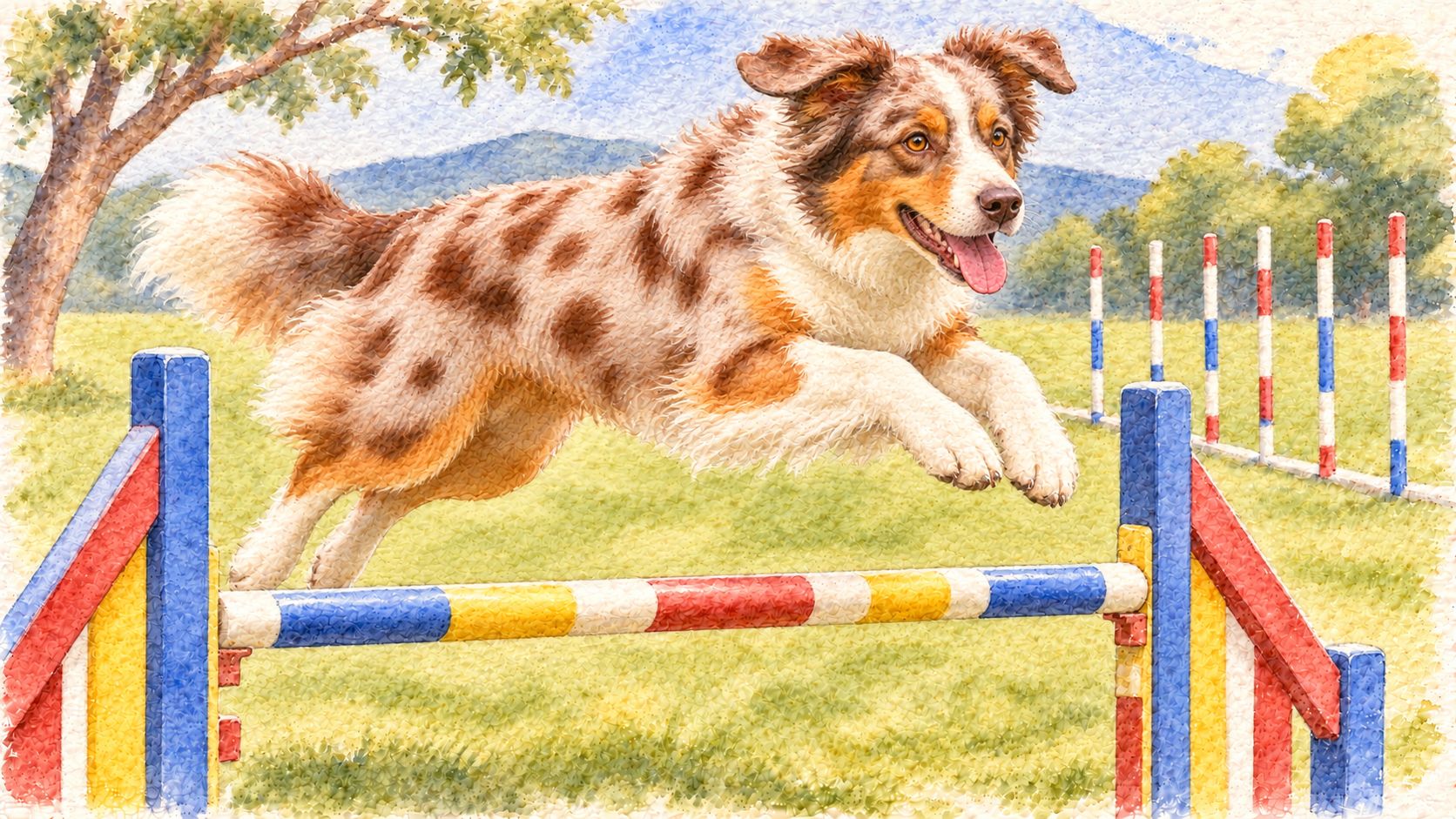
- Try dog sports. The breed excels at obedience, herding trials, agility, flyball, rally and dock diving.
Australian Shepherd Exercise Needs
This breed has a high energy level and needs plenty of daily exercise. Most adults do best with at least an hour or two of activity each day, such as long walks, hikes, running, fetch or structured training.
Physical exercise alone is not enough. This breed also needs mental stimulation to stay content. Puzzle toys, scent games, trick training and dog sports are excellent ways to tire out that busy mind.
Because of its needs, the Aussie is generally better suited to a home with a securely fenced yard than to a small apartment. It can adapt to different living spaces only if its exercise needs are reliably met. Keep your dog on a leash or in a secure area, since its herding instincts may send it chasing after moving animals or vehicles.
Australian Shepherd Grooming
Australian Shepherd grooming is manageable, but the breed does shed a lot. Its weather-resistant double coat needs regular care to stay healthy and free of mats.
Do Australian Shepherds Shed?
Yes, Aussies shed quite a bit, and they shed heavily during seasonal coat changes, usually in spring and fall. Regular brushing is the best way to control loose hair around the house.
Grooming Routine
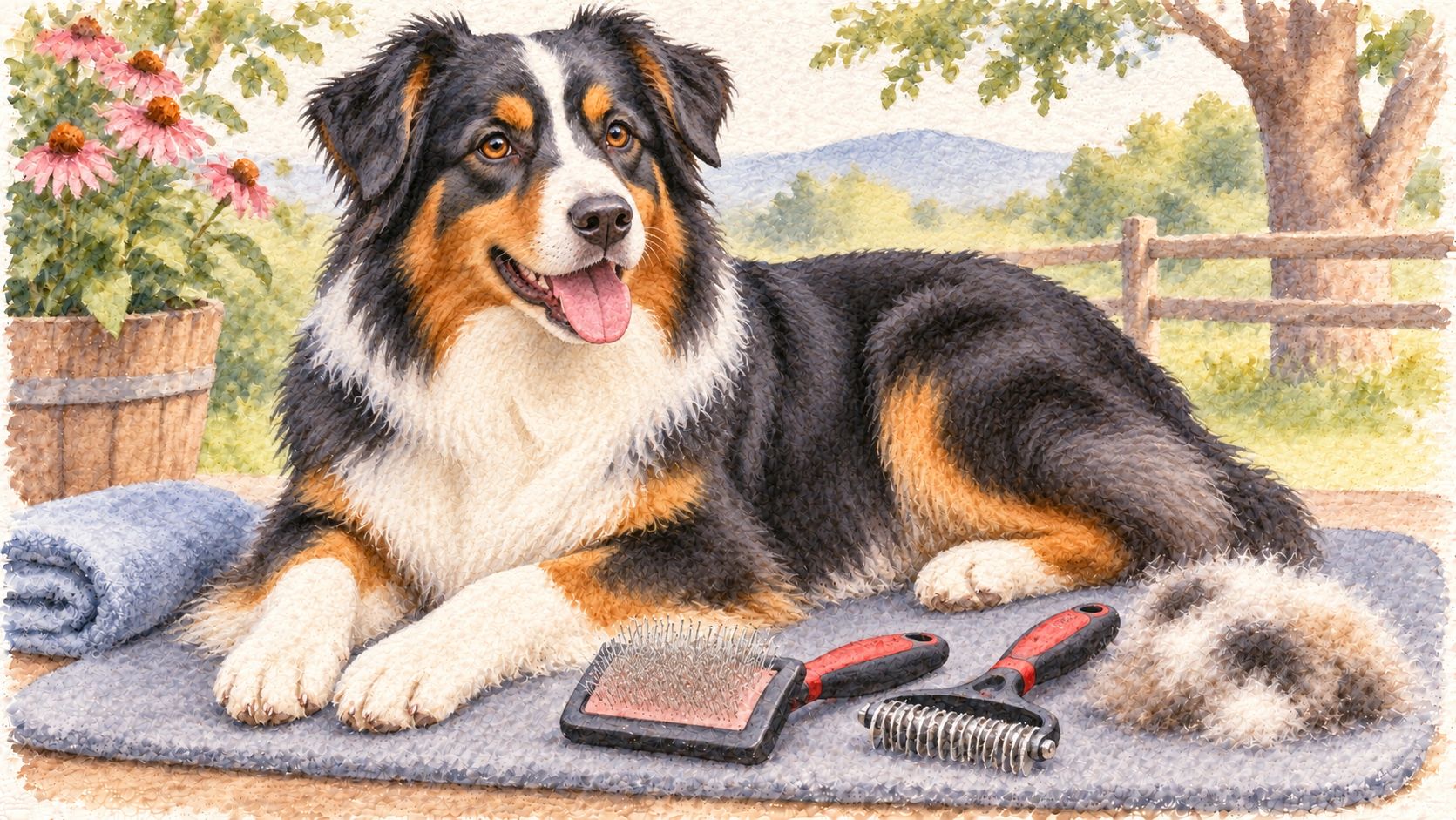
- Brushing: Brush the coat at least once a week with a slicker brush or pin brush. During shedding season, use an undercoat rake more often to remove dead fur.
- Problem spots: Pay extra attention to the hair behind the ears, under the legs and around the "pants," where mats tend to form.
- Bathing: Bathe only as needed, such as when your dog gets muddy or smelly. Too many baths can dry out the coat.
- Nails: Trim nails every few weeks if they are not worn down naturally.
- Teeth: Brush your dog's teeth several times a week to support good dental health.
- Ears: Check ears weekly and gently clean away dirt to help prevent problems.
Shaving an Aussie's double coat is generally not recommended, because the coat helps regulate body temperature. A professional groomer can tidy the feet and feathering if you prefer a neater look.
Australian Shepherd Health and Lifespan
The Australian Shepherd lifespan is typically 12 to 15 years. The breed is generally healthy, but like all dogs, it can be prone to certain conditions. Responsible breeders screen their dogs for common concerns, which may include:
- Hip dysplasia: An abnormal formation of the hip joint that can lead to stiffness or discomfort.
- Epilepsy: A condition that can cause seizures.
- Cataracts and other eye conditions: Regular eye exams help catch problems early.
- Certain cancers: As with many breeds, some cancers are seen in Aussies.
- Drug sensitivity: Some Aussies carry a gene mutation (often called MDR1) that can make them sensitive to certain medications. A simple DNA test can tell you whether your dog is affected.
Keeping your Aussie at a healthy weight, providing daily exercise and scheduling regular checkups all support long-term health. Always work with your veterinarian to set up a routine of vaccinations, preventive care and screenings.
Feeding and Nutrition
An Aussie does best on a complete, high-quality dog food suited to its age, size and activity level. Very active Aussies, such as working ranch dogs or sport competitors, may benefit from a performance or sport formula designed to support lean muscle and energy.
Puppies should eat a food made specifically for puppies to support healthy growth. Puppy foods that include DHA can help support brain and vision development during the first year. Portion sizes vary from dog to dog, so follow the feeding guide on the package and ask your veterinarian for advice. Keep treats to a small share of daily calories to help prevent weight gain.
History of the Australian Shepherd
The breed's story is a bit of a puzzle, and even its name is a famous misunderstanding. The breed is generally believed to descend from European herding dogs, with roots often linked to the Basque region near the Pyrenees Mountains between Spain and France.
In the 1800s, Basque shepherds traveled to Australia with their flocks and dogs, and some later moved on to California and the American West. Ranchers there associated these skilled herding dogs with the shepherds who had arrived from Australia, and the name "Australian Shepherd" stuck. Despite its name, the breed was largely developed in the United States.
The Aussie became closely tied to cowboy culture. After World War II, interest in Western riding, rodeos and horse shows grew, and Aussies were often seen performing tricks and working cattle at these events. They also appeared in movies and television, which helped spread their popularity.
The Australian Shepherd Club of America was founded in 1957, and the American Kennel Club officially recognized the breed in 1993. Today, Aussies still herd livestock, but they also work as therapy dogs, service dogs, detection dogs and search-and-rescue dogs.
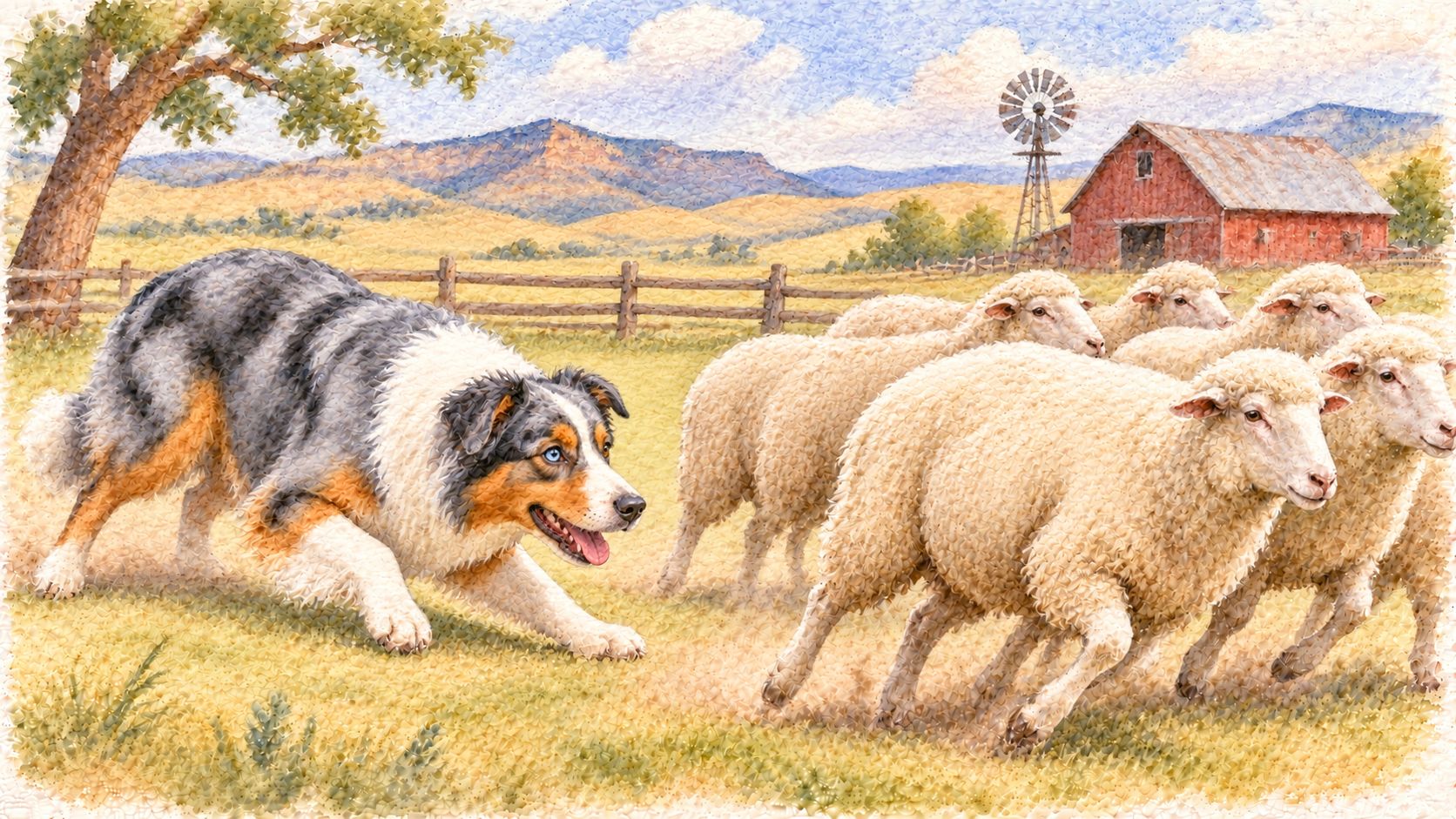
Australian Shepherd vs Border Collie
The Australian Shepherd and the Border Collie are both brilliant, high-energy herding breeds, so they are often compared. Border Collies are usually a little lighter and are famous for their intense, focused "eye" when working sheep. Aussies tend to be slightly stockier, are known for their merle coats and are often described as a bit more playful and goofy at home. Both breeds need lots of daily exercise and mental work.
Is an Australian Shepherd Right for You?
An Aussie could be a wonderful match if you:
- Lead an active lifestyle and enjoy hiking, running or long walks
- Want a highly trainable dog for obedience, agility or other sports
- Have a home with a securely fenced yard
- Can spend time on daily training and mental enrichment
- Don't mind regular brushing and dog hair on your clothes
An Aussie may not be the best fit if you:
- Prefer a low-energy dog that is happy to lounge most of the day
- Work long hours and have little time for exercise and training
- Live in a small apartment with limited access to outdoor space
- Want a low-shedding breed
Finding an Australian Shepherd Puppy
Choose a reputable breeder who health-tests parent dogs for hip, eye and genetic concerns and is happy to share the results. Good breeders raise puppies in a home environment, start socialization early and will ask you questions about your lifestyle, too.
Adoption is another great option. Breed-specific rescue groups often have Aussies and Aussie mixes looking for homes. An adult dog can be a good choice, since its energy level and personality are already known.
Fun Facts About the Australian Shepherd
- Despite its name, the breed was developed mainly in the United States.
- Many Aussies have eyes of two different colors, or eyes with more than one color.
- Some Aussies are born with a naturally short "bob" tail.
- The breed is a familiar sight at rodeos and horse shows, often performing tricks.
- An Aussie's coat color can darken slightly as it gets older.
- The smaller Miniature American Shepherd was developed from small Australian Shepherds and is now recognized as its own breed by the AKC.
Frequently Asked Questions
Are Australian Shepherds actually from Australia?
No. The breed's roots are linked to European herding dogs, and it was largely developed in the American West. The name likely came from its association with Basque shepherds who arrived in California from Australia.
How big do Australian Shepherds get?
Adult Aussies usually weigh about 35 to 70 pounds. Males typically stand around 20 to 23 inches tall, and females around 18 to 21 inches.
Are Australian Shepherds good family dogs?
They can be loving and loyal family dogs for active households. Their herding instinct means they do best with older children and supervised play.
Do Australian Shepherds shed a lot?
Yes. Their double coat sheds year-round and heavily during seasonal changes. Weekly brushing, plus extra sessions with an undercoat rake during shedding season, helps keep loose hair under control.
How long do Australian Shepherds live?
The average Australian Shepherd lifespan is 12 to 15 years with good care, a balanced diet, daily exercise and regular veterinary checkups.
How much exercise does an Aussie need?
Most adult Aussies need at least an hour or two of activity every day, plus mental challenges such as training, puzzle toys or dog sports.
Final Thoughts
This herding breed is a smart, devoted and joyful companion that thrives on activity and teamwork. With its eye-catching coat, cowboy history and eagerness to learn, it brings plenty of fun to the right home. If you can offer daily exercise, consistent training and regular brushing, an Australian Shepherd may become the most loyal partner you have ever had.