
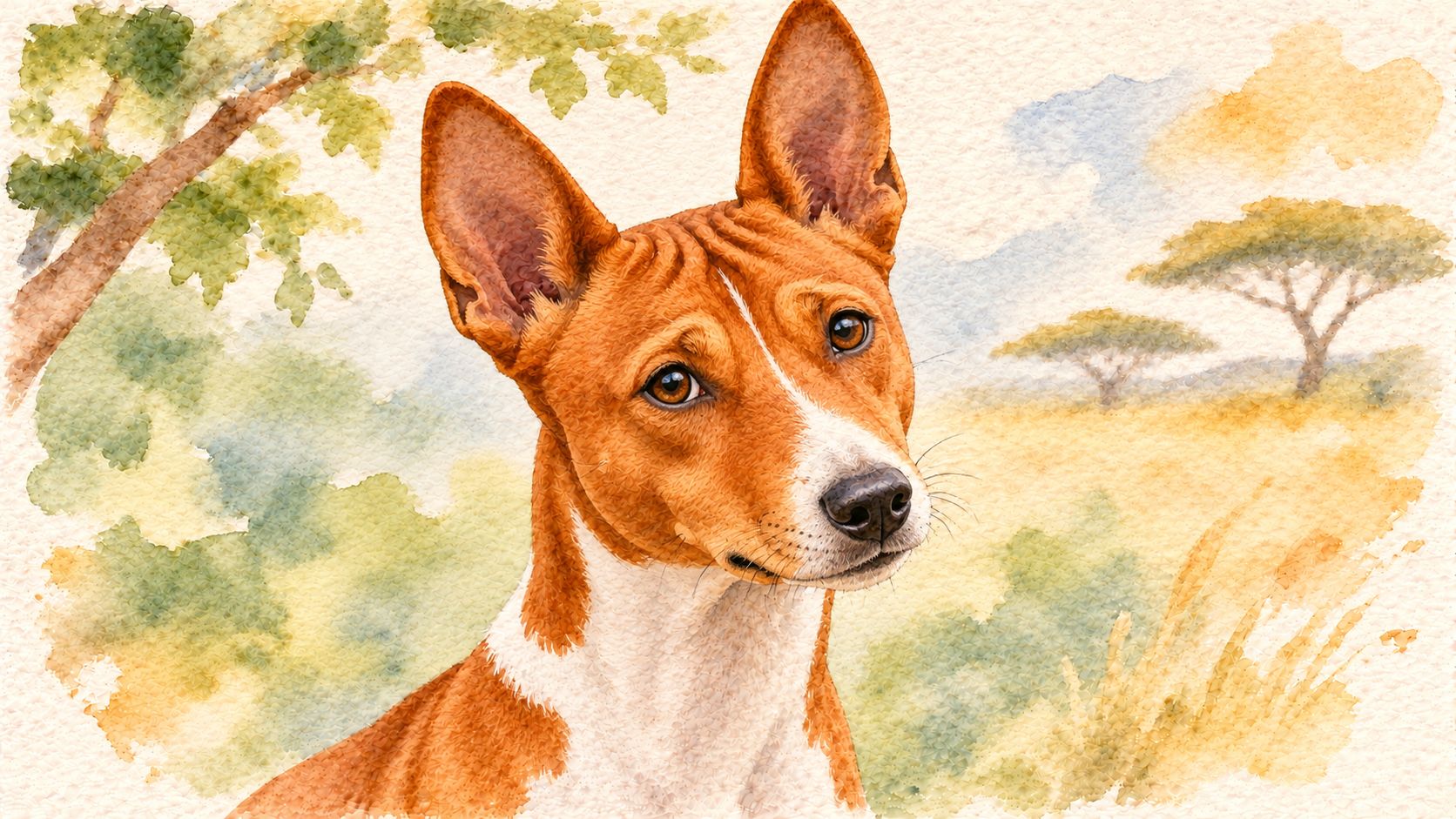
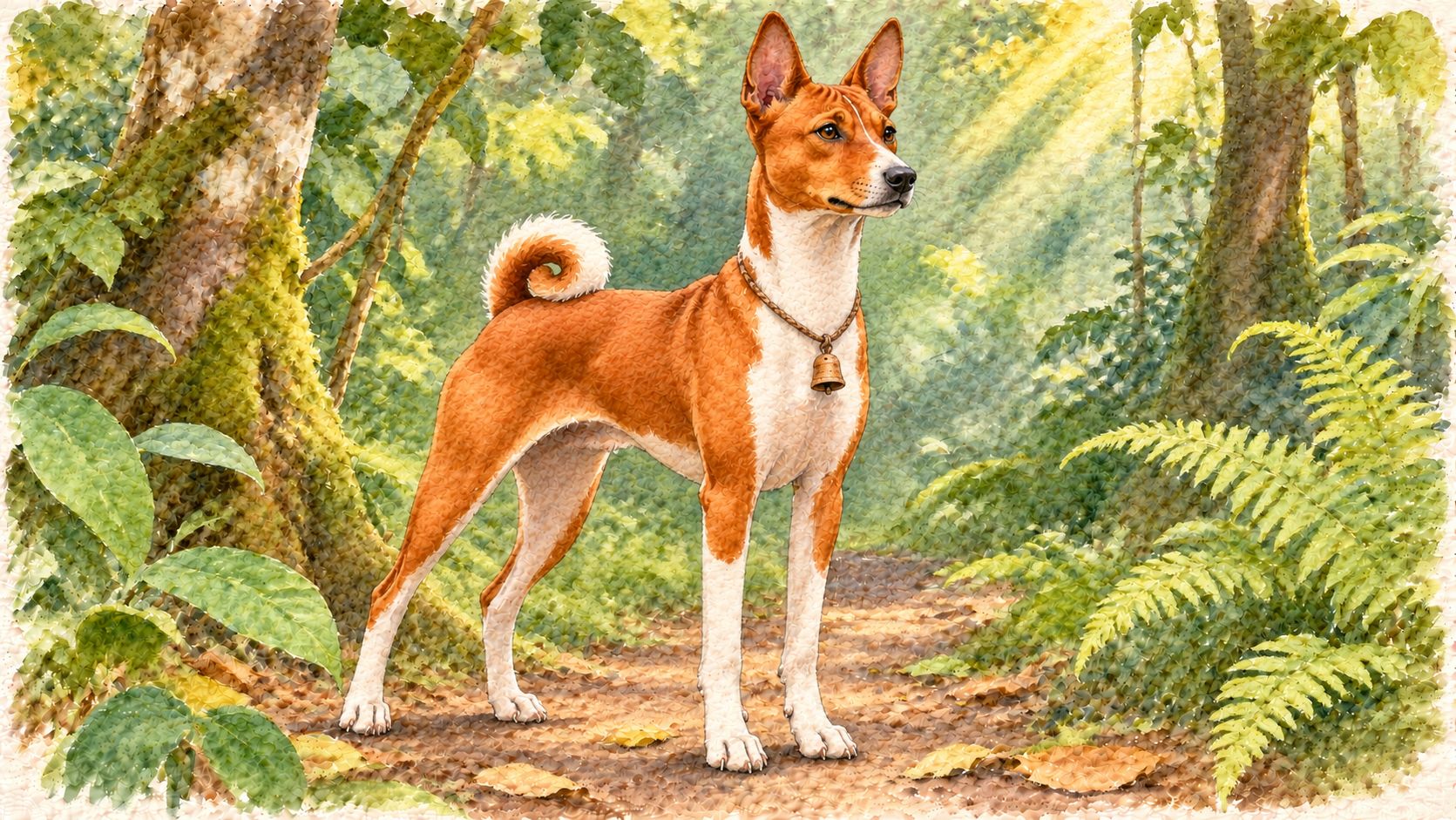
The Basenji is a sleek, graceful hound from Central Africa, famous for one surprising trait: it does not bark like other dogs. Instead, this ancient breed makes a cheerful, yodel-like sound often called a "baroo." With its wrinkled forehead, upright ears and tightly curled tail, it looks as alert and elegant as a small deer.
Behind that polished look is a clever, playful and independent dog with plenty of energy. In this complete dog breed guide, you will learn about the breed's size, temperament, grooming, exercise needs, health, diet and remarkable history, so you can decide whether this unique hound is the right fit for your home.
Basenji at a Glance
| Trait | Details |
|---|---|
| Breed group | Hound (AKC) |
| Height | About 16 to 17 inches (41 to 43 cm) |
| Weight | 20 to 26 pounds (9 to 12 kg) |
| Life expectancy | About 13 to 14 years |
| Coat | Short, fine, close-lying |
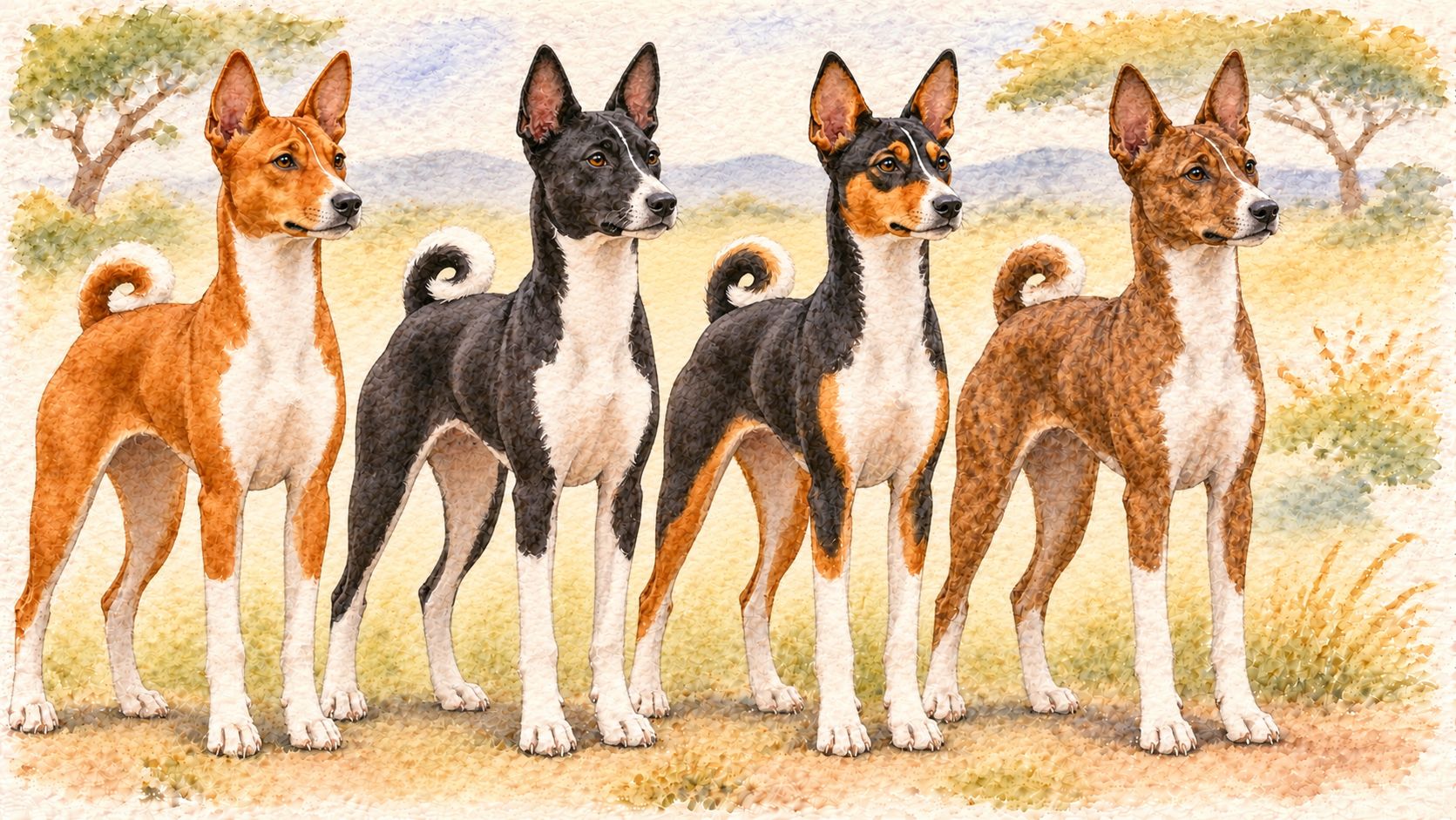
| Colors | Chestnut red, black, tricolor, brindle (all with white markings) |
| Shedding | Minimal |
| Energy level | High |
| Temperament | Alert, intelligent, playful, independent, reserved with strangers |
| Good for | Active adults, experienced owners, families with older kids |
| Origin | Central Africa |
What Is a Basenji?
This is a lightly built hunting dog that belongs to the American Kennel Club's Hound Group. It hunts by both sight and scent, and for centuries it helped hunters in the forests of Central Africa track and flush small game.
It is widely regarded as one of the oldest dog breeds in the world. Many people know it as the "barkless dog," but that nickname is a little misleading. These dogs are not silent at all. They yodel, howl, chortle and even scream when they are excited, just not in the usual "woof" style.
Basenji Size and Appearance
How Big Do Basenjis Get?
These are small to medium-sized dogs that usually stand about 16 to 17 inches (41 to 43 cm) tall at the shoulder and weigh 20 to 26 pounds (9 to 12 kg). Males are typically a little taller and heavier than females.
The body is short-backed and slightly taller than it is long, with long legs, a deep chest and a tucked-up waist. This athletic build gives the breed a light, springy trot that is often compared to the gait of a racehorse.
The head is one of its most charming features. Fine wrinkles appear across the forehead, especially when the dog is curious or alert, giving it a thoughtful, almost puzzled expression. The ears are small, pointed and held upright, the eyes are dark and almond-shaped, and the tail curls tightly over one side of the back.
Coat and Colors
The coat is short, fine and lies close to the skin, which shows off the dog's lean, muscular outline. The coat has a glossy sheen when healthy and carries very little "doggy" odor.
Accepted colors include chestnut red, pure black, tricolor (black and tan with white) and brindle (black stripes on a red background). Every color pattern includes white on the feet, chest and tail tip, and many dogs also have white legs, a white blaze or a white collar.
Basenji Temperament and Personality
The Basenji temperament is often described as part dog, part cat. This breed is known for being:
- Intelligent: These dogs are quick thinkers that learn fast and love to solve problems, including how to open doors or reach the kitchen counter.
- Independent: Bred to hunt ahead of people, they like to make their own decisions and are not always eager to follow orders.
- Playful and energetic: They enjoy games, zoomies around the yard and anything that lets them run and chase.
- Affectionate with family: They form close bonds with their own people and often enjoy curling up beside them after a busy day.
- Reserved with strangers: Many are aloof around new people and prefer to watch from a distance before warming up.
- Alert: Little escapes their notice, and they will make their unusual vocal sounds to let you know something is happening.
Because of their curiosity and energy, they can become mischievous when bored. Chewed furniture, raided trash cans and creative escape attempts are common complaints from owners whose dogs do not get enough activity.
Are Basenjis Good Family Dogs?
Basenjis can be good family dogs for active households, especially those with older children who understand how to respect a dog's space. They are playful and sturdy enough for active games, but supervision is always wise with any breed and young kids.
Are Basenjis Good With Other Pets?
They usually do well with other dogs, particularly if they are raised together. However, their strong prey drive means they may chase cats, rabbits and other small animals. Homes with pet rodents, birds or rabbits should think carefully before choosing this breed.
Early socialization makes a big difference. Introducing your Basenji puppy to a wide range of people, places, sounds and friendly animals will help it grow into a confident, well-mannered adult.
Training a Basenji
Training this breed takes patience and creativity. These hounds are bright and learn quickly, but they often ask, "What's in it for me?" Repetitive drills tend to bore them, so short, upbeat sessions with treats, praise and play work best.
Here are a few training tips for new owners:
- Start early. Begin socialization and basic manners as soon as your puppy comes home.
- Keep it fun. Use games and variety so your dog stays interested and engaged.
- Use positive reinforcement. Rewards work far better than harsh corrections, which can make an independent dog tune you out.
- Practice recall carefully. Because of their hunting instincts, many cannot be trusted off leash in open areas, even with good training.
- Use a crate. Crate training helps with house-training and keeps a curious puppy safe when you cannot supervise.
- Try dog sports. Agility, lure coursing, obedience and other activities give this athletic hound a healthy outlet.
Exercise Needs
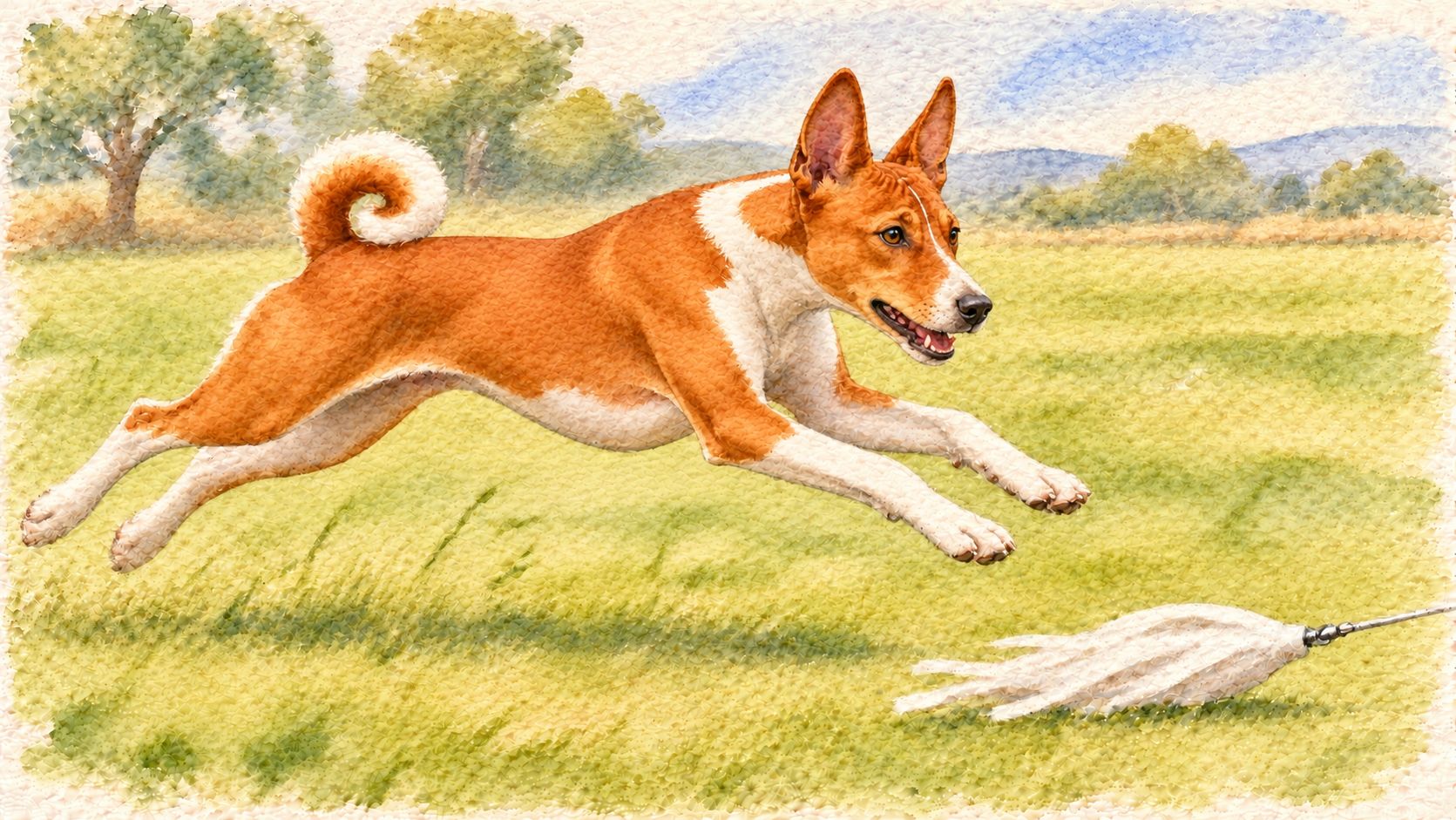
This is a high-energy breed that needs daily physical and mental exercise. Plan for at least an hour of activity each day, such as brisk walks, jogging, play sessions in a fenced yard or a lure coursing class.
Lure coursing is especially popular with this breed because it lets the dog chase a moving lure at full speed, tapping into its natural hunting drive. Puzzle toys, scent games and training sessions are great ways to tire out its busy mind on rainy days.
Always use a secure leash or a well-fenced area. These dogs are excellent climbers and jumpers, and a determined one may scale a low fence or slip through a small gap if it spots something worth chasing.
Basenji Grooming
Do Basenjis Shed?
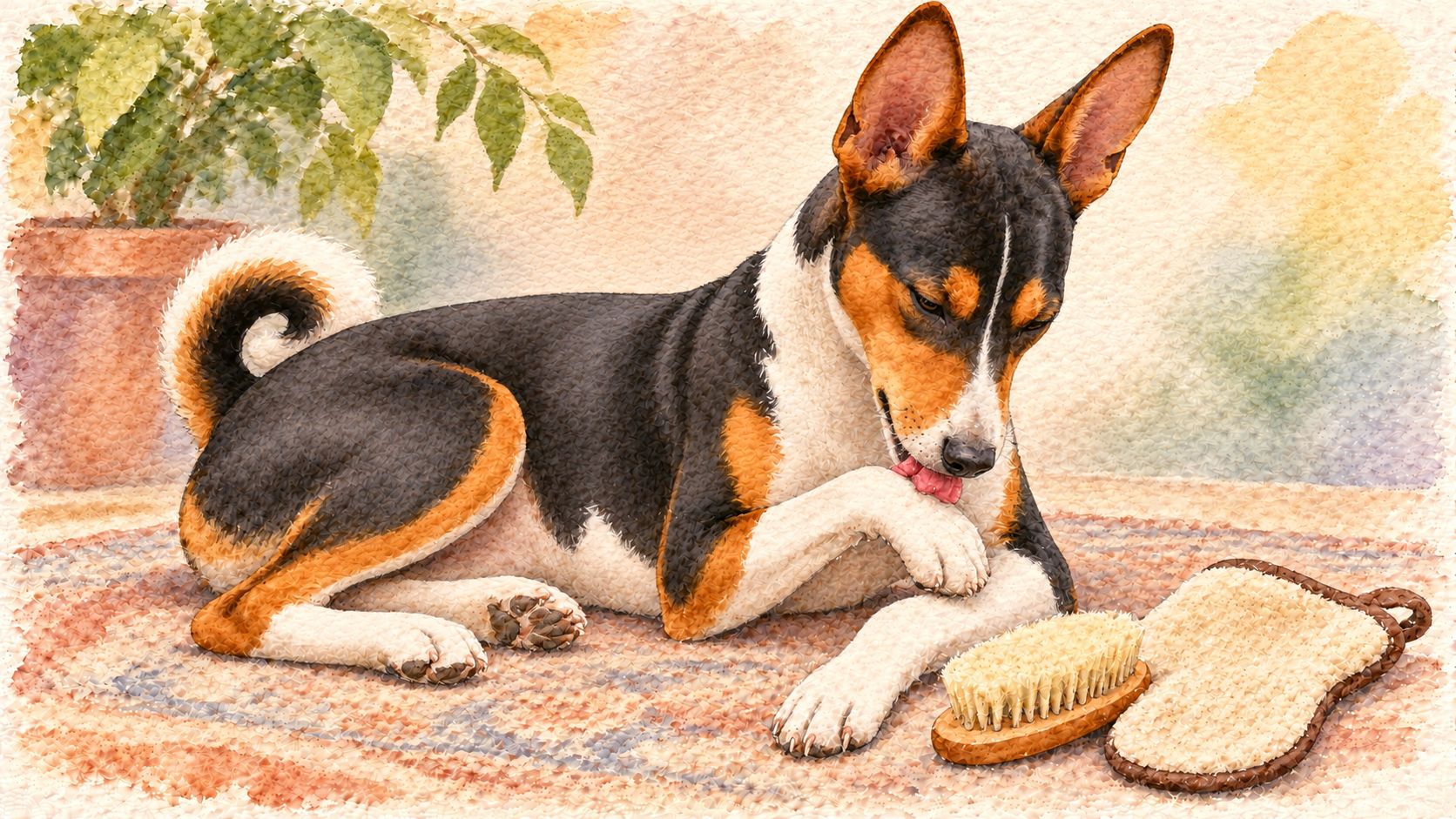
They shed very little, and their short coat is one of the easiest to care for in the dog world. They are also known for grooming themselves much like cats, licking their paws and coat to stay clean.
Because of their low shedding and lack of odor, they often appear on lists of dogs for people with allergies. Keep in mind that no dog is completely hypoallergenic, so allergy sufferers should spend time with the breed before committing.
Grooming Routine
- Brushing: A quick weekly brush with a soft bristle brush or grooming mitt removes loose hair and keeps the coat shiny.
- Bathing: Baths are needed only occasionally, since the coat stays clean and has little odor.
- Nails: Trim nails every few weeks to keep feet comfortable and prevent cracking.
- Teeth: Brush your dog's teeth several times a week to support good dental health.
- Ears: Check ears weekly and wipe away any dirt with a vet-approved cleaner.
Basenji Health and Lifespan
How Long Do Basenjis Live?
The average Basenji lifespan is about 13 to 14 years, and many live even longer with good care. Overall, it is considered a healthy breed, but like all dogs it can be prone to certain inherited conditions.
Responsible breeders screen their dogs for concerns that may include:
- Fanconi syndrome: An inherited kidney disorder; a DNA test is available, so ask breeders about results.
- Progressive retinal atrophy (PRA): A group of eye diseases that can affect vision over time.
- Hip dysplasia: An abnormal development of the hip joint.
- Hypothyroidism: A condition in which the thyroid gland does not produce enough hormone.
Regular checkups help catch problems early. Always work with your veterinarian to set up a routine of exams, vaccinations and preventive care that suits your dog.
Feeding and Nutrition
An active hound does best on a high-quality, complete and balanced dog food suited to its age, size and energy level. Many owners choose a formula with quality protein to support lean muscle and an active lifestyle.
Puppies should eat a food made specifically for puppies to support healthy growth. Portion sizes depend on age, weight and activity, so follow the feeding guide on the package and ask your veterinarian for advice. Keep treats to a small share of daily calories to help your dog stay trim.
These hounds are known for being clever food thieves. Store food securely and keep counters clear, as a hungry hound may help itself to your dinner.
History of the Basenji
The breed's roots lie in Central Africa, particularly the forests of the Congo Basin. There, local hunters relied on these quick, quiet dogs to track game and drive it toward nets. Because the dogs did not bark, hunters sometimes fastened small bells to them so they could follow them through thick undergrowth.
Dogs resembling the breed appear in very old artwork, and it is often said that dogs like them were presented as gifts to the pharaohs of ancient Egypt. Scientists studying canine DNA have also found that the breed sits among the most genetically ancient dog breeds.
Westerners first noticed these dogs in the late 1800s, but early attempts to bring them to England failed because the imported dogs did not survive disease. Breeders finally succeeded in establishing the breed in England in the 1930s, and the dogs soon reached the United States.
The American Kennel Club recognized the breed in 1943 as a member of the Hound Group. The breed later gained wider fame through the 1950s novel and film "Goodbye, My Lady," which told the story of a boy and his special barkless dog.
Basenji vs Shiba Inu
The Basenji and the Shiba Inu are often compared because both are compact, curled-tail breeds with independent, cat-like personalities. The African hound has a sleek, short coat that sheds very little, while the Shiba Inu has a thick double coat that sheds heavily, especially in spring and fall. It also yodels rather than barks, while Shibas are famous for their dramatic "Shiba scream."
Is a Basenji Right for You?
This breed could be a wonderful match if you:
- Lead an active lifestyle and enjoy daily walks, runs or dog sports
- Want a clean, low-shedding dog with minimal grooming needs
- Appreciate an intelligent, independent personality
- Have a securely fenced yard or can always walk your dog on a leash
- Have experience with dogs or are ready for patient, positive training
It may not be the best fit if you:
- Want a dog that obeys instantly and loves repetitive training
- Keep small pets such as cats, rabbits, birds or rodents
- Are away from home for long hours most days
- Want a dog that can be trusted off leash in open spaces
Finding a Basenji Puppy
When searching for a Basenji puppy, look for a reputable breeder who health-tests parent dogs, raises puppies in a home environment and happily answers your questions. Interestingly, females usually come into season only once a year, so litters can be limited and waiting lists are common.
Adoption is another great option. Breed clubs and rescue groups often have adult dogs looking for loving homes, and an adult's personality is already easy to see.
Fun Facts About the Basenji
- The Basenji is often called the "barkless dog," but it yodels, howls and chortles instead.
- These dogs groom themselves much like cats do.
- Their coat has very little doggy odor.
- Hunters in Africa sometimes put bells on them so they could hear where the dogs were.
- Females typically have only one heat cycle per year, unlike most dog breeds.
- The breed starred in the classic film "Goodbye, My Lady."
Frequently Asked Questions
Can Basenjis bark?
They do not bark the way most dogs do. Their unusually shaped larynx produces a yodel-like "baroo" instead, along with howls, whines and other sounds.
How big do Basenjis get?
Adults usually stand about 16 to 17 inches (41 to 43 cm) tall at the shoulder and weigh 20 to 26 pounds (9 to 12 kg).
Are Basenjis hypoallergenic?
They shed very little and have almost no odor, so they are often suggested for people with mild allergies. However, no dog is completely allergen-free.
Are Basenjis good family dogs?
They can be loving companions for active families with older children. Their energy, prey drive and independence mean they do best with owners who can offer daily exercise and patient training.
How long do Basenjis live?
The typical lifespan is about 13 to 14 years with good care, healthy food, plenty of exercise and regular veterinary checkups.
Are Basenjis easy to train?
They are smart and learn quickly, but their independent nature can make training a challenge. Short, fun, reward-based sessions give the best results.
Final Thoughts
The Basenji is a truly one-of-a-kind dog, combining ancient African roots, cat-like cleanliness and a yodel instead of a bark. This elegant hound is smart, playful and deeply loyal to its family. If you can offer daily exercise, a secure yard and patient, positive training, a Basenji may become the most fascinating companion you have ever shared your home with.