
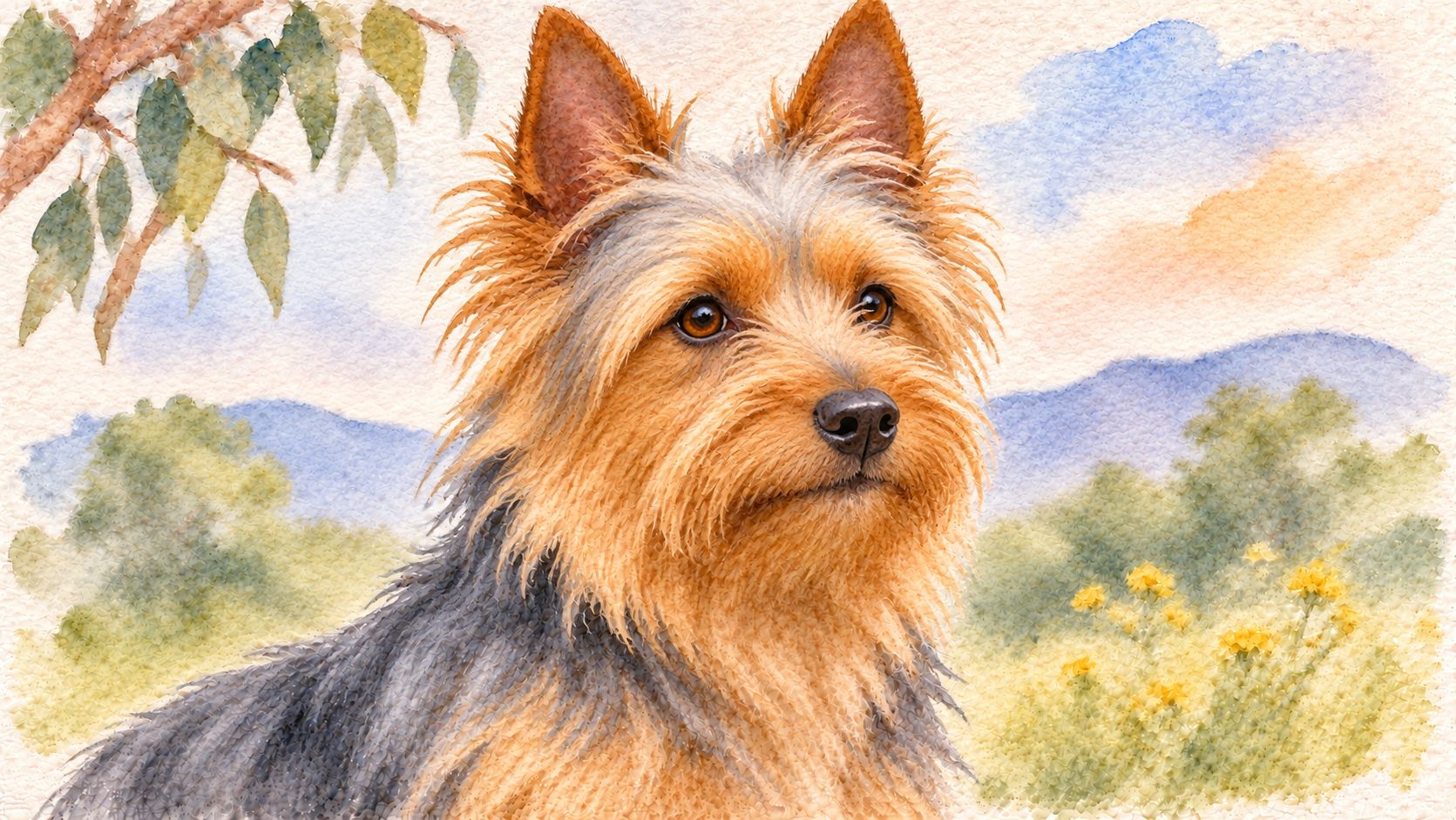
The Australian Terrier is a small, sturdy and spirited dog that packs a remarkable amount of courage and personality into a compact frame. With its rugged coat, soft topknot of hair on the head and bright, alert expression, this little terrier looks ready for adventure at all times.
Bred in Australia to keep vermin in check and help watch over farms, the breed has grown into a devoted, affectionate family companion. In this complete Australian Terrier dog breed guide, you will learn about its size, temperament, grooming needs, exercise requirements, health, diet and history, so you can decide whether this plucky "Aussie" is the right dog for you.
Australian Terrier at a Glance
| Trait | Details |
|---|---|
| Breed group | Terrier (AKC) |
| Height | 10 to 11 inches (25 to 28 cm) for males; 9 to 10 inches (23 to 25 cm) for females |
| Weight | 14 to 16 pounds (6.4 to 7.3 kg) for males; 11 to 14 pounds (5 to 6.4 kg) for females |
| Life expectancy | About 11 to 15 years |
| Coat | Harsh, weather-resistant outer coat with a soft topknot |
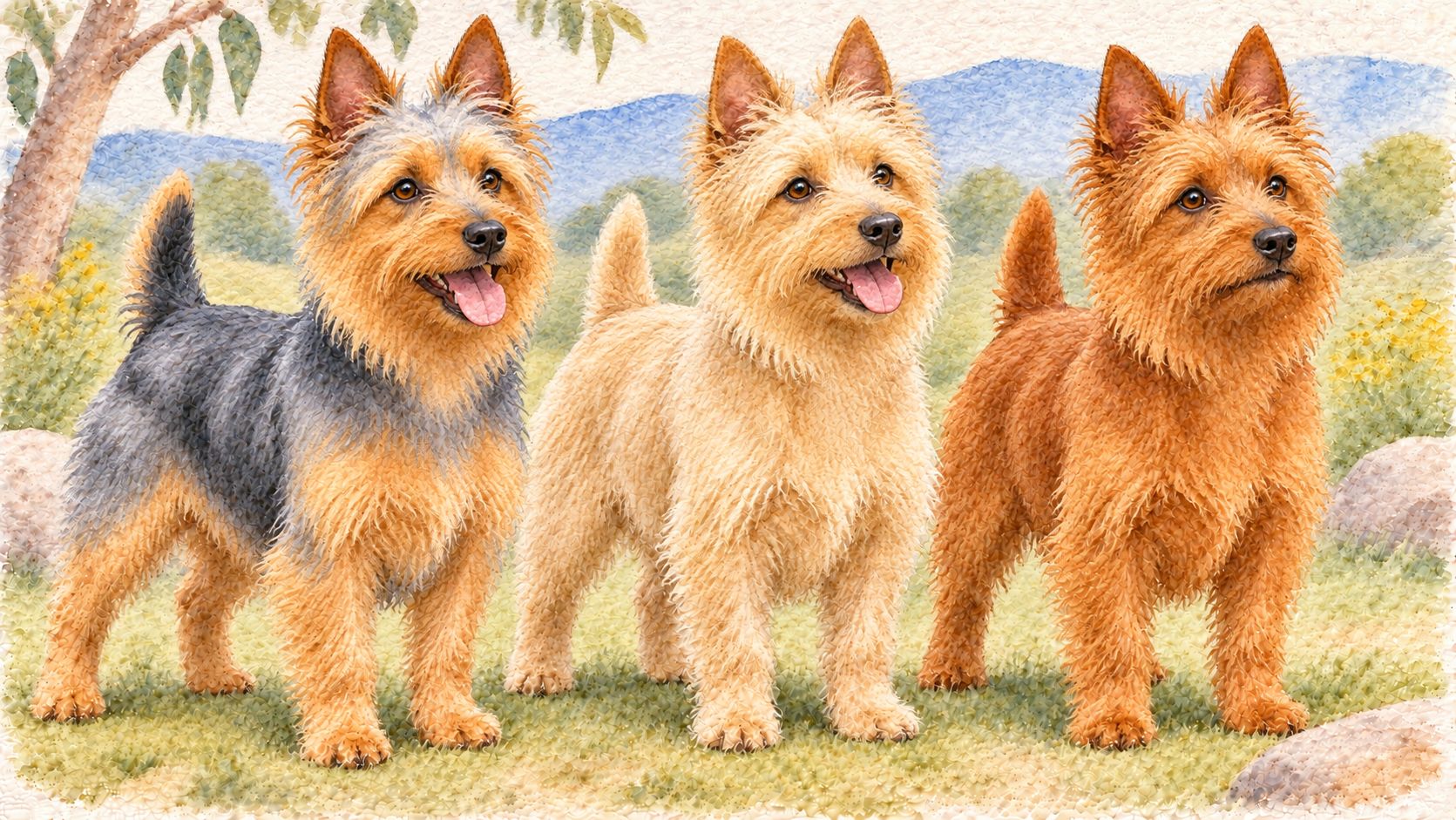
| Colors | Blue and tan, solid sandy, solid red |
| Shedding | Low |
| Energy level | Moderate |
| Temperament | Spirited, alert, self-assured, affectionate, devoted |
| Good for | Families, active singles, city or country homes |
| Origin | Australia (1800s) |
What Is an Australian Terrier?
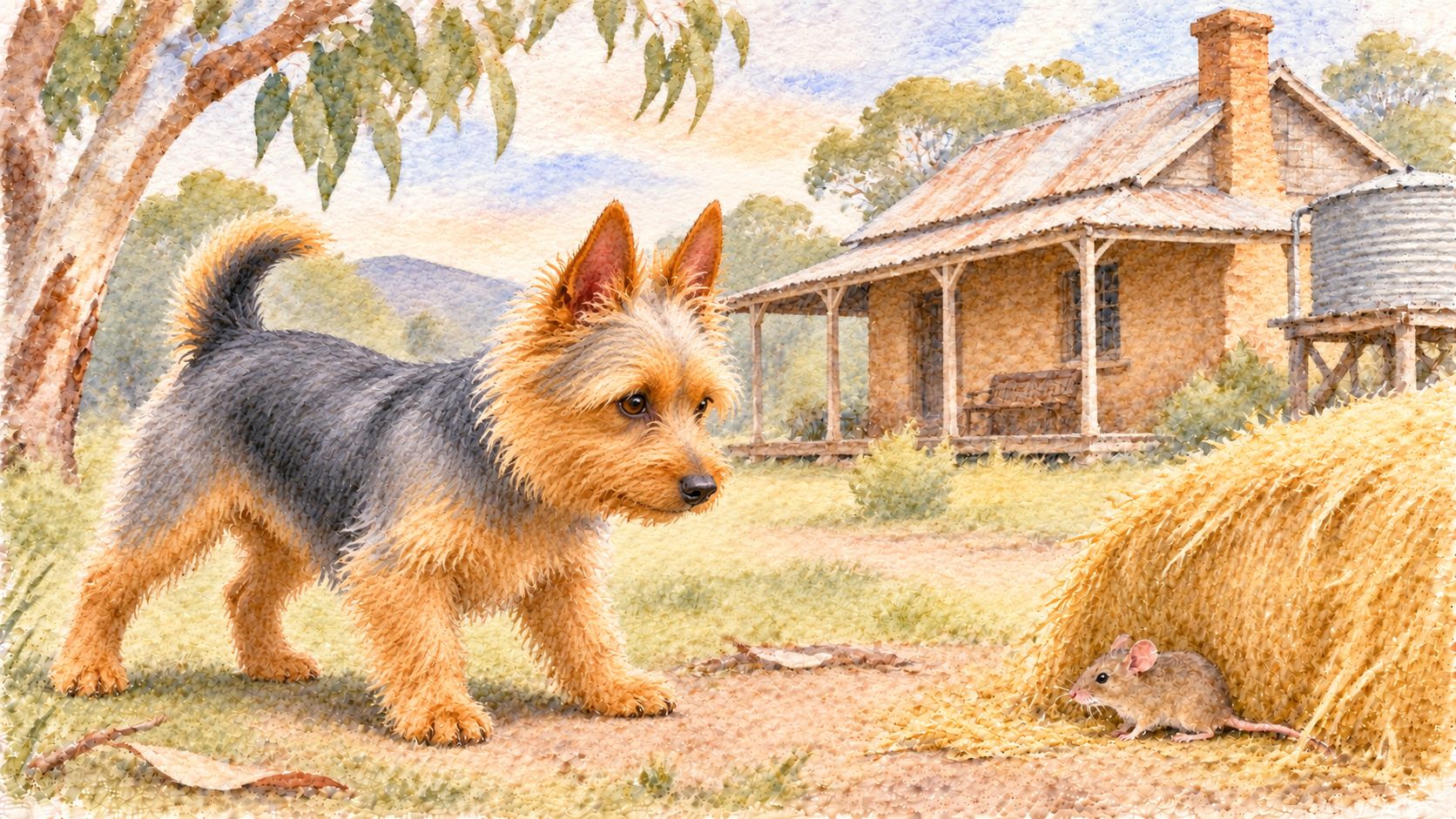
The Australian Terrier is one of the smallest members of the working terrier family. It was developed in Australia during the 1800s as an all-purpose farm and homestead dog. Its jobs included hunting rats, mice and even snakes, as well as alerting its family to visitors or danger.
Today, the breed is best known as a cheerful, low-maintenance companion. It belongs to the American Kennel Club's Terrier Group and holds a special place in Australian history. It was the first breed developed in Australia to be officially recognized and shown at dog shows in its home country.
Australian Terrier Size and Appearance
How Big Do Australian Terriers Get?
They are small dogs, with males standing about 10 to 11 inches tall at the shoulder and females about 9 to 10 inches. Males usually weigh 14 to 16 pounds, while females typically weigh 11 to 14 pounds.
Although the Australian Terrier size is small, this is not a delicate dog. The breed has a sturdy, slightly long body, strong legs and a confident way of moving. It is built low to the ground, which helped its ancestors chase vermin through tall grass and rocky ground.
The head is long and strong, with small, dark, oval eyes that give the dog a keen and intelligent look. The ears are small, pointed and carried upright. A ruff of longer hair around the neck and a soft, silky topknot on the head complete the breed's distinctive look.
Coat and Colors
The breed has a harsh, straight outer coat that is weather-resistant, with a shorter, softer undercoat beneath. The coat is short to medium in length and naturally a bit longer around the neck and chest. The soft topknot on the head is one of the breed's signature features.
Accepted colors are blue and tan, solid sandy and solid red. In blue-and-tan dogs, the topknot is often a lighter, silvery shade, while sandy and red dogs may have a lighter topknot as well.
Australian Terrier Temperament and Personality
The Australian Terrier temperament blends classic terrier spirit with a sweet, loving nature. Owners often describe this breed as a big dog in a small body. It is known for being:
- Spirited: These dogs are lively and eager to take part in whatever is going on around the house.
- Alert: They notice everything and make excellent little watchdogs, quick to let you know when someone arrives.
- Self-assured: This breed is confident and brave, and it rarely backs down from a challenge.
- Affectionate: Despite their toughness, they love their people and enjoy being close to their family.
- Devoted: They form strong bonds and often follow their favorite person from room to room.
Like many terriers, this breed has a strong instinct to dig and chase. These traits come from its working past and are part of what makes the breed so fun. With the right outlets, such as toys, games and supervised digging spots, these instincts can be channeled in positive ways.
Are Australian Terriers Good Family Dogs?
Yes, they are generally considered excellent family dogs. They are friendly, affectionate and sturdy enough to enjoy play with respectful children.
As with any breed, supervision is important when dogs and young children are together. Teach kids to handle the dog gently and to give it space when it is eating or resting.
Are Australian Terriers Good With Other Pets?
They can get along with other dogs, especially when they are raised together and well socialized. Some can be a little bossy with dogs of the same sex, so careful introductions help.
Because of their strong prey drive, they are usually not a safe match for homes with pet rodents, rabbits or birds. Many live happily with cats they grow up with, but they may still chase cats they do not know. Early socialization with many people, animals and places is key.
Training an Australian Terrier
These terriers are smart and quick to learn, but they also have the independent mind typical of terriers. Short, upbeat training sessions with praise, play and small treats work best. Harsh corrections tend to backfire with this proud little dog.
Here are a few training tips for new owners:
- Start early. Begin socialization and basic manners as soon as your puppy comes home.
- Keep it fun. Mix training into games so your dog stays motivated.
- Work on recall. A strong "come" cue is important for a breed that may chase small animals.
- Manage barking. Teach a "quiet" cue and reward calm behavior when visitors arrive.
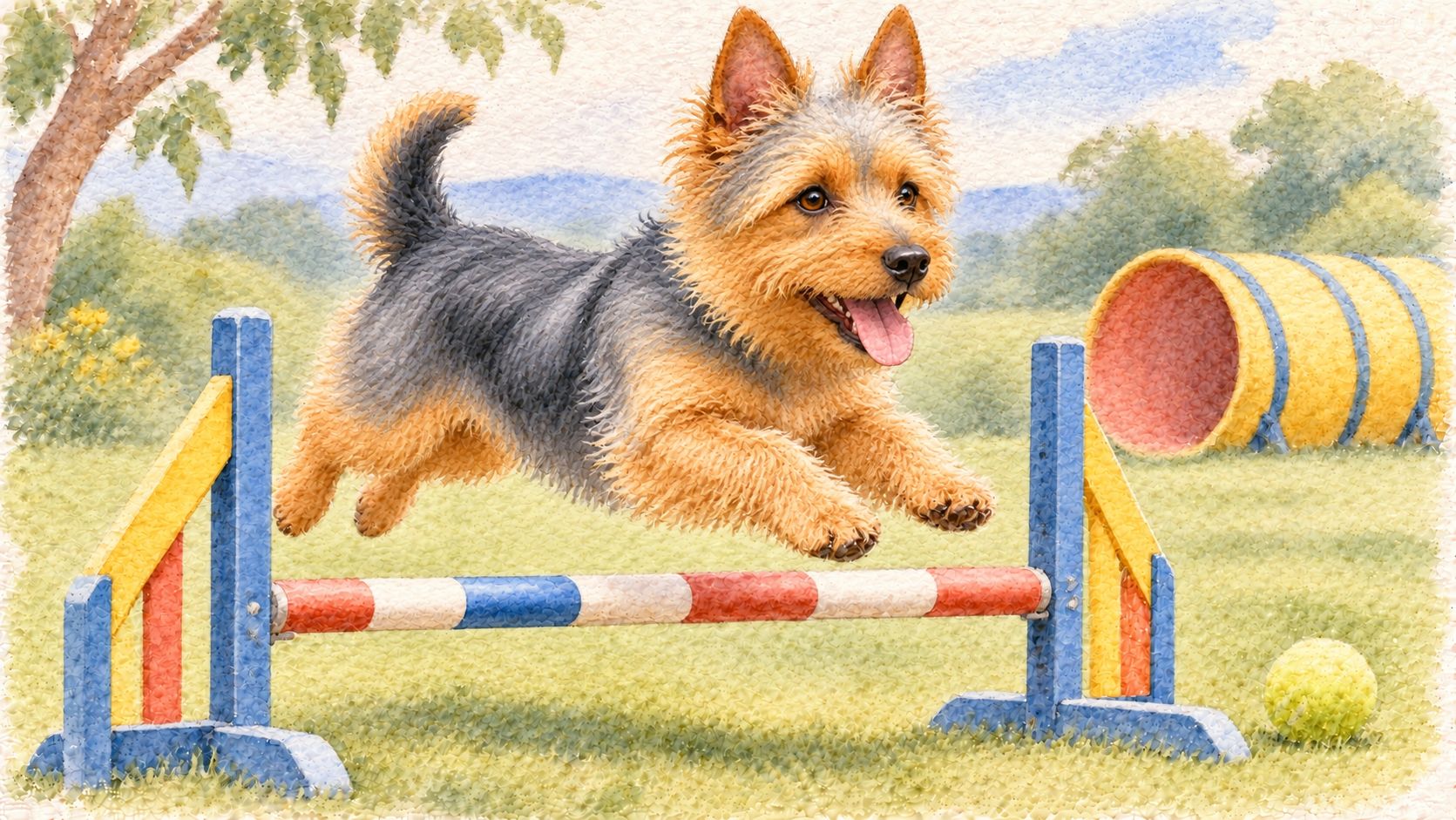
- Try dog sports. The breed often does well in agility, obedience, rally obedience and Earthdog events.
Exercise Needs
This breed has a medium energy level. A couple of daily walks plus some playtime is usually enough to keep this dog fit and content. It enjoys a game of fetch, a romp in a fenced yard or a sniff-filled stroll around the neighborhood.
The breed adapts well to many living situations, including city apartments, suburban homes and country properties. What matters most is that it gets regular physical activity and mental stimulation. Puzzle toys, scent games and short training sessions help keep its busy mind occupied.
Always walk your dog on a leash or let it play in a securely fenced area. Its hunting instincts can send it racing after squirrels or other small animals, and some are skilled diggers who can tunnel under weak fences.
Australian Terrier Grooming
Do Australian Terriers Shed?
They shed very little. Their harsh, weather-resistant coat is known for being easy to care for and does not leave much hair around the house.
Because of this low shedding, the breed is sometimes suggested for people with mild allergies. Keep in mind that no dog is truly 100 percent hypoallergenic, so spend time with the breed before committing if allergies are a concern.
Grooming Routine
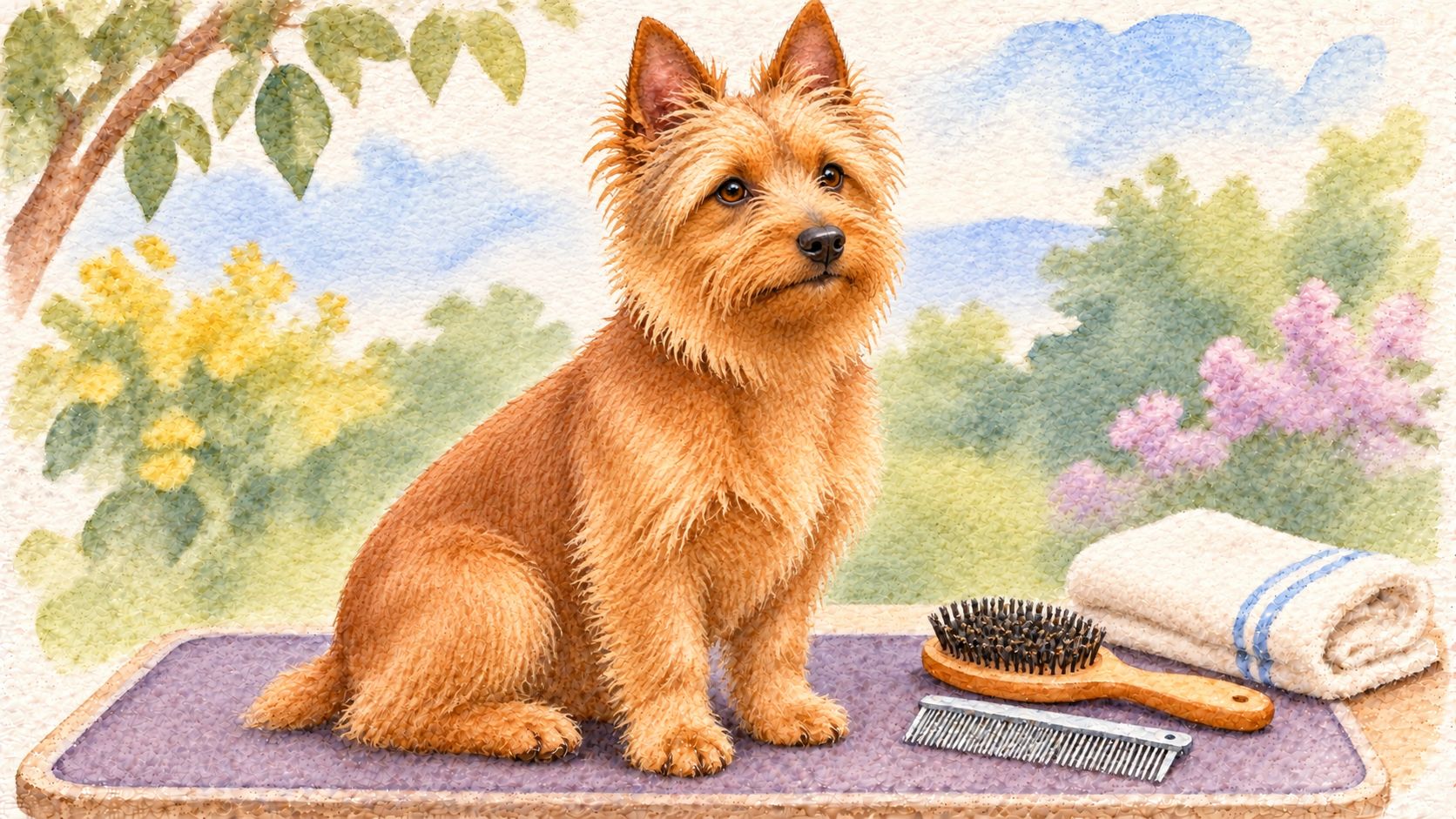
- Brushing: Brush the coat once or twice a week to remove loose hair and keep it neat.
- Coat care: Some owners have the coat hand-stripped a few times a year to maintain its natural harsh texture.
- Bathing: Bathe only when needed. Frequent baths can soften the coat and reduce its weather resistance.
- Trimming: Tidy the hair around the feet, ears and eyes as needed.
- Nails: Trim nails every few weeks if they do not wear down naturally.
- Teeth: Brush your dog's teeth regularly to support good dental health.
- Ears: Check the ears weekly for dirt or redness.
Australian Terrier Health and Lifespan
How Long Do Australian Terriers Live?
The Australian Terrier lifespan is generally about 11 to 15 years. Many stay active and playful well into their senior years with good care.
The breed is considered generally healthy, but like all dogs it can be prone to certain conditions. Responsible breeders screen their dogs for common concerns, which may include:
- Luxating patella: A condition in which the kneecap slips out of place, often seen in small breeds.
- Hip problems: Some small breeds can be affected by hip conditions, so ask breeders about screening.
- Allergies: Some dogs may develop skin or food sensitivities.
- Diabetes: This condition has been reported in the breed, so regular checkups are helpful.
Keeping your dog at a healthy weight supports joint health and overall well-being. Always work with your veterinarian to set up a routine of checkups, vaccinations and preventive care.
Feeding and Nutrition
This breed does well on a high-quality dog food made for small breeds. Small-breed formulas often have smaller kibble that is easy to chew and are designed to meet the energy needs of small, active dogs.
Puppies should eat a food made specifically for puppies to support healthy growth. Portion sizes depend on age, weight and activity level, so follow the feeding guidelines on the package and ask your veterinarian for advice. Treats are great for training but should make up only a small part of your dog's daily calories.
History of the Australian Terrier
The story of the Australian Terrier begins in the 1800s, when British settlers brought a variety of rough-coated terriers to Australia. These dogs were crossed over many years to create a tough, adaptable terrier suited to the harsh Australian landscape.
Breeds believed to be in its background include the Cairn Terrier, Dandie Dinmont Terrier, Skye Terrier, Scottish Terrier and Yorkshire Terrier, among others. The result was a small, hardy dog that could control rats and snakes, guard the homestead and serve as a loyal companion.
Early versions of the breed were shown in Australia in the late 1800s, at first under the name "Rough-Coated Terrier." It became the first breed developed in Australia to be recognized and shown in its home country. It was later recognized in the United Kingdom, and the American Kennel Club added the breed to its Terrier Group in 1960.
Australian Terrier vs Silky Terrier
The Australian Terrier and the Silky Terrier are close cousins, and the Aussie is thought to be one of the Silky's ancestors. The main difference is the coat. The Aussie has a harsh, rugged coat suited to outdoor work, while the Silky Terrier has a long, fine, glossy coat. Silkies are also slightly lighter and are placed in the AKC Toy Group rather than the Terrier Group.
Is an Australian Terrier Right for You?
An Australian Terrier could be a wonderful match if you:
- Want a small but sturdy dog with a big personality
- Prefer a low-shedding, easy-care coat
- Live in a city, suburb or rural area and can offer daily walks
- Enjoy training and playing games with your dog
- Want an alert little watchdog
- Have a family with respectful children
An Australian Terrier may not be the best fit if you:
- Keep small pets such as hamsters, rabbits or birds
- Want a dog that never barks
- Have a garden you do not want dug up
- Cannot provide daily exercise and attention
Finding an Australian Terrier Puppy
This is not one of the most common breeds in the United States, so you may need to join a waiting list for a puppy. Look for a breeder who health-tests their dogs, raises puppies in a home environment and welcomes your questions. Breed clubs and rescue groups can also help you find an adult dog in need of a new home.
Fun Facts About the Australian Terrier
- It was the first breed developed in Australia to be recognized and shown in its home country.
- It is one of the smallest working terriers.
- Early settlers valued the breed for hunting rats and even snakes.
- The breed's soft topknot contrasts with its harsh body coat.
- The American Kennel Club recognized the breed in 1960.
- The Australian Terrier is believed to be an ancestor of the Silky Terrier.
Frequently Asked Questions
How big do Australian Terriers get?
They usually stand 9 to 11 inches tall at the shoulder and weigh about 11 to 16 pounds, with males slightly larger than females.
Are Australian Terriers hypoallergenic?
They shed very little, so they are often suggested for people with mild allergies. However, no dog is completely allergen-free, so spend time with the breed first.
Are Australian Terriers good family dogs?
Yes. They are friendly, affectionate and sturdy, and they usually enjoy life with families and respectful children.
How long do Australian Terriers live?
The average Australian Terrier lifespan is about 11 to 15 years with good care, a healthy diet and regular veterinary checkups.
Do Australian Terriers bark a lot?
They are alert watchdogs and will bark to announce visitors or unusual sounds. Training and plenty of daily activity help keep barking under control.
Can Australian Terriers live in apartments?
Yes. Their small size and medium energy level let them adapt to apartment life, as long as they get daily walks, play and mental stimulation.
Final Thoughts
The Australian Terrier is a small dog with a brave heart, a loving nature and a coat that is wonderfully easy to care for. Born from the rugged Australian outback, this spirited terrier is just as happy in a city apartment as on a country farm. If you can offer daily activity, positive training and plenty of companionship, an Australian Terrier may become your most loyal friend.