
25 Fun Facts
25 Lion Facts: The Mighty Social Cats of Africa and India
Lions are famous as the "king of beasts", with powerful roars, golden manes and a reputation for strength and courage. Unlike other big cats, they live together in family groups, working as a team to hunt and raise their cubs.
Here are 25 fascinating facts about lions, from how a pride works to the last wild Asiatic lions in India's Gir Forest.
Lion Facts
The lion's scientific name is Panthera leo.
Lions are the second-largest cats in the world, after tigers.
Adult male lions usually weigh around 150 to 250 kilograms, while females are smaller, at around 110 to 180 kilograms.
Lions are the only big cats that live in groups, called prides.
A pride is usually made up of several related females, their cubs and one or a few adult males.
Prides vary in size, but many have around 10 to 15 members.
Today, wild lions live in parts of sub-Saharan Africa and in one place in Asia: the Gir Forest region of Gujarat in India.
Lions once lived across much of Africa, the Middle East, India and even parts of south-eastern Europe.
Despite the nickname "king of the jungle", lions don't live in jungles. They prefer grasslands, savannas and dry open forests.
India's Gir Forest is the last home of the wild Asiatic lion
The Asiatic lion once roamed from the Middle East across India, but by the early 1900s hunting had reduced it to perhaps only a few dozen animals in the Gir Forest of Gujarat. Thanks to strict protection by the Nawab of Junagadh, and later the Indian government, the population slowly recovered. Today, Asiatic lions have spread beyond Gir into the surrounding region of Saurashtra, and the 2025 count found close to 900 lions. They are the only wild lions found outside Africa.
Asiatic lions are slightly smaller than African lions, with shorter manes and a fold of skin running along their belly.
Male lions are the only big cats with manes. A mane makes a male look bigger and helps protect his neck during fights.
Studies in the Serengeti found that lionesses prefer males with darker manes, which are often a sign of good health and strength.
Some male lions, such as those in the Tsavo region of Kenya, have very small manes or none at all.
A lion's roar can be heard up to about 8 kilometres away. Lions roar to mark their territory and keep in touch with their pride.
Lions are the only cats with a tuft of dark hair at the end of their tail.
Lions can rest or sleep for up to 20 hours a day.
Lionesses do most of the hunting, working together as a team to catch prey such as zebras, wildebeest and buffalo.
Male lions defend the pride's territory from rival males, and they also join hunts for large prey like buffalo.
Lions guard India's national emblem
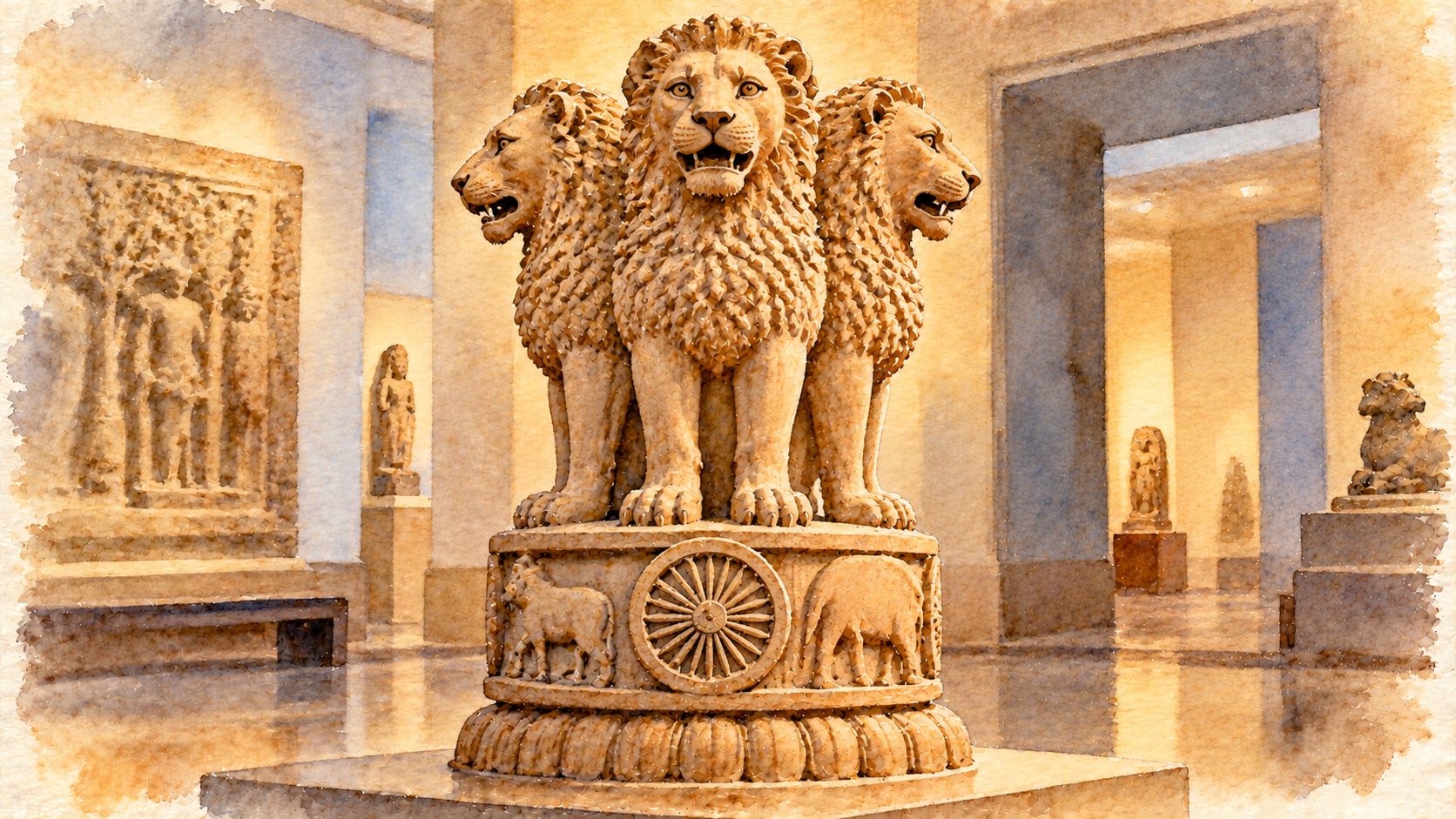
India's national emblem comes from the Lion Capital of Ashoka, a stone sculpture created around 250 BCE and found at Sarnath, near Varanasi. The original shows four Asiatic lions standing back to back, facing in four directions, symbolising power, courage, pride and confidence. India adopted the emblem on 26 January 1950, the day the country became a republic. It appears on Indian currency notes, passports and official documents.
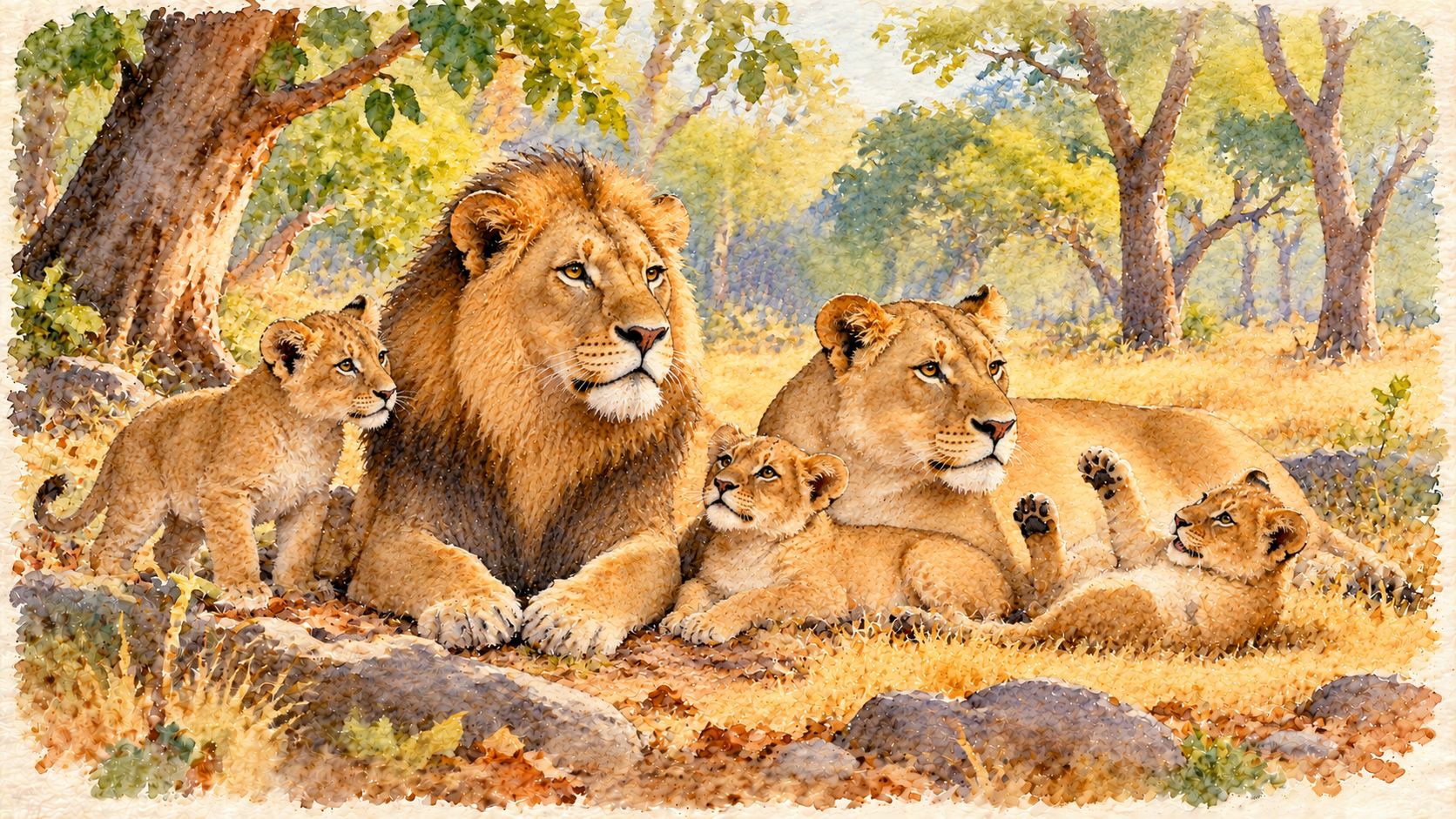
Lion cubs are born blind and covered in spots, which help hide them and slowly fade as they grow.
Lionesses in a pride often give birth around the same time and may nurse each other's cubs.
Wild lions usually live for around 10 to 14 years, while lions in zoos can live for 20 years or more.
African lions are listed as vulnerable, and their numbers have fallen sharply over the past few decades because of habitat loss and conflict with people.
World Lion Day is celebrated every year on 10 August to raise awareness about protecting lions.
Sources and Further Reading
- Gujarat Forest Department
- Wildlife Institute of India
- Archaeological Survey of India
- IUCN Red List of Threatened Species
- Lion Recovery Fund
- Encyclopaedia Britannica
Frequently asked questions
Where do lions live in the wild?
Wild lions live in parts of sub-Saharan Africa and in the Gir Forest region of Gujarat, India, which is the only home of wild Asiatic lions.
How many Asiatic lions are left in India?
The 2025 count found close to 900 Asiatic lions in the Gir Forest and surrounding areas of Gujarat.
Why do male lions have manes?
A mane makes a male lion look larger and more impressive to females and rivals, and it helps protect his neck during fights.
Who does the hunting in a lion pride?
Lionesses do most of the hunting, working together as a team. Male lions mainly defend the territory but also help catch large prey like buffalo.
How far can a lion's roar be heard?
A lion's roar can be heard up to about 8 kilometres away. Lions roar to mark their territory and communicate with their pride.
What do the lions on India's national emblem mean?
The four lions of the Lion Capital of Ashoka, found at Sarnath, symbolise power, courage, pride and confidence. India adopted the emblem on 26 January 1950.
More Fun Facts