25 Rainbow Trout Facts: Colourful Fish of Cold Waters
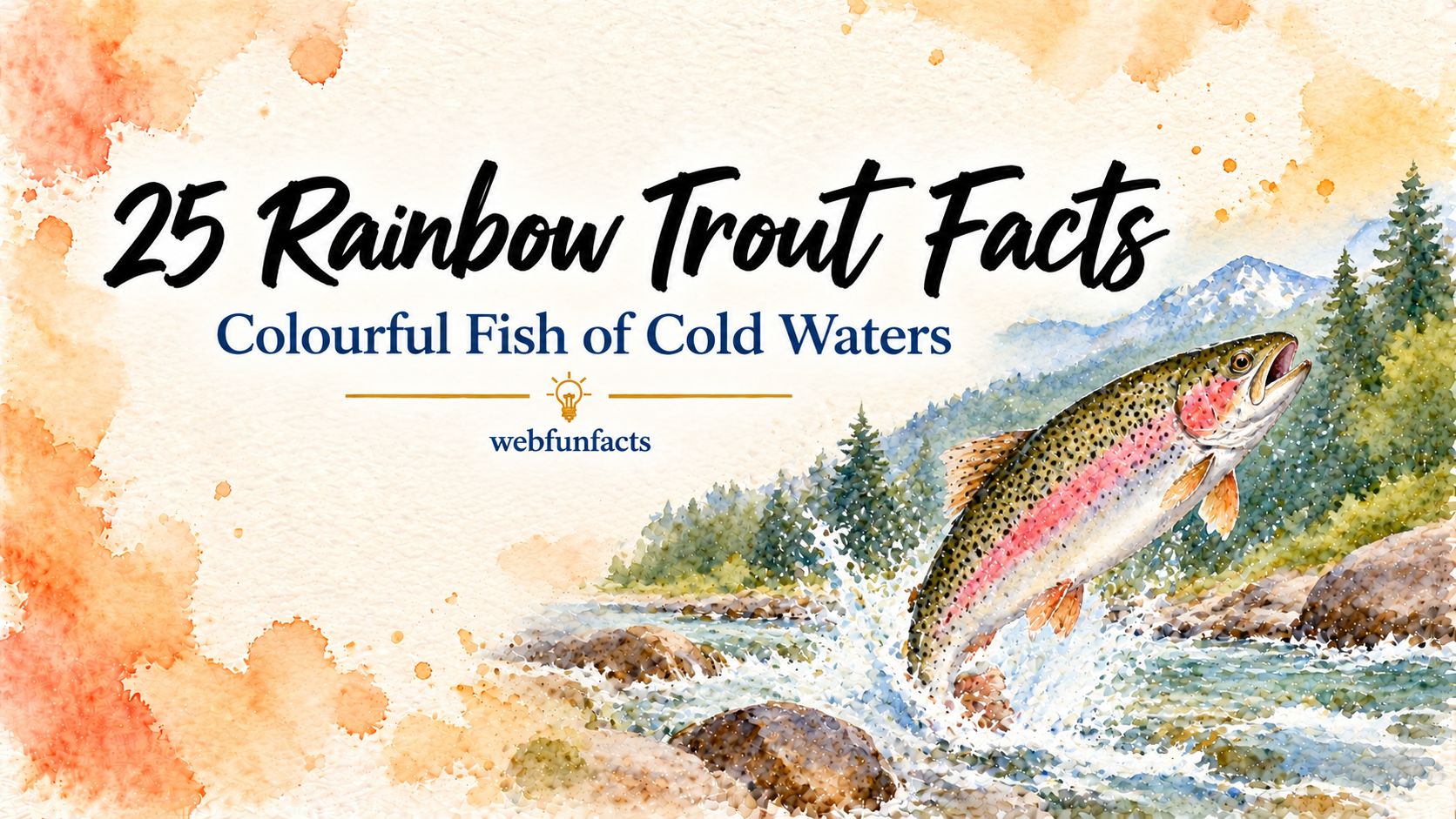
The rainbow trout is one of the world's best-known freshwater fish. Named for the pinkish band that shimmers along its sides, it is native to cold rivers and lakes around the North Pacific, yet today it swims in streams, reservoirs and fish farms on every continent except Antarctica.
Prized by anglers and farmed for food on a huge scale, the rainbow trout also has a sea-going twin, a sensitive nature that makes it useful to scientists and a controversial record as an introduced species. Here are 25 facts about this colourful fish, including its long history in India's hills.
Rainbow Trout Facts
The rainbow trout's scientific name is *Oncorhynchus mykiss*. It was first described in 1792 by the naturalist Johann Julius Walbaum, who named it *Salmo mykiss*.
It belongs to the salmon family, Salmonidae, and is more closely related to Pacific salmon than to the brown trout of Europe.
Its native range is broad, stretching along Pacific-draining rivers of North America from Alaska to north-western Mexico, as well as Russia's Kamchatka Peninsula.
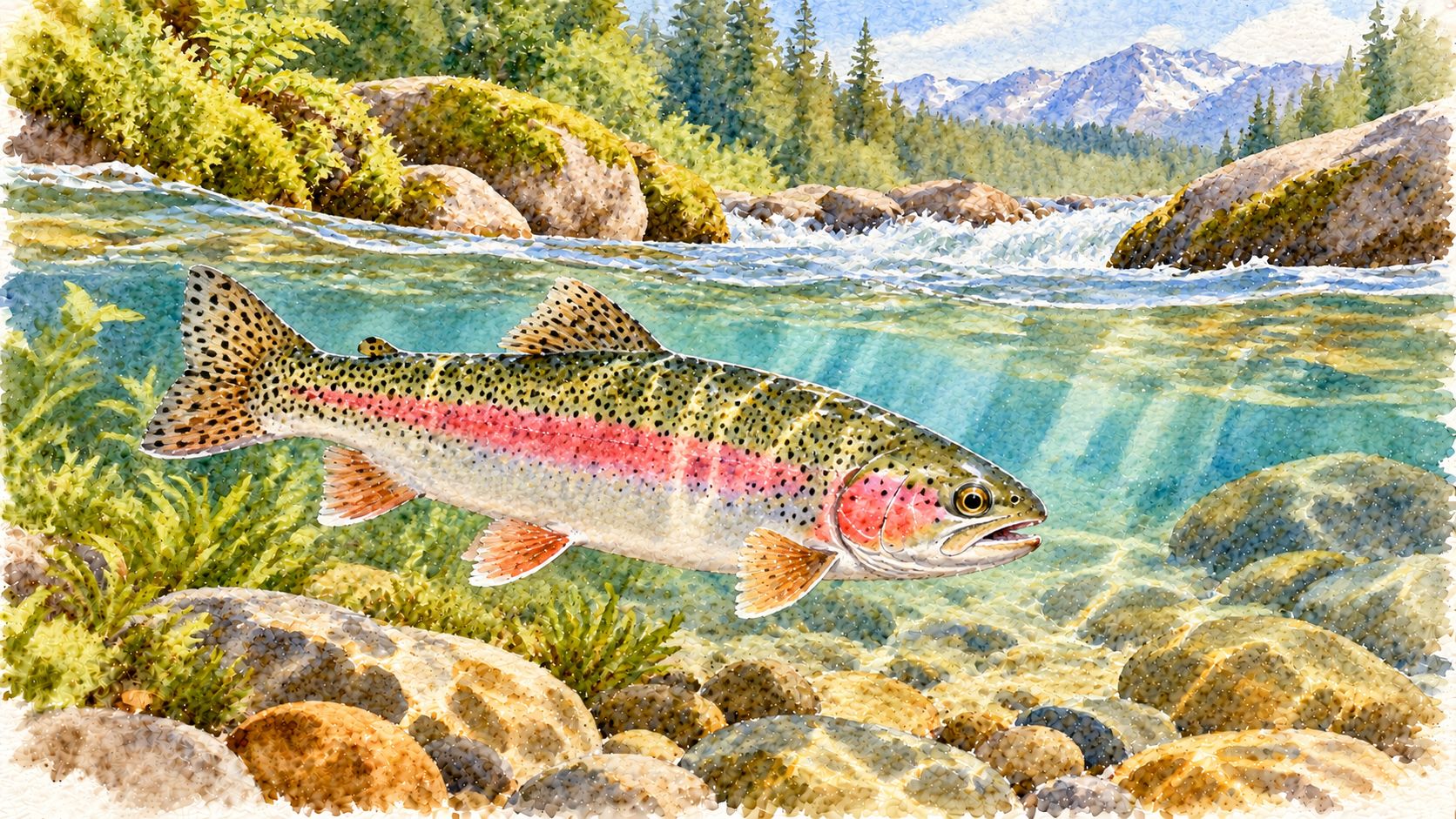
The fish gets its name from the pink to reddish stripe along each side, set against a body speckled with small dark spots.
Some rainbow trout migrate to the ocean and return to rivers to breed. These sea-run fish are called steelhead and belong to the same species.
Steelhead often turn bright silver at sea, and many grow larger than rainbow trout that stay in fresh water all their lives.
Unlike most Pacific salmon, which die after spawning, rainbow trout and steelhead can survive to spawn more than once.
Rainbow trout show a strong tendency to return to the stream where they hatched to breed, although some individuals stray to new waters.
Wild rainbow trout usually spawn in spring. The female digs a shallow nest, called a redd, in clean gravel where flowing water keeps the eggs supplied with oxygen.
Rainbow Trout Need Cold, Clean Water
Rainbow trout are fussy about where they live. They thrive in cool, well-oxygenated water and generally struggle as temperatures climb above about 20°C, when warm water holds less oxygen. They are also sensitive to many pollutants. This sensitivity makes them valuable to scientists: rainbow trout are among the most widely used fish in standard laboratory tests that check how toxic chemicals, effluents and pesticides are to aquatic life. The health of trout populations in a river can also act as a useful signal of water quality, so a stream full of thriving trout is usually a sign of a clean, cold and healthy habitat.
A female can lay from a few hundred to several thousand eggs, depending largely on her size.
The eggs usually hatch within several weeks, with colder water slowing development and warmer water speeding it up.
Rainbow trout are predators. They feed on aquatic insects at every life stage, land insects that fall into the water, crustaceans, fish eggs and smaller fish.
Their colours vary with habitat: stream fish are often boldly marked, lake fish can be paler and silvery, and sea-run steelhead are mostly silver.
Like other fish, rainbow trout have a lateral line, a row of sensory organs along each side that detects vibrations and water movement.
Rainbow trout have been introduced to more than 80 countries, either for sport fishing or for fish farming.
Trout hatcheries were operating in the United States by the 1870s, and California's rainbow trout eggs were soon being shipped around the world.
Today the rainbow trout is one of the world's most important farmed fish, with Iran, Turkey, Chile and Norway among the major producers.
Some farmed rainbow trout are raised in sea cages, since the species can adapt to salt water, much like its steelhead relatives.
The British Brought Trout to India's Hills
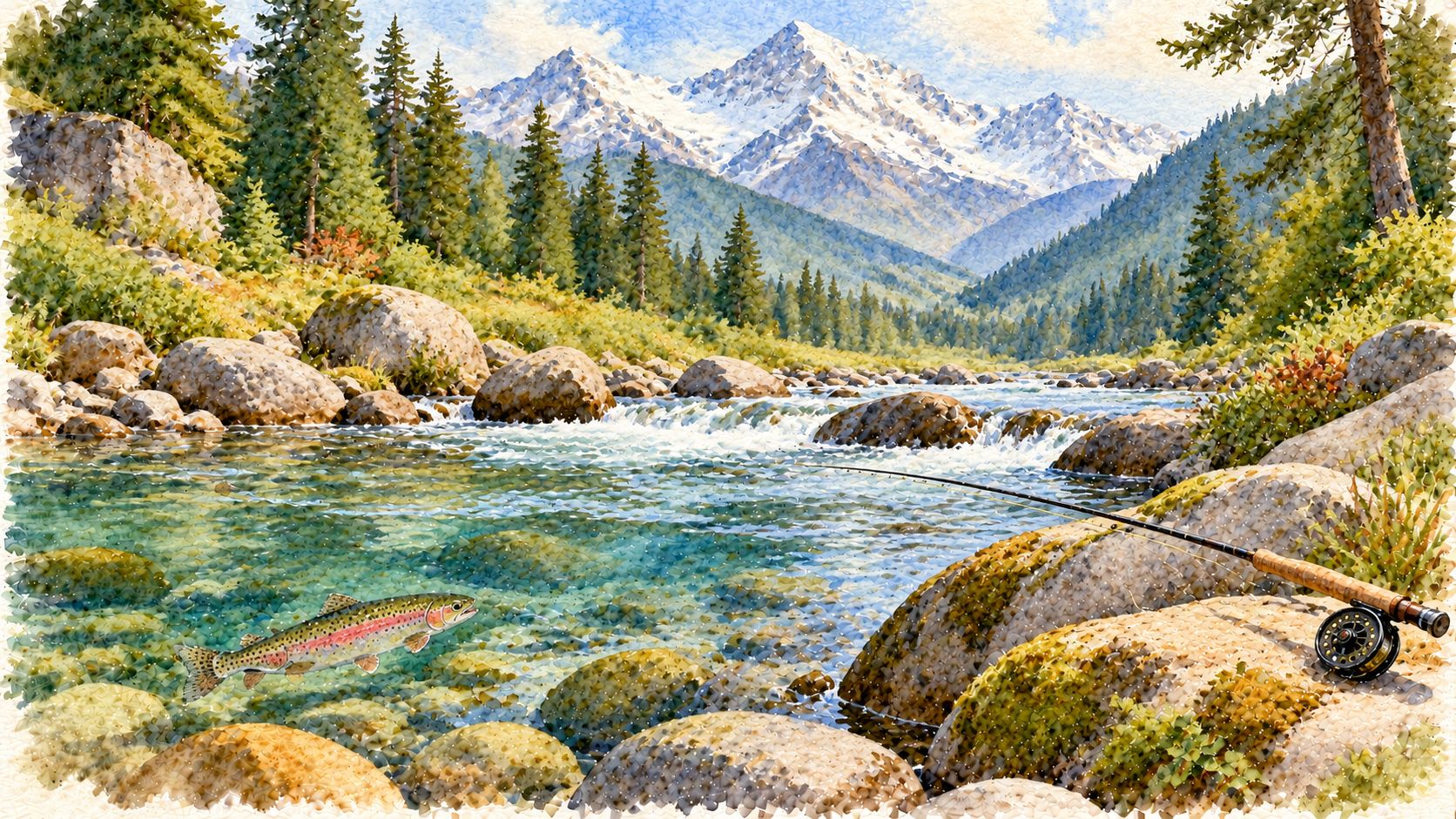
Trout are not native to India. During the British period, from the late 1800s onwards, colonial officials and angling enthusiasts shipped trout eggs to India's cold hill streams, with brown trout generally arriving first and rainbow trout following, much of it in the early twentieth century. Kashmir, Himachal Pradesh's Kullu valley and Barot, and Munnar in Kerala's High Ranges became well-known trout-fishing spots, and Munnar's trout waters were long managed by a local angling association. Today trout farming is a valuable industry in Jammu and Kashmir, Himachal Pradesh, Uttarakhand and parts of the north-east, and anglers still visit these areas.
The rainbow trout appears on the "100 of the World's Worst Invasive Alien Species" list compiled by experts working with the IUCN, because in some places it competes with or preys on native fish and frogs.
Several subspecies are recognised, including inland redband trout and the golden trout of California's Kern River area, though scientists disagree on the exact number.
The bright yellow "golden rainbow trout" sold to anglers is a farmed colour variety, not a true subspecies.
The heaviest rainbow trout on record, at roughly 22 kg, came from Lake Diefenbaker in Saskatchewan, Canada, and is widely thought to have escaped from a nearby fish farm.
Wild rainbow trout often live around four to six years, though some individuals, especially large steelhead, can live longer.
Sources and Further Reading
- Food and Agriculture Organization of the United Nations
- NOAA Fisheries
- US Fish and Wildlife Service
- IUCN Invasive Species Specialist Group
- Encyclopaedia Britannica
- ICAR-Directorate of Coldwater Fisheries Research
Frequently asked questions
Why is it called a rainbow trout?
It is named for the pink to reddish band that runs along each side of its spotted body.
What is the difference between a rainbow trout and a steelhead?
They are the same species. Steelhead migrate to the sea and return to rivers to spawn, while rainbow trout stay in fresh water.
Is rainbow trout native to India?
No. Trout were introduced to India's hill streams during British rule, and rainbow trout are now farmed in several hill states.
Where can you go trout fishing in India?
Kashmir, Himachal Pradesh and Munnar in Kerala are among the best-known trout-fishing areas.
What do rainbow trout eat?
They eat aquatic and land insects, crustaceans, fish eggs and smaller fish.
Do rainbow trout die after spawning?
No. Unlike most Pacific salmon, rainbow trout and steelhead can survive and spawn again.
More Fun Facts