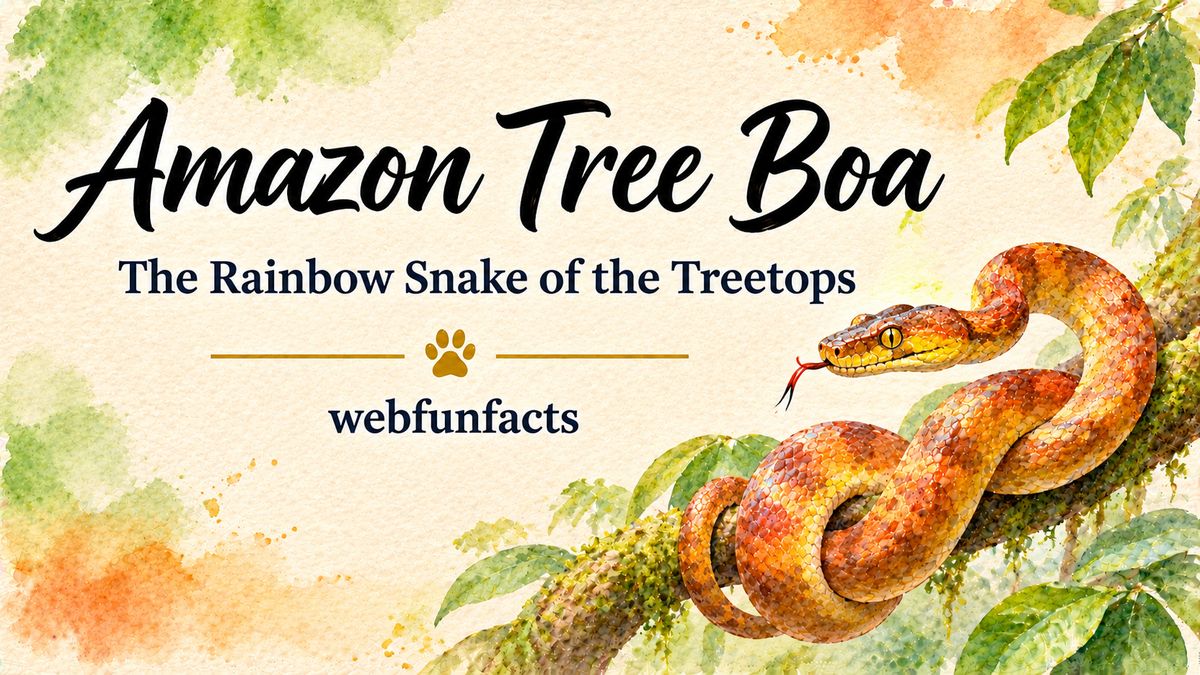
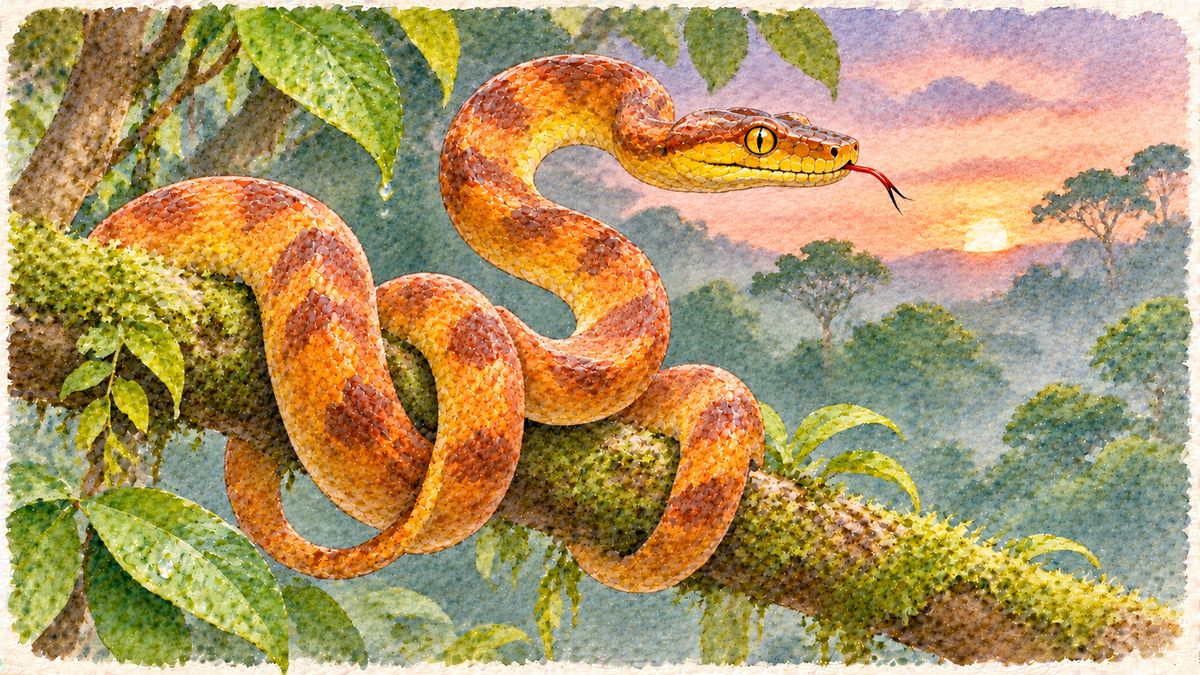
The Amazon tree boa is a slender, rainbow-colored snake that spends its life in the branches of South American forests. Hanging from a limb with its head curved like a question mark, it waits in the dark for a bat, bird or lizard to pass. Few snakes can match its range of colors: individuals may be yellow, orange, red, brown, gray, black or a mix, and no two look exactly alike.
Also known as the garden tree boa, the Amazon tree boa is a favorite of reptile keepers and a fascinating predator in the wild. Yet it has a reputation, since it is nervous, quick to strike and equipped with long teeth. In this complete guide, you will learn what an Amazon tree boa is, what it looks like, where it lives, what it eats, how it hunts, how it breeds, how long it lives and what you should know if you ever meet one.
Quick answer: The Amazon tree boa (Corallus hortulanus) is a non-venomous, tree-dwelling constrictor found across northern South America. It grows about 1.2 to 2 m (4 to 6.5 ft) long, hunts at night for birds, bats, rodents and lizards, and gives birth to live young. It is highly variable in color and is listed as Least Concern by the IUCN.
Amazon Tree Boa at a Glance
| Feature | Details |
|---|---|
| Scientific name | Corallus hortulanus |
| Class | Reptilia |
| Order | Squamata |
| Family | Boidae |
| Size / length | About 4 to 6.5 feet (1.2 to 2 m) |
| Weight | Roughly 1.5 to 3 pounds (0.7 to 1.4 kg); larger females may be heavier |
| Lifespan | About 15 to 20 years in captivity; wild lifespan is not well known |
| Diet | Birds, bats, rodents, lizards and frogs |
| Habitat | Rainforests, forest edges, plantations and gardens |
| Range | Northern South America, including the Amazon basin and the Guianas |
| Conservation status (IUCN) | Least Concern |
What Is an Amazon Tree Boa?
The Amazon tree boa is a medium-sized member of the boa family, Boidae. Boas kill their prey by constriction, wrapping their coils around it and squeezing until it can no longer breathe. This species is arboreal, meaning it lives mainly in trees and shrubs. It is also nocturnal, so it is mostly active at night.
It is called the garden tree boa because it is frequently found in gardens, plantations and cultivated land, not just in untouched forest. Older books sometimes use the name Corallus enydris, and some sources treat the garden tree boa as more than one species, so you may see slightly different names in different places. Today, most experts recognize Corallus hortulanus as the species for the Amazonian populations discussed here.
Is the Amazon Tree Boa Venomous?
No. It has no venom. It is a constrictor, but it has very long front teeth for catching and holding slippery prey. These teeth can cause painful bites to people, though the snake is not dangerous in the way that venomous snakes are.
What Does an Amazon Tree Boa Look Like?
Size and Shape
Adults are slender and strongly compressed from side to side, like a ribbon. They measure around 1.2 to 2 meters (4 to 6.5 feet) long, and females are usually bigger than males. The body is thin and flexible, perfect for balancing on branches.
The Rainbow of Colors
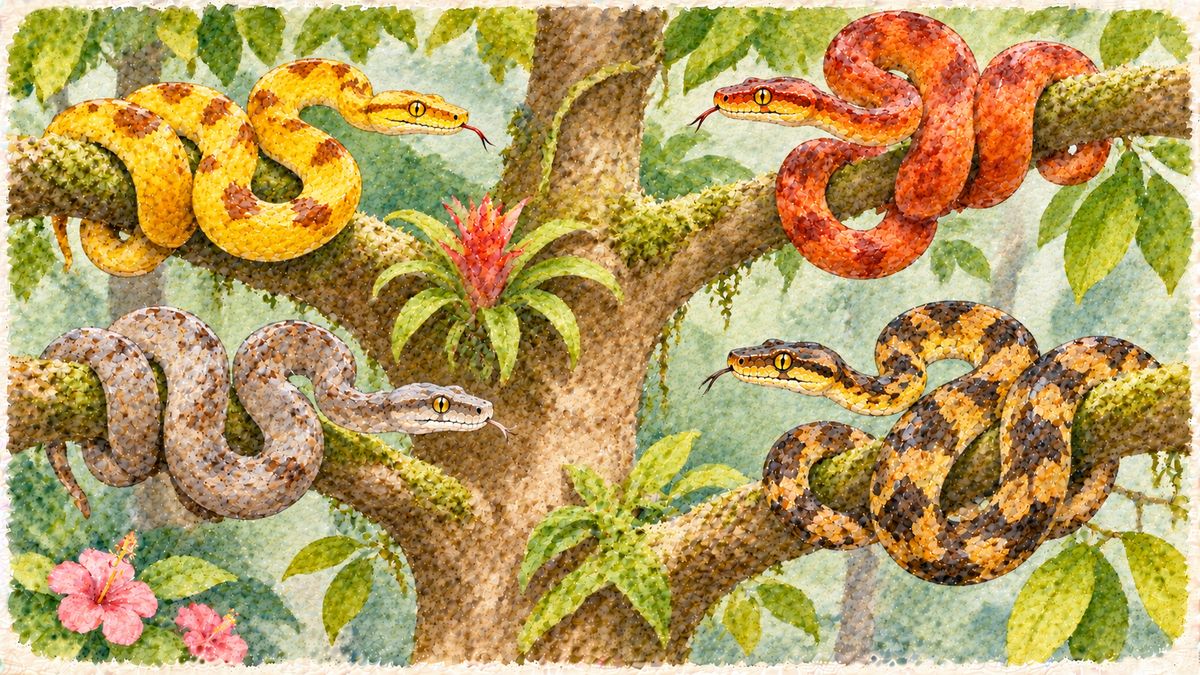
This snake is famous for its color variation. Typical colors and patterns include:
- Yellow and orange: Bright, golden or pumpkin-colored individuals.
- Red and brick: Warm red-brown tones, sometimes with a darker pattern.
- Gray and brown: Subtle shades that blend with bark.
- Black or dark patterns: Some have bold dark patches, diamonds or speckles.
- Mixed patterns: Spots, saddles, stripes or a smooth, single color.
Because colors vary even within the same brood, keepers and breeders have developed many named color forms. Scientists think this variety may help individuals hide in different tree types and lighting.
Head, Eyes and Teeth
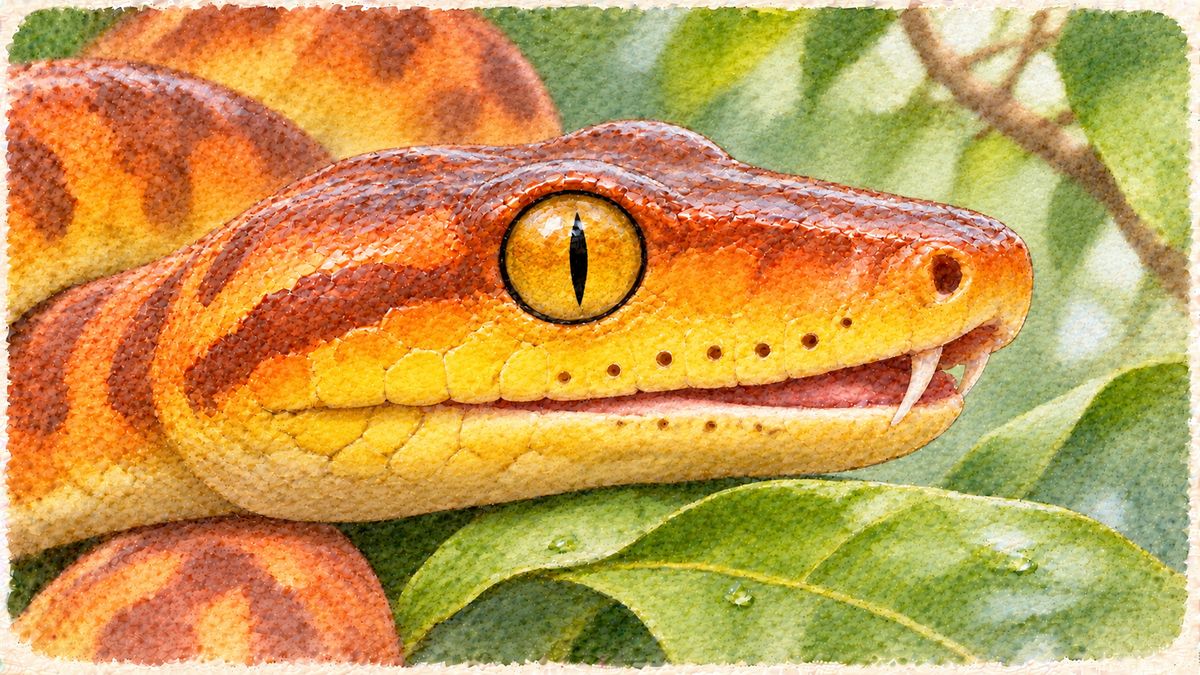
The head is wide and distinct from the narrow neck. The eyes are large with vertical, cat-like pupils, which helps with night vision. The mouth contains long, curved teeth, among the longest relative to body size of any non-venomous snake, which are used to grip birds and bats.
Heat-Sensing Pits
Along the upper and lower lips, the snake has small, deep pits that detect infrared heat. This allows it to sense warm-blooded prey in total darkness, even without seeing or smelling it.
Prehensile Tail
The tail is prehensile, meaning it can grip branches like an extra hand. This lets the snake anchor itself and strike with the front part of its body.
Where Do Amazon Tree Boas Live?
The Amazon tree boa lives in northern and central South America. Its range includes the Amazon basin in Brazil, Peru, Ecuador, Colombia, Bolivia and Venezuela, plus the Guianas and nearby areas. Related forms live in parts of the Caribbean, and exact range limits depend on how scientists classify populations.
Habitat
- Rainforest: Dense, humid forest with thick vegetation.
- Forest edges and clearings: The snake often hunts where branches overlap near open areas.
- Plantations and gardens: Cultivated areas attract rodents and birds, which attract the boa.
- Riverside and swampy forest: Humid, tangled vegetation near water.
During the day the snake rests coiled in a tree hollow, a tangle of vines or a dense bush, hidden from view. At night it moves to its favored hunting posts.
What Do Amazon Tree Boas Eat?
The Amazon tree boa is a carnivore with a wide menu.
Typical Prey
- Birds: Sleeping or nesting birds are common prey.
- Bats: Caught as they leave roosts or fly past.
- Rodents: Small mice and rats, especially around farms.
- Lizards: Anoles and other tree lizards.
- Frogs: Tree frogs taken on branches.
Young boas tend to eat lizards and frogs, while larger adults switch to birds, bats and rodents.
How It Hunts
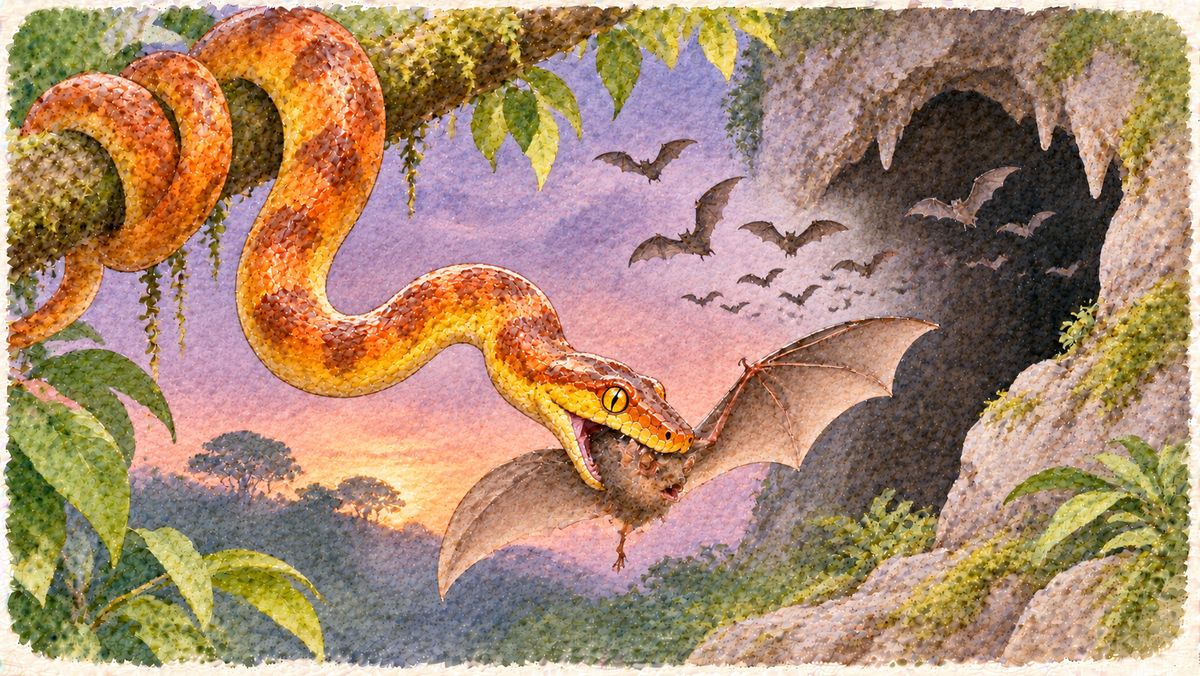
The Amazon tree boa is an ambush predator. It drapes itself over a branch in an S-shaped coil, often near a bat cave or a fruiting tree where animals visit. It waits for prey to come within reach, then strikes quickly, grabs the animal with its long teeth and wraps coils around its body. The snake then swallows its meal headfirst.
Some individuals are known to hang at cave entrances, picking bats out of the air as they stream out at dusk. This is a famous example of a snake catching flying prey.
Amazon Tree Boa Behavior and Lifestyle
Nocturnal and Arboreal
Amazon tree boas spend nearly all their lives off the ground. They move with slow, careful movements, using the tail to grip, and are skilled at crossing gaps between branches.
Solitary Life
Adult snakes live alone, except during mating. They do not defend large territories, but they favor certain hunting perches.
Temperament
The Amazon tree boa has a reputation for being defensive and quick to bite. Wild snakes rely on camouflage first, but if disturbed, they will coil, flatten the head and strike. Captive-bred individuals can become calmer with careful, gentle handling, but this species is considered nervous and is best suited to experienced keepers.
Seasonal Activity
Activity patterns depend on weather, season and prey. In the wet season, more prey is available, and snakes may be more active.
Amazon Tree Boa Reproduction and Babies
Like other boas, the Amazon tree boa gives birth to live young. The eggs develop inside the mother's body, and she gives birth to fully formed babies, a method called ovoviviparity.
Mating
Males find females by following scent trails. Mating occurs mainly during the cooler or drier months, and several males may court one female.
Birth and Litter Size
After several months of pregnancy, the female gives birth to a litter of live young, typically about 6 to 20, although the number varies by female size and age. Newborns measure around 30 to 45 cm (12 to 18 in) and are fully independent. The mother does not feed or guard them.
Growing Up
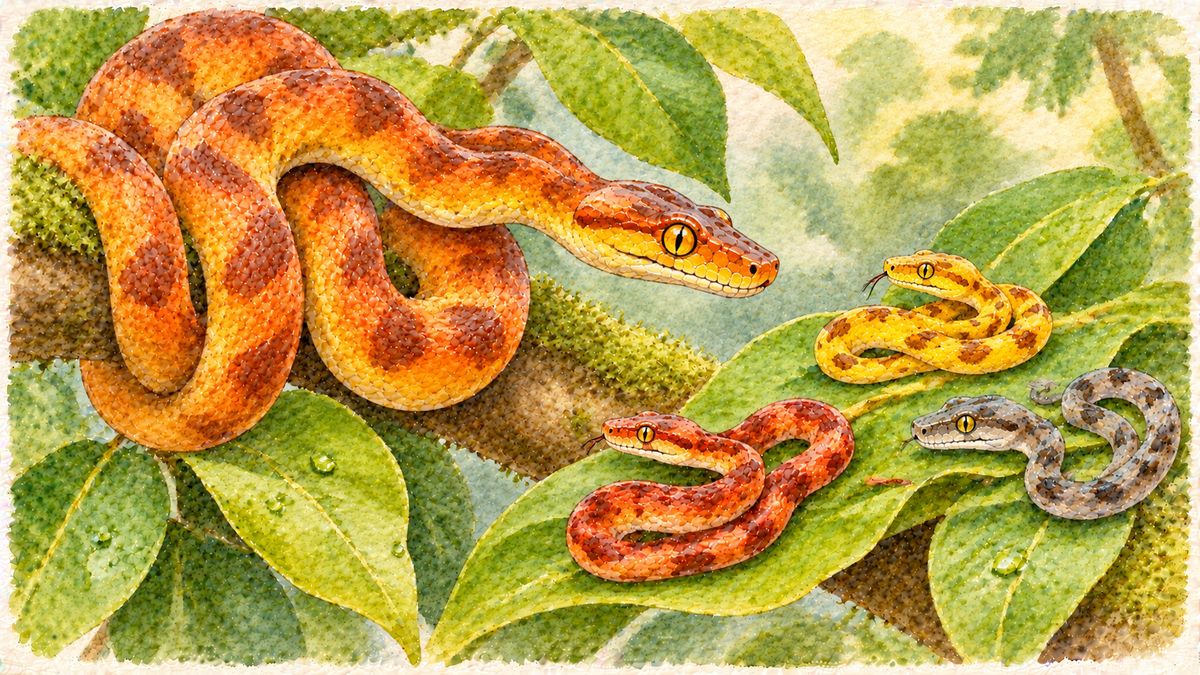
Young snakes often have different colors from their parents, and they may change as they grow. Juveniles feed on small lizards and frogs and become mature at around 2 to 4 years.
How Long Do Amazon Tree Boas Live?
In captivity, with good care, Amazon tree boas commonly live 15 to 20 years, and some are reported to live longer. Wild lifespan is not well known, but predation, disease and habitat loss probably shorten it.
Basic Captive Care Notes
Keepers who want to learn more should understand that this species has specific needs:
- Tall enclosure: A tall cage with branches and vertical space.
- Warm and humid air: Temperatures around 26 to 29 C (79 to 84 F) with high humidity.
- Hide spots: Leafy cover to make the snake feel secure.
- Appropriate food: Rodents sized to the snake, offered in line with experienced advice.
- Legal and ethical sourcing: Choose captive-bred animals.
Because this species can be difficult for beginners, anyone considering one should research carefully.
Predators and Threats
Natural Predators
Young Amazon tree boas may be eaten by larger snakes, birds of prey, mammals such as small cats and opossums, and large lizards. Adults have fewer predators but may be targeted by large raptors and big cats.
Defense
- Camouflage: Their coloration blends with bark, vines and leaves.
- Stillness: They freeze among branches.
- Strike and bite: When provoked, they lunge with long teeth.
- Musk: Like many snakes, they may release a foul-smelling fluid.
Human Threats
- Deforestation: Loss of trees removes hunting posts and homes.
- Persecution: Snakes are sometimes killed out of fear.
- Collecting: Wild collection for the pet trade can affect local populations.
Why Amazon Tree Boas Are Important
- Pest control: They eat rodents that might damage crops or spread disease.
- Bat and bird regulation: As predators, they help balance prey populations.
- Food web link: Their young feed many other animals.
- Sign of healthy forest: The presence of tree boas often suggests a functioning, diverse forest.
Are Amazon Tree Boas Endangered?
No. The Amazon tree boa is listed as Least Concern, because it is widespread and adaptable. But its future still depends on forest protection. Large areas of South American forest are lost every year, and while this species can live in gardens and plantations, it relies on trees. Preserving habitat, reducing wild collection and encouraging captive breeding all help keep it secure.
Fun Facts About Amazon Tree Boas
- Rainbow snake: Few snakes have as many colors and patterns.
- Long teeth: Their teeth are some of the longest compared with body size among non-venomous snakes.
- Heat vision: Their lip pits sense infrared warmth.
- Cave hunters: Some catch bats in flight at cave mouths.
- Gripping tail: The tail works like a hand.
- Live birth: Females give birth to live young instead of laying eggs.
- Garden visitors: They often live around gardens and plantations.
- Night vision: Vertical pupils help them see in the dark.
- Question mark pose: They strike from an S-shaped coil.
- Many names: Garden tree boa, Amazon tree boa and others refer to similar snakes.
Frequently Asked Questions
Is the Amazon tree boa venomous? No. It is a constrictor with no venom, but its long teeth can deliver a painful bite.
How big do Amazon tree boas get? Most adults are about 1.2 to 2 m (4 to 6.5 ft) long. Females tend to be longer and heavier than males.
What do Amazon tree boas eat? They eat birds, bats, rodents, lizards and frogs, which they ambush at night from a branch.
Are Amazon tree boas good pets? They are best for experienced keepers. They are nervous and bite readily, and they need tall, warm, humid enclosures.
How long do Amazon tree boas live? Often 15 to 20 years in captivity.
Where do Amazon tree boas live? They live in the forests of northern South America, including the Amazon basin and the Guianas, mostly high in trees.
Final Thoughts
The Amazon tree boa is a wonder of color, camouflage and patience. From its heat-sensing lips to its gripping tail, every feature serves a life in the branches. It is not a snake to handle casually, but it is one to admire and protect. By conserving rainforest habitat and treating wildlife with respect, we help ensure that this rainbow predator keeps hanging from the night branches of South America.