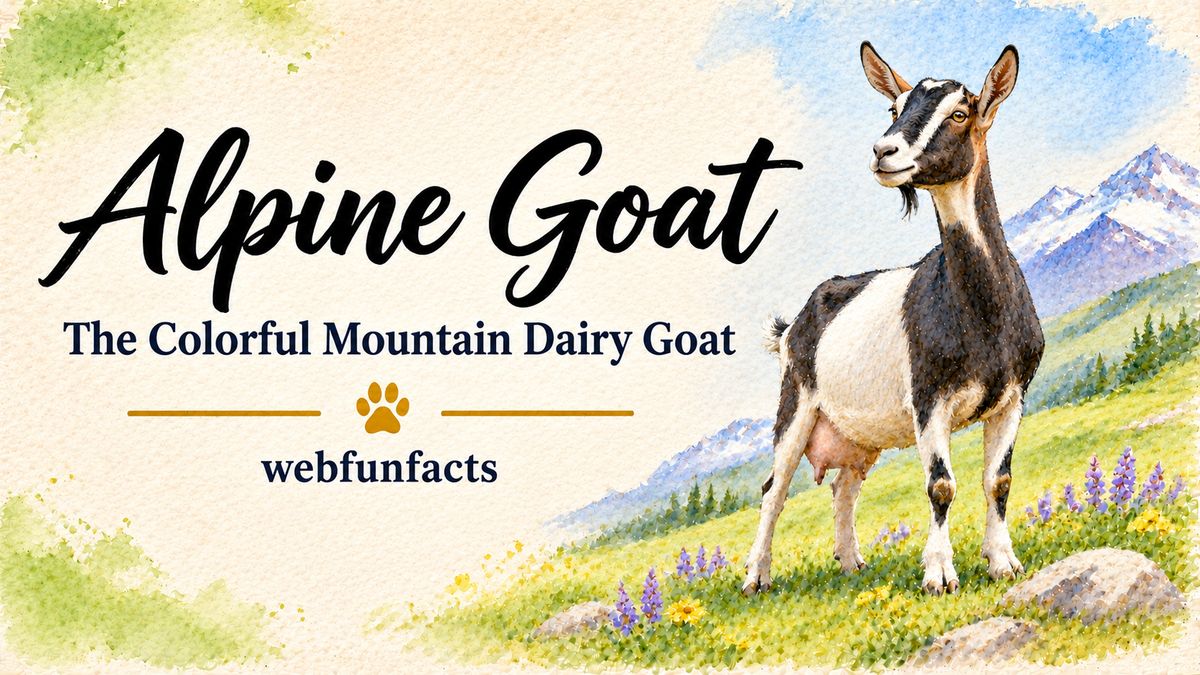
The Alpine goat is one of the world's most productive and most popular dairy goats. Bred in the mountains of France and Switzerland, this hardy, alert and good-natured breed is known for giving plenty of sweet milk, adapting to many climates and showing off a spectacular variety of coat colors and patterns, no two of which look quite alike.
Whether you are thinking about starting a small homestead, looking for the best dairy goat for fresh milk and cheese, or simply curious about farm animals, the Alpine is a breed worth knowing. In this complete guide, you will learn what an Alpine goat is, where it comes from, what it looks like, how much milk it gives, what it eats, how it behaves, how it breeds and how to care for it, from fencing and shelter to health and hoof care.
Quick answer: The Alpine goat (also called the French Alpine) is a medium-to-large dairy goat breed developed in the Alps of France and Switzerland. Does stand at least about 76 cm (30 in) tall and weigh around 60 to 80 kg (135 to 175 lb). They produce roughly 1 gallon (about 4 liters) or more of milk per day at peak, live around 10 to 15 years, and eat hay, pasture and browse. As a domestic breed, the Alpine has no IUCN conservation status.
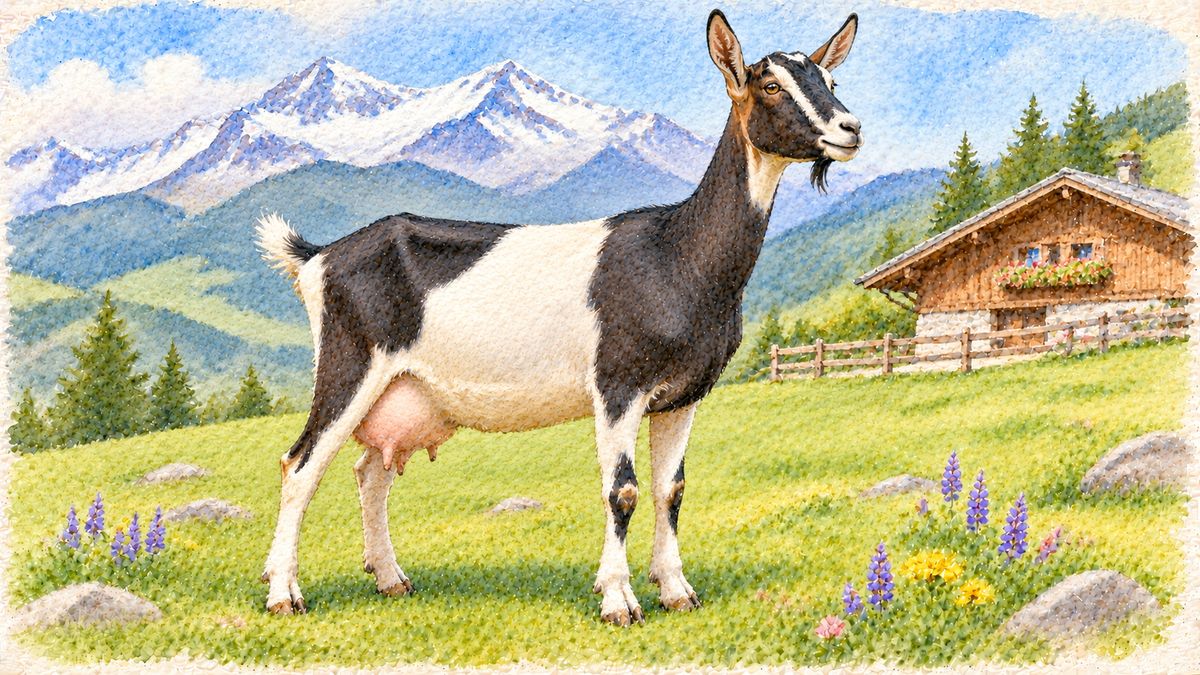
Alpine Goat at a Glance
| Feature | Details |
|---|---|
| Scientific name | Capra hircus (domestic goat) |
| Class | Mammalia |
| Order | Artiodactyla (even-toed ungulates) |
| Family | Bovidae |
| Breed type | Dairy goat |
| Origin | French Alps and neighboring Swiss regions |
| Height at withers | Does at least about 30 inches (76 cm); bucks at least about 32 inches (81 cm) |
| Weight | Does about 135 to 175 pounds (61 to 80 kg); bucks 170 pounds (77 kg) or more |
| Lifespan | About 10 to 15 years |
| Milk | About 1 gallon (4 L) or more per day at peak; moderate butterfat |
| Coat | Short to medium hair in many colors and patterns |
| Temperament | Alert, curious, friendly and strong-willed |
| Conservation status | Domesticated breed; not assessed by the IUCN |
What Is an Alpine Goat?
The Alpine goat is a breed of domestic goat, which means it is a variety of Capra hircus, the species descended from the wild bezoar ibex of western Asia. People have kept goats for around 10,000 years, and different breeds have been developed for milk, meat, fiber or companionship. The Alpine was developed for milk.
The breed is named after the Alps, where goats were kept by mountain farmers who relied on them for milk, cheese and meat. Alpine goats were brought to the United States in the early 1900s, with a well-known importation from France in 1922, and they quickly became a favorite with dairy farmers and homesteaders. In North America the breed is commonly called the "French Alpine" to distinguish it from the "Swiss Alpine" strains, though in the show ring and in many registries they are all simply called Alpines.
Today the Alpine is one of the most widely kept dairy goats in the United States and in many other countries. It is valued for its reliable milk production, its adaptability to heat and cold, and its sturdy health.
What Does an Alpine Goat Look Like?
Size and Build
Alpines are medium to large goats with a lean, strong, well-balanced body. According to common breed standards, mature does should be at least about 30 inches (76 cm) tall at the withers and bucks about 32 inches (81 cm). Does usually weigh about 135 to 175 pounds (61 to 80 kg), while bucks are heavier, at 170 pounds (77 kg) or more.
Head and Ears
The head is lean with a straight (or slightly concave) profile, a feature that helps distinguish Alpines from breeds with a Roman, curved nose. The ears are small to medium in size and stand upright, pointing forward and alert. Both sexes may have horns, though many farm goats are disbudded when they are young for safety.
Coat and Colors
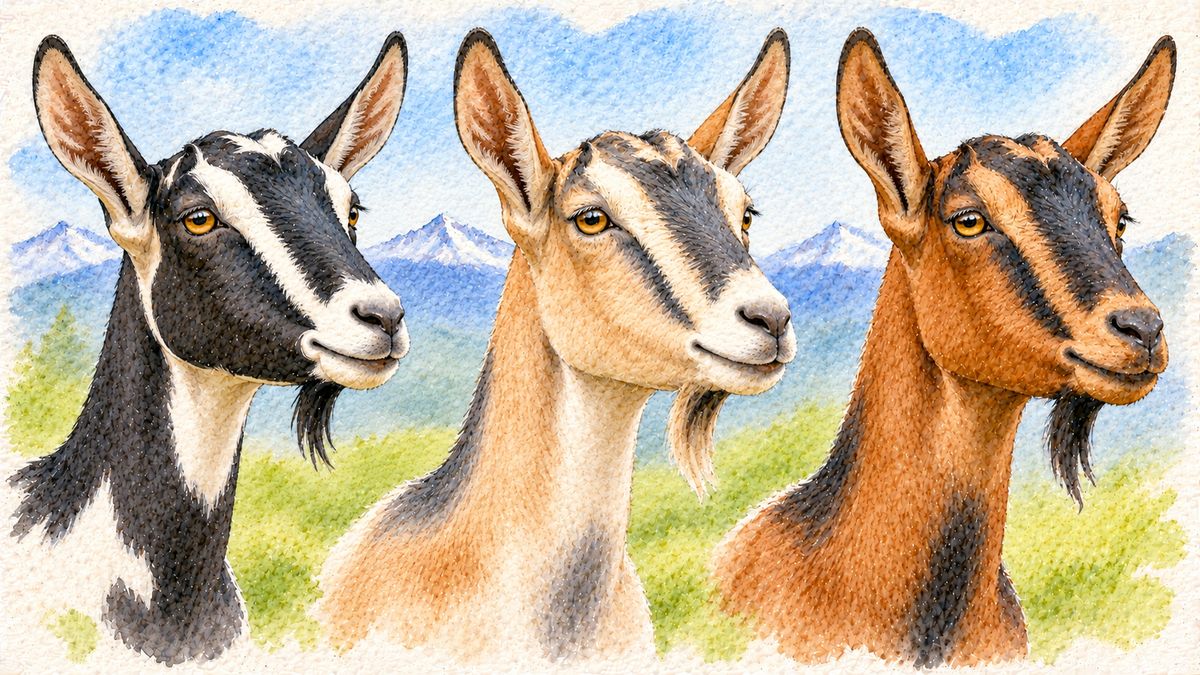
The coat is short to medium and lies close to the body. One of the Alpine's most striking features is its wide variety of colors. There is no single "standard" color. Common patterns include:
- Cou blanc: white front half of the body and a black or dark rear half
- Cou clair: a light, tan or gray front half and a darker rear
- Cou noir: a black front half and a white or light rear
- Sundgau: a black body with white markings on the face, belly and lower legs
- Chamoisee: a brown or bay body with black markings
- Pied and two-tone: spotted or patterned in various ways
- Solid colors: white, black, gray or brown
White is also found on some individuals. Because genetics and breeding choices produce so many combinations, no two Alpines look quite the same.
Udder and Teats
Alpine does are bred to carry a well-attached, balanced udder with evenly sized teats, which makes milking easier and cleaner.
Where Do Alpine Goats Live?
Alpine goats originated in the Alps, but they have spread widely. They are now kept in North and South America, Europe, Australia and many other places. Their adaptability is one of their best assets: they can handle cold winters and hot summers better than some other dairy breeds, as long as they have shelter, shade and water.
On farms, Alpines live in pastures, paddocks and barns. They prefer dry, well-drained ground and do better on varied terrain with plenty of browse such as shrubs, brush and leaves.
How Much Milk Do Alpine Goats Give?
The Alpine is known as a high-producing, reliable dairy breed.
- Daily yield: Many does give around 1 gallon (about 4 liters) per day at peak, and some give more.
- Lactation length: About 305 days in typical production records.
- Annual yield: Often about 2,000 pounds (900 kg) or more per lactation for good producers, and top does exceed this considerably.
- Butterfat: Typically moderate, usually in the range of roughly 3 to 4 percent, making the milk good for drinking, cheese, yogurt and soap.
- Flavor: The milk is mild and sweet when handled cleanly and cooled quickly.
Production depends strongly on genetics, nutrition, health and management. Goats are seasonal breeders, so many owners stagger breeding to have fresh milk over a longer part of the year.
What Do Alpine Goats Eat?
Goats are ruminants and are browsers by nature. They prefer to nibble leaves, twigs and weeds more than to graze closely on grass.
Basic Diet
- Good-quality hay: such as grass or alfalfa hay, the foundation of the diet, especially in winter
- Pasture and browse: shrubs, brush, weeds and leaves
- Grain or concentrate: fed in measured amounts to milking does to support production
- Loose goat minerals: formulated for goats, usually with the correct level of copper, offered free-choice
- Fresh, clean water: always available; milking goats can drink a lot
A mature goat generally eats about 3 to 4 percent of its body weight in dry matter each day, and lactating does eat more. Feed changes should be gradual to avoid digestive upset.
What Should Goats Avoid?
Goats are famously curious, but not everything is safe. Poisonous plants include azalea, rhododendron, oleander, wild cherry leaves (especially wilted), yew and some others. Spoiled or moldy feed should never be fed. Contrary to the myth, goats do not eat tin cans, and they can be picky about dirty food.
Alpine Goat Behavior and Temperament
Friendly and Curious
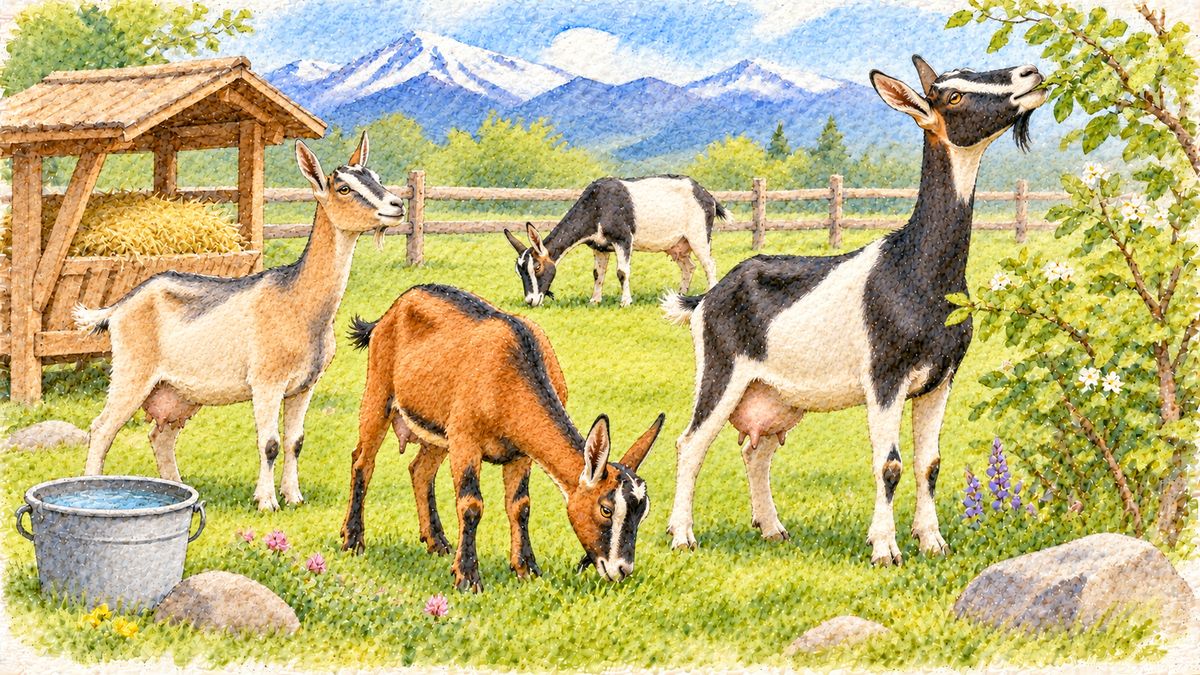
Alpine goats are intelligent, alert and sociable. They enjoy human attention, especially from the people who feed them, and they are easy to train for milking. They are also strong-willed and playful, and young kids love to climb and leap onto anything available.
Herd Animals
Goats are herd animals and should never be kept alone. Two or more goats are the minimum for good welfare, and a lone goat can become stressed and loud.
Pecking Order
In every herd, goats establish a pecking order through head-butting and pushing. Alpines are often among the more dominant goats in mixed herds, so it helps to give plenty of feeder space to reduce bullying.
Escape Artists
Goats are well known for testing fences. Alpines are agile jumpers and climbers and can find any weak spot, so strong fencing is essential.
Sounds
Alpines communicate by bleating. Kids call to their mothers, and adults may call out when they are hungry, bored or in heat.
Alpine Goat Breeding and Kids
Does reach puberty at around 5 to 8 months of age but are usually bred when they are about 8 to 10 months old and have reached roughly 60 to 70 percent of adult weight. Alpines are seasonal breeders, with heat cycles occurring mainly in autumn when daylight shortens, repeating about every 18 to 21 days.
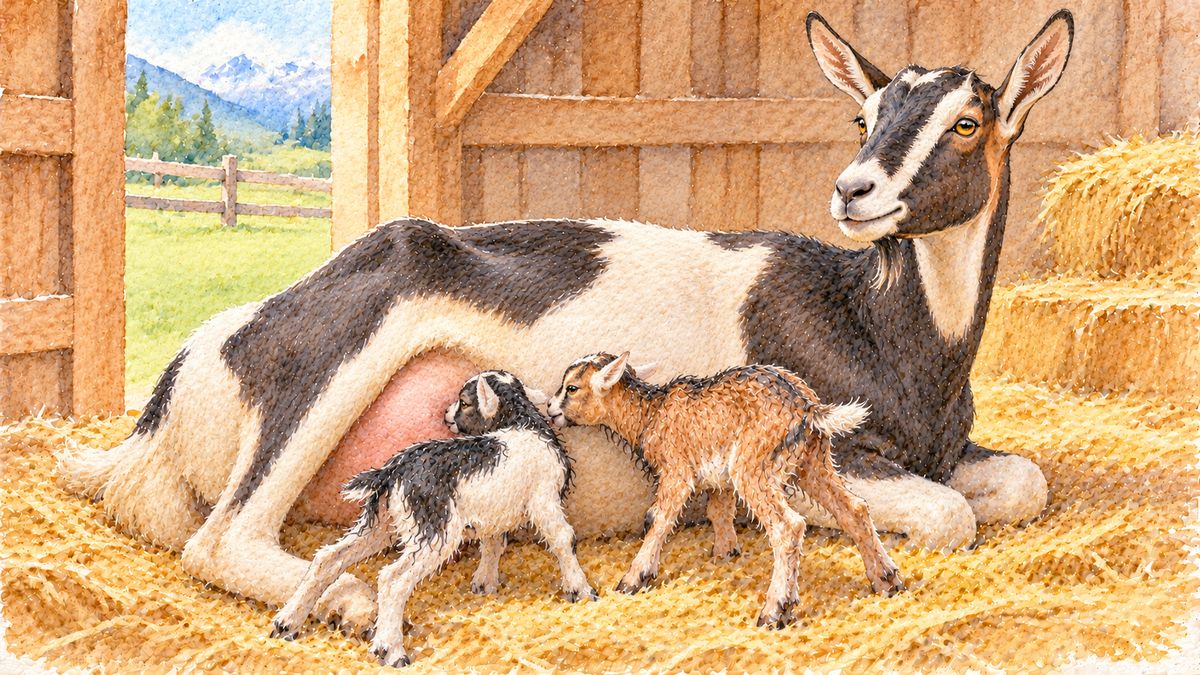
Pregnancy, or gestation, lasts about 150 days (roughly five months). A doe typically gives birth to one to three kids, with twins most common. Newborn kids weigh about 6 to 9 pounds (3 to 4 kg), stand quickly and nurse within an hour or so. It is important that they receive colostrum, the first milk, within the first hours of life.
Kids may be raised on the dam or removed and bottle-fed, which makes them tamer and allows the owner to take the milk. They are weaned at around two to three months, and a doe usually starts to produce milk right after kidding.
Alpine Goat Care Guide
Shelter and Bedding
Alpines need a dry, draft-free shelter, though they do not require a heated barn in most climates. A three-sided shelter with clean, dry bedding such as straw or wood shavings is usually enough, and it should be big enough to allow each goat roughly 15 to 20 square feet (1.4 to 1.9 square meters) of indoor space.
Fencing
Use sturdy fencing about 4 to 5 feet (1.2 to 1.5 m) high, such as woven wire or welded cattle panels. Avoid loose wire that heads can get stuck in.
Hoof Care
Hooves grow constantly and need trimming every 6 to 8 weeks, or as needed. Overgrown hooves cause lameness and foot problems.
Health Care
- Vaccination: The CD&T vaccine, which protects against overeating disease and tetanus, is commonly given.
- Parasite control: Internal parasites, especially barber pole worm, are a major problem for goats. Regular fecal tests and targeted deworming are best.
- Mastitis checks: Milking does need clean milking practices and udder checks.
- Urinary calculi: Males fed too much grain can develop urinary blockages, which are emergencies.
- Veterinary support: Find a vet experienced with goats.
Milking Basics
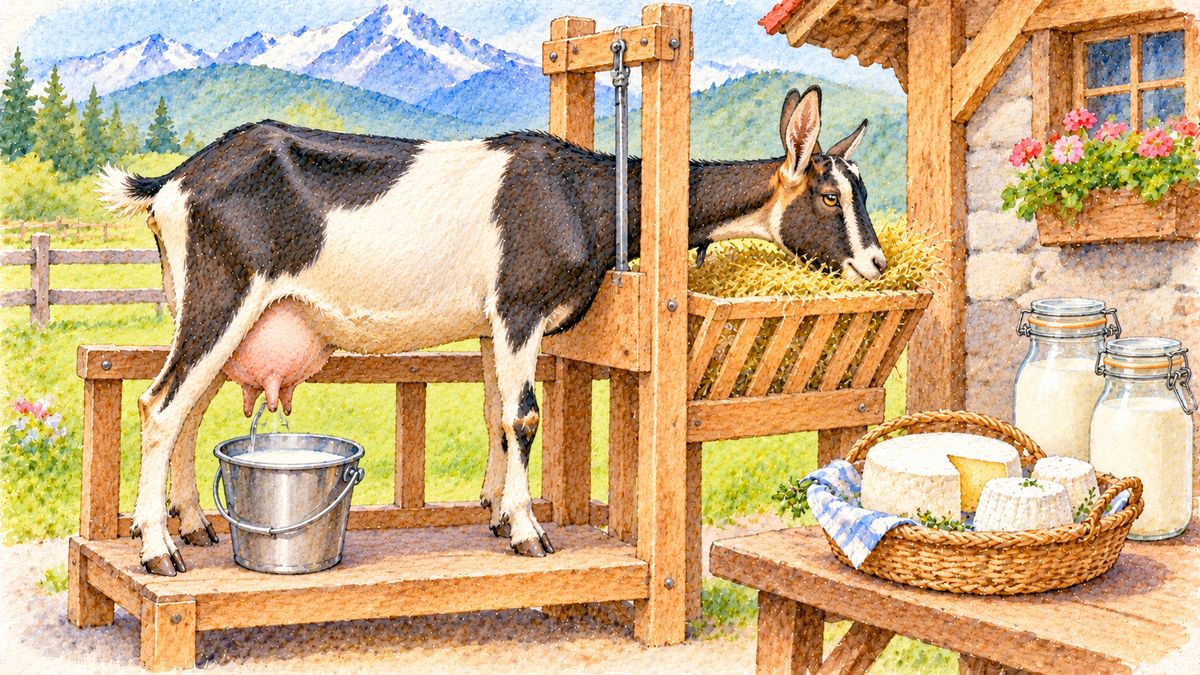
Milking is done once or twice a day at consistent times. Clean the udder, discard the first squirts and milk into a clean pail, then chill the milk quickly and strain it. Clean practices keep the milk tasting sweet and safe.
How Long Do Alpine Goats Live?
With good care, Alpine goats usually live about 10 to 15 years. Does can stay productive for many years, although milk production often peaks in the middle years.
Predators and Threats
Goats on farms can be targeted by coyotes, stray dogs, wolves, foxes and large birds of prey, especially young kids. Secure night housing, good fencing and livestock guardian animals such as dogs, llamas or donkeys can help protect the herd.
Why Alpine Goats Are Important
- Milk and dairy: They supply fresh milk, cheese, yogurt and other products.
- Small-farm friendly: They are easier to manage than cattle for small homesteads.
- Brush control: They are used for clearing weeds and brush.
- Fertilizer: Their manure is great for compost.
- Companionship and 4-H: Alpines are popular in youth programs and as friendly pets.
Are Alpine Goats Endangered?
No. The Alpine is a domestic breed with large numbers worldwide, and it is not considered at risk. The breed is not evaluated by the IUCN, and it is widely recognized by breed associations.
Fun Facts About Alpine Goats
- Colorful coats: They come in an amazing variety of colors and patterns.
- Mountain heritage: The breed comes from the French Alps.
- Milk machines: A top Alpine can produce more than a gallon of milk each day.
- Great climbers: Goats are agile and love to climb.
- Rectangular pupils: Goats have horizontal, rectangular pupils that give them wide-angle vision.
- Four-part stomach: Goats are ruminants with a four-compartment stomach.
- Social learners: They watch and learn from other goats.
- No tin-can diet: Goats do not actually eat cans.
- Quick kids: Newborn kids can stand within minutes.
Frequently Asked Questions
What is an Alpine goat? The Alpine is a dairy goat breed from the French Alps. It is known for high milk production, hardiness and a wide variety of coat colors.
How much milk does an Alpine goat give? A good Alpine doe gives around 1 gallon (about 4 liters) of milk per day at peak, and often about 2,000 pounds (900 kg) or more over a lactation.
How big do Alpine goats get? Does typically stand at least 30 inches (76 cm) tall and weigh about 135 to 175 pounds (61 to 80 kg). Bucks are larger.
What do Alpine goats eat? They eat good hay, pasture and browse, with goat minerals, fresh water and measured grain for milking does.
How long do Alpine goats live? With good care they live about 10 to 15 years.
Are Alpine goats good for beginners? Yes. They are hardy, friendly and productive, but they need strong fencing, a companion goat, regular hoof care and parasite management.
Final Thoughts
The Alpine goat is a classic dairy breed that combines production, hardiness and personality in one colorful package. With strong fencing, good feed, clean water, a friend or two for company and regular health care, Alpines reward their owners with sweet milk, entertaining antics and years of companionship. For anyone dreaming of a small dairy or a lively backyard herd, the Alpine is a very good place to start.