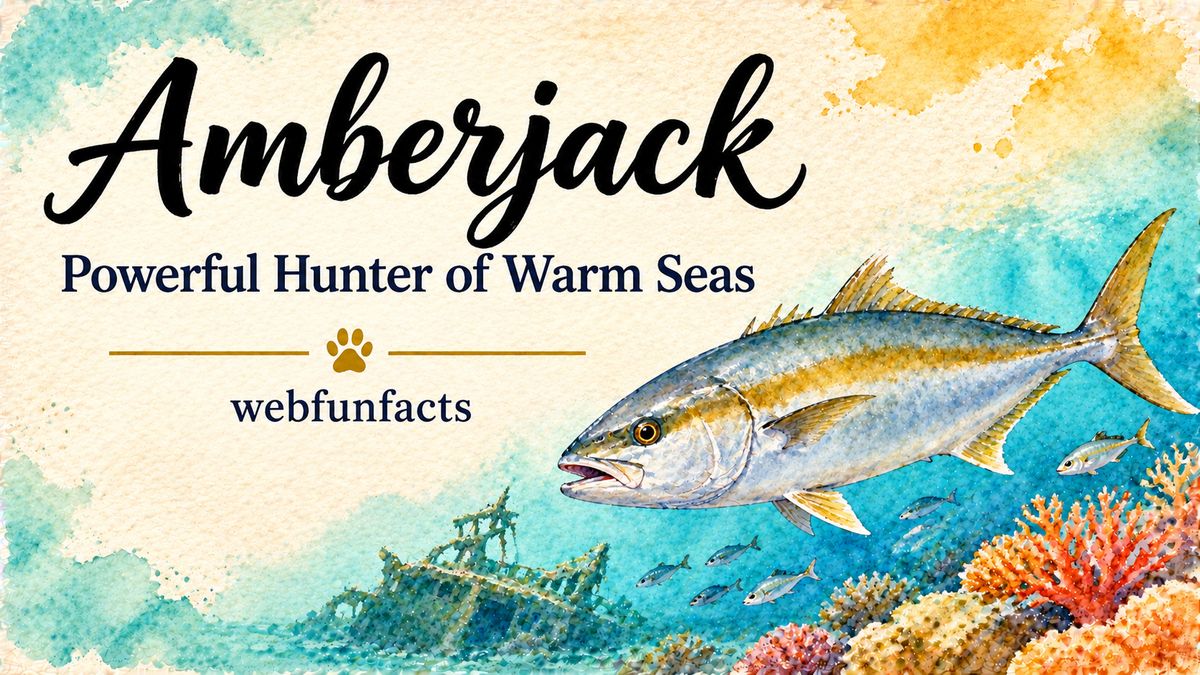
The amberjack is a powerful, fast and hard-fighting fish that lives in warm seas around the world. Anglers prize it for its brute strength, divers meet it hovering near wrecks and reefs, and chefs value its firm, flavorful flesh. Silvery, streamlined and marked with a dark stripe through the eye, the amberjack is a true open-water athlete.
When people say "amberjack" they usually mean the greater amberjack, the biggest member of the group, though several close relatives share the name. In this complete guide, you will learn what an amberjack is, what it looks like, where it lives, what it eats, how it hunts, how it reproduces, how long it lives, what threatens it and why careful fishing matters for its future.
Quick answer: The amberjack (usually the greater amberjack, Seriola dumerili) is a large, fast-swimming marine fish of the jack family found in warm waters worldwide. Adults commonly reach about 1 m (3.3 ft), can grow to roughly 2 m (6.5 ft) and weigh over 70 kg (150 lb), and hunt smaller fish and squid around reefs and wrecks. It is listed as Least Concern by the IUCN, though some regional stocks have been overfished.
Amberjack at a Glance
| Feature | Details |
|---|---|
| Scientific name | Seriola dumerili (greater amberjack) |
| Class | Actinopterygii (ray-finned fishes) |
| Order | Carangiformes |
| Family | Carangidae (jacks and pompanos) |
| Size / length | Commonly 3 to 4 feet (about 1 to 1.2 m); up to about 6.5 feet (2 m) |
| Weight | Commonly 20 to 60 pounds (9 to 27 kg); large fish over 150 pounds (70 kg) |
| Lifespan | Roughly 15 years or more |
| Diet | Fish, squid, crabs and other crustaceans |
| Habitat | Open ocean, reefs, wrecks, rocky areas and offshore structures |
| Range | Warm and temperate waters of the Atlantic, Pacific and Indian Oceans, including the Mediterranean |
| Conservation status (IUCN) | Least Concern |
What Is an Amberjack?
The amberjack belongs to the jack family, Carangidae, a large group of fast, silvery fish that includes pompanos, trevallies and scads. Within the family, amberjacks belong to the genus Seriola, which contains several widely recognized species.
The greater amberjack, Seriola dumerili, is the largest and most widely known. Other members of the group include:
- Lesser amberjack (Seriola fasciata): A smaller relative found in the western Atlantic.
- Almaco jack (Seriola rivoliana): A close cousin often confused with the greater amberjack.
- Yellowtail amberjack (Seriola lalandi): Found in southern waters and Pacific regions, and also sold as yellowtail, kingfish or hamachi.
- Japanese amberjack (Seriola quinqueradiata): Heavily farmed and prized in Japan, where it is known as buri or hamachi.
The common name "amberjack" is thought to come from the amber or golden tint often seen along the fish's flanks, especially in young fish, while "jack" is a common name for many fish in the family.
Is It the Same as Yellowtail?
Not exactly. The names overlap in different parts of the world. In the United States, "yellowtail" can refer to several different fish. In Japan, the farmed Seriola quinqueradiata is a closely related species. If you are buying or fishing, it helps to know the exact species.
What Does an Amberjack Look Like?
Size and Shape
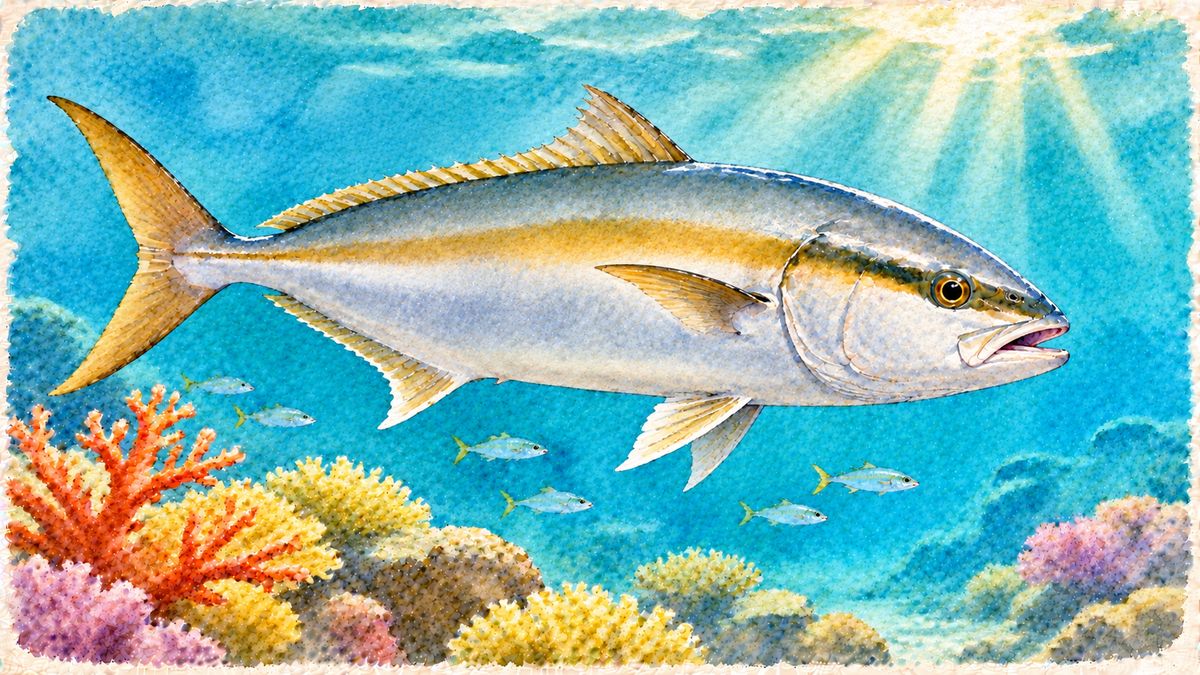
The greater amberjack has a torpedo-shaped, muscular body designed for speed. Most adult fish are around 1 meter (3.3 feet) long, but the biggest may reach close to 2 meters (6.5 feet). A large specimen can weigh more than 70 kilograms (150 pounds), though most caught fish are far smaller.
Color and Markings
- Back: Blue-gray to olive-brown.
- Sides: Silvery with a faint amber or yellowish tinge.
- Belly: Whitish.
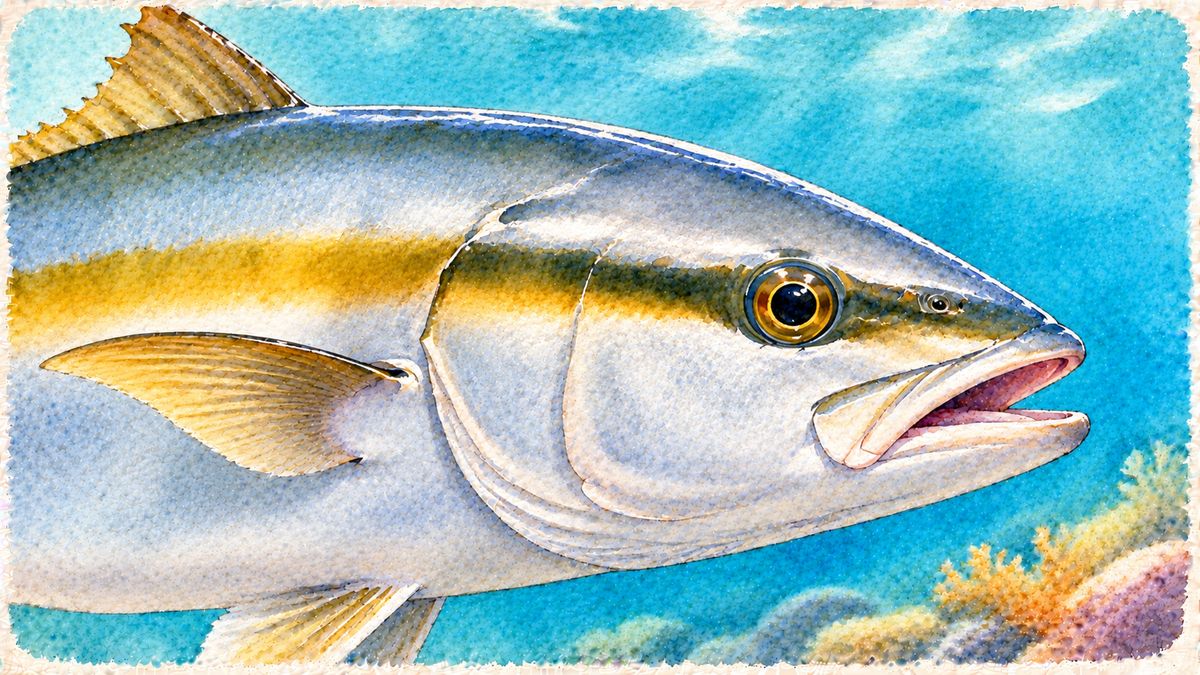
- Eye stripe: A distinct dark band running from the nose, through the eye, to the front of the dorsal fin, which is often described as the fish's "mask." In adults it is a diagonal stripe.
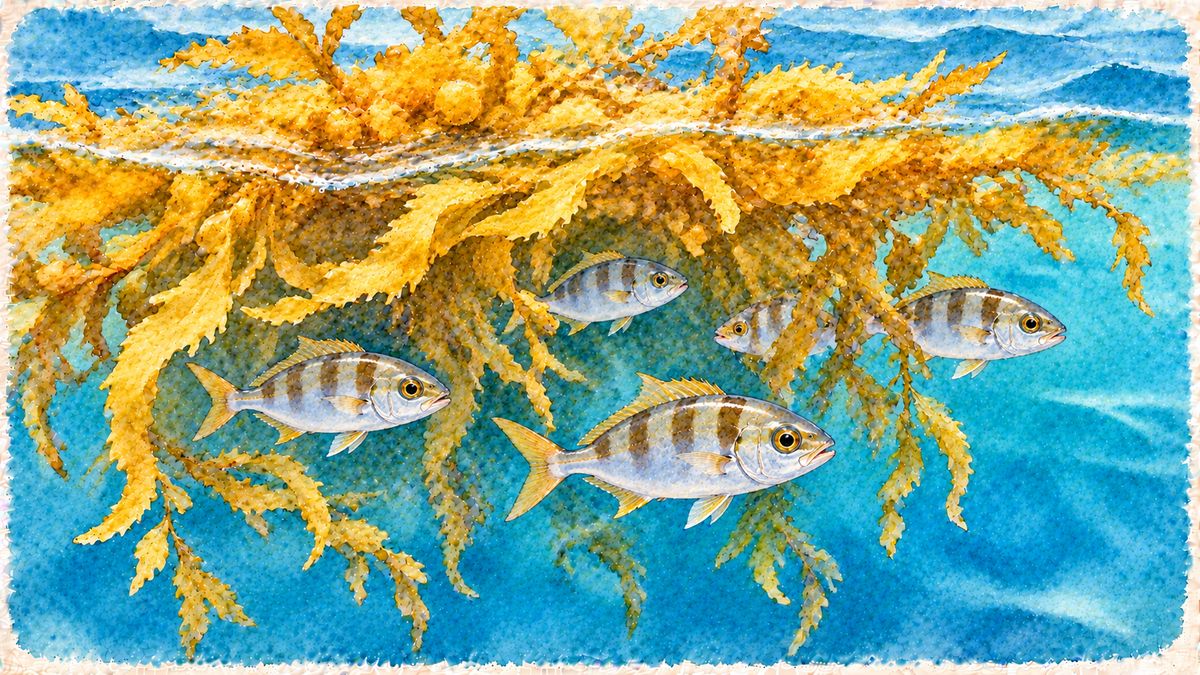
- Young fish: Often show dark vertical bars along the sides, which fade with age.
Fins and Body Features
The amberjack has a small first dorsal fin with a few short spines, a long second dorsal fin and a deeply forked tail that gives powerful, steady thrust. The scales are very small, which makes the skin feel smooth, and the body is covered with a layer of slime that helps reduce drag.
Where Do Amberjacks Live?
Amberjacks live in tropical and subtropical seas around the world. Greater amberjacks occur in the Atlantic Ocean, including the Gulf of Mexico, the Caribbean and the Mediterranean, as well as in parts of the Indian Ocean and the Pacific.
Typical Habitat
- Offshore reefs and rocky banks: Areas where bait fish gather.
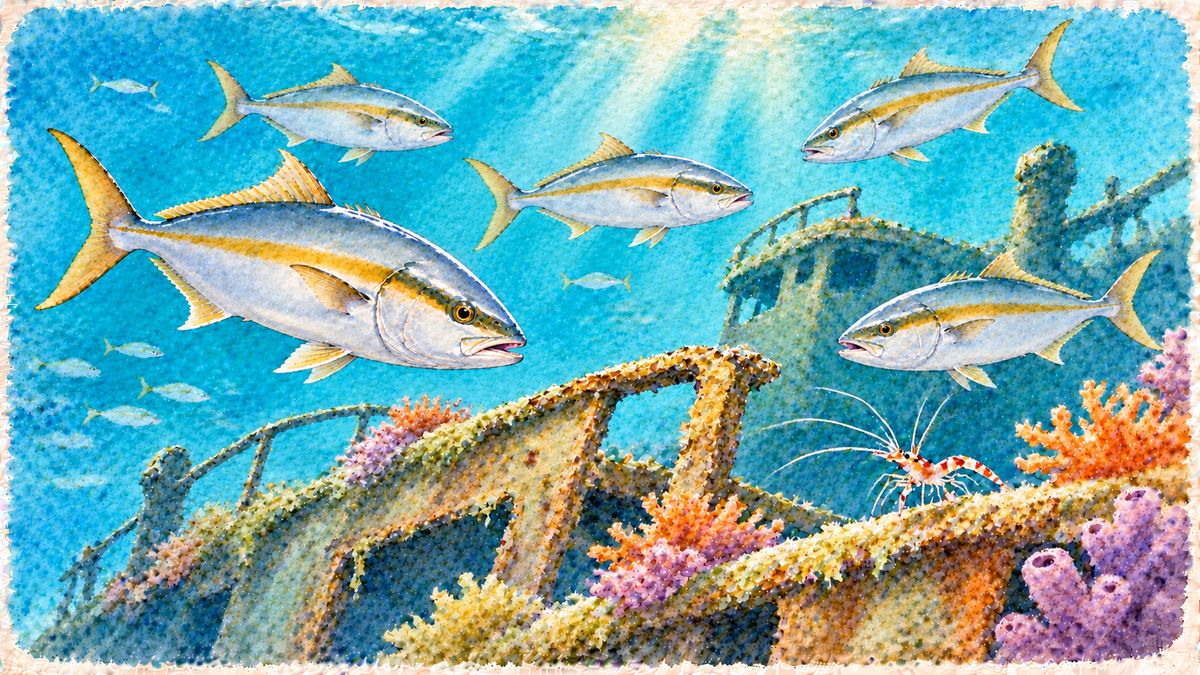
- Wrecks and oil platforms: Artificial structures that attract fish and invertebrates.
- Open water: Adults are often found cruising near drop-offs and ledges.
- Depth range: Frequently found from about 18 to 70 m (60 to 230 ft), and sometimes deeper, down to several hundred meters.
Young Amberjacks
Young amberjacks often live in the open ocean under floating weed, especially drifting Sargassum, and around other floating objects, where they hide and feed on small prey. As they grow, they move to deeper reefs and structures.
What Do Amberjacks Eat?
The amberjack is an active predator that eats nearly any prey it can catch.
Main Foods
- Smaller fish: Mackerel, sardines, scad, grunts, herring and other schooling fish.
- Squid: Hunted in open water.
- Crustaceans: Crabs and shrimp, particularly when young.
How Amberjacks Hunt
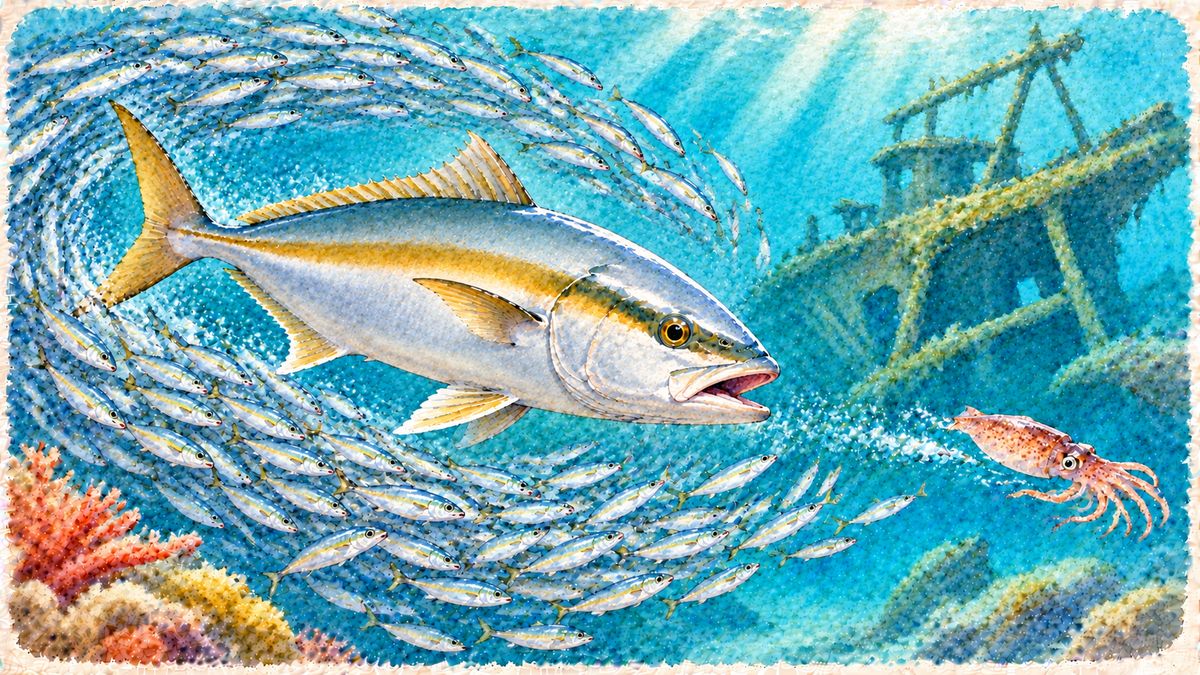
Amberjacks hunt using speed and surprise. They often patrol around reefs and wrecks, ambushing prey that gather there. Sometimes they hunt in groups, which may help herd small fish. They are strong swimmers capable of rapid bursts, and they can chase prey through the water column from the sea floor up to the surface.
Amberjack Behavior and Lifestyle
Schooling and Solitary Habits
Small amberjacks often form schools, while very large ones tend to be more solitary or gather in small groups. Schools may circle over a reef or wreck, and they sometimes follow divers out of curiosity.
Strong Fighters
Anglers know the amberjack as one of the strongest fish pound for pound. When hooked, it dives straight toward the structure, trying to break the line on rocks or wreckage. This is why it is nicknamed "reef donkey" in some fishing circles.
Daily Movement
Amberjacks move between feeding areas and resting spots, and they may travel long distances. Tagging studies show that some individuals roam across large stretches of ocean, while others stay around a particular reef for long periods.
Cleaning Stations
Like many large fish, amberjacks visit cleaner fish and shrimp that remove parasites from their skin and gills. This relationship helps keep the fish healthy.
Amberjack Reproduction and Babies
Spawning
Amberjacks spawn in warm, offshore waters, usually in spring and summer, though timing varies by region. They gather in groups to spawn, and females release large numbers of tiny eggs into the open water.
Eggs and Larvae
The eggs are pelagic, meaning they float in the water. After hatching, the larvae drift with the plankton, feeding on tiny organisms. As they grow, they seek shelter in floating weed and debris. The parents give no care.
Growth
Amberjacks grow quickly in their first few years. Many reach maturity at around 2 to 4 years, depending on region and sex. Because large, older females lay many more eggs than younger ones, protecting big fish is important for the health of the population.
How Long Do Amberjacks Live?
Greater amberjacks are known to live at least 15 years, and some individuals may live longer, though ages vary among regions. Faster growth in the first years is followed by slower growth later in life. Because they take several years to mature, heavy fishing can damage stocks.
Predators and Threats
Natural Predators
Young amberjacks are eaten by larger predatory fish, seabirds and other hunters. Adults are fast and powerful, so they have few predators, though sharks and large tuna may take them.
Parasites
Amberjacks commonly carry parasites such as gill flukes and, in some regions, worms in the flesh. These are usually harmless to humans if the fish is cooked properly.
Human Threats
- Overfishing: Some stocks, including in the southeastern United States and Gulf of Mexico, have faced overfishing and have been placed under management plans.
- Bycatch and discards: Fish caught accidentally may not survive release.
- Habitat damage: Reefs and structures can be harmed by pollution and warming seas.
- Ciguatera: Large amberjacks from certain reef areas may carry ciguatoxin, which can make people sick, so local advice matters.
Amberjack and People
Fishing for Amberjack
Amberjacks are a favorite target of offshore anglers, who fish for them with live bait, heavy jigs and large lures over reefs and wrecks. Because the fish dive for cover the moment they feel the hook, tackle must be strong, and a long, tiring fight is common. Many anglers practice catch and release for the largest fish, which are the most valuable breeders. Where fish are kept, size and bag limits help protect stocks.
Amberjack in the Kitchen
The flesh is firm, white to pinkish and moderately rich, with a clean flavor that holds up to grilling, baking, searing and raw preparations. Cooks often cut away the darker red muscle along the lateral line to give a milder taste. Closely related species, such as the Japanese amberjack, are a staple of sushi and sashimi, and farmed fish are exported around the world. Because some large reef fish carry ciguatera, it is wise to follow local health advice about eating big amberjacks from tropical reefs.
Farming Amberjack
Aquaculture of amberjack relatives has grown in Japan, Australia, the Mediterranean and elsewhere. Young fish are raised in sea cages and fed on pellets or fish. Done well, farming can supply markets without adding pressure to wild stocks, although farms also face challenges such as disease, waste and the need for responsible feed.
Why Amberjacks Are Important
- Top reef predators: They help control populations of smaller fish and squid.
- Food source: They are a food fish across many cultures, supporting commercial and recreational fisheries.
- Aquaculture: Closely related species are farmed in Japan and the Mediterranean, taking some pressure off wild stocks.
- Recreational value: Sport fishing brings income to coastal communities.
Are Amberjacks Endangered?
No. The greater amberjack is listed as Least Concern globally. However, some regional populations have declined, and management is needed. Regulations in places such as the United States include size limits, bag limits and seasonal closures to help stocks recover. Practices such as using circle hooks, handling fish gently and following local rules all support sustainability. If you eat amberjack, choosing responsibly sourced or well-managed fish makes a difference.
Fun Facts About Amberjacks
- Speed machines: Their torpedo shape allows fast bursts of speed.
- Reef donkeys: Anglers use this nickname for their stubborn fight.
- A mask on the face: The dark eye stripe is a signature feature.
- Worldwide fish: They live in oceans on every continent except the poles.
- Wreck lovers: They gather around wrecks and oil platforms.
- Sushi star: Related species are the famous hamachi and buri.
- Floating nurseries: Young fish hide under drifting seaweed.
- Curious visitors: They often approach divers.
- Very strong: They are among the toughest fighters for their size.
- Part of the jack family: They are cousins of pompano and trevally.
Frequently Asked Questions
How big do amberjacks get? Greater amberjacks commonly reach about 1 m (3.3 ft) and can grow to nearly 2 m (6.5 ft), weighing over 70 kg (150 lb).
What do amberjacks eat? They eat smaller fish, squid and crustaceans, which they catch around reefs, wrecks and open water.
Where do amberjacks live? They live in warm waters of the Atlantic, Pacific and Indian Oceans, usually near reefs, wrecks and drop-offs.
Is amberjack good to eat? Yes. It has firm, mild, slightly rich flesh and is popular grilled, baked or as sashimi, though large fish may carry parasites or ciguatera.
How long do amberjacks live? They commonly live around 15 years, and perhaps longer.
Are amberjacks endangered? Not globally. The IUCN lists the greater amberjack as Least Concern, though some local stocks need careful management.
Final Thoughts
The amberjack is one of the ocean's great athletes, a sleek hunter that patrols reefs, wrecks and open water with power and grace. It feeds people, thrills anglers and keeps marine food webs in balance. With sensible fishing rules and respect for the sea, this golden-flanked fighter can remain a symbol of healthy warm-water oceans for generations to come.