25 Llama Facts: The Andes' Woolly, Humming Pack Animals

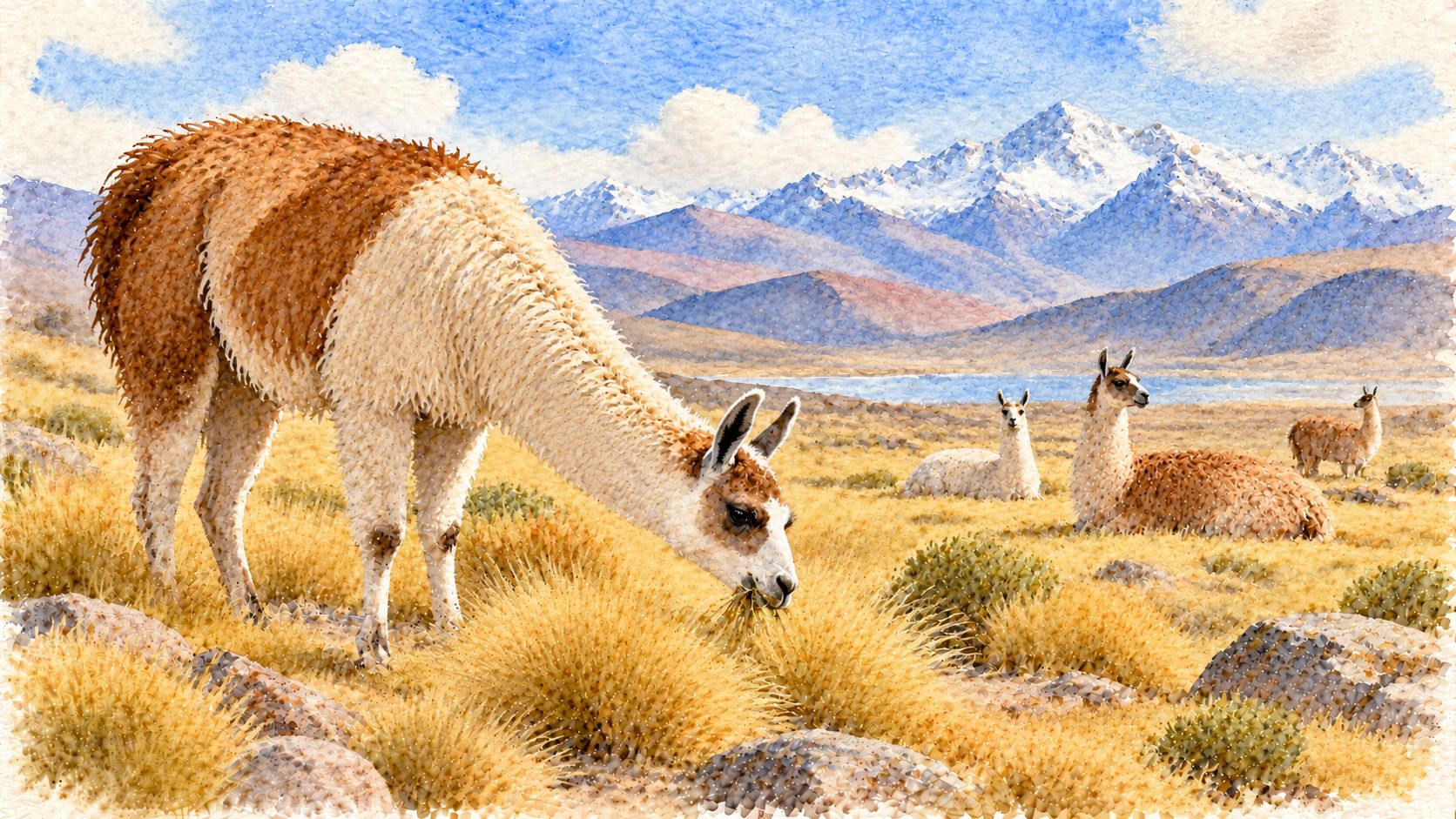
Llamas are the long-necked, banana-eared pack animals of the high Andes in South America. For thousands of years they have carried goods, supplied wool and fuel, and shaped the lives of mountain communities. Today they also turn up on farms around the world as guards, companions and even therapy animals.
Behind that calm, slightly comical face sits a surprisingly specialised animal. Llamas have blood built for thin mountain air, a stomach that squeezes nutrition from tough grasses, and a whole vocabulary of hums and clucks. Here are 25 facts about these remarkable members of the camel family.
Llama Facts
Llamas belong to the camel family, Camelidae, which also includes alpacas, guanacos, vicuñas and the Old World camels of Asia and Africa.
Like camels, the llama's family story began in North America, where early camelids evolved tens of millions of years ago before spreading to other continents.
The ancestors of South America's camelids are thought to have moved south about 3 million years ago, after the Isthmus of Panama formed a land bridge between the Americas.
Camelids later died out in North America around the end of the last Ice Age, roughly 10,000–13,000 years ago, leaving their South American relatives to carry on the line.
There are no truly wild llamas. They are a domesticated animal, bred by Andean peoples from the wild guanaco several thousand years ago.
The alpaca is a separate domestic camelid, generally thought to descend from the wild vicuña. Llamas and alpacas can still interbreed, and their fertile hybrid is called a huarizo.
A fully grown llama typically weighs somewhere around 130–200 kg and stands about 1.7–1.8 metres tall at the head, making it noticeably larger than an alpaca.
As pack animals, llamas are usually loaded with about a quarter of their body weight, often quoted as around 25–35 kg, and can carry it for many kilometres a day.
An overloaded or exhausted llama may simply lie down and refuse to move until its burden is lightened, a habit that herders have long had to respect.
A Stomach Built for Tough Grass
Llamas chew the cud like cows, but they are not true ruminants. Instead of four stomach chambers, camelids have a stomach divided into three compartments. Food is swallowed, partly fermented by microbes, brought back up and chewed again before moving on. This system lets llamas get surprising nourishment from the coarse, low-quality grasses of the high Andes, where better grazing is scarce. It is also why their famous spit can be so unpleasant: a seriously annoyed llama may bring up green, partly digested material from its first stomach compartment and mix it with saliva before letting fly.
Most llama spitting is aimed at other llamas, usually during squabbles over food or rank. Well-socialised llamas rarely spit at people unless they feel cornered or are caught in the crossfire.
Llamas hum constantly in soft, varied tones. Mothers and their babies hum to each other, and humming is also heard when llamas are curious, uneasy or tired.
Male llamas make a distinctive gurgling sound called orgling during mating, something few other animals do.
A baby llama is called a cria. Pregnancy lasts about 11 months, a single cria is the norm, and the newborn is usually standing and feeding within an hour or two of birth.
Llamas have no upper front teeth. They grip plants between their lower incisors and a hard dental pad on the upper jaw, then tear rather than bite.
Adult males grow sharp "fighting teeth", which breeders often trim to reduce injuries when males wrestle with their necks and bite at each other's legs to settle rank.
Instead of hard hooves, llamas have two toes on each foot with tough nails and soft, leathery pads underneath, which tread more lightly on fragile mountain soils.
Llamas tend to use shared dung piles. This tidy habit makes them easier to manage, and in the Andes dried llama dung has long been gathered as cooking fuel and fertiliser.
Llama fleece has coarse outer guard hairs and a softer undercoat. Andean weavers have used it for rope, rugs and textiles, though alpaca fleece is usually considered finer.
Oval Blood Cells for Thin Mountain Air
Llamas live comfortably at altitudes of 4,000 metres and more, where each breath carries far less oxygen than at sea level. One reason is their unusual blood. Like other camelids, llamas have oval, rather than round, red blood cells, a shape unknown in other mammals. Their haemoglobin, the protein that carries oxygen, also grabs oxygen especially tightly, helping them load up even in thin air. Together with efficient lungs and a calm, energy-saving temperament, these adaptations let llamas work high in the Andes where many lowland animals, and many visiting humans, quickly struggle with altitude sickness.

Llamas were central to life in the Inca Empire. The state kept large herds for transport, wool and meat, and llamas featured in religious offerings and ceremonies.
Small llama figurines made of gold, silver and shell have been found with Inca high-altitude offerings, showing how highly the animal was valued.
The word "llama" comes from Quechua, the language family of the Andes, and reached English through Spanish.
Since the late 20th century, farmers in North America and elsewhere have used llamas as guard animals for sheep and goats, as they often confront or chase off foxes, coyotes and stray dogs.
Llamas commonly live about 15–20 years, and their calm nature has made them popular visitors in therapy programmes at schools and care homes in several countries.
Sources and Further Reading
- Encyclopaedia Britannica
- Smithsonian's National Zoo and Conservation Biology Institute
- National Geographic
- San Diego Zoo Wildlife Alliance
- Natural History Museum, London
- Food and Agriculture Organization of the United Nations (FAO)
Frequently asked questions
Are llamas and alpacas the same animal?
No. Both are domesticated South American camelids, but llamas are larger pack animals bred from guanacos, while alpacas are smaller fleece animals thought to descend from vicuñas.
Where do llamas come from?
Llamas were domesticated in the Andes of South America, especially in the region of present-day Peru and Bolivia, although their camelid ancestors originally evolved in North America.
Do llamas really spit at people?
They can, but most spitting is directed at other llamas over food or rank. Well-handled llamas seldom spit at humans unless they feel threatened.
Are there wild llamas?
No. The llama exists only as a domestic animal. Its closest wild relatives are the guanaco and the vicuña, which still live wild in South America.
Why are llamas good guard animals?
Llamas are naturally alert and wary of dogs and similar predators. Many will sound an alarm, walk towards an intruder or chase it off, protecting sheep and goats.
How long do llamas live?
Llamas usually live around 15 to 20 years, and some well-cared-for animals live a little longer.