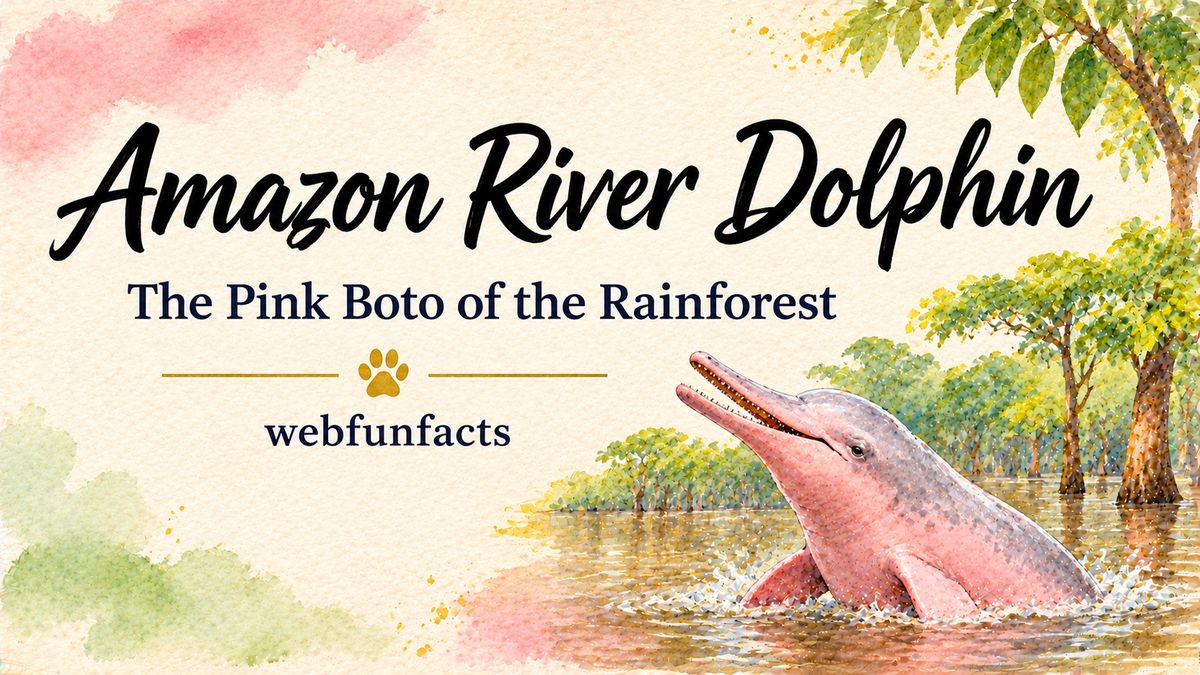
The Amazon river dolphin is one of the most extraordinary mammals on the planet. It is a pink, long-snouted, flexible-necked dolphin that swims through flooded rainforests, weaving between tree trunks and roots as easily as an ocean dolphin cruises the open sea. Known locally as the boto, it is also the star of many Amazonian legends, in which it transforms into a charming human at night.
Behind the folklore, the Amazon river dolphin is a real and remarkable animal, and it is in trouble. Pollution, fishing nets, dams and deliberate killing have pushed it onto the endangered list. In this complete guide, you will learn what the Amazon river dolphin is, why it is pink, where it lives, what it eats, how it hunts, how it raises its calves, what threatens it and what is being done to protect it.
Quick answer: The Amazon river dolphin (Inia geoffrensis), also called the pink river dolphin or boto, is the largest river dolphin in the world. It grows up to about 2.5 m (8 ft) long, weighs up to roughly 185 kg (400 lb), lives in the Amazon and Orinoco river basins of South America, and eats fish, crabs and small turtles. The IUCN lists it as Endangered, with populations declining.
Amazon River Dolphin at a Glance
| Feature | Details |
|---|---|
| Scientific name | Inia geoffrensis |
| Class | Mammalia |
| Order | Artiodactyla (including whales and dolphins, Cetacea) |
| Family | Iniidae |
| Size / length | About 5.9 to 8.2 feet (1.8 to 2.5 m); males are larger |
| Weight | About 99 to 400 pounds (45 to 185 kg) |
| Lifespan | Roughly 30 years; estimates vary |
| Diet | Fish, crabs, river turtles and other aquatic prey |
| Habitat | Rivers, lakes, floodplains and flooded forests |
| Range | Amazon and Orinoco basins in Brazil, Peru, Colombia, Ecuador, Bolivia and Venezuela |
| Conservation status (IUCN) | Endangered |
What Is an Amazon River Dolphin?
The Amazon river dolphin is a freshwater toothed whale. It is the biggest of the world's river dolphins, a small group of species that live in rivers rather than the sea. It is also known as the boto, the boto cor-de-rosa, the pink river dolphin or the bufeo colorado.
Unlike ocean dolphins, river dolphins evolved in murky, tangled water where good eyesight is less useful than a strong sense of touch and sound. They are very old lineages, and the Amazon river dolphin belongs to a family, Iniidae, that is separate from the ocean dolphins. Researchers have debated how many species of Inia exist. Some scientists recognize separate species in Bolivia (Inia boliviensis) and in the Araguaia basin of Brazil (Inia araguaiaensis), while others treat them as populations of one species, so you may see slightly different classifications.
Why Is It Called the Boto?
"Boto" is the Portuguese name used in Brazil. It is used for the dolphin in daily life, in stories and in folk festivals. The name stuck because people along the river have shared their waters with these dolphins for centuries.
What Does an Amazon River Dolphin Look Like?
Nothing about this animal looks like an ocean dolphin, apart from the smooth, streamlined body.
Size and Shape
Adults measure roughly 1.8 to 2.5 meters (6 to 8 feet) long. Males are noticeably bigger than females, which is unusual among dolphins. A large male can weigh close to 185 kilograms (400 pounds), while females are lighter. The body is stout but flexible, and the flippers are long and paddle-shaped.
Why Is It Pink?
Young Amazon river dolphins are gray. As they grow older, many turn pinkish, and some adult males become a bright, salmon pink. Several factors may contribute:
- Scars: Males fight each other and their skin is often scraped, and healed scars lighten the skin.
- Blood flow: The skin is thin, and blood vessels close to the surface show through, especially when the animal is excited or exerting itself.
- Age and sex: Older animals, and males in particular, tend to be pinker.
- Water and diet: Some researchers think environmental factors may play a role, though it is not fully proven.
Pink coloring may also act as a signal in mate choice, with pinker males perhaps showing strength, though this is still being studied.
A Flexible Neck
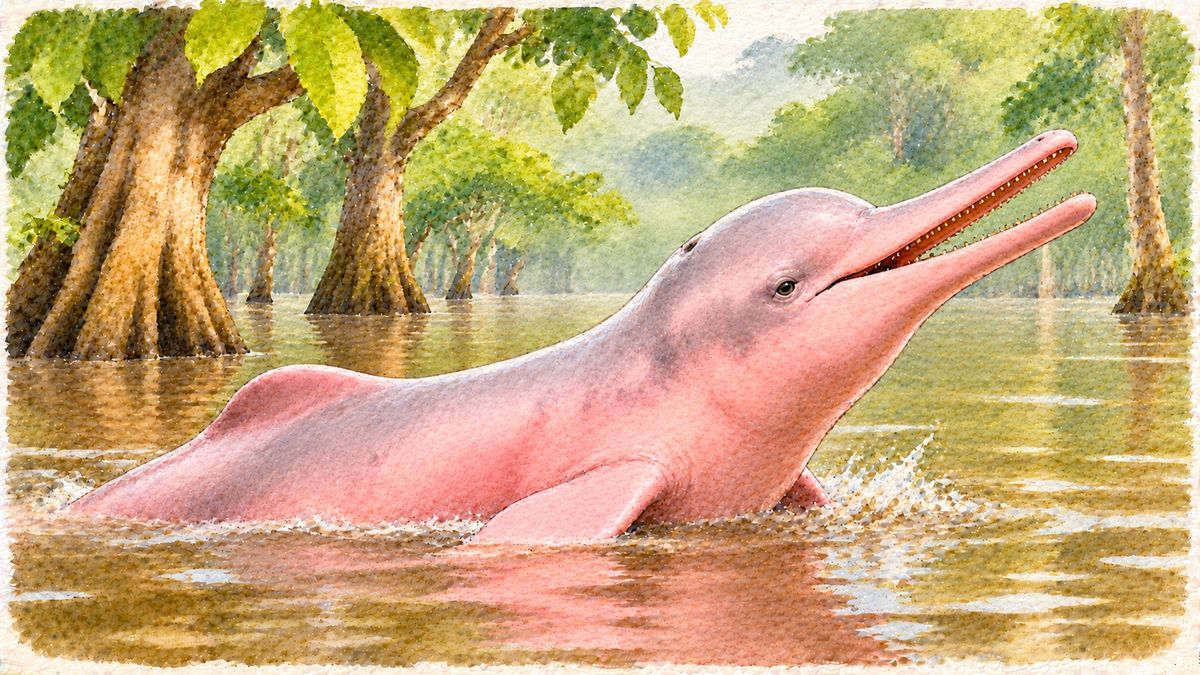
Unlike most dolphins, whose neck bones are fused, the Amazon river dolphin has unfused neck vertebrae. It can turn its head up to about 90 degrees from side to side, which helps it twist around roots and branches and look for prey in tight spaces.
Long Beak and Strange Teeth
Its long, slender snout is covered with stiff bristles, which are sensitive and help it detect prey on muddy riverbeds. The teeth are unusual too. The front teeth are cone-shaped for grabbing, and the back teeth are flat, like molars, used for crushing hard prey such as crabs and turtle shells. Most dolphins have teeth of only one type, so this is a special feature.
No True Dorsal Fin
Instead of a tall dorsal fin, the Amazon river dolphin has a low ridge along its back. This streamlined shape helps it move through flooded forests without snagging on branches.
Where Do Amazon River Dolphins Live?
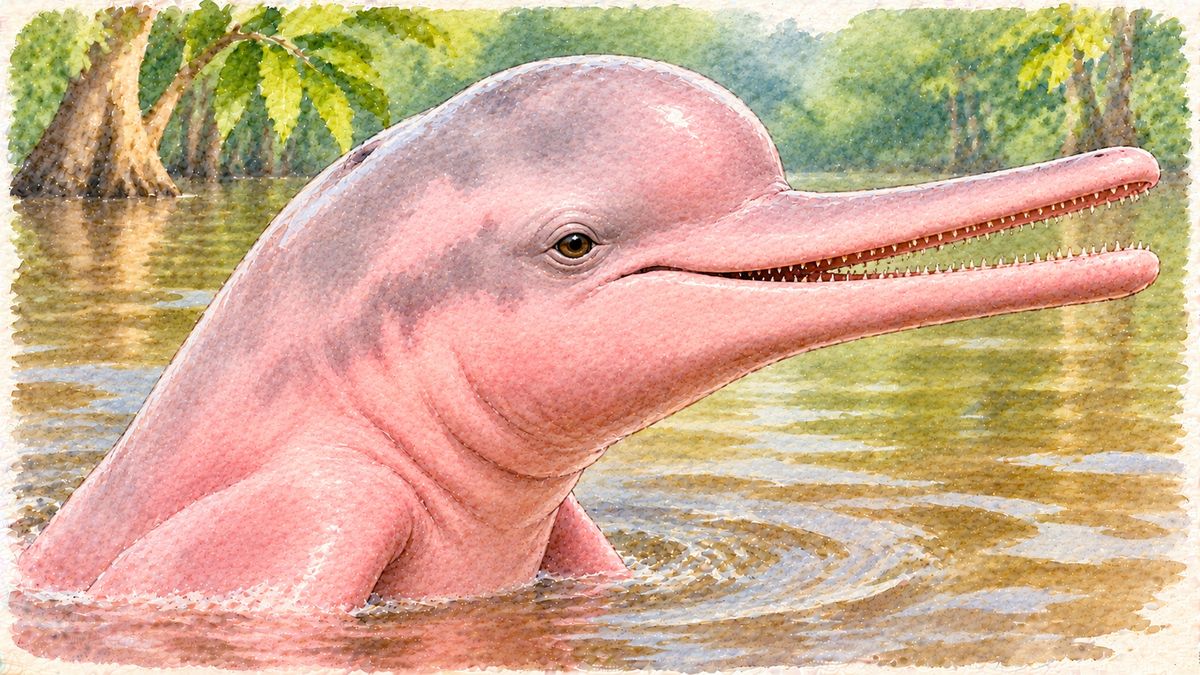
Amazon river dolphins live in the Amazon and Orinoco river systems of South America. They are found in Brazil, Peru, Colombia, Ecuador, Bolivia and Venezuela, and in the many tributaries, lakes and channels that connect these rivers.
A Habitat That Changes With the Seasons
The Amazon basin experiences huge seasonal floods. During the rainy season, rivers can rise 10 meters (about 33 feet) or more and spill into the forest. Dolphins follow the water:
- High water: They swim into the flooded forest, called igapo or varzea, where fish are abundant and hiding places are plentiful.
- Low water: They retreat to main channels, lakes and river mouths, where water remains.
This movement is important, because the dolphin must find food in a habitat that changes every few months.
Where They Are Most Common
They like places where rivers meet, such as confluences, and where there are calm backwaters with plenty of fish. They generally avoid very strong currents and prefer slower, deeper pools.
What Do Amazon River Dolphins Eat?
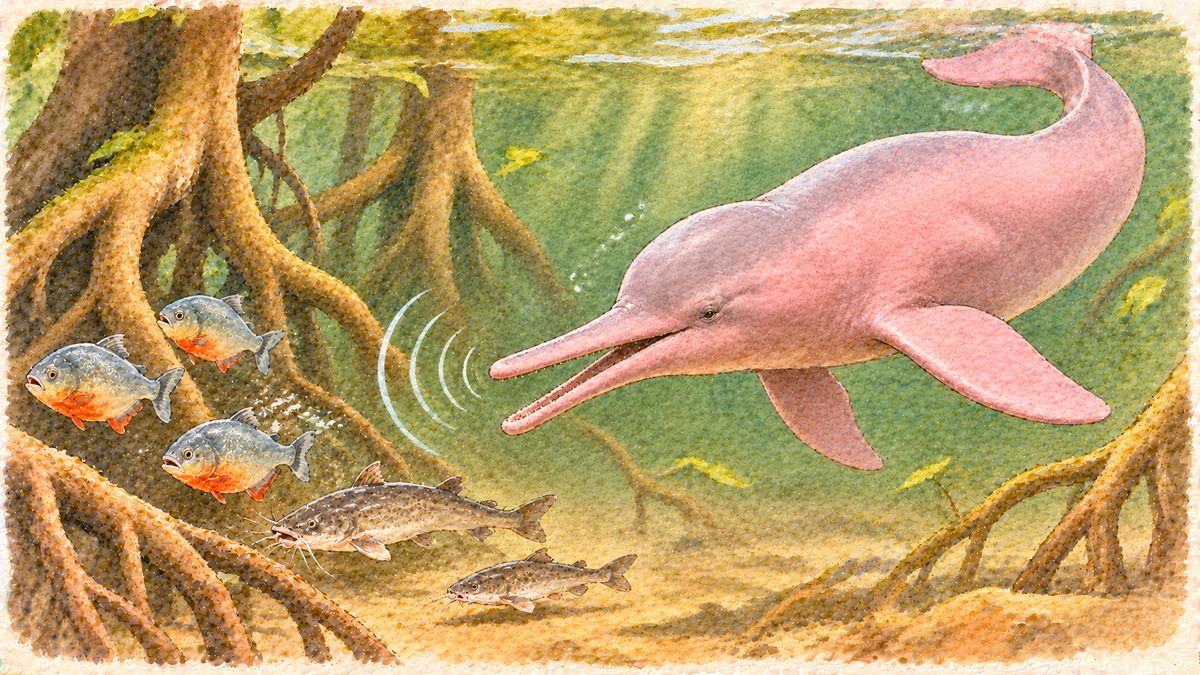
The Amazon river dolphin is a generalist predator with one of the most varied diets of any dolphin. Studies have recorded dozens of species of prey.
Typical Prey
- Fish: Piranhas, catfish, tetras, croakers, cichlids and many others.
- Crustaceans: River crabs and sometimes shrimp.
- Turtles: Small river turtles, whose shells can be crushed with the back teeth.
Adults eat roughly 5 percent of their body weight per day, or about 2.5 to 5.5 kilograms (5 to 12 pounds) of fish, depending on the size of the animal.
How They Hunt
Amazon river dolphins use echolocation, producing clicks and listening for the echoes, to find prey in cloudy water. Their bristly snout and flexible neck help them probe the bottom and the roots of submerged trees. They may hunt alone or in small groups, and sometimes they work together to drive fish into shallow water.
Friendly Fishing Partners
In some places, boto dolphins have learned to hang around fishing boats and wait for fishermen to toss scraps. In certain locations, tourist feeding has become common, but wildlife experts warn that feeding wild dolphins can change their behavior and put them at risk.
Amazon River Dolphin Behavior and Lifestyle
Solitary or in Small Groups
Compared with ocean dolphins, Amazon river dolphins are not highly social. They usually travel alone, in pairs or in small groups of a few animals. Larger gatherings can form at rich feeding sites. Mother-calf pairs are the strongest bonds.
Swimming Style
They swim slowly, usually moving at around 1.5 to 3 kilometers per hour (1 to 2 miles per hour), but they can speed up when chasing prey. Their flexible bodies let them swim sideways, upside down and in tight turns.
Communication
They produce whistles, clicks and other sounds. Echolocation is vital in dark, silty water. Their sounds travel well in rivers, helping them communicate and navigate.
Playful Behavior
Botos are curious and playful. They have been seen carrying sticks, grass and even small turtles in their mouths and tossing them. Males are known to carry objects as part of displays, which may be linked to attracting mates or intimidating rivals.
Eyesight
Despite the muddy water, they have functional eyesight both in and out of water, and they can often see above the surface, which is helpful when surfacing in tangled forest.
Amazon River Dolphin Reproduction and Babies
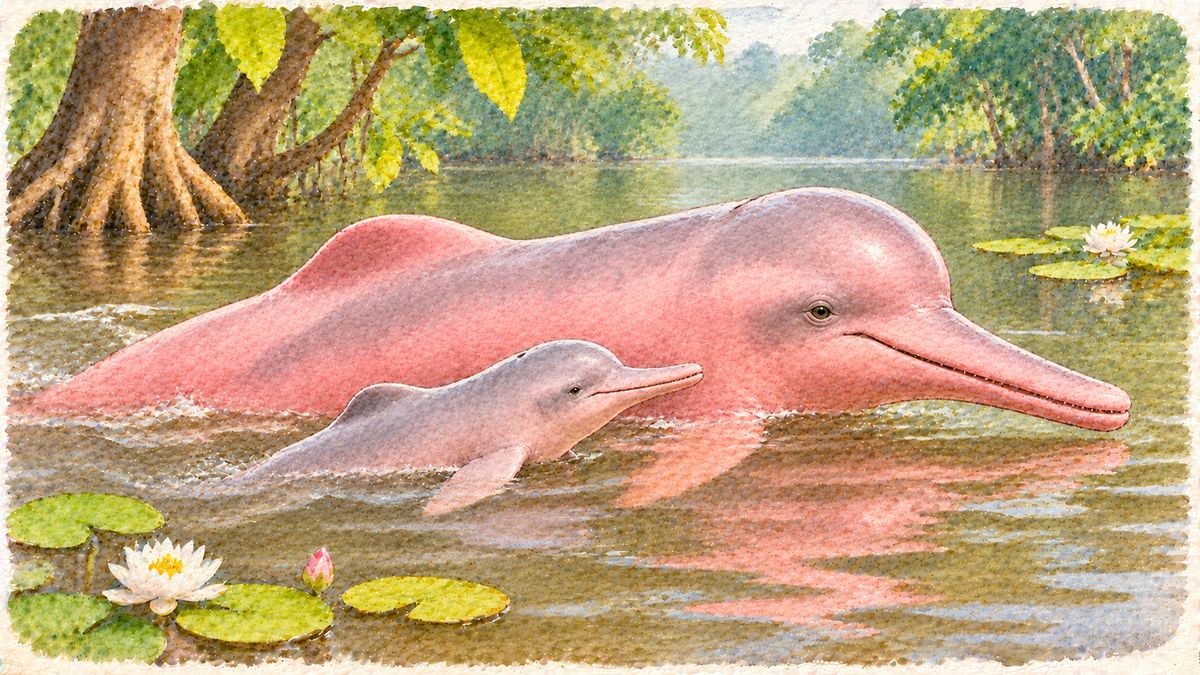
Female Amazon river dolphins give birth to a single calf after a pregnancy of around 11 to 12 months. Births are often timed to the rising or high water, when food is plentiful.
A newborn calf is about 80 centimeters (2.6 feet) long and gray in color. It nurses on its mother's milk for a year or more and stays close for protection. Females usually have a calf every few years, so populations recover slowly. Sexual maturity arrives at around 5 to 10 years, and since dolphins have long gaps between births, the loss of even a few adults can harm a population.
How Long Do Amazon River Dolphins Live?
Lifespan in the wild is thought to be roughly 30 years, though this is estimated rather than precisely known. Individuals in captivity have not generally thrived, and river dolphins do poorly in aquariums, which is one reason experts recommend protecting them in the wild.
Predators and Threats
Natural Predators
Adult Amazon river dolphins have few natural enemies. Jaguars, caimans, anacondas and large black caiman may occasionally prey on young or weak animals, but such events are rarely recorded.
Human Threats
People are the main danger:
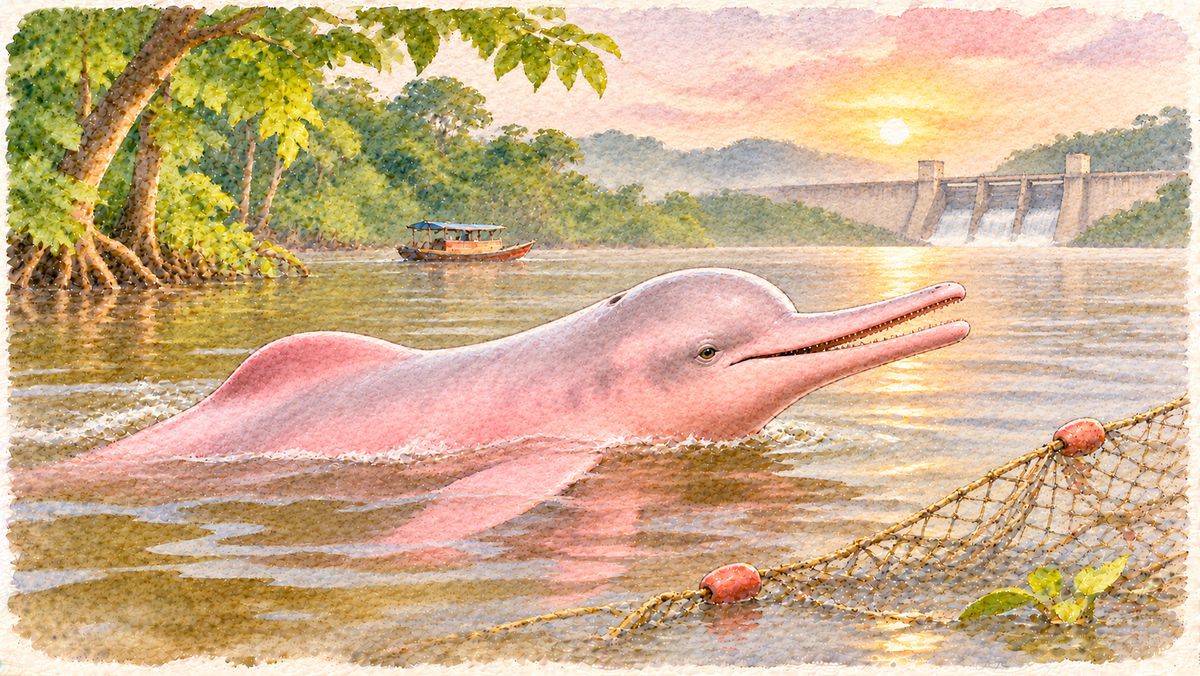
- Fishing nets and bycatch: Dolphins become tangled in gill nets and drown.
- Deliberate killing for bait: In parts of the Amazon, dolphins have been killed and used as bait for the piracatinga catfish, a practice that spread in the 2000s and caused serious declines.
- Mercury pollution: Gold mining releases mercury that builds up in fish and in dolphins at the top of the food chain.
- Dams and habitat fragmentation: Dams block movement and split populations.
- Boat traffic and noise: Disturbance and collisions can harm animals.
- Climate change and drought: Severe droughts have caused overheating and die-offs in some lakes.
Why Amazon River Dolphins Are Important
As top predators, Amazon river dolphins keep fish populations balanced and show how healthy the river is.
- Indicators of river health: Pollution and falling fish stocks often show up first in dolphin populations.
- Ecosystem balance: By hunting many kinds of prey, they help prevent any single species from dominating.
- Cultural importance: In Amazonian culture they are part of myths, festivals and identity.
- Ecotourism: Responsible dolphin watching can bring income to river communities.
Are Amazon River Dolphins Endangered?
Yes. In 2018, the IUCN moved the Amazon river dolphin to Endangered after studies found sharp declines. In some monitored areas, numbers were reported to have fallen by more than half over about a decade, though the full picture varies by region. Because the dolphins are widespread and hard to count, scientists are still working to understand total population size.
Conservation actions include:
- Protected areas: Reserves such as Mamiraua in Brazil help safeguard habitat.
- Bans on killing and on piracatinga fishing: Several countries have introduced temporary or permanent bans, although enforcement is hard.
- Safer fishing gear: Programs encourage alternatives to harmful nets.
- Research and tagging: Scientists use satellite tags and surveys to track movements.
- Community involvement: Local guides and fishers take part in monitoring and protection.
Fun Facts About Amazon River Dolphins
- Pink power: Older males can be a vivid pink, the pinkest of all dolphins.
- The boto legend: Folklore says the boto becomes a handsome man in a white hat at night, which is why some people wear hats to cover blowholes.
- Flexible neck: They can turn their heads about 90 degrees.
- Different teeth: They have both cone-shaped and molar-like teeth.
- Forest swimmers: They swim among the trees in flooded forests.
- Bristly snout: Stiff hairs on the beak help detect prey.
- Largest river dolphin: They are the biggest river dolphin in the world.
- Brainy: Their brains are large, and they are often described as intelligent.
- No tall dorsal fin: A low ridge helps them move through branches.
- Male gifts: Males carry objects such as sticks in displays.
Frequently Asked Questions
Why are Amazon river dolphins pink? They are born gray and become pink as they age, mostly because of scars from fights and blood vessels near the skin. Males are generally pinker than females.
Where do Amazon river dolphins live? They live in the Amazon and Orinoco river basins in Brazil, Peru, Colombia, Ecuador, Bolivia and Venezuela, including rivers, lakes and flooded forests.
What do Amazon river dolphins eat? They eat many kinds of fish, plus crabs and small river turtles, using echolocation to find prey in murky water.
How big do Amazon river dolphins get? They grow up to about 2.5 m (8 ft) long and can weigh around 185 kg (400 lb). Males are larger than females.
Are Amazon river dolphins dangerous to humans? No. They are generally gentle, though wild animals can bite if provoked. It is best to watch from a distance and never feed or touch them.
Are Amazon river dolphins endangered? Yes. The IUCN lists them as Endangered because of bycatch, mercury pollution, dams, hunting and other threats.
Final Thoughts
The Amazon river dolphin is a living symbol of the rainforest: pink, curious, flexible and mysterious. It has survived for millions of years in some of the most challenging waters on Earth, but modern threats are testing its limits. Protecting river dolphins means protecting clean rivers, healthy fish populations and the communities that depend on them. If we act in time, the boto will continue to rise from the dark water for generations to come.