The Brussels Griffon is a tiny toy dog with a scruffy beard, huge dark eyes and a face so expressive that people often describe it as almost human. One glance at that bearded, button-nosed look and it is easy to see why this little Belgian breed has charmed royalty, movie audiences and dog lovers around the world.
Behind the comical face is a lively, sensitive and deeply loyal companion. In this complete guide, you will learn everything you need to know before welcoming one into your home, including its size, temperament, grooming needs, exercise requirements, common health concerns, diet tips and fascinating history.
Brussels Griffon at a Glance
| Trait | Details |
|---|---|
| Breed group | Toy (AKC) |
| Height | About 7 to 10 inches (18 to 25 cm) |
| Weight | About 6 to 12 pounds (3 to 5.5 kg) |
| Life expectancy | 12 to 15 years |
| Coat | Rough (wiry) or smooth (short and glossy) |
| Colors | Red, belge, black, black and tan |
| Shedding | Rough coat: very little; smooth coat: seasonal |
| Energy level | Moderate |
| Temperament | Lively, intelligent, sensitive, loyal, alert |
| Good for | Adults, couples, seniors, apartment living |
| Origin | Brussels, Belgium (1800s) |
What Is a Brussels Griffon?
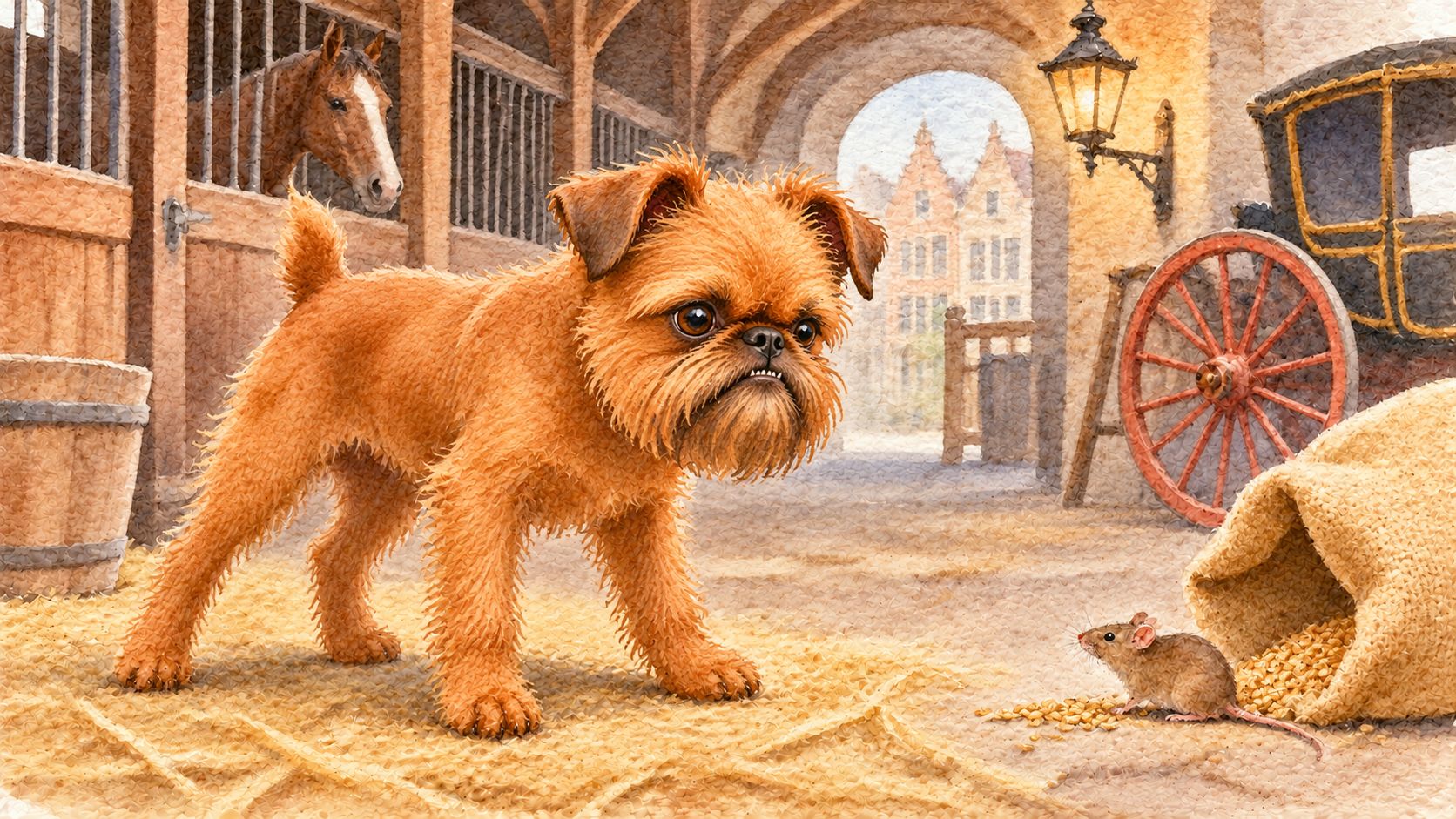
This is a small, sturdy toy breed that originated in Belgium in the 1800s. Its ancestors were scrappy little stable dogs that kept carriage houses free of rats. Over generations, breeders refined the dog into a charming house companion with a big personality packed into a very small body.
The American Kennel Club places the breed in its Toy Group. Fans often call it the "Griff" for short. Although it is not one of the most common breeds in the United States, it has a loyal following among people who appreciate its quirky looks and devoted nature.
Brussels Griffon Size and Appearance
How Big Do Brussels Griffons Get?
Adults are tiny, usually standing about 7 to 10 inches (18 to 25 cm) tall at the shoulder and weighing roughly 6 to 12 pounds (3 to 5.5 kg). Males are often slightly heavier than females.
Despite its small size, the Griff is compact and surprisingly solid, with a square body and a thick-set frame. It is a little dog that feels sturdy when you pick it up, not fragile.
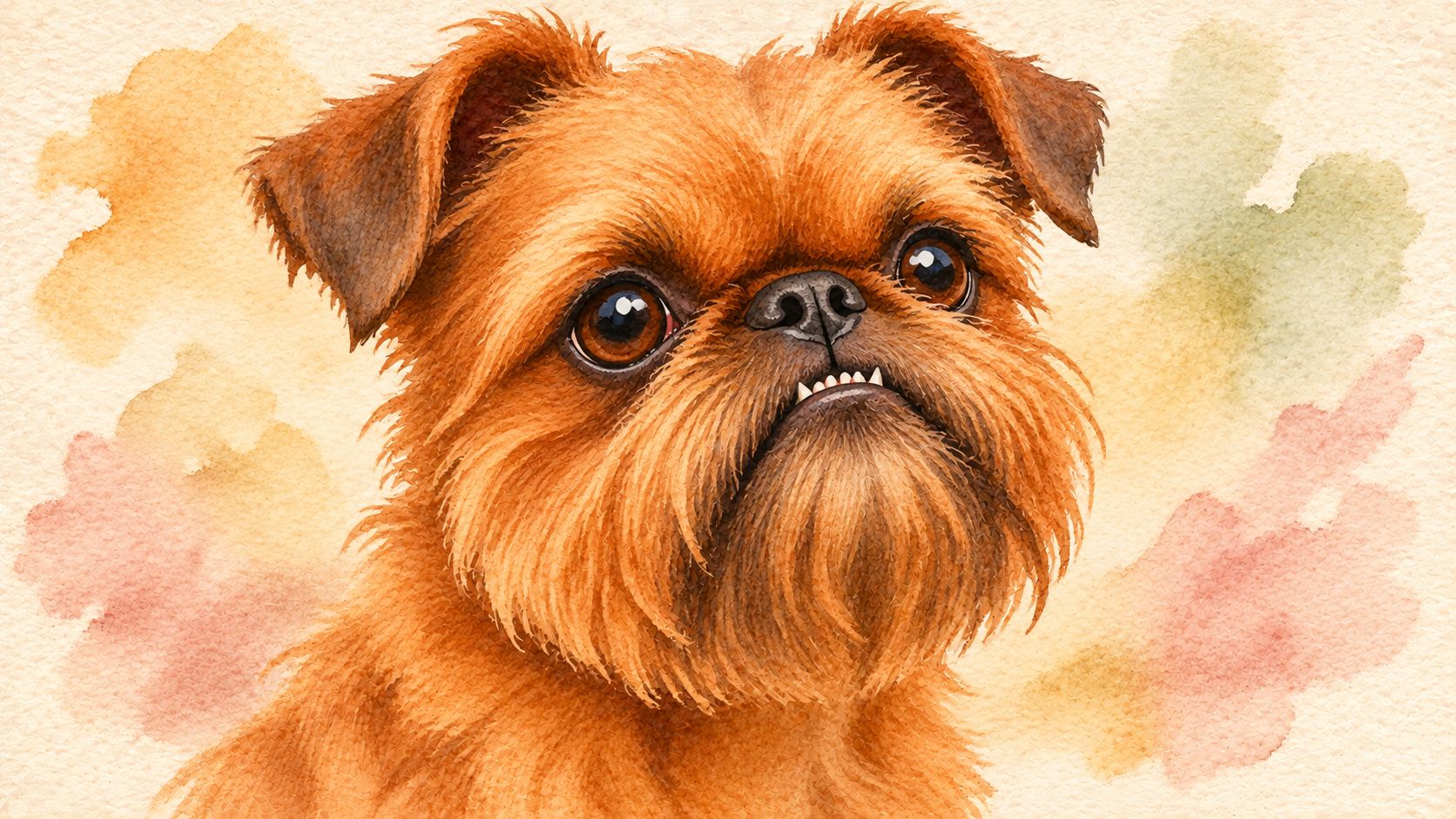
The face is the star of the show. The breed has a very short muzzle, a prominent chin, a slightly upturned underbite and large, wide-set dark eyes. Rough-coated dogs also sport a bushy beard and mustache that complete the wise, almost human expression.
Coat and Colors
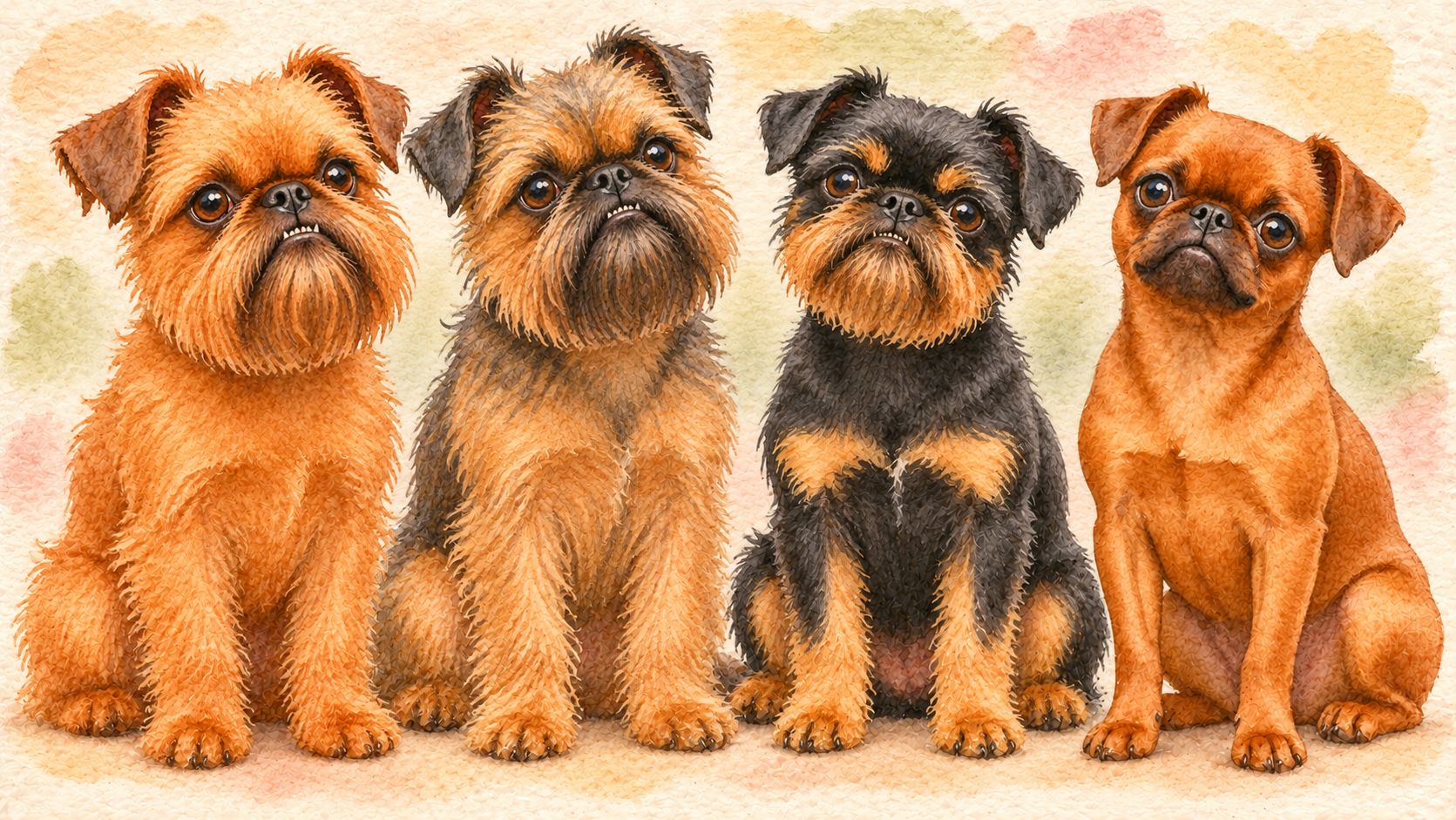
The breed comes in two coat types:
- Rough coat: A harsh, wiry coat with longer hair on the face forming the signature beard and eyebrows.
- Smooth coat: A short, straight, glossy coat with no beard. In some countries, the smooth variety is called the Petit Brabançon.
Accepted colors include red, belge (a mix of reddish-brown and black hairs), black, and black and tan. Both coat types can appear in the same litter.
Brussels Griffon Temperament and Personality
The Brussels Griffon temperament is often described as "big dog in a small body." Here is what you can expect from this little companion:
- Lively: Griffs are playful and busy, and they like to be involved in whatever is happening at home.
- Intelligent: They are clever and quick to figure out routines, including when it is time for meals and walks.
- Sensitive: These dogs are emotionally tuned in to their owners and can be hurt by harsh words or rough handling.
- Loyal and affectionate: Many bond strongly with one special person and like to stay close by.
- Alert: Griffs make excellent watchdogs and will let you know when visitors arrive.
Because they are so attached to their people, Griffs do not like spending long hours alone. They are best suited to households where someone is home much of the day or where the dog can come along on outings.
Are Brussels Griffons Good With Kids?
Brussels Griffons do best with adults and older, gentle children. Their small size and sensitive nature mean they may not enjoy the noise, grabbing and rough play that often comes with toddlers.
With calm, respectful kids who understand how to handle a small dog, a Griff can be a loving playmate. Always supervise interactions between young children and toy breeds.
Are They Good With Other Pets?
Most Griffs get along with other dogs and cats, especially if they are raised together. Because they are confident and a bit bossy, they may not realize how small they are, so watch them around larger dogs. Early socialization with many people, pets and places helps them grow into well-adjusted adults.
Training a Brussels Griffon
Griffs are intelligent and can learn quickly, but they also have a stubborn streak. Gentle, positive training works best. Use praise, play and small treats, and keep sessions short and upbeat. Harsh corrections can make this sensitive breed fearful or uncooperative.
Here are a few tips for training success:
- Start socialization early. Introduce your puppy to new sights, sounds and friendly people from the start.
- Be patient with house-training. Like many toy breeds, Griffs can take a little longer to house-train. A consistent schedule and crate training help.
- Keep it short and fun. Five to ten minutes at a time is plenty.
- Manage barking. Teach a "quiet" cue early and reward calm behavior.
- Try obedience or rally. Many Griffs enjoy learning tricks and can do well in obedience, rally and even agility.
Exercise Needs
The Brussels Griffon has a moderate energy level. It is active indoors and adapts well to apartment living, but it still needs daily walks and play to stay fit and happy. Two short walks a day plus indoor games usually meet its needs.
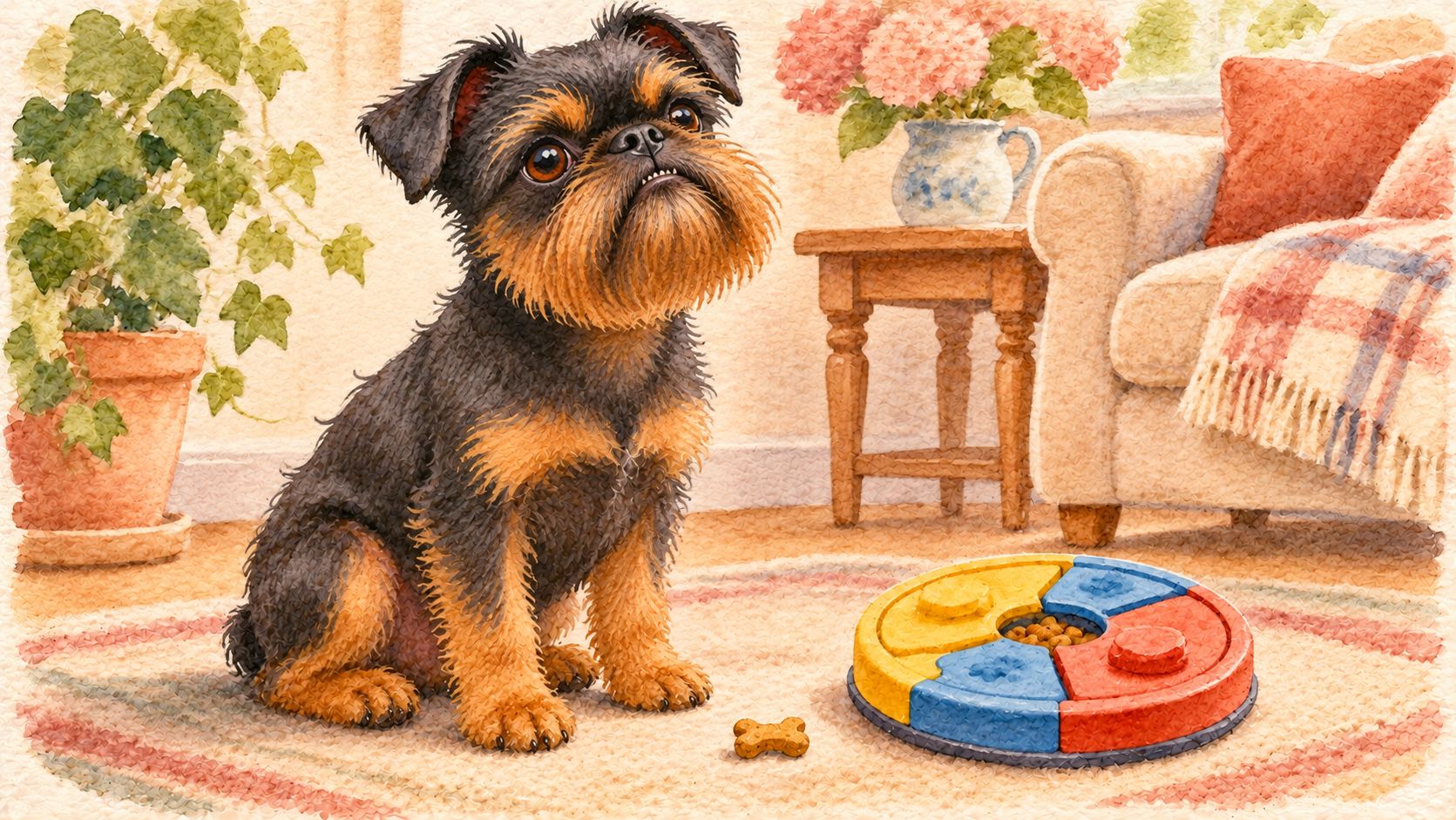
Puzzle toys, short training sessions and gentle games of fetch are great ways to give a Griff mental exercise. Because of its short face, avoid strenuous activity during hot or humid weather and schedule walks for cooler parts of the day.
Always use a leash or a secure yard. Small, confident dogs can wander off or get into trouble with larger animals.
Grooming a Brussels Griffon
Do Brussels Griffons Shed?
It depends on the coat. Rough-coated dogs shed very little, while smooth-coated dogs shed seasonally, usually for a week or two in spring and fall. Either way, the breed is considered fairly low maintenance in terms of loose hair.
Grooming Routine
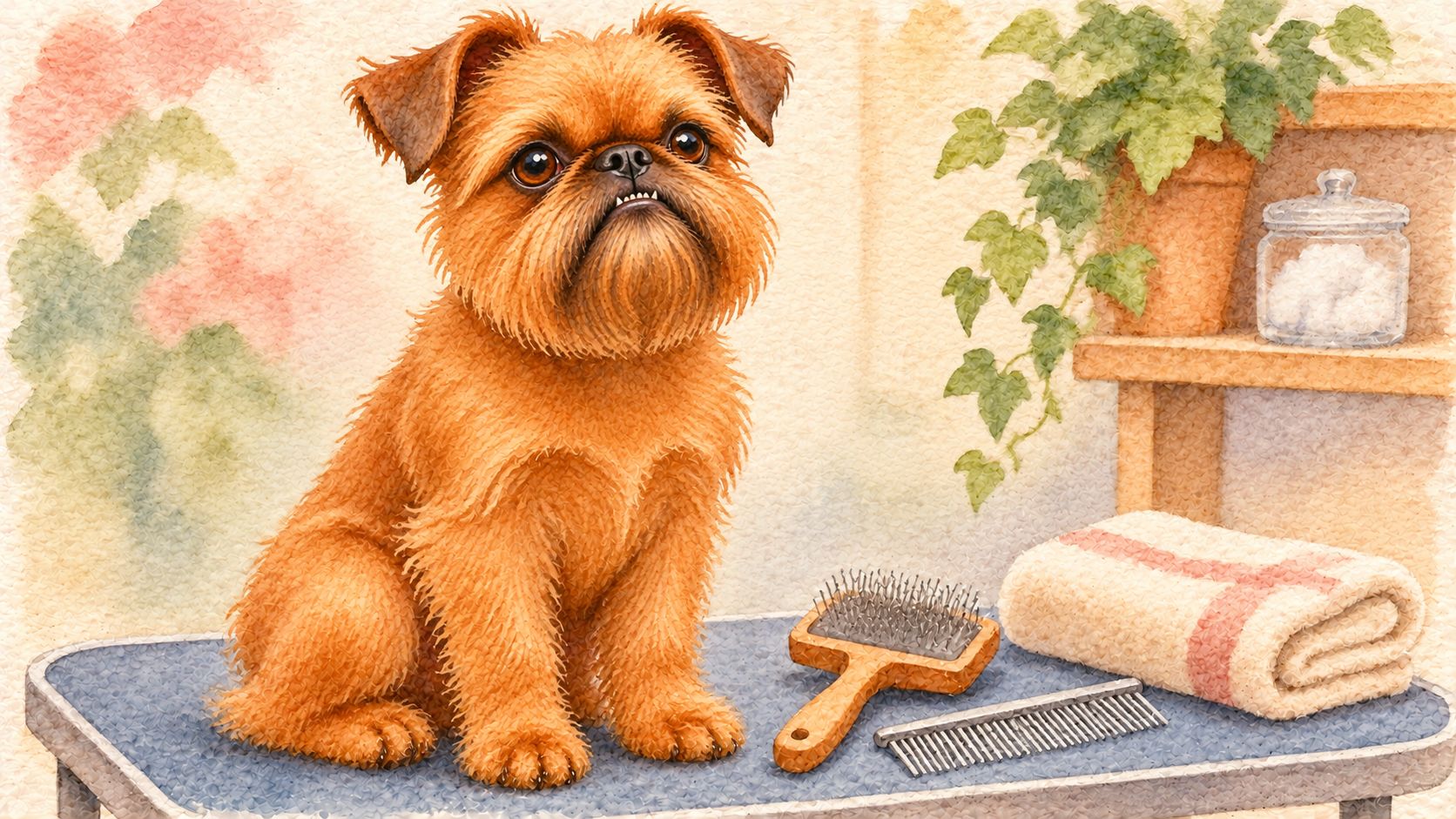
- Rough coat: Brush a couple of times a week to prevent tangles. Many owners have the body coat clipped short while keeping the beard longer. Show dogs are usually hand-stripped to maintain the wiry texture.
- Smooth coat: Brush weekly, and daily during seasonal shedding periods. Bathe only occasionally.
- Face care: Wipe the beard and facial folds after meals to keep them clean and dry.
- Eyes: Those large eyes can be vulnerable to scratches and irritation, so check them daily.
- Nails and teeth: Trim nails every few weeks and brush teeth several times a week, since toy breeds are prone to dental problems.
Brussels Griffon Health and Lifespan
This breed is generally healthy, with an average lifespan of about 12 to 15 years. Responsible breeders screen their dogs for conditions that can affect the breed, which may include:
- Heart problems: Screening helps identify potential concerns early.
- Cataracts and other eye issues: Large, prominent eyes need regular checks.
- Patellar luxation: A kneecap that slips out of place, common in small breeds.
- Hip dysplasia: An abnormal formation of the hip joint.
Because of their flat faces, Griffs often snore and can have trouble breathing in hot or humid weather. Keep them cool, provide shade and fresh water, and never leave them in a parked car. Always work with your veterinarian to set up a routine of checkups, vaccinations and preventive care.
Feeding and Nutrition
A toy or small-breed dog food is often a good fit for the Brussels Griffon. These formulas usually have smaller kibble that is easier for tiny mouths and short muzzles to pick up and chew. If your dog tends to gain weight, a healthy-weight formula may help.
Puppies should eat a toy or small-breed puppy food during their first year to support growth and development. Follow the package feeding guide, adjust for activity and body condition, and ask your veterinarian for advice. Keep treats small and limited.
History of the Brussels Griffon
The breed's story begins in Brussels, Belgium, in the early 1800s. Coachmen kept small, sturdy, wire-coated dogs in their stables to hunt rats. These dogs were known as griffons d'écurie, or "wire-coated stable dogs," and they looked much like the Affenpinscher.
Over time, these stable dogs were likely crossed with other small breeds. Because detailed breeding records were not kept, the exact ancestry is unknown, but the Pug, English Toy Spaniel and Yorkshire Terrier are often mentioned as possible contributors. These crosses gave the breed its shorter face, larger eyes and smaller size.
The breed's popularity soared in the late 1800s when Queen Marie Henriette of Belgium became a fan. Griffs became fashionable at court, and their fame spread to England and America. The American Kennel Club recognized the breed in 1910.
Both World Wars hit the breed hard in Europe, and numbers dropped sharply. Dedicated British and American breeders helped keep it going. In 1997, a Griff named Verdell charmed moviegoers in the film As Good as It Gets, starring Jack Nicholson and Helen Hunt, and introduced the breed to a whole new audience.
Brussels Griffon vs Affenpinscher
These two bearded toy breeds are often confused, and they share common ancestry. The Affenpinscher comes from Germany and has a shaggier, more monkey-like look, usually in black. The Griff from Belgium has a flatter face, larger eyes, a more pronounced underbite and comes in both rough and smooth coats, most often in red.
Is a Brussels Griffon Right for You?
This breed could be a wonderful match if you:
- Want a small, sturdy companion with a big personality
- Live in an apartment or smaller home
- Are home often and want a dog that loves to stay close
- Prefer a low-shedding dog (especially the rough coat)
- Can provide gentle, patient training
It may not be the best fit if you:
- Have toddlers or very young children
- Are away for long hours most days
- Want a completely quiet dog
- Live in a very hot climate without air conditioning
Finding a Brussels Griffon Puppy
Because the breed is relatively uncommon, you may need to join a waiting list for a Brussels Griffon puppy. Choose a breeder who health-tests parent dogs, raises puppies in a home setting and welcomes your questions. Litters are often small, so patience pays off. Breed clubs and rescue groups can also help you find adult dogs that need loving homes.
Fun Facts About the Brussels Griffon
- The breed started as a ratting dog in Belgian stables.
- Its early ancestors were called griffons d'écurie, or wire-coated stable dogs.
- Queen Marie Henriette of Belgium helped make the breed fashionable.
- A Griff named Verdell co-starred with Jack Nicholson in As Good as It Gets.
- Rough and smooth puppies can be born in the same litter.
- Fans affectionately call the breed the "Griff."
Frequently Asked Questions
How big do Brussels Griffons get?
Adults usually stand about 7 to 10 inches tall at the shoulder and weigh around 6 to 12 pounds, making them a true toy breed.
Do Brussels Griffons shed?
Rough-coated Griffs shed very little, while smooth-coated Griffs shed seasonally, usually in spring and fall. Regular brushing keeps loose hair under control.
Are Brussels Griffons good family dogs?
They can be loving family pets for adults and older, gentle children. They are usually not ideal for homes with toddlers because of their small size and sensitive nature.
How long do Brussels Griffons live?
The average Brussels Griffon lifespan is about 12 to 15 years with good care, a healthy diet and regular veterinary checkups.
Can Brussels Griffons be left alone?
Griffs are very people-oriented and do not like spending long hours alone. They do best in homes where someone is around for much of the day.
What dog was in As Good as It Gets?
The dog Verdell in the 1997 film As Good as It Gets was a Brussels Griffon. Several Griffs reportedly shared the role during filming.
Final Thoughts
The Brussels Griffon is a tiny dog with a huge heart, a comical face and a deep devotion to its people. It thrives in calm homes where it can stay close to its family and receive gentle, patient training. If you are looking for a loyal, low-shedding lap companion with a personality all its own, a Brussels Griffon may be the perfect fit.