The Bull Terrier is instantly recognizable thanks to its long, egg-shaped head, small triangular eyes and muscular, barrel-chested body. Often called the "clown of dogs," this playful English breed is famous for its goofy antics, sweet nature and boundless love for its people.
Under that comical exterior is a strong, spirited and sometimes stubborn dog that needs plenty of exercise and consistent training. In this complete breed guide, you will learn everything you need to know before bringing one home, including its size, temperament, grooming needs, exercise requirements, health, diet and colorful history.
Bull Terrier at a Glance
| Trait | Details |
|---|---|
| Breed group | Terrier (AKC) |
| Height | 21 to 22 inches (53 to 56 cm) |
| Weight | 50 to 70 pounds (23 to 32 kg) |
| Life expectancy | 12 to 13 years |
| Coat | Short, flat, harsh to the touch |
| Colors | White, or colored (brindle, red, fawn, black brindle, tricolor) |
| Shedding | Moderate; seasonal |
| Energy level | Moderate to high |
| Temperament | Playful, affectionate, spirited, mischievous, loyal |
| Good for | Active families, experienced owners, homes with yards |
| Origin | England (1800s) |
What Is a Bull Terrier?
This is a muscular, medium-sized terrier developed in 19th-century England. It was created by crossing the old Bulldog with quick, lively terriers, producing a dog that was both strong and agile. Over time, breeders softened its temperament and refined its look into the distinctive "egghead" we know today.
The American Kennel Club places the breed in the Terrier Group and recognized it in 1885. A smaller version, the Miniature Bull Terrier, is now registered as a separate breed. Today, these dogs are cherished family companions known for their fun-loving attitude and devotion to their people.
Bull Terrier Size and Appearance
How Big Do Bull Terriers Get?
Adults typically stand about 21 to 22 inches (53 to 56 cm) tall at the shoulder and weigh roughly 50 to 70 pounds (23 to 32 kg). The breed standard focuses more on balance and substance than on exact measurements, so individual dogs can vary.
The body is round, muscular and big-boned, with a broad chest and strong shoulders. Despite its solid build, the breed moves with a light, jaunty gait that matches its cheerful personality.
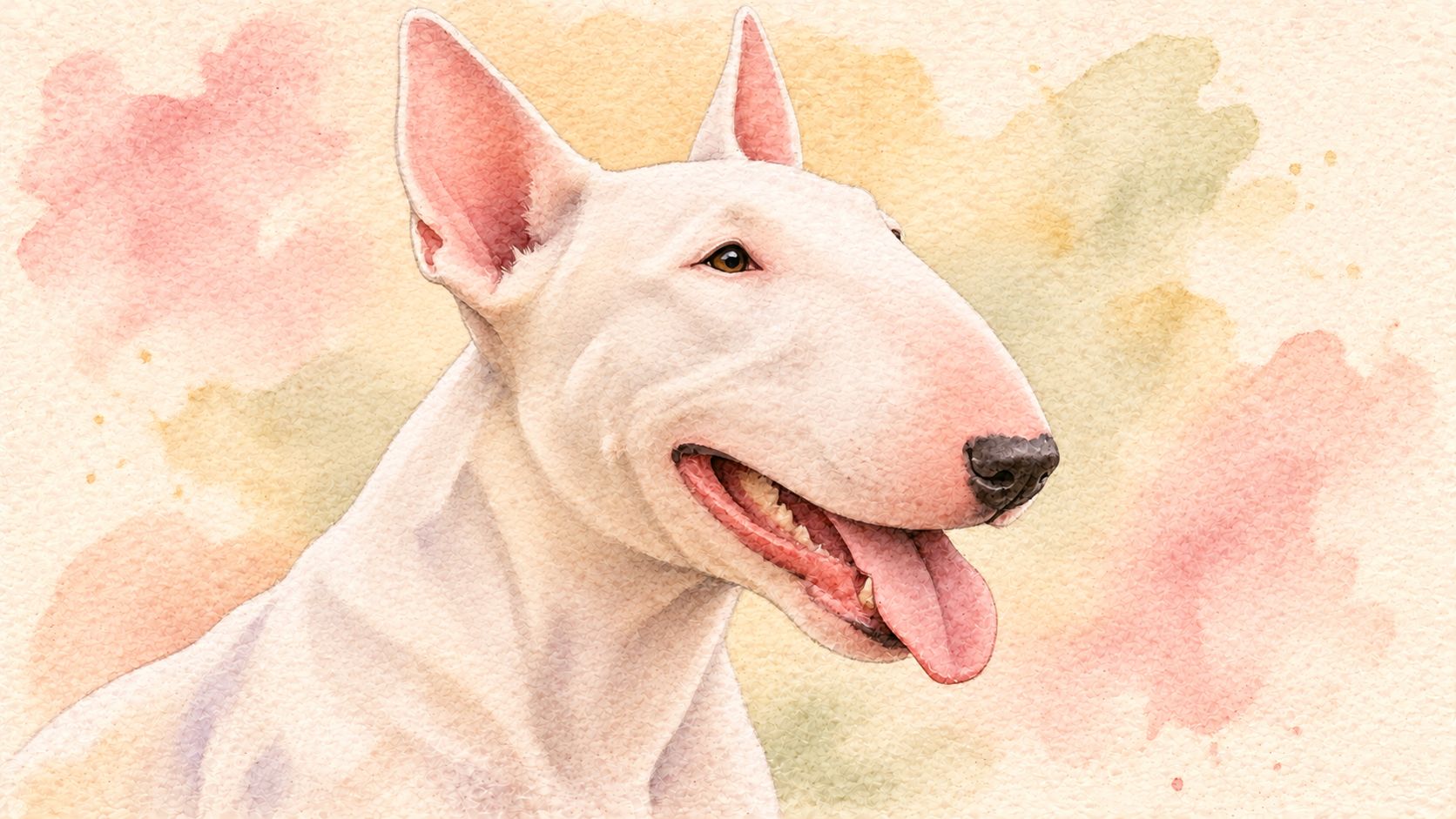
The head is the breed's trademark. Seen from the side, it curves gently from the top of the skull to the tip of the nose with no stop, creating the famous egg shape. Small, dark, triangular eyes and erect, pointed ears complete the mischievous expression.
Coat and Colors
The coat is short, flat and harsh to the touch, with a fine gloss. It lies close to the body and is easy to care for.
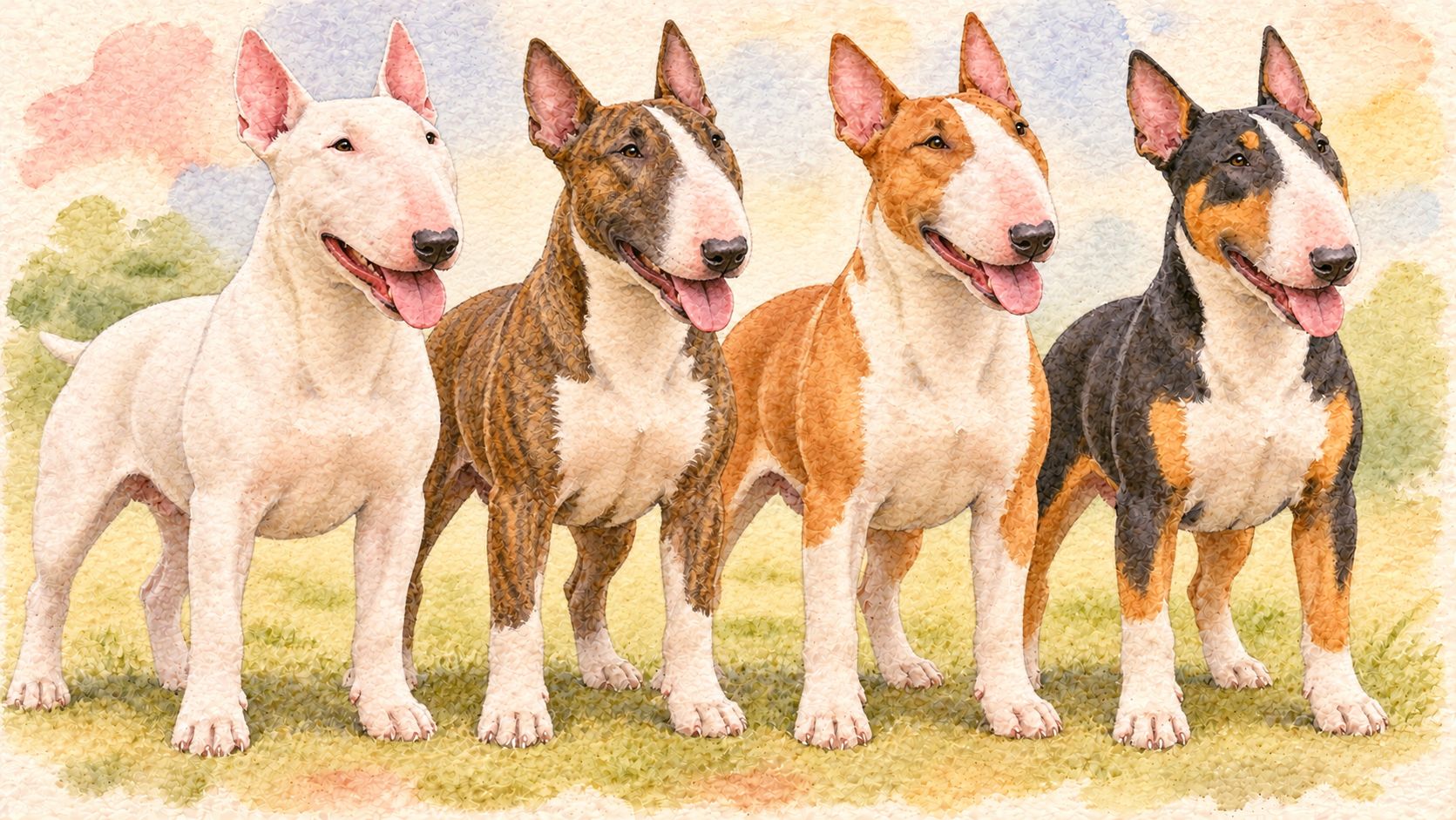
There are two color varieties:
- White: Pure white, though markings on the head are allowed.
- Colored: Any color other than white, or any color with white markings. Brindle is especially popular, along with red, fawn, black brindle and tricolor.
Bull Terrier Temperament and Personality
The Bull Terrier temperament is a delightful mix of playfulness, affection and stubborn charm. Here is what you can expect:
- Playful and clownish: These dogs love games, toys and silly antics, and many keep a puppy-like sense of fun well into adulthood.
- Affectionate: They thrive on human company and want to be part of everything the family does.
- Spirited and robust: They are energetic, confident and always ready for action.
- Independent: Like many terriers, they have their own ideas and can be strong-willed.
- Quiet: They rarely bark without a good reason, so it is worth paying attention when they do.
Because they are so people-focused, these dogs do not enjoy being left alone for long stretches. A bored dog may chew, dig or develop repetitive habits, so plenty of company, exercise and mental challenges are key.
Are Bull Terriers Good Family Dogs?
Yes, Bull Terriers can be wonderful family dogs for active households. They are known to love children and enjoy rough-and-tumble play.
Because they are strong and can get overexcited, supervision is important around younger children. Teaching both the dog and the kids calm play habits keeps everyone safe and happy.
Are They Good With Other Pets?
With early socialization, many get along well with other pets. However, some can be pushy or intolerant with other dogs, especially of the same sex, and may chase cats or small animals. Careful introductions and ongoing supervision are wise.
Training a Bull Terrier
These dogs are intelligent but independent, which means training takes patience and consistency. The best approach is loving but firm, using positive reinforcement such as praise, play and treats. Harsh methods tend to backfire with this sensitive, strong-willed breed.
Tips for successful training:
- Socialize early and often. Introduce your puppy to many people, dogs, places and sounds.
- Enroll in puppy classes. Structured obedience training helps build good manners and focus.
- Keep sessions short and fun. Turn lessons into games to hold your dog's interest.
- Be consistent. Set clear house rules and make sure everyone in the family follows them.
- Try dog sports. The breed can enjoy agility, obedience, rally and other activities that combine exercise with mental work.
Exercise Needs
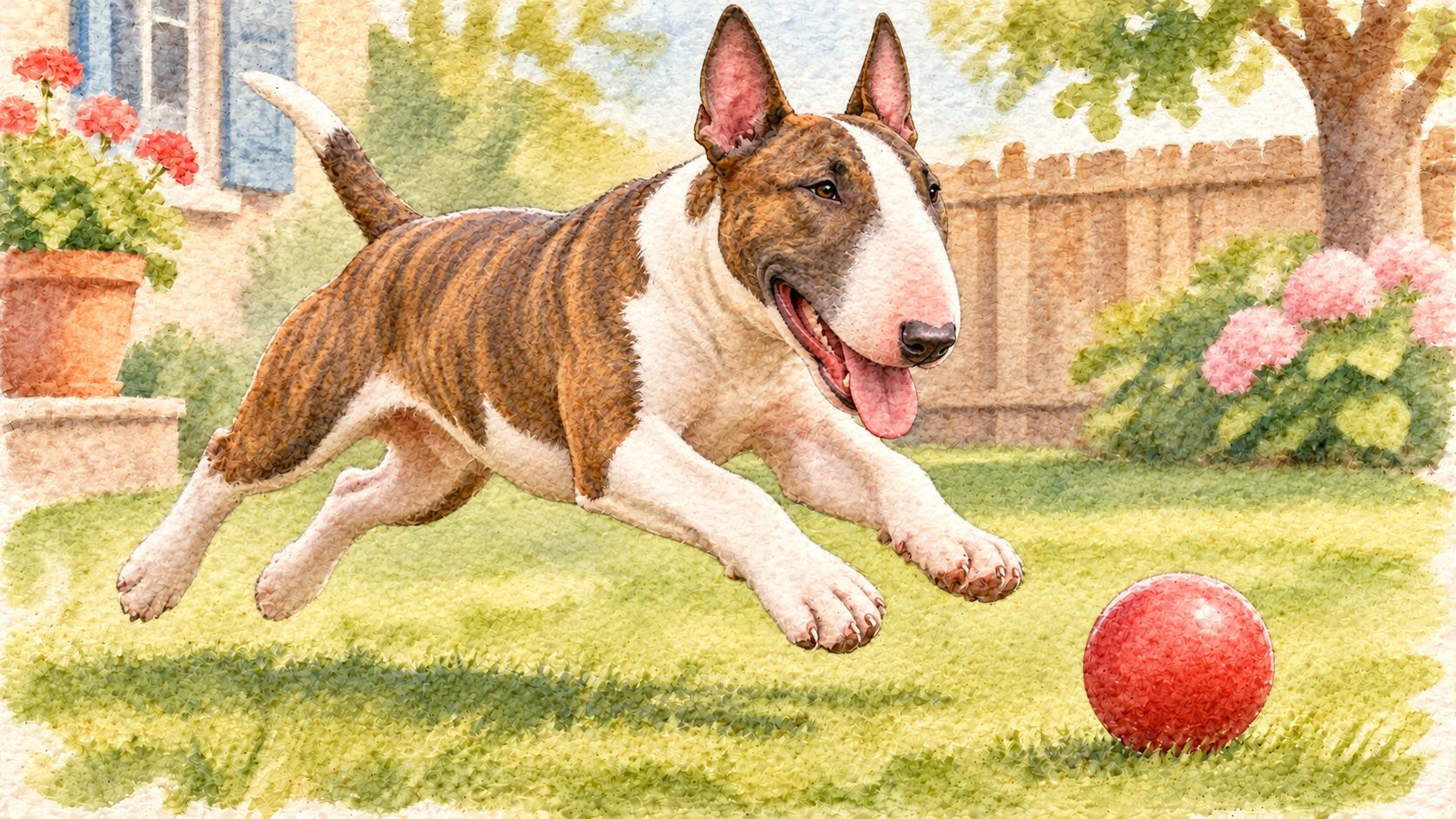
With its energetic, well-muscled build, this breed needs daily exercise to stay fit and well-behaved. Aim for at least an hour of activity each day, such as brisk walks, play sessions in a fenced yard and games of fetch or tug.
These dogs especially love games with balls and toys, along with outdoor adventures. Mental stimulation matters just as much as physical activity, so rotate puzzle toys and teach new tricks to keep that clever brain busy.
Always keep your dog on a leash or in a secure yard. Its strength and terrier instincts can lead it to chase animals or wander off.
Can a Bull Terrier Live in an Apartment?
A Bull Terrier can live in an apartment if it gets enough daily exercise and attention. Size matters less than activity: a well-walked, mentally engaged dog is usually calm and content indoors.
That said, many owners find a home with a securely fenced yard makes life easier. A yard gives the dog a safe place to play fetch and burn off energy between walks. Whatever your living situation, plan your routine around plenty of time together, because this breed is happiest when it is with its people.
Bull Terrier Puppy Care
Puppies are bundles of energy and curiosity, and they tend to explore the world with their mouths. Provide sturdy chew toys, puppy-proof your home and supervise closely during the first months. Avoid long runs or heavy jumping while the puppy is still growing, and instead focus on short play sessions, gentle walks and plenty of positive socialization.
Bull Terrier Grooming
Do Bull Terriers Shed?
Yes, Bull Terriers shed seasonally, usually more heavily once or twice a year. The rest of the time, shedding is fairly light, and their short coat is easy to maintain.
Grooming Routine
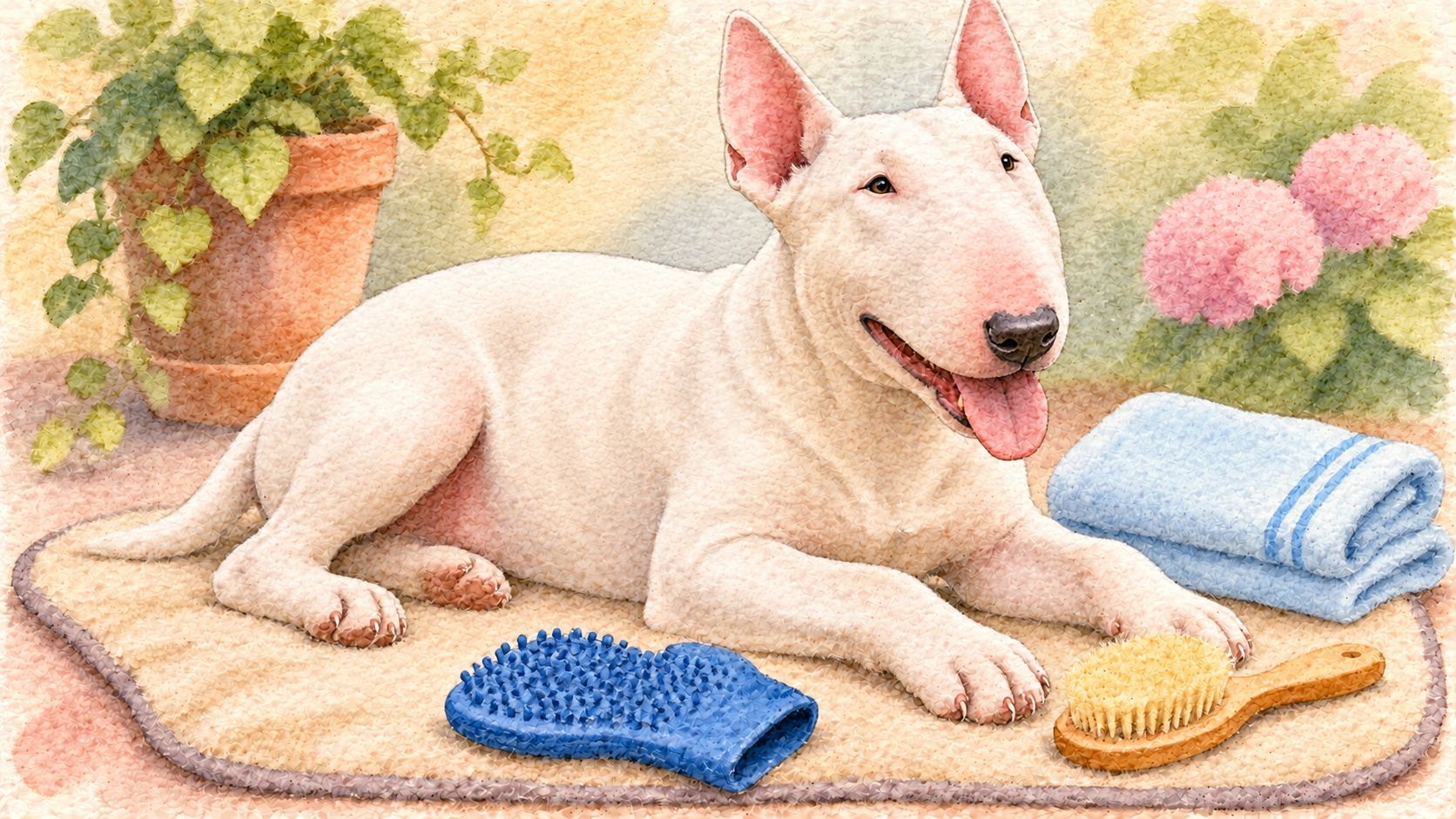
- Brushing: Brush once a week with a soft bristle brush or rubber grooming mitt to remove loose hair and dirt. Brush more often during shedding seasons.
- Bathing: Bathe only as needed to keep the coat clean.
- Skin care: White dogs in particular may be sensitive to sunburn and skin irritation, so limit long periods in strong sun and check the skin regularly.
- Nails: Trim nails every few weeks to keep feet comfortable.
- Teeth and ears: Brush teeth several times a week and check ears weekly.
Bull Terrier Health and Lifespan
This breed is generally sturdy, with an average lifespan of about 12 to 13 years. Like all breeds, it can be prone to certain inherited conditions. Responsible breeders screen for issues that may include:
- Kidney problems: Some lines can be affected by inherited kidney disease.
- Heart conditions: Heart screening is recommended for breeding dogs.
- Deafness: Puppies should be hearing tested. Deafness is more common in white dogs.
- Skin allergies: Some dogs develop itchy skin that needs attention.
Keeping your dog at a healthy weight and well exercised supports long-term health. Always work with your veterinarian to set up a routine of checkups, vaccinations and preventive care.
Feeding and Nutrition
Most adult dogs of this breed do well on a high-quality, complete and balanced dog food. Portion sizes depend on age, size and activity level. Because these dogs love food, keep an eye on body condition and adjust portions to prevent weight gain. A healthy-weight formula may help dogs that need to slim down.
Puppies should eat a puppy food during their first year to support growth and development. Follow the package feeding guide and ask your veterinarian for advice. Limit treats to a small share of daily calories.
History of the Bull Terrier
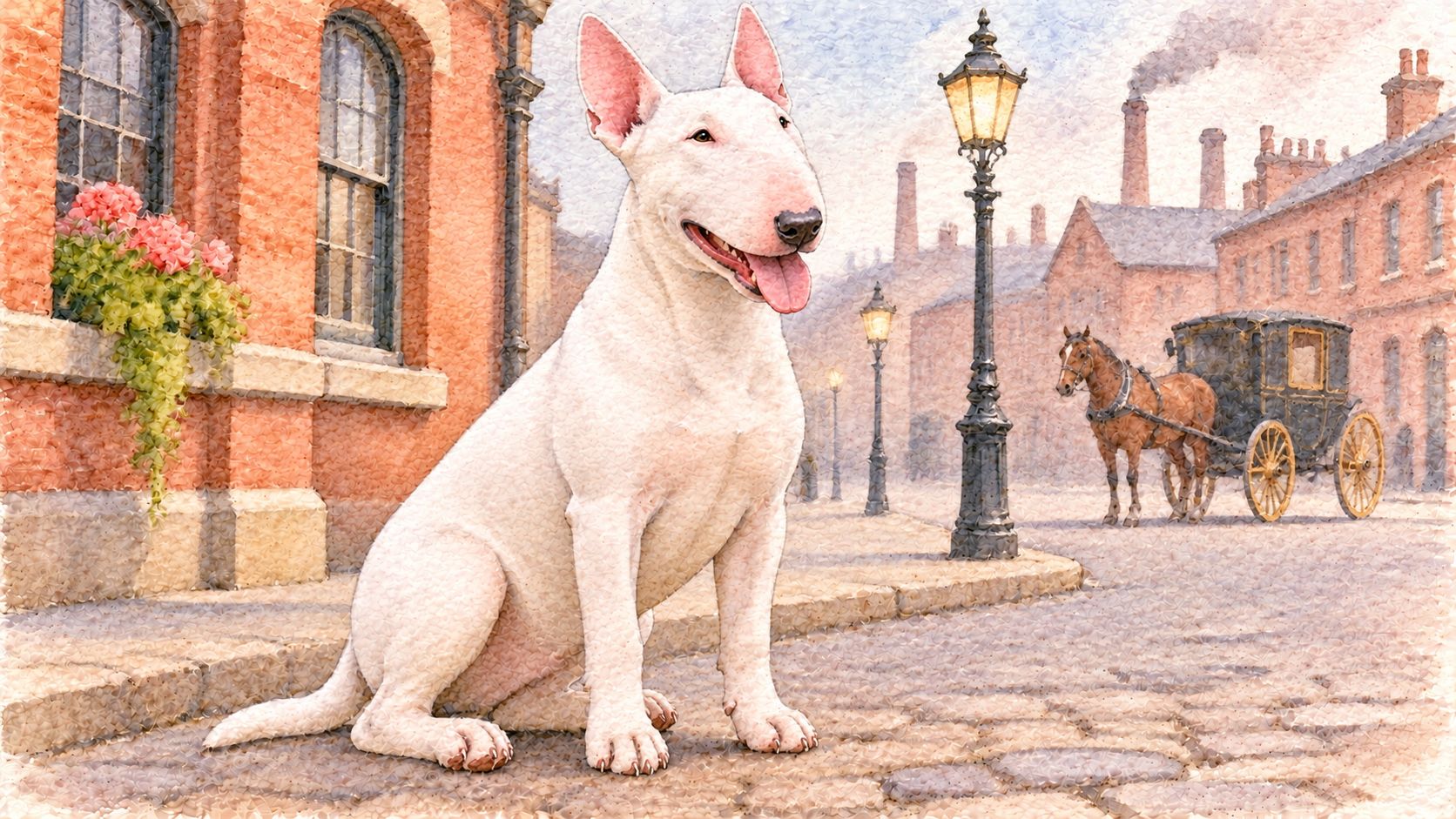
The breed's story begins in early 19th-century England. At that time, the old Bulldog was used in cruel blood sports such as bull-baiting. When these sports were outlawed in the 1830s, people began crossing Bulldogs with faster, more agile terriers. The resulting "bull and terrier" dogs came in many sizes and colors.
In the mid-1800s, a Birmingham dog dealer named James Hinks set out to create a more refined, elegant version. His all-white dogs, sometimes nicknamed "White Cavaliers," became fashionable companions for young gentlemen. Breeders continued to improve the dog's temperament, turning it into the friendly companion it is today. Colored varieties were later developed and accepted.
The American Kennel Club recognized the breed in 1885. Over the years, these dogs have had many famous fans. President Theodore Roosevelt owned one named Pete, and General George S. Patton's Bull Terrier Willie was his constant companion. A Bull Terrier named Rufus won Best in Show at the Westminster Kennel Club Dog Show in 2006, and Bullseye, Target's mascot, is one of the most recognizable dogs in advertising.
As with some other bull breeds, a few areas have breed-specific rules, so owners should check local regulations.
Bull Terrier vs Miniature Bull Terrier
The Bull Terrier and the Miniature Bull Terrier share the same egg-shaped head, coat colors and playful personality. The main difference is size: Minis typically stand about 10 to 14 inches tall, much shorter than the standard breed. The AKC recognizes them as two separate breeds.
Is a Bull Terrier Right for You?
This breed could be a great match if you:
- Want a playful, affectionate and entertaining companion
- Lead an active lifestyle and can provide daily exercise
- Have experience with confident, independent dogs
- Can commit to consistent, positive training
- Want a short-coated dog that is easy to groom
It may not be the best fit if you:
- Are away from home for long hours most days
- Want an easy-to-train, highly obedient dog
- Have other pets that may not tolerate a pushy companion
- Prefer a calm, low-energy dog
Finding a Bull Terrier Puppy
When looking for a Bull Terrier puppy, choose a responsible breeder who screens parent dogs for kidney and heart issues and has puppies hearing tested. Ask to meet the parents to get a feel for their temperament. Breed clubs and rescue groups are also great places to find adult dogs looking for new homes.
Fun Facts About the Bull Terrier
- The breed is nicknamed the "clown of dogs."
- Its egg-shaped head is unique among recognized breeds.
- Early all-white dogs were nicknamed "White Cavaliers."
- President Theodore Roosevelt and General George S. Patton both owned one.
- Bullseye, the Target mascot, is a white Bull Terrier.
- The breed rarely barks without a reason.
Frequently Asked Questions
How big do Bull Terriers get?
Adults usually stand about 21 to 22 inches tall at the shoulder and weigh roughly 50 to 70 pounds, with a muscular, solid build.
Are Bull Terriers good family dogs?
Yes, they are affectionate and playful and often love children. Because they are strong and energetic, they need training and supervision around young kids.
How long do Bull Terriers live?
The average Bull Terrier lifespan is about 12 to 13 years with a healthy diet, regular exercise and routine veterinary care.
Do Bull Terriers shed?
They shed seasonally, with heavier shedding once or twice a year. Weekly brushing removes most loose hair.
Why do Bull Terriers have egg-shaped heads?
The egg-shaped head was developed through selective breeding in England and is now a defining feature of the breed standard.
Are Bull Terriers easy to train?
They are intelligent but independent, so training takes patience and consistency. Positive, reward-based methods and early socialization work best.
Final Thoughts
The Bull Terrier is a fun-loving, affectionate and one-of-a-kind companion with a face you will never forget. It thrives in active homes with owners who enjoy play, provide daily exercise and offer patient, consistent training. If you are ready for a loyal clown with a big heart, a Bull Terrier may be the perfect addition to your family.