25 Fun Facts
25 Zebra Facts: The Striped Horses of Africa
With their bold black-and-white stripes, zebras are among the most recognisable animals on Earth. But why do they have stripes, and how do they survive on the African plains surrounded by lions and hyenas?
Here are 25 fascinating facts about zebras, from the real reason for their stripes to their epic journeys across Africa.
Zebra Facts
Zebras belong to the horse family, along with horses and donkeys.
There are three species of zebra: the plains zebra, the mountain zebra and Grévy's zebra.
Zebras live wild only in Africa, mainly in the grasslands and savannas of eastern and southern Africa.
No two zebras have exactly the same stripe pattern. Each one is as unique as a fingerprint.
Underneath their fur, zebras have black skin, and most scientists describe them as black animals with white stripes.
Like horses, zebras walk on a single toe on each foot, protected by a hard hoof.
The plains zebra is the most common species, with broad stripes that often have pale "shadow stripes" in between.
Mountain zebras have a small flap of skin on their throat, called a dewlap, and a grid-like stripe pattern on their rump.
Grévy's zebra is the largest wild member of the horse family, with thin, closely packed stripes, large round ears and a white belly.
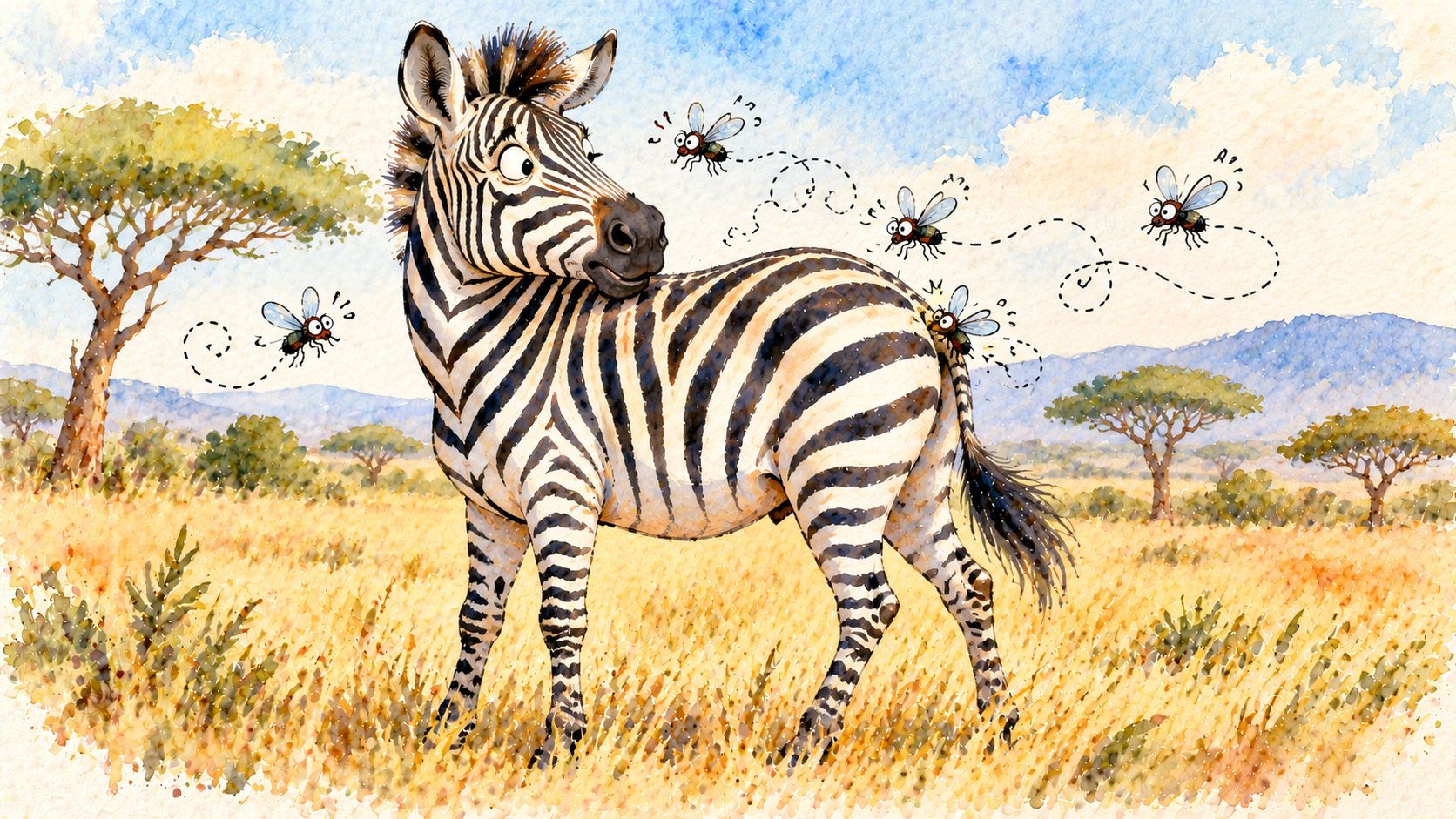
Zebra stripes help keep biting flies away
Scientists have long wondered why zebras have stripes. Ideas have included camouflage, confusing predators and keeping cool. Recent research has found strong evidence for another reason: stripes help keep biting flies away. In a 2019 study, researchers put striped coats on horses and found that horseflies struggled to land on them, often flying past or bumping into them. Since biting flies in Africa can spread deadly diseases, stripes may help protect zebras' health.
Grévy's zebra is named after Jules Grévy, a French president who was given one as a gift in the 1880s.
Grévy's zebras are endangered, with only a few thousand left in the wild, mostly in northern Kenya and Ethiopia.
Plains zebras usually live in family groups made up of one stallion, several mares and their foals.
Many family groups often gather together to form huge herds.
A male zebra is called a stallion, a female is called a mare and a baby is called a foal.
A zebra foal is born with brown-and-white stripes and can usually stand within about 15 minutes of being born.
For the first few days, a mother keeps other zebras away from her foal so it can learn her unique stripes, voice and smell.
Zebras can run at around 55 to 65 kilometres per hour, and they can deliver powerful kicks that injure predators like lions and hyenas.
A zebra's ears show its mood. Ears pointing forward show it's calm or curious, while ears pinned back mean it's angry or scared.
Zebras make some of Africa's longest migrations
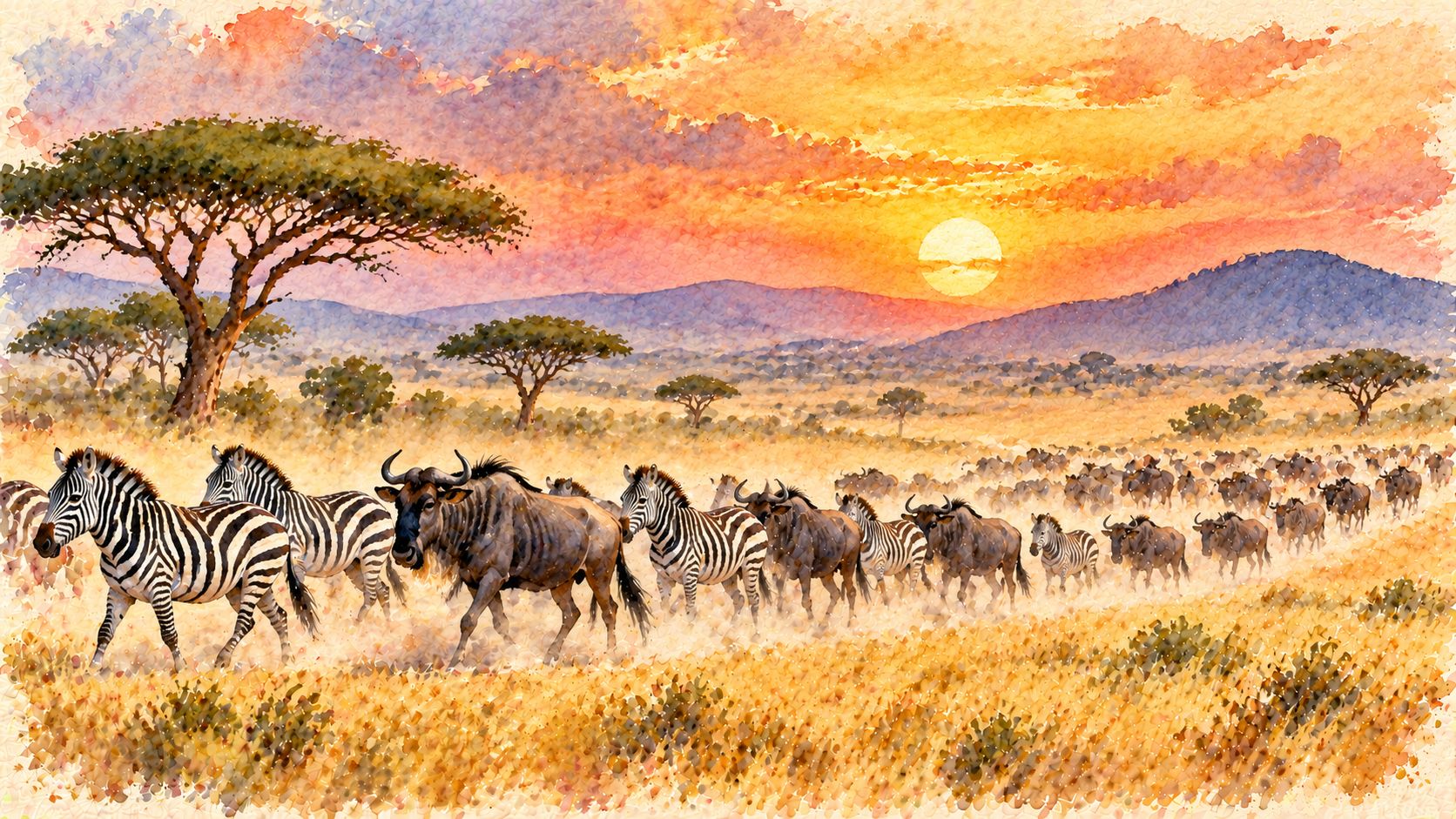
Each year, around 200,000 zebras join more than a million wildebeest in the Great Migration across Tanzania's Serengeti and Kenya's Maasai Mara, following the rains in search of fresh grass. Zebras often lead the way, eating the tough tops of the grass and leaving the shorter, softer shoots for the wildebeest behind them. In southern Africa, scientists have tracked zebras travelling around 500 kilometres between Namibia and Botswana, one of the longest land migrations recorded on the continent.
Zebras often sleep standing up, so they can run away quickly if danger appears, but they lie down for deep sleep when it's safe.
The quagga was a kind of plains zebra from South Africa with stripes only on the front half of its body. It went extinct in 1883.
Zebras have never been truly domesticated, but Walter Rothschild, a British banker and zoologist, famously drove a carriage pulled by zebras through London.
In Swahili, a zebra is called "punda milia", which means "striped donkey".
Road crossings painted with black-and-white stripes are called zebra crossings because they look like a zebra's coat.
Sources and Further Reading
- Grévy's Zebra Trust
- IUCN Red List of Threatened Species
- University of Bristol
- Smithsonian's National Zoo & Conservation Biology Institute
- Encyclopaedia Britannica
- National Geographic
Frequently asked questions
Why do zebras have stripes?
Research suggests that stripes mainly help keep biting flies away. Scientists also think they may help with cooling, confusing predators and recognising each other.
Are zebras black with white stripes or white with black stripes?
Zebras have black skin under their fur, and most scientists describe them as black animals with white stripes.
How many types of zebra are there?
There are three species: the plains zebra, the mountain zebra and Grévy's zebra.
Are zebras endangered?
Grévy's zebra is endangered, and the mountain zebra is considered vulnerable. The plains zebra is the most common species but is listed as near threatened.
How fast can a zebra run?
Zebras can run at around 55 to 65 kilometres per hour, which helps them escape predators like lions.
Can zebras be ridden like horses?
Zebras have never been truly domesticated because they are wild, nervous and unpredictable, although a few people have trained them to pull carriages.
More Fun Facts