25 Fun Facts
25 Lemur Facts: Madagascar's Wide-Eyed Primates
With their big glowing eyes, striped tails and playful personalities, lemurs are some of the most charming animals on Earth. They live wild in only one place in the world: the island of Madagascar, off the coast of Africa.
Here are 25 fascinating facts about lemurs, from smelly tail fights to the island's surprising ancient link to India.
Lemur Facts
Lemurs live wild only on Madagascar and a few small nearby islands.
There are more than 100 species of lemur.
The name "lemur" comes from the Latin word "lemures", meaning ghosts or spirits of the night, inspired by their glowing eyes and night-time calls.
Lemurs are primates, like monkeys, apes and humans, but they belong to a more ancient branch along with lorises and bushbabies.
Scientists think lemur ancestors reached Madagascar around 50 to 60 million years ago, probably by floating across the sea from Africa on rafts of plants and fallen trees.
With no monkeys or apes on Madagascar to compete with them, lemurs spread out into many different shapes, sizes and lifestyles.
Madame Berthe's mouse lemur is the smallest primate in the world, weighing only about 30 grams.
The largest living lemur is the indri, which can weigh around 9 kilograms and sings loud, eerie songs that echo through the forest.
Long ago, some giant lemurs living on Madagascar were as big as gorillas, but they are now extinct.
Ring-tailed lemurs have "stink fights"
Ring-tailed lemurs have scent glands on their wrists and chests. During the breeding season, rival males rub their long, striped tails against these glands to coat them in a strong smell. They then face each other and wave their smelly tails over their heads, wafting the scent towards their opponent. These "stink fights" can go on for up to an hour, until one male gives up and backs away.
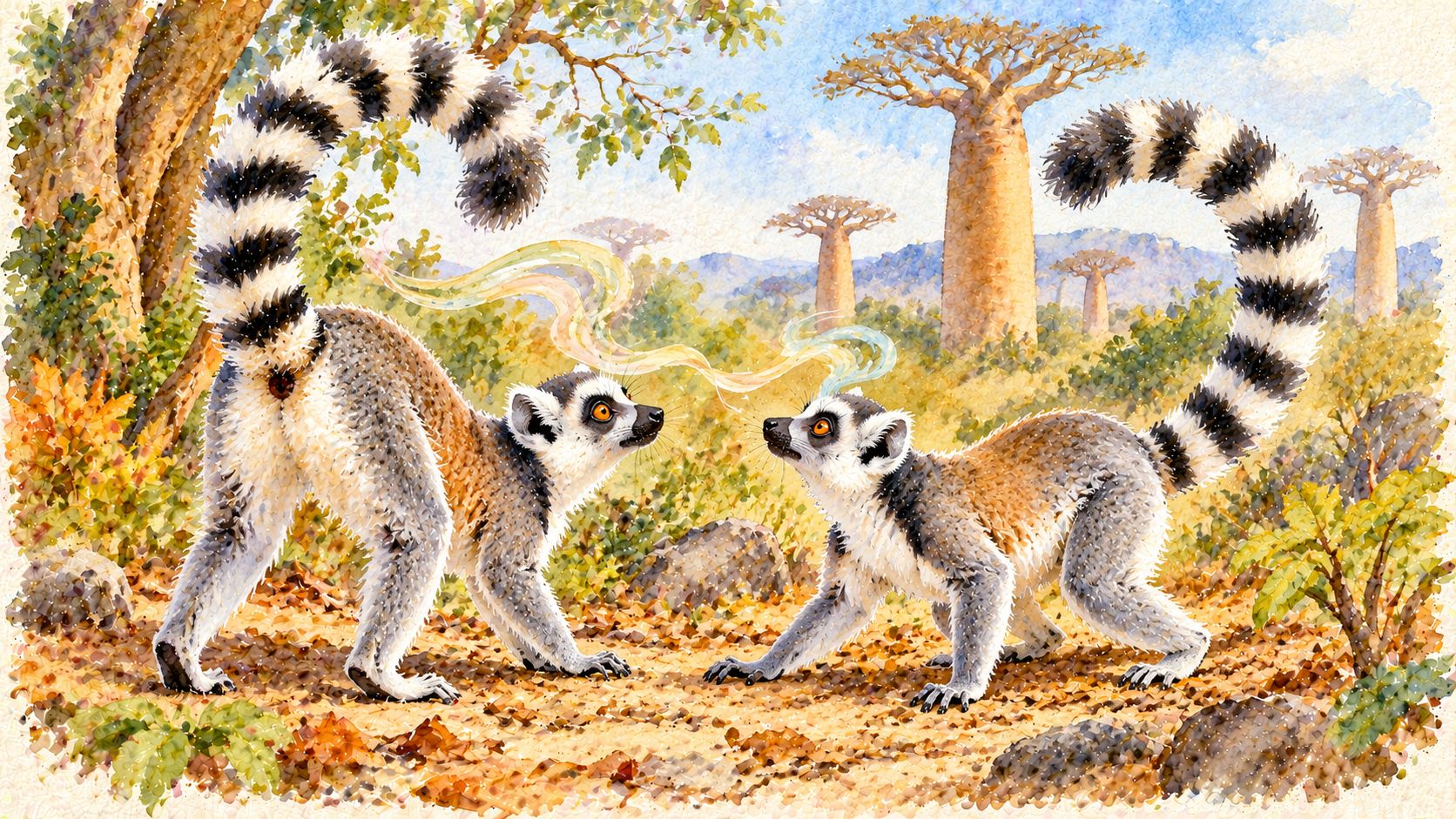
A ring-tailed lemur's tail has around 13 black-and-white rings and is longer than its body.
Ring-tailed lemurs spend more time on the ground than most other lemurs.
In most lemur groups, the females are in charge, and they often get first choice of food.
In the morning, ring-tailed lemurs sit in the sun with their arms spread wide and bellies facing up, as if doing yoga, to warm up.
Lemurs groom each other using a "tooth comb" made from their lower front teeth, as well as a special grooming claw on each foot.
Lemurs mainly eat fruit, leaves and flowers, and some species also eat insects.
Sifakas move across open ground by hopping sideways on their back legs with their arms raised, as if they are dancing.
The fat-tailed dwarf lemur is the only primate known to hibernate for months at a time. It stores fat in its tail to survive.
The blue-eyed black lemur is one of the very few primates, besides humans, to have truly blue eyes.
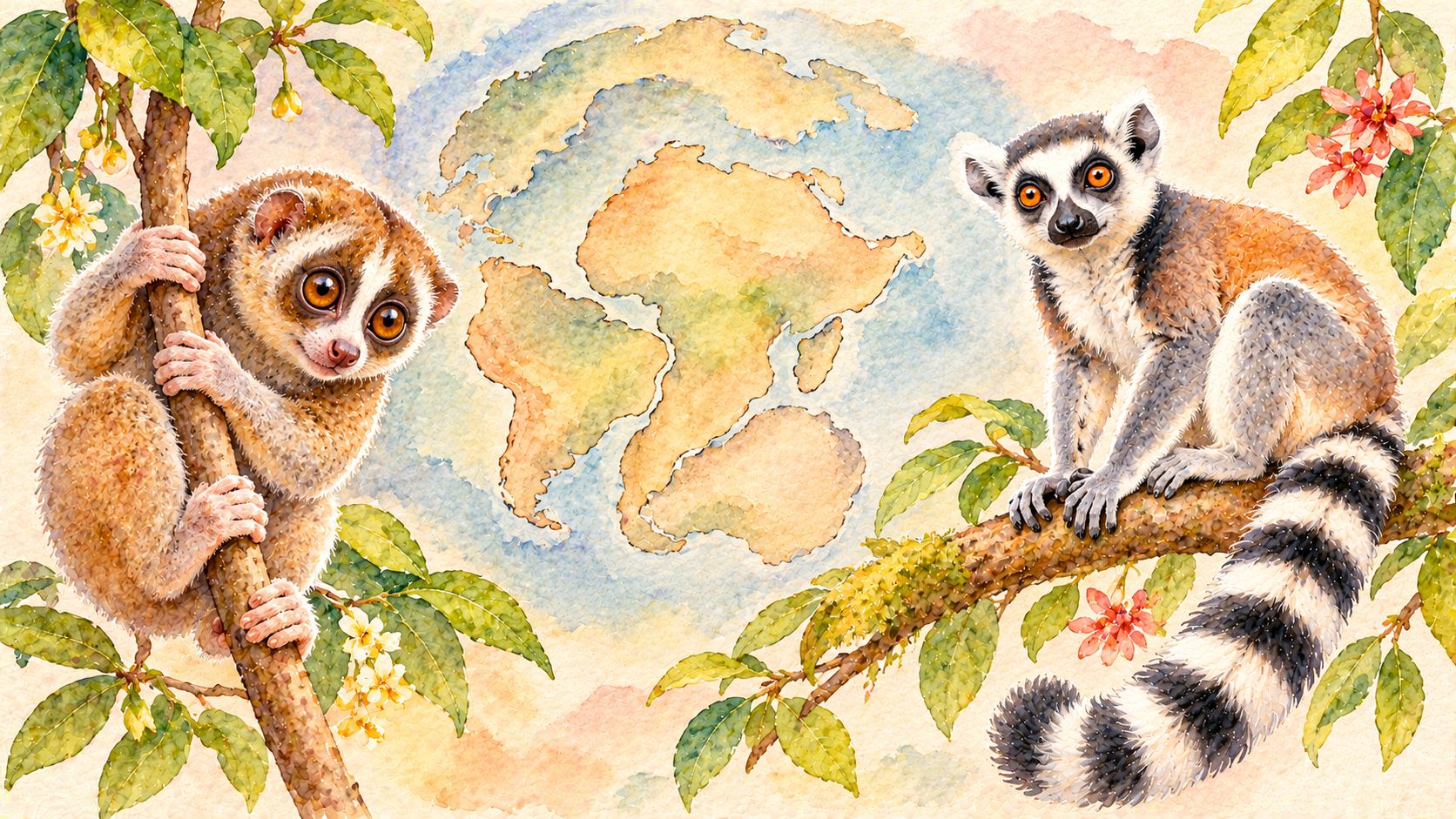
Madagascar, the land of lemurs, was once joined to India
Millions of years ago, Madagascar was part of a giant southern landmass called Gondwana, attached to both Africa and India. Madagascar separated from Africa first, and then, around 88 million years ago, India broke away and drifted north towards Asia. Because of this, Madagascar and India share some ancient plant and animal links. India is also home to some of the lemurs' closest relatives, the slender loris of southern India and the slow loris of the northeast, which share the lemurs' big eyes and night-time habits.
The aye-aye taps on tree bark with its long, thin middle finger and listens for hollow spots where grubs are hiding, then fishes them out.
In some parts of Madagascar, the aye-aye has long been seen as a bad omen, and people have sometimes killed it because of this superstition.
Lemurs are the most threatened group of mammals on Earth, with almost all species at risk of extinction.
Their biggest threats are forest clearing for farming, logging and hunting.
World Lemur Day is celebrated every year on the last Friday of October.
Sources and Further Reading
- IUCN Primate Specialist Group
- Duke Lemur Center
- Smithsonian's National Zoo & Conservation Biology Institute
- Madagascar Fauna and Flora Group
- Encyclopaedia Britannica
- National Geographic
Frequently asked questions
Where do lemurs live?
Lemurs live wild only on Madagascar, a large island off the south-east coast of Africa, and a few small nearby islands.
What is the smallest lemur?
Madame Berthe's mouse lemur is the smallest lemur and the smallest primate in the world, weighing only about 30 grams.
Are lemurs monkeys?
No. Lemurs are primates, but they belong to an older branch of the primate family along with lorises and bushbabies, separate from monkeys and apes.
Why do lemurs sunbathe?
Lemurs, especially ring-tailed lemurs, sit in the sun with their arms spread and bellies up in the morning to warm their bodies after cool nights.
Are lemurs endangered?
Yes. Lemurs are the most threatened group of mammals in the world, with almost all species at risk, mainly from forest loss and hunting.
Are there lemurs in India?
No wild lemurs live in India, but India is home to their close relatives, the slender loris and the slow loris. Madagascar was also once joined to India millions of years ago.
More Fun Facts