25 Polar Bear Facts: Life on Top of the Frozen World
The polar bear is the great wanderer of the Arctic, a huge hunter that spends much of its life on floating sea ice far from land. Perfectly built for bitter cold, it can swim for days, sniff out seals hidden beneath snow and survive months without a proper meal.
But the frozen world it depends on is changing fast. In these 25 facts, discover how polar bears stay warm, how they hunt, how mothers raise tiny cubs in snow dens and why melting sea ice has become the biggest threat to their future.
Polar Bear Facts
The polar bear's scientific name, *Ursus maritimus*, means "sea bear", a fitting name for an animal that spends so much time on sea ice and in the ocean.
Polar bears are often classed as marine mammals, the only bear species treated this way, because they depend on the sea for almost all of their food.
They live around the Arctic in five countries: Canada, the United States (Alaska), Russia, Greenland and Norway. Canada is home to the largest share of the world's polar bears.
Polar bears are, along with large Alaskan brown bears, the biggest bears on Earth and are often called the largest land carnivores.
Adult males typically weigh around 350 to 700 kilograms, while females are roughly half that size. A male standing on its hind legs can be close to 3 metres tall.
The heaviest polar bear on record is reported to have weighed about 1,000 kilograms, though such old records may have been estimated rather than weighed exactly.
A layer of blubber up to about 10 centimetres thick lies under the skin, keeping the bear warm and storing energy for lean times.
Their huge paws can be about 30 centimetres across. They spread the bear's weight on thin ice and work like paddles in the water.
Small bumps and tufts of fur on the soles of the paws give extra grip on slippery ice.
Black Skin Under a See-Through Coat
A polar bear looks white, but its fur is not actually white at all. Each outer guard hair is transparent and hollow, and it looks white because the hairs scatter visible light, much as snow and ice do. Underneath the dense coat, the bear's skin is black. Together, the thick fur, the black skin and the blubber layer trap heat so well that polar bears are more likely to overheat when running than to feel cold. A popular idea that the hollow hairs channel sunlight down to the skin like optical fibres has been tested by scientists and is not supported.
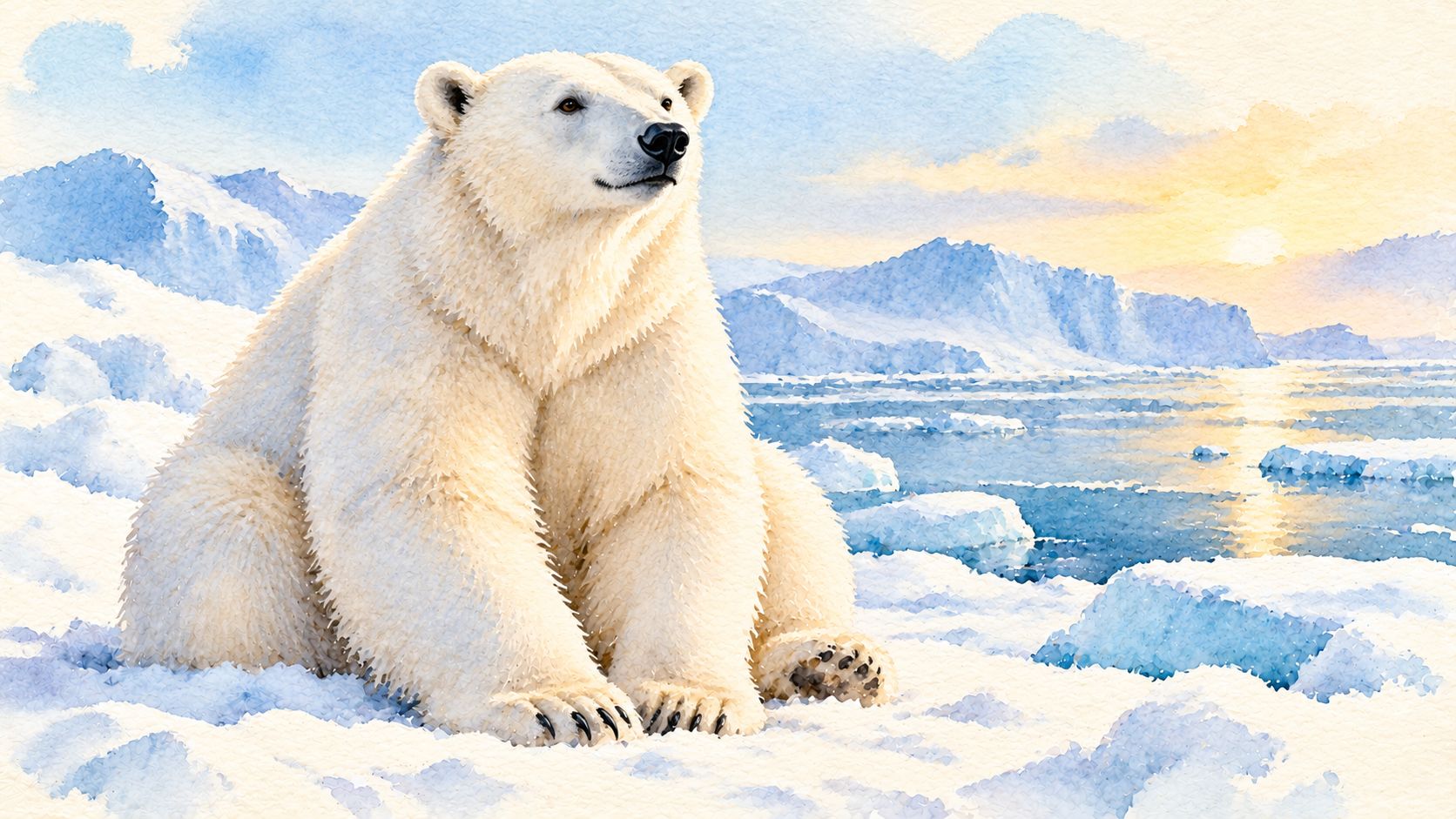
Polar bears are strong swimmers, paddling at around 10 kilometres per hour using their large front paws while their hind legs help steer.
In 2008, researchers tracked a female polar bear that swam non-stop for about 687 kilometres over nine days in the Beaufort Sea, one of the longest swims ever recorded for the species.
Their main prey is ringed seals and bearded seals. They prefer to eat the fat-rich blubber, which gives them the energy they need.
A favourite hunting method is "still hunting", where a bear waits silently beside a seal's breathing hole in the ice, sometimes for hours, ready to strike when the seal comes up for air.
Polar bears have an excellent sense of smell and are thought to be able to detect seals from nearly a kilometre away or hidden under thick snow.
When seals are hard to catch, polar bears also scavenge whale carcasses and eat bird eggs, though these foods cannot fully replace seals.
They can sprint at around 40 kilometres per hour in short bursts but quickly overheat, so they usually walk slowly to save energy.
Some polar bears travel more than 1,000 kilometres in a single year as they follow the moving sea ice in search of food.
Polar bears do not truly hibernate. Only pregnant females settle into snow dens for the winter, while other bears can stay active all year.
Why Sea Ice Is Everything
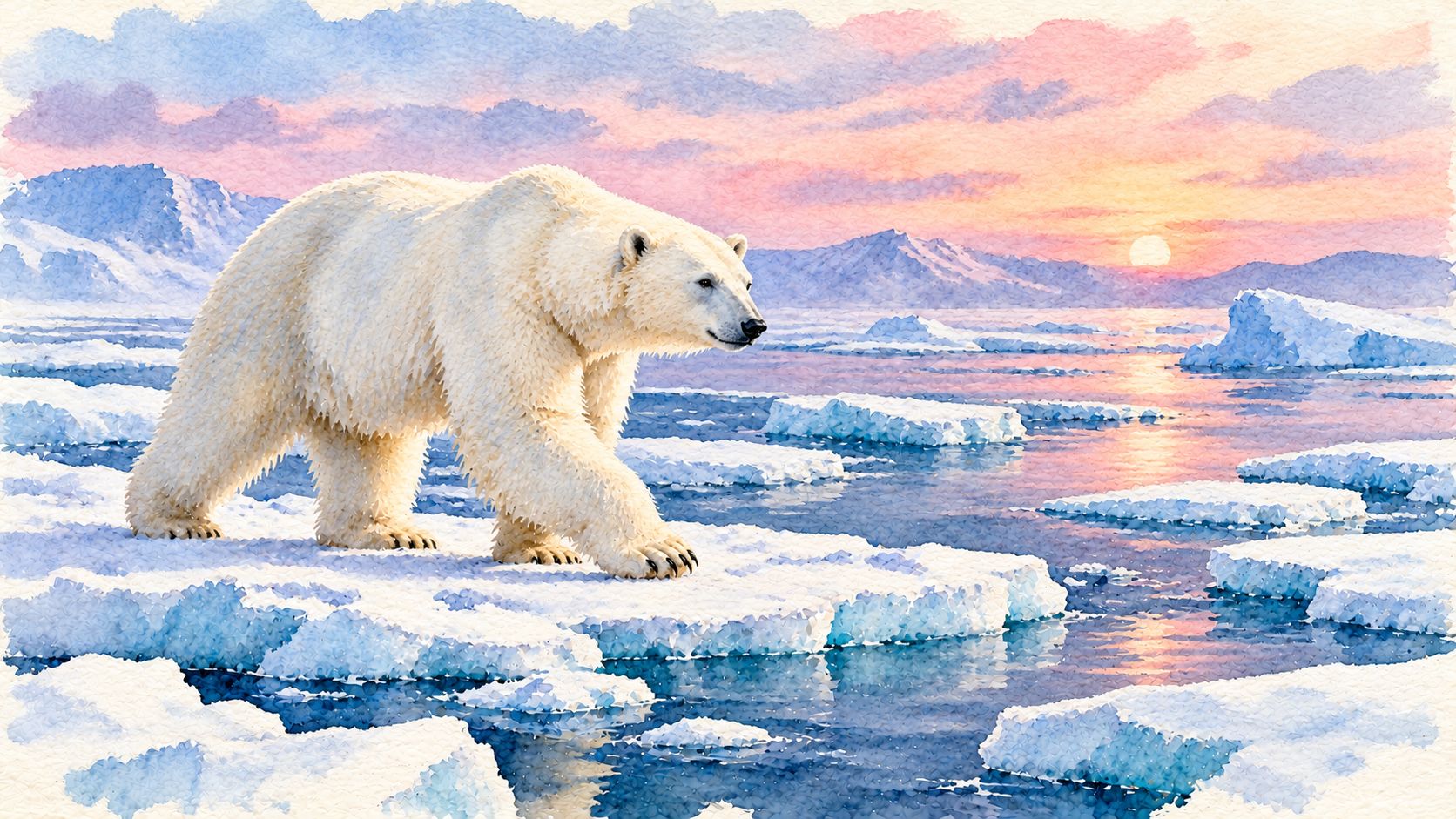
For a polar bear, sea ice is a hunting platform, a highway and a place to find a mate. Bears catch most of their seals from the ice, so when it melts each summer, many must come ashore and live off their fat reserves for months. As the Arctic warms, the ice is forming later and breaking up earlier in many regions, which means longer fasts and thinner bears. Because of this, the IUCN lists the polar bear as Vulnerable. The world population is roughly estimated at around 26,000 bears, but numbers in many subpopulations are still uncertain.
Cubs are born in snow dens in the middle of winter and weigh only about half a kilogram, smaller than a guinea pig. Twins are common.
A mother may go without food for around eight months while she dens, gives birth and nurses her cubs on her rich milk.
Cubs usually stay with their mother for about two and a half years, learning how to hunt seals before going off on their own.
Polar bears and grizzly bears can interbreed. The first confirmed wild hybrid was identified through genetic testing in 2006 in the Canadian Arctic.
Polar bears and penguins never meet in the wild. Polar bears live only in the Arctic, while wild penguins are found almost entirely in the Southern Hemisphere.
Sources and Further Reading
- IUCN Red List
- Polar Bears International
- WWF
- US Geological Survey (USGS)
- Norwegian Polar Institute
- Encyclopaedia Britannica
Frequently asked questions
Are polar bears really white?
No. Their fur is made of transparent, hollow hairs that look white because they scatter light, and their skin underneath is black.
Where do polar bears live?
They live around the Arctic in Canada, Alaska in the United States, Russia, Greenland and Norway's Svalbard islands.
What do polar bears eat?
They mainly eat ringed and bearded seals, especially the blubber, and sometimes scavenge whale carcasses or eat bird eggs.
Do polar bears hibernate?
Not truly. Only pregnant females spend the winter in snow dens, while other polar bears stay active.
How many polar bears are left?
The world population is roughly estimated at about 26,000, though many subpopulations have not been counted precisely.
Why are polar bears threatened?
The main threat is the loss of Arctic sea ice due to climate change, which makes it harder for them to hunt seals.