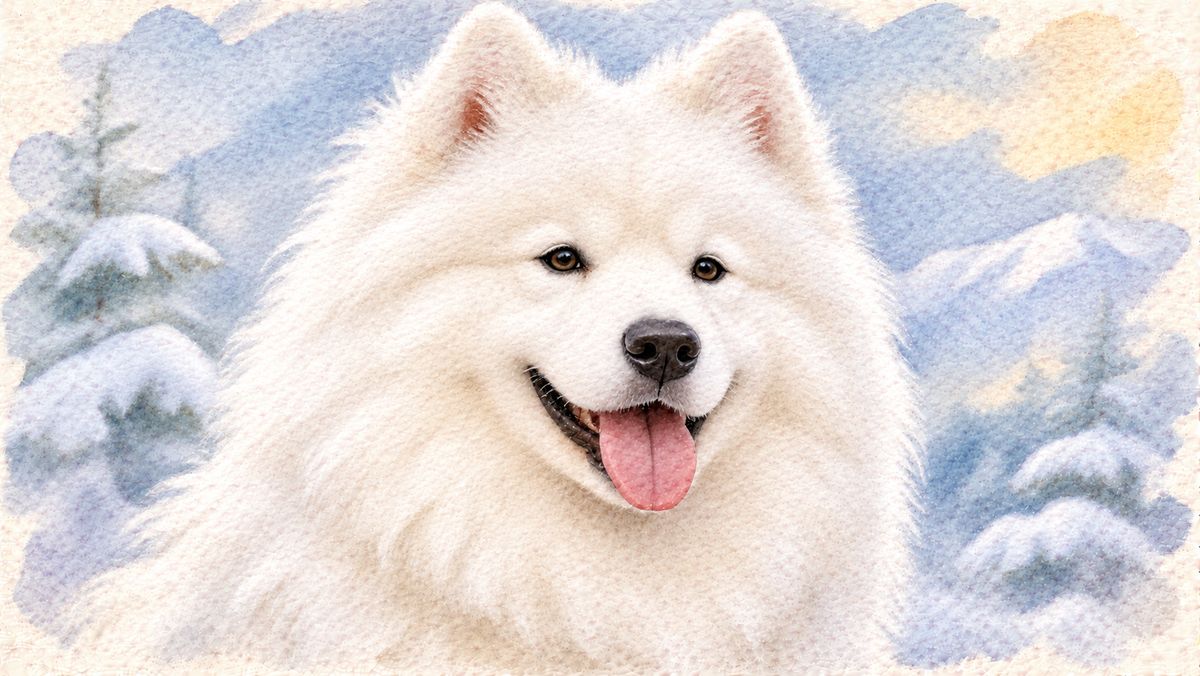
The Samoyed is a fluffy, snow-white Arctic dog best known for its famous "Sammy smile," the gently upturned corners of its mouth that make it look happy all the time. Originally bred in Siberia to herd reindeer, pull sleds and keep its people warm, this hardworking spitz breed has a cheerful personality to match its bright expression.
Today, the breed is loved around the world as a friendly, playful family companion. However, that beautiful coat and lively spirit come with real responsibilities. In this complete Samoyed dog breed guide, you will learn about its size, temperament, exercise needs, grooming, health, diet, history and whether this smiling snow dog is right for your home.
Samoyed at a Glance
| Trait | Details |
|---|---|
| Breed group | Working (AKC) |
| Height | 19 to 23.5 inches (48 to 60 cm) |
| Weight | 35 to 65 pounds (16 to 29 kg) |
| Life expectancy | 12 to 14 years |
| Coat | Thick double coat, weather resistant |
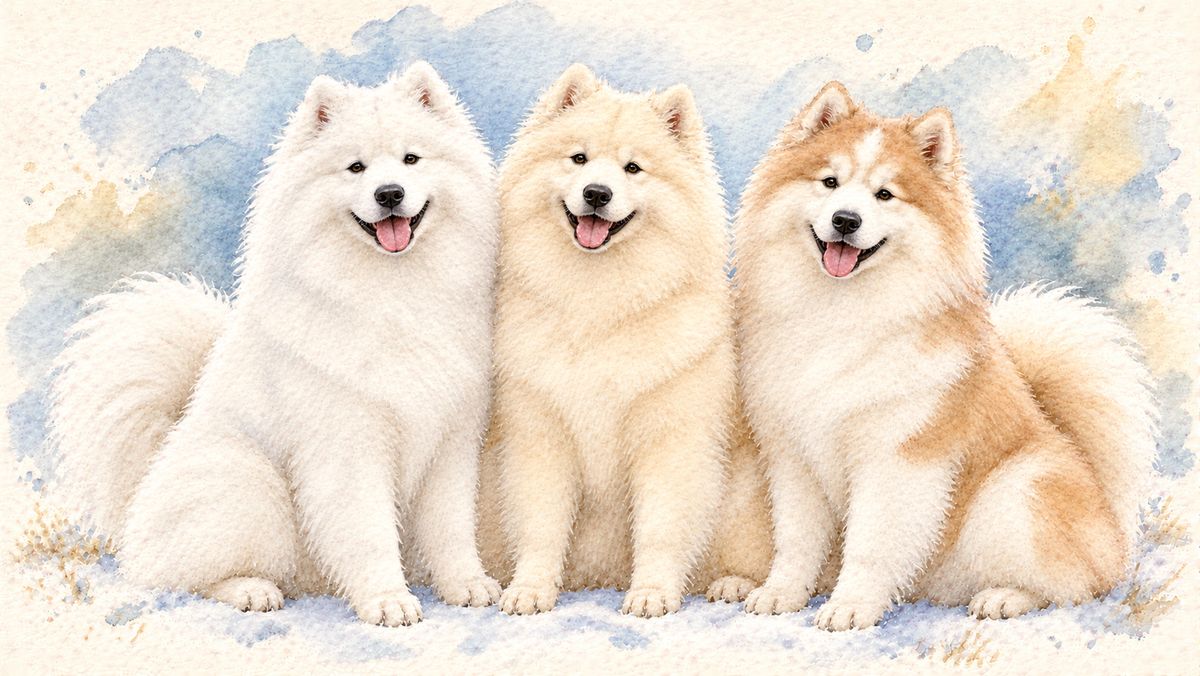
| Colors | White, cream, biscuit, white and biscuit |
| Shedding | Heavy; year-round, more in spring and fall |
| Energy level | High |
| Temperament | Friendly, gentle, playful, devoted, clever |
| Good for | Active families, cooler climates |
| Origin | Siberia (Russia) |
What Is a Samoyed?
This is a medium-sized working dog from the spitz family, a group of northern breeds with thick coats, pointed ears and curled tails. It takes its name from the Samoyedic peoples of Siberia, semi-nomadic reindeer herders who depended on these dogs for many daily tasks.
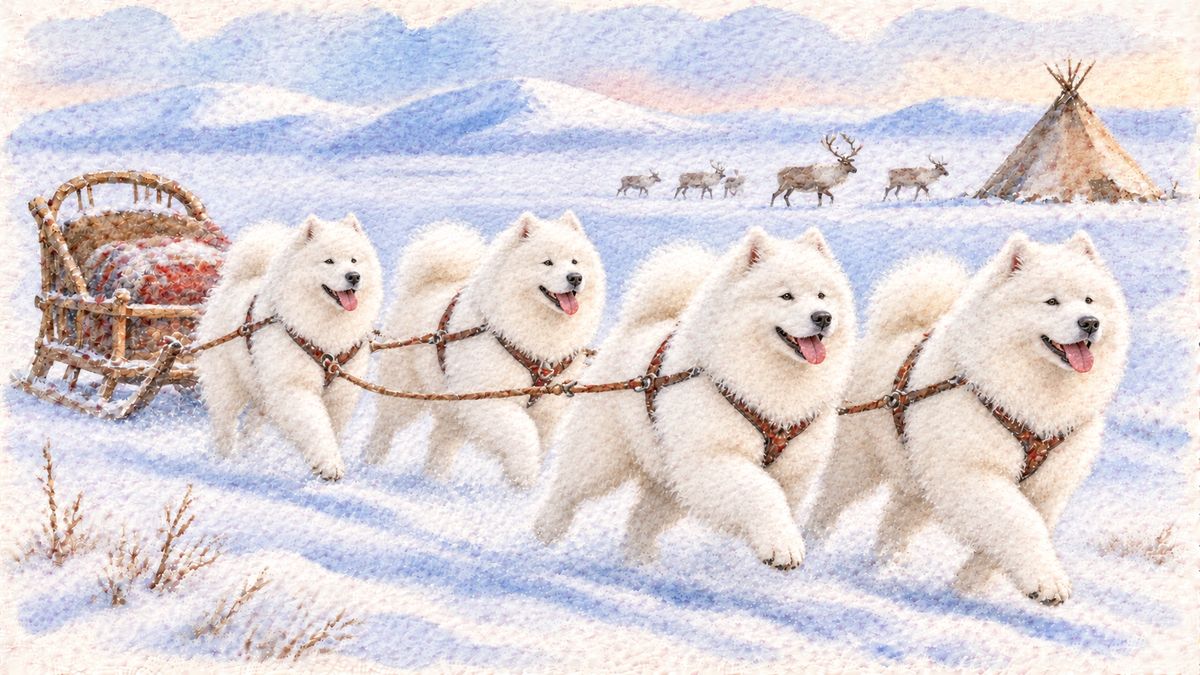
The dogs helped herd and guard reindeer, pulled sleds and even slept beside their families on cold Arctic nights for warmth. That close partnership helps explain why the breed is so people-oriented today. It is a member of the American Kennel Club's Working Group.
Even though few modern dogs herd reindeer, the breed still carries the instincts of its ancestors. Many enjoy pulling sleds or carts, hiking with a pack and taking part in herding trials. Others are simply happy to supervise family life from the middle of the living room.
Samoyed Size and Appearance
How Big Do Samoyeds Get?
They are medium-sized dogs, with males standing about 21 to 23.5 inches tall and weighing roughly 45 to 65 pounds. Females are slightly smaller, usually 19 to 21 inches tall and about 35 to 50 pounds.
The Samoyed size is balanced and athletic rather than bulky. Under all that fluff is a strong, agile body built for work in harsh conditions. The breed has a wedge-shaped head, dark almond-shaped eyes, thick erect ears and a plumed tail that curls over the back.
The Famous Smile
One of the breed's most charming features is its black lips, which curve up at the corners. This creates the well-known smile. Many people say the upturned lips also help keep drool from freezing into icicles on the face in very cold weather.
Coat and Colors
The breed has a thick double coat made up of a soft, dense undercoat and a longer, straight outer coat that stands away from the body. The coat is weather resistant and was designed to protect the dog in temperatures far below freezing.
While most people picture a pure white dog, accepted colors also include cream, biscuit, and white and biscuit. The coat often has a silvery sheen when light hits the tips of the outer hairs.
Samoyed Temperament and Personality
The Samoyed temperament is famously friendly and cheerful, and it is one of the main reasons people fall in love with the breed. These dogs are often described as:
- Friendly: Most are happy to greet everyone, including strangers, which makes them better welcoming committees than guard dogs.
- Gentle and devoted: They bond closely with their families and love to be included in daily life.
- Playful: They tend to keep a puppy-like sense of fun well into adulthood.
- Intelligent: They are quick learners and clever problem-solvers.
- Vocal: Many like to "talk," bark or howl to share their opinions.
- Hardworking: As a working breed, they are happiest when they have a job to do.
Because they are so social, these dogs do not enjoy being left alone for long periods. A bored or lonely dog may dig, chew or bark to entertain itself.
Their friendliness also means they are not reliable guard dogs. They may bark to announce a visitor, but they are far more likely to greet that visitor with a wagging tail than to scare anyone away.
Are Samoyeds Good Family Dogs?
Yes, Samoyeds are generally excellent family dogs, and their friendly nature is one of the main reasons families choose them. They are kind, gentle and devoted, and they usually do well with children who know how to treat dogs respectfully.
Their playful energy can be a little much for very young children, especially during adolescence. Supervise playtime and teach kids to interact calmly so everyone stays safe and happy.
Are Samoyeds Good With Other Pets?
Most get along well with other dogs, especially when raised together. Because they were bred to herd, some may try to chase or gently herd cats or small animals. Early socialization helps a Samoyed puppy learn good manners with people, pets and new environments.
Training a Samoyed
These dogs are smart and capable, but they also have an independent streak. Training works best when it is upbeat, consistent and rewarding. Harsh methods tend to backfire, while praise, treats and play keep them engaged.
Here are a few training tips for new owners:
- Start early. Begin training and socialization as soon as your puppy comes home.
- Keep it fun. Short, varied sessions hold their attention better than long, repetitive drills.
- Teach a solid recall. Their curious nature and herding instincts can lead them to wander.
- Manage barking. Teach a "quiet" cue and reward calm behavior.
- Give them a job. Many enjoy agility, herding, sledding, carting, obedience and pack hiking.
Exercise Needs
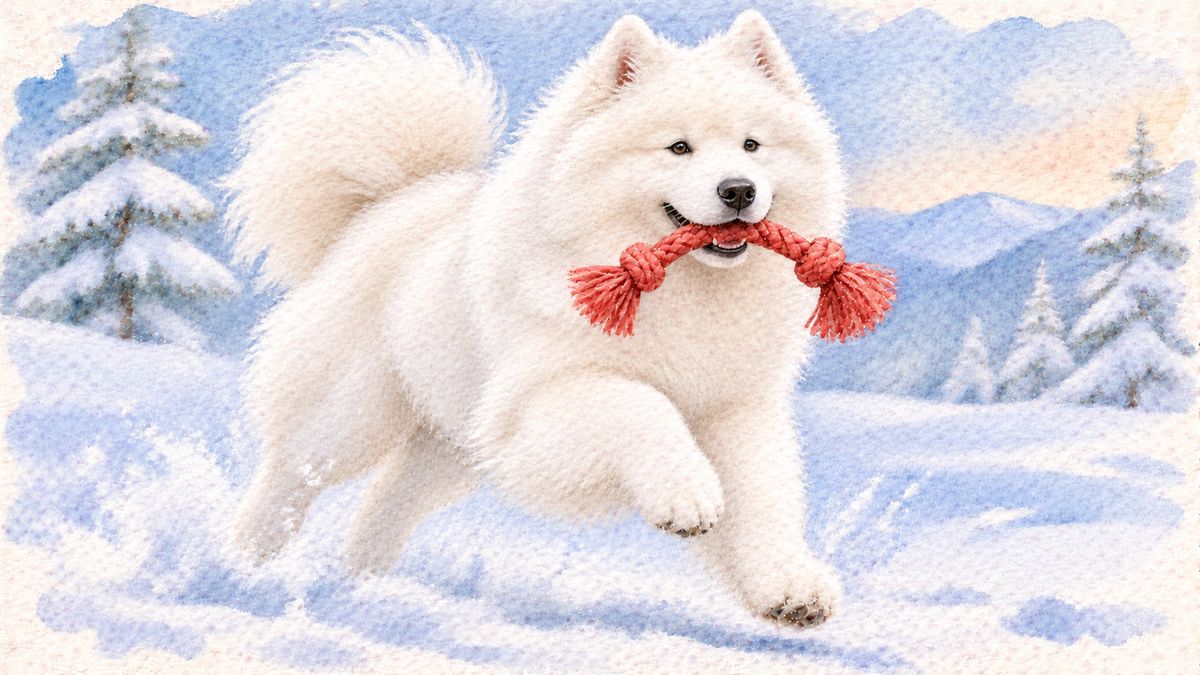
This is a high-energy breed that needs daily physical and mental exercise. Plan on at least an hour of activity each day, such as brisk walks, hikes, games of fetch or play in a secure yard.
Mental exercise matters just as much as physical activity. Puzzle toys, training games and dog sports help keep their clever minds busy. Without enough activity, they can become restless and may find their own entertainment, such as digging or chewing.
Because of their thick coat, these dogs love cold weather but can overheat in warm conditions. In summer, exercise during the coolest parts of the day, provide shade and fresh water, and never leave your dog in a parked car.
Samoyed Grooming
Do Samoyeds Shed?
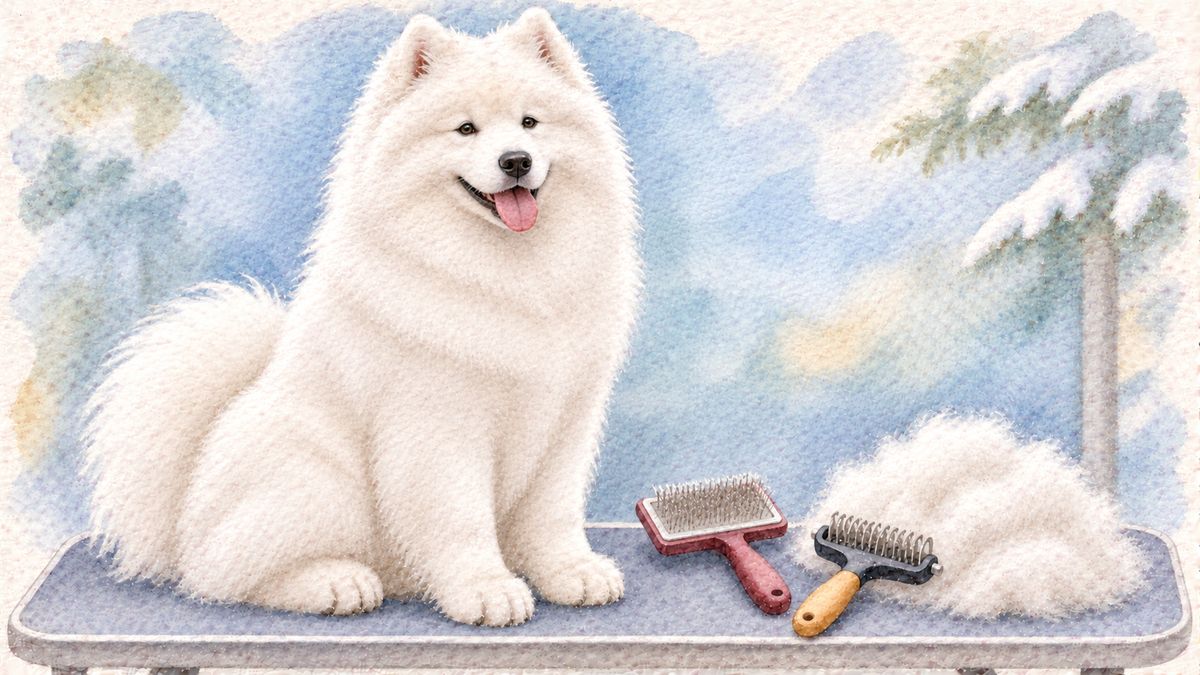
Yes, they shed a lot. They shed year-round, and they shed even more heavily in spring and fall when they "blow" their undercoat.
If you choose this breed, be prepared for white fur on your clothes, floors and furniture. Some owners joke that they could knit a sweater from the fluff they collect.
Grooming Routine
Regular Samoyed grooming keeps the coat clean, healthy and free of mats:
- Brushing: Brush daily, or at least several times a week, to remove dirt, debris and loose hair.
- Shedding season: Use an undercoat rake during heavy shedding periods to help remove loose fur.
- Bathing: Bathe occasionally. Make sure the coat is fully dry, as the thick undercoat holds moisture.
- No shaving: The double coat helps regulate temperature and protects the skin, so shaving is not recommended.
- Nails and teeth: Trim nails every few weeks and brush teeth several times a week.
- Ears: Check the ears weekly for dirt or redness.
Surprisingly, the coat tends to shed dirt well once it is dry and brushed, and many owners say the breed has little doggy odor.
Samoyed Health and Lifespan
The average Samoyed lifespan is about 12 to 14 years. The breed is generally healthy, but like all dogs, it may be prone to certain conditions. Responsible breeders screen their dogs, and concerns may include:
- Hip dysplasia: An abnormal formation of the hip joint.
- Eye conditions: Some eye disorders can affect the breed, so regular eye exams are helpful.
- Heart problems: Some lines may be affected, so heart screening is recommended.
- Kidney concerns: Some lines may carry an inherited kidney condition, so ask breeders about health testing.
Keeping your dog at a healthy weight, providing regular exercise and scheduling routine checkups all support long-term health. Because the thick coat can hide weight gain, run your hands over your dog's ribs regularly to check body condition. Always work with your veterinarian to plan vaccinations and preventive care.
Feeding and Nutrition
Adult dogs thrive on a complete and balanced dry or wet dog food that suits their age, size and activity level. Active working dogs may need more energy, while less active adults may need smaller portions.
Puppies need a complete and balanced puppy food during their first year to support healthy growth. Feeding the right amount helps young dogs grow at a steady pace, which supports developing joints. Follow the feeding guidelines on the package, monitor your dog's body condition and ask your veterinarian for advice. Treats are helpful for training but should only be a small part of daily calories.
History of the Samoyed
This is an ancient breed from Siberia. It is named after the Samoyedic peoples, who are believed to have migrated to the region from Asia many centuries ago. These people lived as reindeer herders, and their dogs were essential partners.
At first, the dogs may have helped hunt. Over time, their roles expanded to herding and guarding reindeer, pulling sleds and acting as family companions. On frigid nights, the dogs slept close to their people, sharing warmth inside tents.
In the late 1800s, explorers and travelers began bringing these dogs to England. The breed quickly became popular, helped by the support of Queen Alexandra, who kept these dogs and promoted them as show dogs and companions.
The breed's strength and endurance also made it a favorite on polar expeditions. These dogs were part of the team that accompanied Norwegian explorer Roald Amundsen on his famous journey to the South Pole in 1911. The first Samoyed registered by the American Kennel Club was a dog named Moustan of Argenteau, in 1906.
Samoyed vs Husky
The Samoyed and the Siberian Husky are both Siberian sled dogs, so they are often compared. The Husky comes in many colors, often has striking blue or multicolored eyes and is known for its independence and love of running. The Samoyed is usually white, cream or biscuit with dark eyes, has a fluffier coat and tends to be especially people-focused. Both breeds shed heavily and need plenty of exercise, so either one suits an active owner who does not mind fur.
Is a Samoyed Right for You?
A Samoyed could be a wonderful match if you:
- Want a friendly, affectionate and playful family dog
- Lead an active lifestyle with time for daily exercise
- Live in a cool or moderate climate
- Can commit to frequent brushing and lots of vacuuming
- Are home often or can include your dog in daily life
- Enjoy training and dog sports
A Samoyed may not be the best fit if you:
- Want a low-shedding or tidy dog
- Live in a very hot climate
- Are away from home for long hours each day
- Need a quiet dog, since many of these dogs are vocal
Finding a Samoyed Puppy
When searching for a puppy, look for a reputable breeder who health-tests their dogs, raises puppies in a home environment and is happy to answer your questions. Breed clubs and rescue groups are also excellent places to find adult dogs looking for new homes.
Fun Facts About the Samoyed
- The breed's upturned lips create its famous "Sammy smile."
- The breed helped Roald Amundsen's team reach the South Pole in 1911.
- The breed is named after the Samoyedic peoples of Siberia.
- These dogs once slept beside their families on cold nights to share warmth.
- Queen Alexandra helped make the breed popular in England.
- The first AKC-registered Samoyed was Moustan of Argenteau in 1906.
Frequently Asked Questions
How big do Samoyeds get?
Males usually stand 21 to 23.5 inches tall and weigh 45 to 65 pounds, while females are about 19 to 21 inches and 35 to 50 pounds.
Are Samoyeds good family dogs?
Yes. They are gentle, friendly and devoted, and they usually do well with respectful children. Supervise play with very young kids.
How long do Samoyeds live?
The typical lifespan is about 12 to 14 years with good care, regular exercise and veterinary checkups.
Do Samoyeds shed a lot?
Yes. They shed year-round and even more in spring and fall. Daily brushing helps manage the fluff.
Are Samoyeds hypoallergenic?
No. Their heavy shedding means they are not considered hypoallergenic. Allergy sufferers should spend time with the breed before deciding.
Why do Samoyeds smile?
The corners of their black lips curve upward, giving them a smiling expression. This feature is often said to help prevent drool from freezing on their faces in extreme cold.
Final Thoughts
The Samoyed is a joyful, affectionate and hardworking companion with a smile that can brighten any day. It needs plenty of exercise, regular grooming and a family that enjoys spending time together. If you are ready for the fluff and the fun, a Samoyed can bring years of loyal friendship and happiness to your home.