
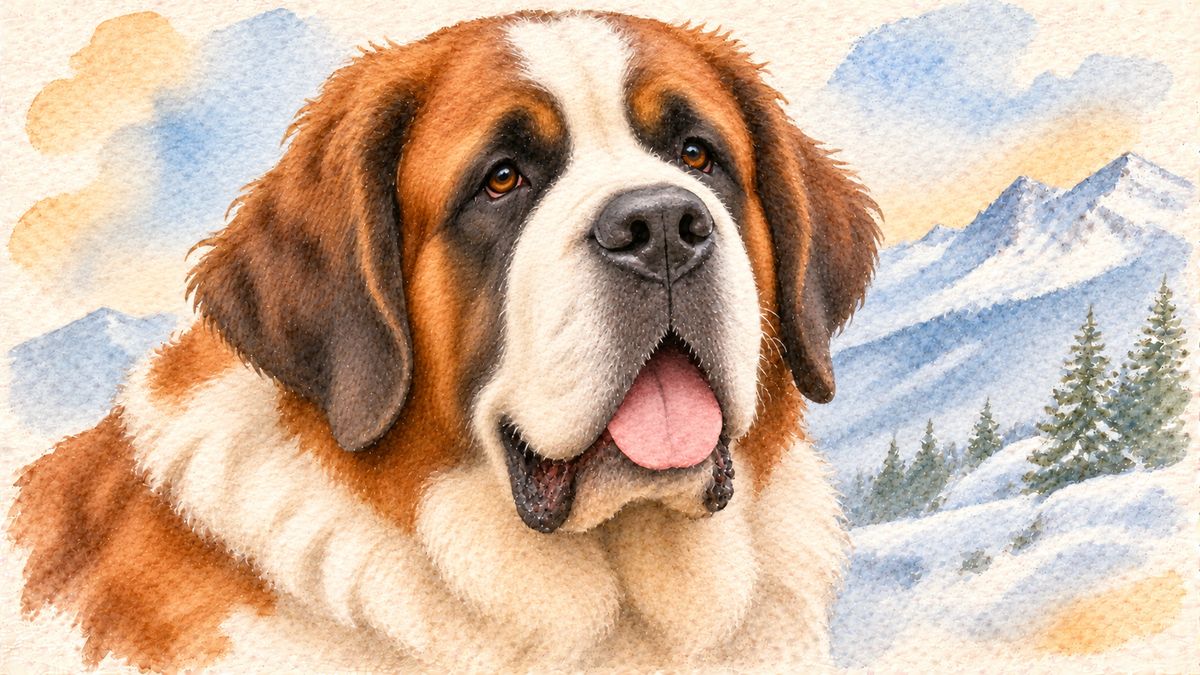
The Saint Bernard is one of the most recognizable dogs in the world, famous for its huge size, soulful eyes and legendary history of rescuing travelers lost in the snowy Swiss Alps. For centuries, these powerful dogs worked alongside monks high in the mountains, guiding and finding people caught in storms. Today, they are better known as calm, affectionate family companions with a heart as big as their paws.
Living with a gentle giant is a unique experience, though. This breed needs space, regular grooming and a family that does not mind a little drool. In this complete Saint Bernard dog breed guide, you will learn about its size, temperament, exercise needs, grooming, health, diet, history and whether this noble breed is the right fit for your home.
Saint Bernard at a Glance
| Trait | Details |
|---|---|
| Breed group | Working (AKC) |
| Height | 26 to 30 inches (66 to 76 cm) |
| Weight | 120 to 180 pounds (54 to 82 kg) |
| Life expectancy | About 8 to 10 years |
| Coat | Shorthaired or longhaired; dense |
| Colors | Deep brown to brownish-yellow or red, with white markings |
| Shedding | Heavy; seasonal coat blows |
| Energy level | Low |
| Temperament | Gentle, patient, friendly, loyal, calm |
| Good for | Families with space, experienced or committed owners |
| Origin | Swiss Alps (Switzerland) |
What Is a Saint Bernard?
This is a giant working breed from Switzerland. It takes its name from the Great St. Bernard Hospice, a mountain refuge for travelers crossing one of the high passes between Switzerland and Italy. The hospice itself was named after Bernard of Menthon, a monk who is honored as the patron saint of mountaineers and skiers.
The monks at the hospice kept large dogs to help guide travelers through snow and fog and to locate people trapped after storms. Over time, these dogs became famous across Europe as rescue heroes. Today, the breed is a member of the American Kennel Club's Working Group and is loved for its easygoing, friendly nature.
Saint Bernard Size and Appearance
How Big Do Saint Bernards Get?
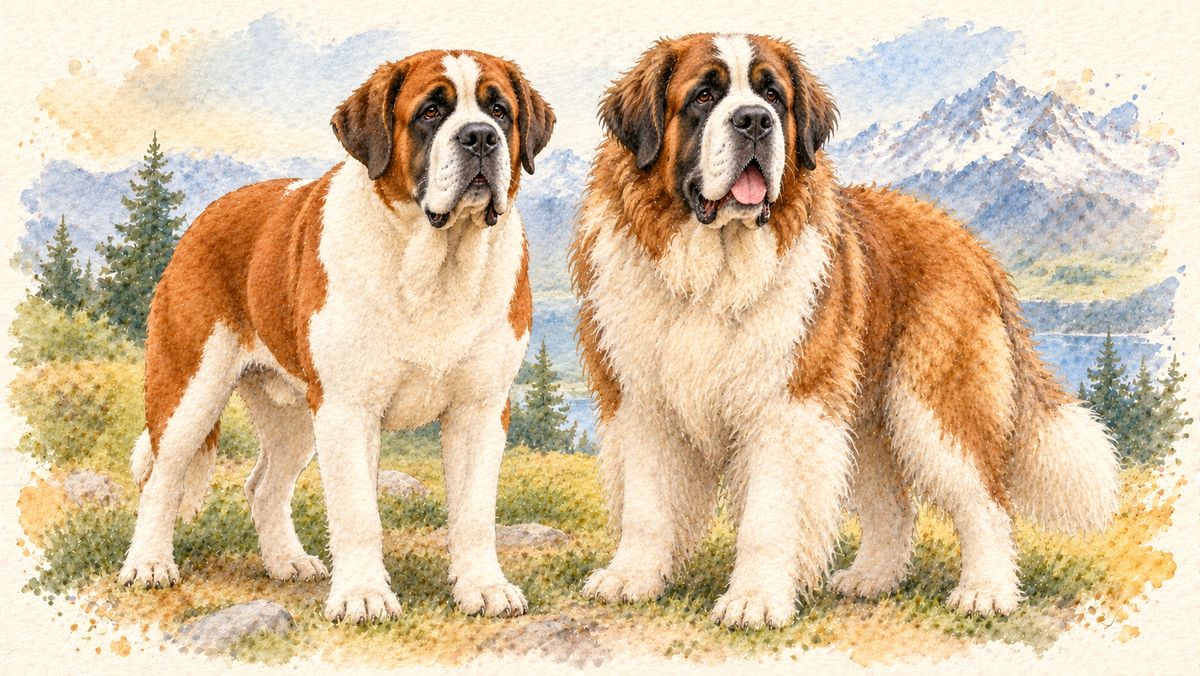
They are true giants, with males standing about 28 to 30 inches tall and weighing roughly 140 to 180 pounds. Females are a bit smaller, usually 26 to 28 inches tall and around 120 to 140 pounds. Some individual dogs can be even larger.
The Saint Bernard size is matched by its powerful, muscular build. It has a massive head, a short and broad muzzle, a wrinkled brow and gentle, intelligent eyes. Its ears are medium sized and hang close to the head, and its tail is long and heavy.
Puppies grow very quickly. A puppy may gain several pounds a week during peak growth, and most do not reach full maturity until they are around two years old.
Coat and Colors
The breed comes in two coat varieties: shorthaired and longhaired. The shorthaired coat is dense, smooth and tough, while the longhaired coat is medium to long and may be slightly wavy, with feathering on the legs and a bushy tail. Both types are thick and well suited to cold weather.
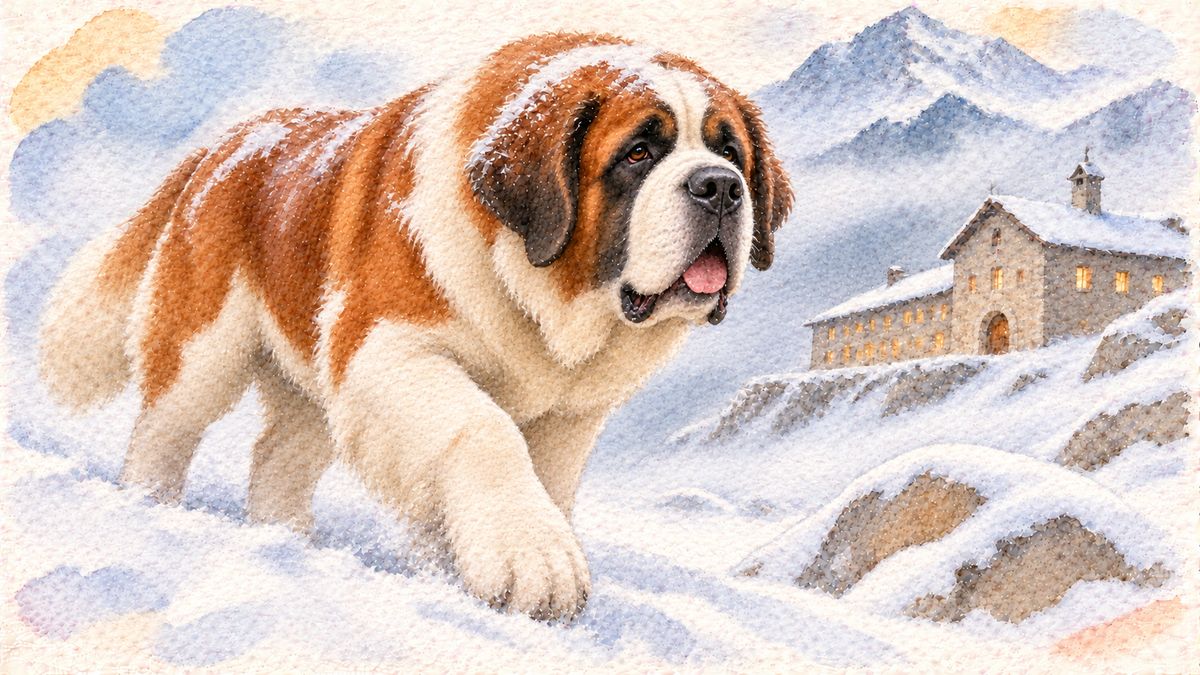
Colors range from deep brown to brownish-yellow and red, always combined with white. Common white markings include a white chest, feet, tail tip and a white blaze on the face. Many dogs also have a darker "mask" around the eyes and ears.
Saint Bernard Temperament and Personality
The Saint Bernard temperament is one of the breed's biggest selling points. Despite its imposing size, this dog is usually calm, kind and remarkably patient. It is often described as:
- Gentle: These dogs tend to move slowly and carefully, and they are known for their soft, mellow nature.
- Friendly: Most are sociable with people and enjoy meeting guests once they have been introduced.
- Loyal and devoted: They form deep bonds with their families and like to stay close to their people.
- Intelligent: They learn quickly, though they can be a little slow to respond when they are not in the mood.
- Watchful: Their size and deep bark make them natural deterrents, even though they are rarely aggressive.
This dog is happiest as part of family life, not left alone in a yard. Because it bonds closely with its people, it may not enjoy long hours by itself.
Are Saint Bernards Good Family Dogs?
Yes, they are generally excellent family dogs, known for their patience and tolerance with children. Their calm nature makes them affectionate companions for kids who know how to treat dogs respectfully.
That said, their size is a real consideration. A friendly tail wag or a playful bump can easily knock over a toddler. Always supervise young children around the dog, and teach kids not to climb on or ride the dog.
Are Saint Bernards Good With Other Pets?
These dogs usually get along well with other dogs and even cats, especially if they are raised with them. Early socialization helps a Saint Bernard puppy grow into a confident, well-mannered adult who is relaxed around new animals, people and places.
Training a Saint Bernard
Training is not optional with a giant breed. A dog that weighs more than many adults must learn to walk politely on a leash, greet people without jumping and respond reliably to basic cues. The good news is that the breed is intelligent and eager to please their families.
Here are a few training tips for new owners:
- Start while your puppy is small. Teach good manners before your dog weighs 100 pounds or more.
- Use positive reinforcement. Praise, treats and gentle encouragement work best for this sensitive breed.
- Focus on leash skills. Loose-leash walking is essential, since a pulling giant can be hard to control.
- Discourage jumping early. What is cute in a puppy can be dangerous in a full-grown giant.
- Keep sessions short and upbeat. These dogs can lose interest with long, repetitive drills.
Many also enjoy activities such as obedience, cart pulling, weight pulling and therapy work.
Exercise Needs
The Saint Bernard has a low energy level compared with many working breeds. A daily walk and some moderate play are usually enough to keep it fit and content. Most adults are happy to relax at home for much of the day.
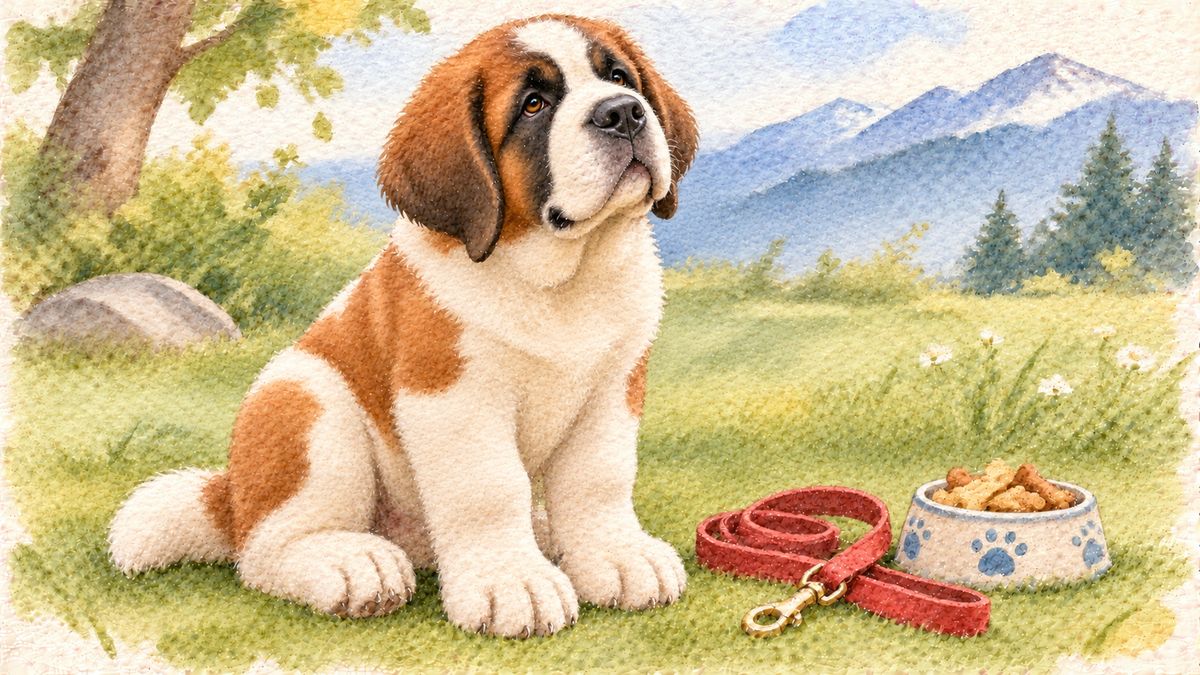
Puppies need special care. Because their bones and joints are growing rapidly, avoid long runs, repeated jumping and stairs during the first year or so. Gentle play and short walks are best until your veterinarian says your dog is ready for more.
The breed was built for snow and cold, so they handle winter well but struggle in heat. In warm weather, exercise them in the early morning or evening, provide shade and fresh water, and never leave them in a parked car.
Saint Bernard Grooming
Do Saint Bernards Shed?
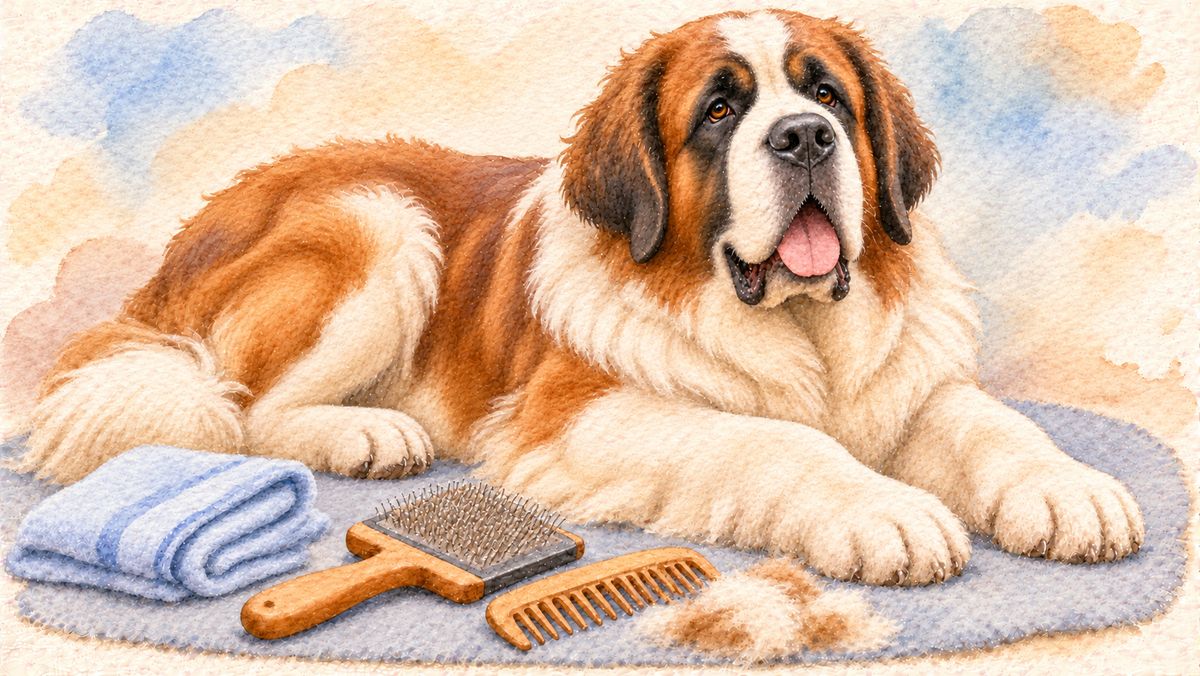
Yes, this breed sheds heavily, especially when they "blow" their coat once or twice a year. Both the shorthaired and longhaired varieties shed, so expect to find dog hair on your floors and furniture.
Do Saint Bernards Drool?
Yes, most of these dogs drool quite a bit, particularly after drinking, eating or exercising. Many owners keep a towel handy to wipe their dog's mouth and jowls.
Grooming Routine
Regular Saint Bernard grooming keeps the coat healthy and helps manage shedding:
- Brushing: Brush at least once or twice a week, and daily during heavy shedding seasons.
- Bathing: Bathe as needed. Because of the dog's size, many owners use a professional groomer or a walk-in tub.
- Face care: Wipe the jowls and facial folds regularly to keep them clean and dry.
- Ears and eyes: Check ears weekly for dirt or redness, and keep the area around the eyes clean.
- Nails: Trim nails every few weeks to keep them from growing too long.
- Teeth: Brush your dog's teeth several times a week to support good dental health.
Saint Bernard Health and Lifespan
The Saint Bernard lifespan is shorter than that of smaller breeds, typically about 8 to 10 years. This is common for giant dogs, which tend to age faster than small ones. Good care, a healthy weight and regular veterinary visits can help your dog enjoy as many happy years as possible.
Like all breeds, they can be prone to certain health conditions. Responsible breeders screen their dogs, and common concerns may include:
- Hip and elbow dysplasia: Abnormal development of the joints, which is common in large and giant breeds.
- Bloat (gastric dilatation-volvulus): A serious, sudden condition affecting deep-chested dogs that needs emergency veterinary care.
- Eye conditions: Some dogs may have eyelid problems, so regular eye checks are helpful.
- Heart conditions: Some lines may be affected, so heart screening can be useful.
Keeping your dog lean is one of the best things you can do for its joints. Always work with your veterinarian to plan checkups, vaccinations and preventive care.
Feeding and Nutrition
This breed does best on a complete and balanced dog food made for large or giant breeds. These formulas are designed to support healthy bones and joints and to provide the right balance of energy for big dogs.
Giant-breed puppies should eat a puppy food made for large breeds, which helps them grow at a steady, controlled rate. Portion sizes depend on your dog's age, weight and activity level, so follow the feeding guidelines on the package and ask your veterinarian for advice. Many owners feed two or more smaller meals a day rather than one large meal.
History of the Saint Bernard
The breed's story is closely tied to the Great St. Bernard Pass, a high and dangerous route through the Alps at roughly 8,000 feet (about 2,470 meters). Around the 11th century, Bernard of Menthon founded a hospice there to shelter travelers and pilgrims crossing the mountains.
Records suggest that large dogs were living at the hospice by the late 1600s. At first they may have served as watchdogs and companions, but the monks soon realized the dogs had a remarkable ability to find paths in deep snow and to locate people buried after avalanches. The dogs often worked in small teams, finding stranded travelers and helping guide them to safety.
The most famous of these rescue dogs was Barry, who worked at the hospice in the early 1800s. He is often credited with saving around 40 lives. Today, Barry's preserved body is displayed at the Natural History Museum in Bern, Switzerland.
The breed's fame spread through Europe in the 1800s, and it was sometimes known by other names, including "Barry dogs." The name "Saint Bernard" became widely used later in the century. The American Kennel Club recognized the breed in 1885.
Popular culture has made the breed even more famous. The image of a rescue dog with a small barrel around its neck comes from art and legend rather than real hospice practice. The 1992 family film Beethoven also introduced a new generation to this lovable, slobbery giant.
Saint Bernard vs Newfoundland
The Saint Bernard and the Newfoundland are often compared because both are gentle, giant working dogs with famous rescue histories. The Swiss breed is known for mountain snow rescue, while the Newfoundland comes from Canada and is famous for water rescue. Newfoundlands are usually solid black, brown or black-and-white, and they have a heavier, water-resistant coat. Both breeds drool and shed, so the choice often comes down to looks and personal preference.
Is a Saint Bernard Right for You?
A Saint Bernard could be a wonderful match if you:
- Want a calm, affectionate and patient family dog
- Have a home with enough space for a giant breed
- Live in a cool or mild climate
- Can commit to regular brushing and managing drool
- Are prepared for the costs of feeding and caring for a giant dog
- Can provide early training and socialization
A Saint Bernard may not be the best fit if you:
- Live in a small apartment or a very hot climate
- Prefer a tidy home with little dog hair
- Want an energetic jogging or hiking partner
- Are away from home for long hours each day
Finding a Saint Bernard Puppy
When looking for a Saint Bernard puppy, choose a reputable breeder who health-tests their dogs, raises puppies in a home environment and will answer your questions openly. Meeting the puppy's parents can give you a good idea of size and temperament. Breed clubs and Saint Bernard rescue groups are also great places to find adult dogs that need loving homes.
Fun Facts About the Saint Bernard
- The Saint Bernard is named after the Great St. Bernard Hospice in the Swiss Alps.
- A famous rescue dog named Barry is credited with saving about 40 people in the early 1800s.
- The classic brandy barrel around the neck is mostly a legend made popular by artists.
- The breed comes in two coat types: shorthaired and longhaired.
- The breed is considered a national symbol of Switzerland.
- The AKC recognized the breed in 1885, making it one of its earliest recognized breeds.
Frequently Asked Questions
How big do Saint Bernards get?
Adult males usually stand 28 to 30 inches tall and weigh 140 to 180 pounds, while females are about 26 to 28 inches and 120 to 140 pounds.
Are Saint Bernards good family dogs?
Yes. They are known for being gentle and patient with children. Because of their size, they should always be supervised around toddlers.
How long do Saint Bernards live?
The average Saint Bernard lifespan is about 8 to 10 years, which is typical for giant breeds.
Do Saint Bernards shed a lot?
Yes. They shed heavily, especially during seasonal coat changes. Regular brushing helps keep loose hair under control.
Do Saint Bernards drool?
Most of them drool, especially after eating, drinking or exercise. Keeping a towel nearby is a smart habit for owners.
Did Saint Bernards really carry barrels of brandy?
The barrel is mostly a legend made popular by paintings. The real hospice dogs were valued for finding paths and locating lost travelers in the snow.
Final Thoughts
The Saint Bernard is a true gentle giant, combining a heroic rescue history with a calm, loving personality. This breed needs space, training, grooming and a tolerance for drool, but it repays its family with endless loyalty and affection. If you have room in your home and your heart, a Saint Bernard may be the most devoted companion you will ever know.