
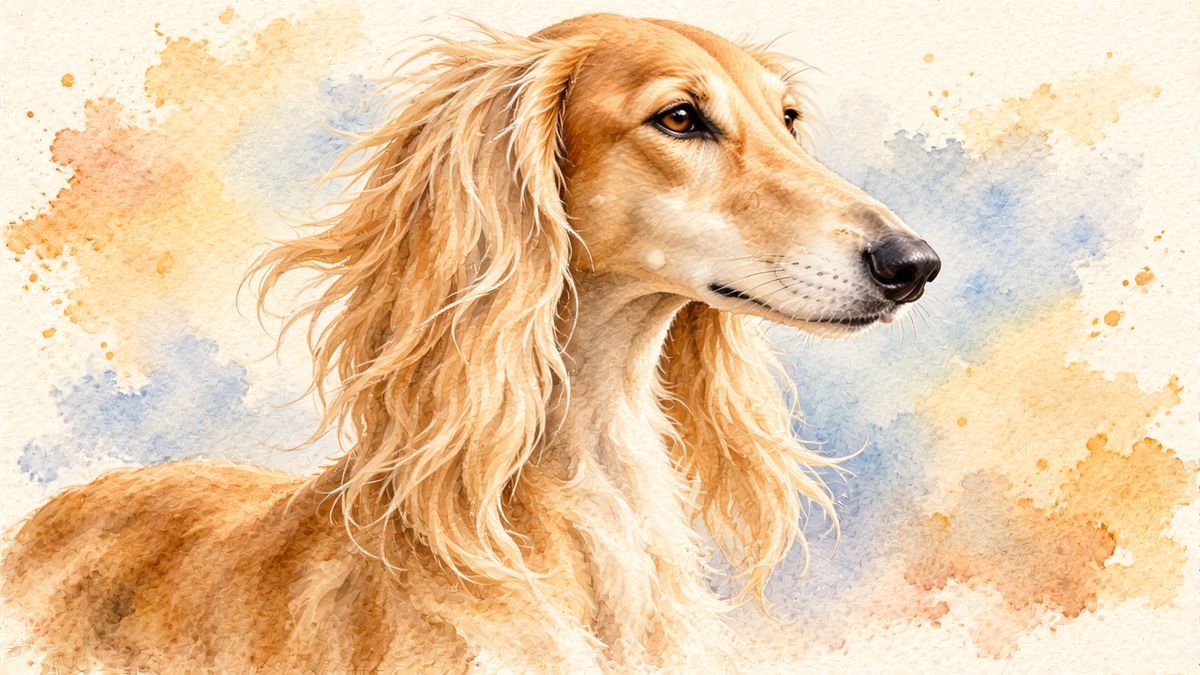
The Saluki is one of the oldest and most elegant dog breeds in the world, a slender sighthound whose graceful lines have been admired for thousands of years. Bred to chase gazelles across desert sands, this dog combines remarkable speed with impressive stamina. Its long legs, deep chest and silky feathered ears give it a look that is both athletic and refined.
Behind that dignified appearance is a gentle, sensitive and independent companion. This hound can be wonderfully affectionate with its family, yet it also keeps a strong hunting instinct and a mind of its own. In this complete Saluki dog breed guide, you will learn about its size, temperament, exercise needs, grooming, health, diet, history and whether this ancient hound is right for your home.
Saluki at a Glance
| Trait | Details |
|---|---|
| Breed group | Hound (AKC) |
| Height | 22 to 28 inches (56 to 71 cm) |
| Weight | 35 to 65 pounds (16 to 29 kg) |
| Life expectancy | About 10 to 17 years (many live 12 to 14) |
| Coat | Short and silky; feathered or smooth |
| Colors | White, cream, fawn, golden, red, grizzle and tan, black and tan, tricolor |
| Shedding | Light to moderate |
| Energy level | Medium, with bursts of high speed |
| Temperament | Graceful, gentle, independent, loving, reserved |
| Good for | Active owners, homes with secure fencing |
| Origin | Middle East (Fertile Crescent) |
What Is a Saluki?
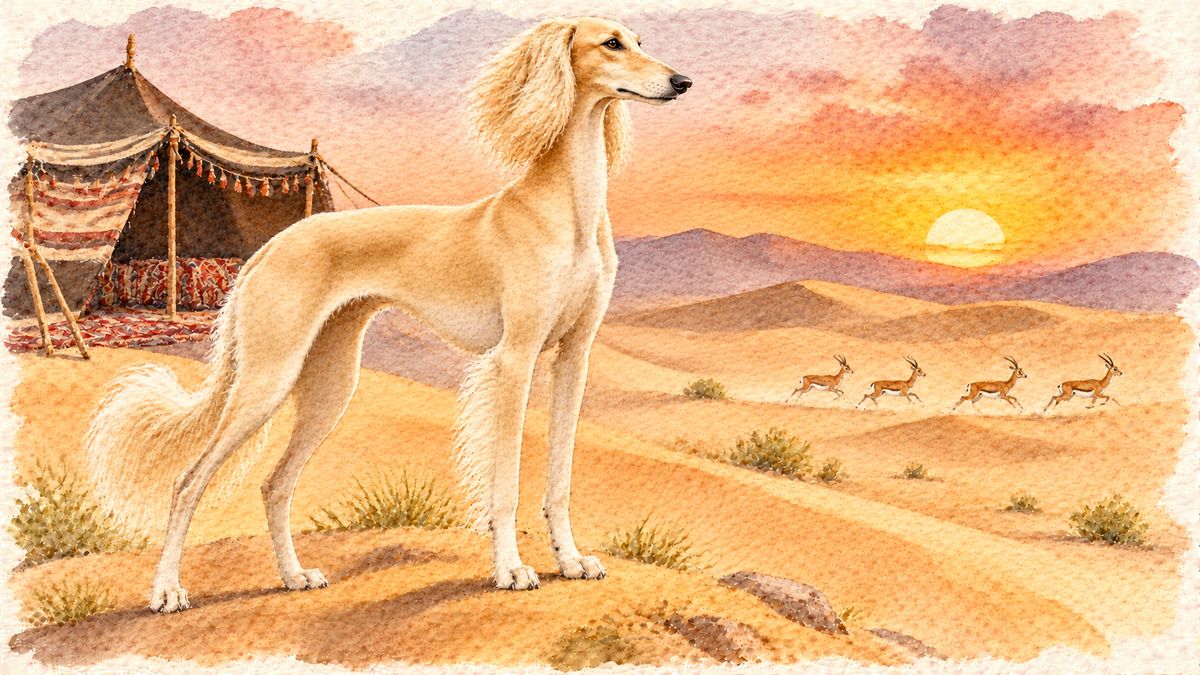
This breed is a sighthound, which means it hunts mainly by sight and speed rather than by scent. It originated in the Middle East, where nomadic tribes and royalty used these dogs to hunt gazelle, hare and other fast game across open desert. Because of this history, the breed has also been called the Persian Greyhound, the Gazelle Hound and the Royal Dog of Egypt.
Today, the breed belongs to the American Kennel Club's Hound Group. While few modern dogs hunt gazelles, many still enjoy lure coursing, a sport that lets sighthounds chase a moving lure across a field. At home, most are quiet, clean and calm companions that love a soft spot on the sofa.
This contrast surprises many new owners. Outdoors, the breed is a focused athlete. Indoors, it is often a relaxed, almost cat-like companion that enjoys warmth, comfort and gentle attention.
Saluki Size and Appearance
How Big Do Salukis Get?
They are medium to large dogs, with males standing about 23 to 28 inches tall at the shoulder and females about 22 to 27 inches. They usually weigh between 35 and 65 pounds. Despite their height, they look light and lean because of their narrow build.
The Saluki size and shape reflect its purpose as a long-distance runner. It has a long, narrow head, large dark or hazel eyes, long ears covered in silky hair, a deep chest and long, muscular legs. Its tail is long and curved and often carries feathering on the underside.
Coat and Colors
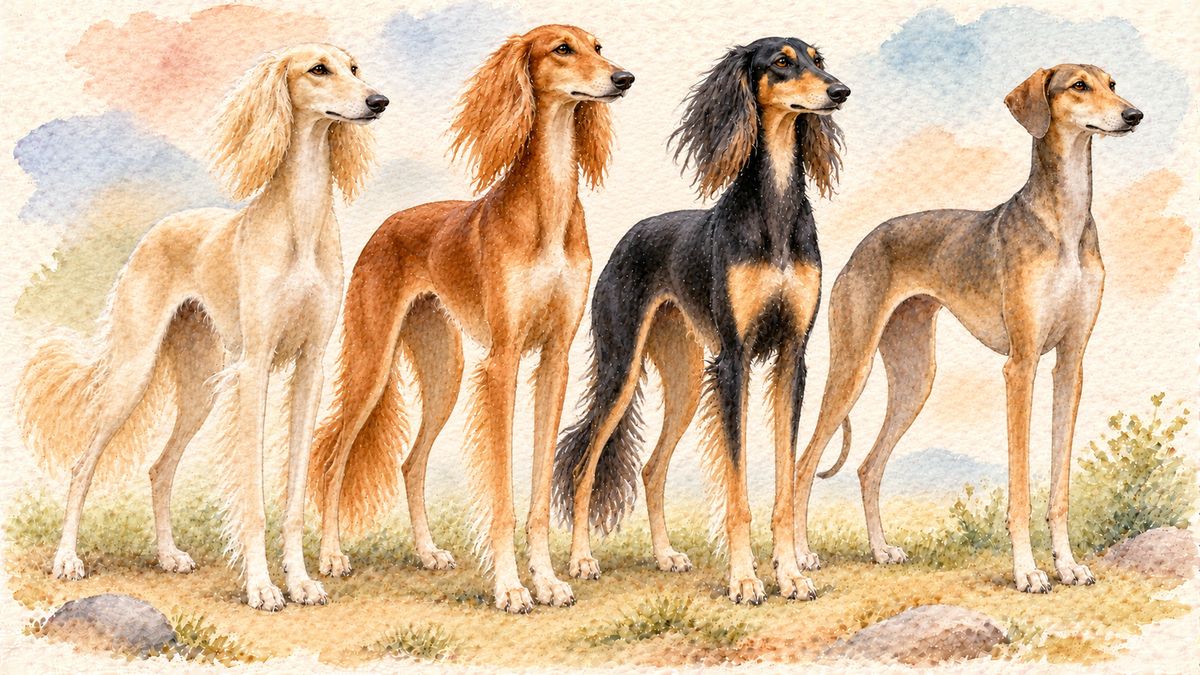
The breed comes in two coat types. The feathered variety has a smooth, silky body coat with longer, soft hair on the ears, the backs of the legs and the tail. The smooth variety has the same short, sleek coat but without the feathering.
Colors are wonderfully varied. They include white, cream, fawn, golden, red, grizzle and tan, black and tan, and tricolor (white, black and tan). Some dogs also have a darker mask or particolor markings.
Saluki Temperament and Personality
The Saluki temperament blends of gentle affection and independent spirit. This breed is often described as:
- Graceful: Every movement looks smooth and effortless, from a slow walk to a full gallop.
- Gentle and loving: These dogs are usually affectionate and devoted with their own families.
- Independent: They think for themselves and are not as eager to obey as some working breeds.
- Reserved with strangers: Many are polite but aloof with people they do not know.
- Sensitive: They respond poorly to harsh handling and prefer a calm, quiet household.
- Quiet: They are generally not big barkers.
Because they were bred to chase, these hounds have a very strong prey drive. A running squirrel, rabbit or cat can trigger an instant sprint, and once they are in full chase, they may not respond to calls.
Are Salukis Good Family Dogs?
They can be good family dogs for calm households with older, respectful children. They are gentle and loving with the people they know, but they usually prefer quiet affection over rough play.
Young children who run, shriek and grab may be too much for this sensitive breed. As with any dog, supervise interactions and teach kids how to approach and handle a dog gently.
Are Salukis Good With Other Pets?
These hounds often enjoy the company of other dogs, especially other sighthounds of similar size. Small pets are a different story. Because of their strong prey drive, they may not be safe with cats, rabbits or small rodents unless raised with them, and even then caution is wise.
Early socialization is important. Gently introducing a Saluki puppy to new people, sounds, places and friendly dogs will help it become a confident, relaxed adult.
Training a Saluki
Training this breed takes patience. These dogs are intelligent, but they are also independent and easily bored by repetitive drills. They respond best to positive reinforcement, gentle encouragement and short, varied sessions.
Here are a few training tips for new owners:
- Start early. Begin socialization and basic manners as soon as your puppy comes home.
- Keep it positive. Use praise, treats and play. Harsh corrections can make this sensitive dog withdraw.
- Keep sessions short. A few minutes of fun training several times a day works better than one long session.
- Work on recall, but stay realistic. Even a well-trained sighthound may ignore you when it spots prey.
- Try dog sports. Many enjoy lure coursing, agility, obedience and rally.
Exercise Needs
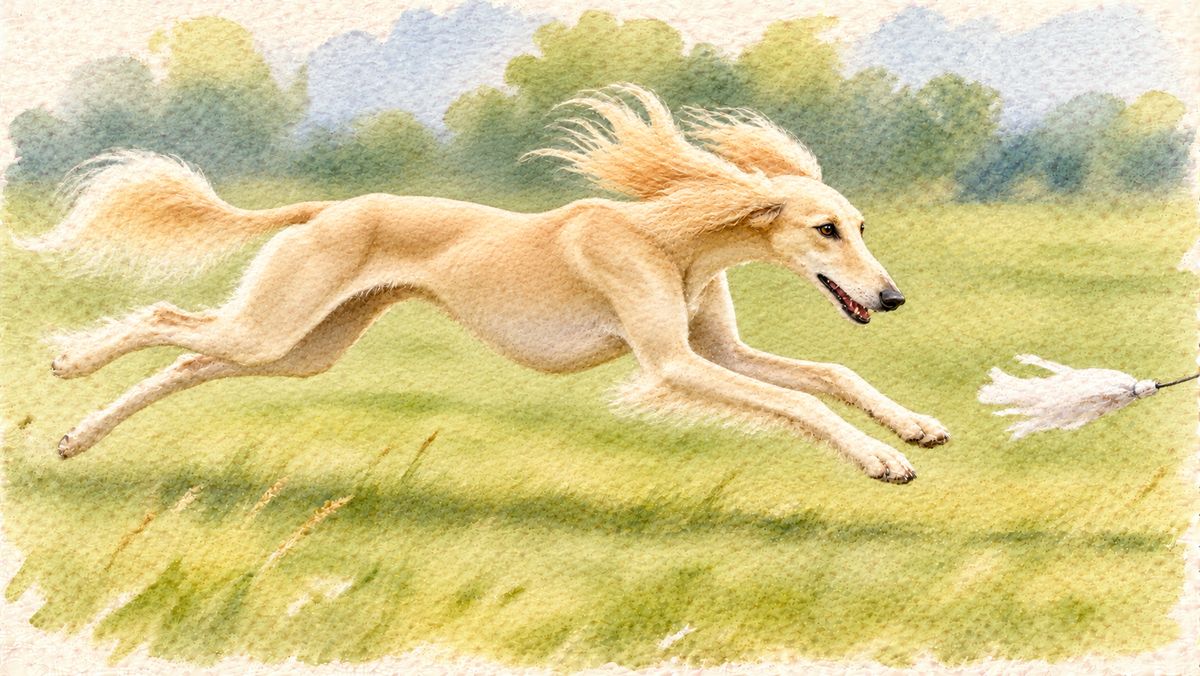
The breed has a medium energy level overall, but they need daily exercise and regular chances to run. A couple of good walks each day, plus time to sprint in a safely enclosed area, will keep most adults happy and fit.
These dogs are built for speed and endurance. They are often counted among the fastest dog breeds, and they can keep up a strong pace over long distances. Because of this, they should only be allowed off leash in securely fenced areas.
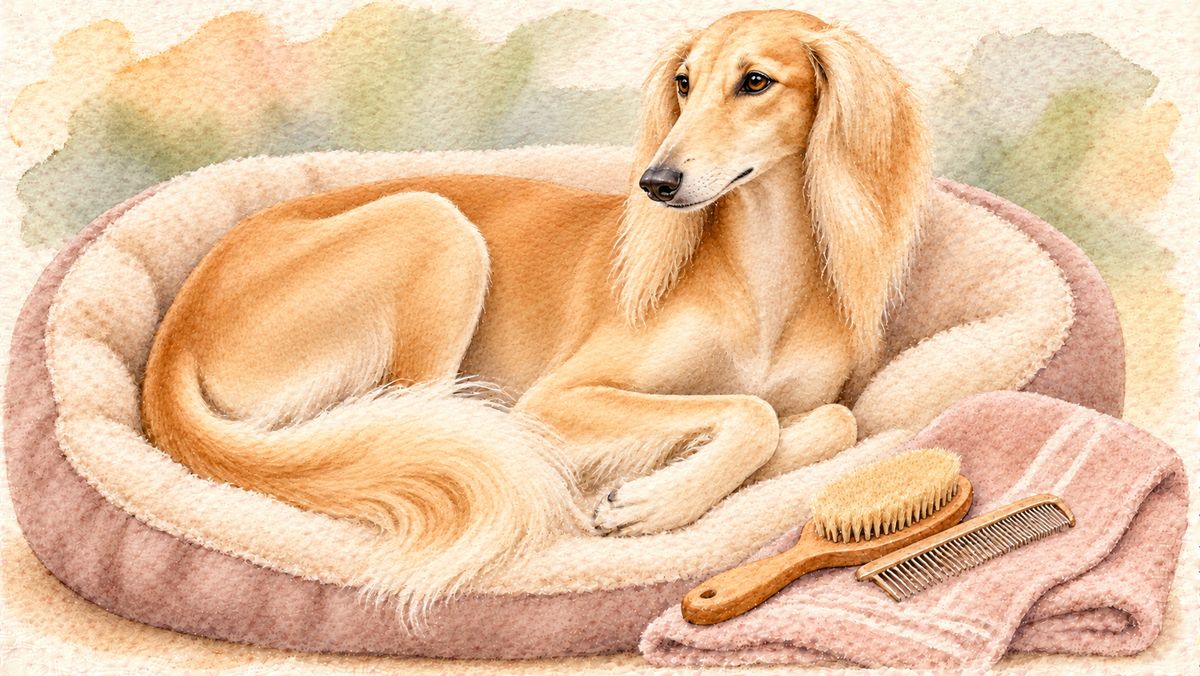
A tall, secure fence is a must. These hounds can jump surprisingly high, and their prey drive may tempt them to escape. After exercise, most are happy to curl up and nap for hours, and they often enjoy a soft, padded bed because they have little body fat.
Saluki Grooming
Do Salukis Shed?
They shed only a little to a moderate amount, and their short coat is easy to care for. They also tend to have very little doggy odor, which many owners appreciate.
Grooming Routine
Saluki grooming is fairly simple:
- Brushing: Brush the coat about once a week to remove loose hair and keep it shiny.
- Feathering: Gently comb the longer hair on the ears, legs and tail to prevent tangles.
- Bathing: Bathe occasionally, or when your dog gets dirty.
- Ears: Check the ears weekly, since long feathered ears can trap food and dirt.
- Nails: Trim nails every few weeks to keep feet comfortable.
- Teeth: Brush your dog's teeth several times a week to support dental health.
Because they are lean and have a thin coat, these dogs can feel the cold. A dog coat or sweater can help in chilly weather.
Saluki Health and Lifespan
The Saluki lifespan is fairly long for a dog of its size. The AKC lists a range of about 10 to 17 years, and many live around 12 to 14 years with good care.
The breed is generally healthy, but like all dogs, it can be prone to certain conditions. Responsible breeders screen their dogs, and concerns may include:
- Heart conditions: Heart screening is recommended for breeding dogs.
- Eye conditions: Regular eye checks help catch problems early.
- Certain cancers: As with many breeds, some cancers can occur in older dogs.
- Anesthesia sensitivity: Many sighthounds have little body fat, so it is wise to discuss anesthesia with your veterinarian before any procedure.
Their lean build is normal, so a healthy dog may look thinner than you expect, with hip bones and a few ribs slightly visible. Always work with your veterinarian to plan checkups, vaccinations and preventive care.
Feeding and Nutrition
This breed does well on a complete and balanced dog food suited to its age, size and activity level. Active dogs may need a little more energy, while less active adults may need smaller portions to avoid gaining weight.
Puppies should eat a food designed for puppies to support healthy growth. Follow the feeding guidelines on the package, adjust for your dog's body condition and ask your veterinarian if you have questions. Some owners prefer to feed two meals a day and avoid hard exercise right after eating.
History of the Saluki
The breed is considered one of the most ancient domesticated dog breeds. Images of slender, feathered hounds resembling the breed appear in ancient art from Egypt and the Middle East, and these dogs were valued for thousands of years as hunting partners.
Bedouin tribes prized these hounds for hunting gazelles and hares in the desert. They were treasured so highly that they often lived and slept in the family's tent, and they were rarely sold, though they were sometimes given as gifts of honor. In ancient Egypt, they were held in such high regard that some were mummified, much like the pharaohs.
The breed reached the West in larger numbers in the late 1800s and early 1900s, when travelers and soldiers brought dogs home from the Middle East. The Saluki Club in England was formed in the 1920s, and the American Kennel Club recognized the breed in 1927.
Today, the breed is still treasured in its homelands, especially for its beauty and hunting skills, and it has a devoted following around the world.
Modern owners often describe living with one as sharing a home with a quiet, graceful roommate. The dog that once raced across the desert is now just as likely to be found stretched out on a sofa, waiting for the next walk.
Saluki vs Greyhound
The Saluki and the Greyhound are both sleek sighthounds, but they differ in build and style. The Greyhound is more muscular and is famous as a sprinter over short distances. The Saluki is lighter and leaner, often has silky feathering on its ears and tail, and is known for its stamina over longer distances. Both breeds are calm indoors and need secure areas to run.
Is a Saluki Right for You?
A Saluki could be a wonderful match if you:
- Want an elegant, gentle and quiet companion
- Have a securely fenced yard or access to safe running areas
- Enjoy daily walks and outdoor activity
- Prefer a low-maintenance coat with little odor
- Have patience for an independent, sensitive dog
- Live in a calm household
A Saluki may not be the best fit if you:
- Keep cats, rabbits or other small pets
- Want a dog that can be trusted off leash in open areas
- Want a highly obedient dog that follows every command
- Have a very busy, noisy home with toddlers
Finding a Saluki Puppy
Because the breed is not especially common in the United States, you may need to wait for a Saluki puppy from a reputable breeder. Look for breeders who health-test their dogs, raise puppies in a home environment and are happy to answer questions. Sighthound rescue groups and breed clubs can also help you find adult dogs in need of loving homes.
Fun Facts About the Saluki
- The breed has been called the Royal Dog of Egypt, the Persian Greyhound and the Gazelle Hound.
- Some of these hounds were mummified in ancient Egypt, a sign of how highly they were valued.
- Bedouin tribes often let their hounds sleep inside the family tent.
- The breed comes in two coat types: feathered and smooth.
- The AKC recognized the Saluki in 1927.
- These hounds are famous for combining speed with endurance over long distances.
Frequently Asked Questions
How big do Salukis get?
Males usually stand 23 to 28 inches tall and females 22 to 27 inches, with most adults weighing 35 to 65 pounds.
Are Salukis good family dogs?
They can be loving family dogs for calm homes with older, gentle children. They are sensitive and usually prefer quiet affection over rough play.
How long do Salukis live?
The AKC lists a lifespan of about 10 to 17 years, and many live around 12 to 14 years.
Do Salukis shed a lot?
No. They shed lightly to moderately, and weekly brushing keeps their short coat in good condition.
Can Salukis be off leash?
It is safest to let them off leash only in securely fenced areas. Their strong prey drive and speed mean they may chase and not come back.
How fast is a Saluki?
They are among the fastest dog breeds and are especially known for keeping up a quick pace over long distances, rather than only short sprints.
Final Thoughts
The Saluki is a living piece of history, combining ancient elegance, great speed and a gentle, loving heart. It needs secure space to run, patient training and a calm home that respects its independent nature. If you can offer those things, a Saluki can be a graceful, loyal and quietly devoted companion for many years.