25 Fun Facts
25 Lobster Facts: Surprising Secrets of the Sea's Armoured Crawlers
Lobsters are armoured ocean crawlers with some truly strange features. They have teeth in their stomachs, taste with their legs and can even be bright blue, yellow or completely white.
Here are 25 surprising facts about lobsters, from why they turn red when cooked to the spiny lobsters found off India's coasts.
Lobster Facts
There are two main kinds of lobster: clawed lobsters with big front pincers, and spiny lobsters, which have long spiky antennae but no large claws.
Spiny lobsters, also called rock lobsters, are found off India's coasts, including Gujarat, Kerala and Tamil Nadu.
Lobsters live on the seabed, hiding in rocky crevices and burrows during the day and coming out at night to feed.
Most live lobsters are a dark, muddy greenish-brown or blue-black colour, which helps them blend in with the seabed.
A clawed lobster usually has two different claws: a heavy "crusher" for breaking shells and a sharper "cutter" for tearing food.
Like people, lobsters can be "left-handed" or "right-handed", depending on which side their crusher claw is on.
Lobsters taste with tiny hairs on their legs and smell with their small antennae.
Lobsters have "teeth" inside their stomachs, called a gastric mill, which grind up their food.
Lobsters have blue blood, because it uses copper instead of iron to carry oxygen.
Why lobsters turn red when cooked
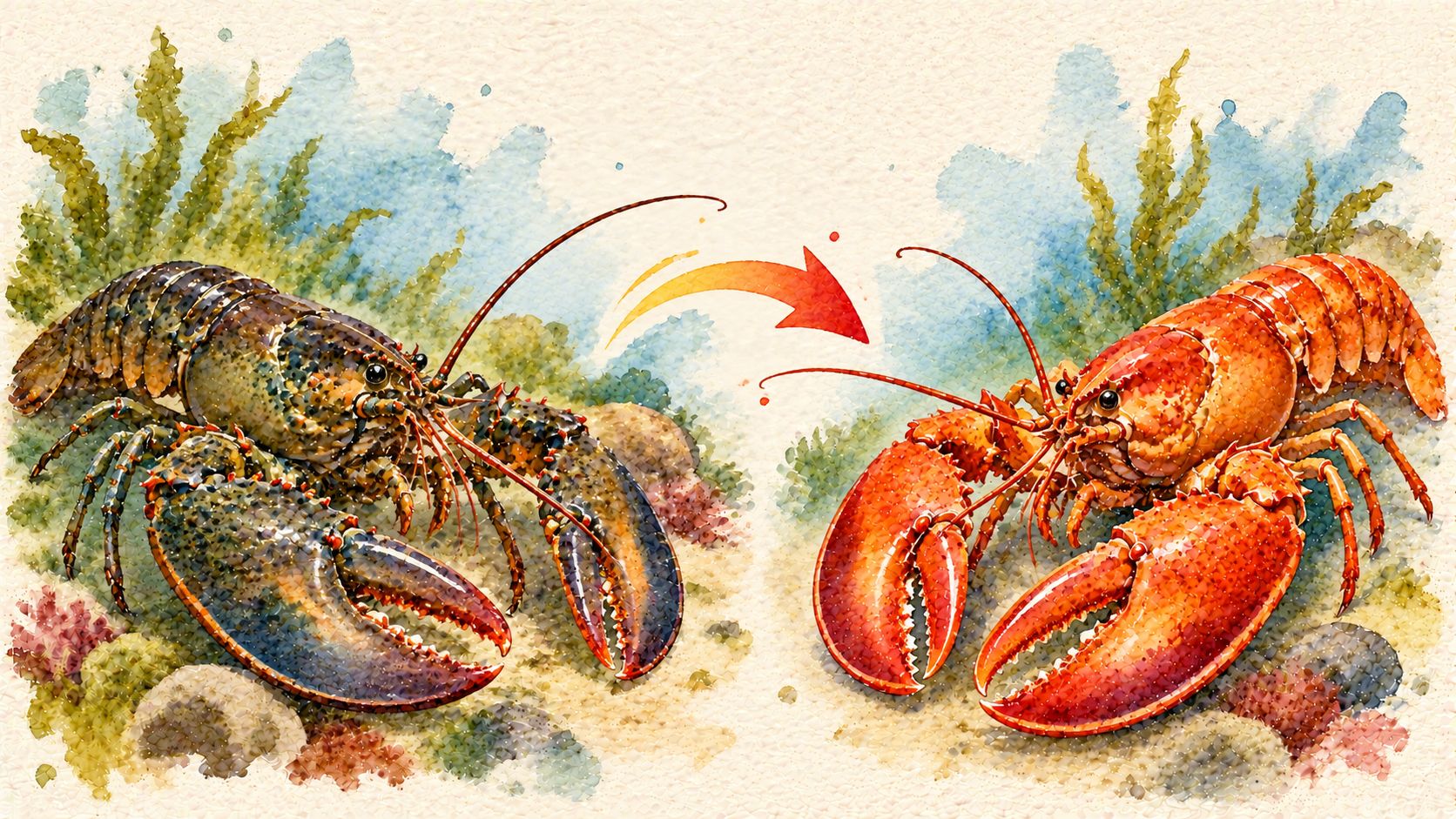
A live lobster's shell contains a red pigment called astaxanthin, which comes from the food it eats. But in a living lobster, this pigment is tightly bound to proteins that twist its colour into dark green, brown or blue. When a lobster is heated, these proteins break apart and release the pigment, so its true bright red colour finally shows. That's why lobsters that look dark and dull in the sea turn bright red when cooked.
Lobsters' kidneys are in their heads, and they release urine from openings near their faces. They use it to send chemical messages to other lobsters.
Lobsters walk forward slowly, but when frightened they can shoot backwards quickly by flicking their tails.
Lobsters' eyes contain thousands of tiny square, mirror-like tubes. This design inspired scientists to build special X-ray telescopes.
Lobsters grow by shedding their hard shells, called moulting, and often eat the old shell to regain calcium.
If a lobster loses a claw or leg, it can grow a new one over its next few moults.
Lobsters keep growing throughout their lives. The heaviest lobster on record, caught off Nova Scotia, Canada, weighed around 20 kilograms.
Lobsters can live for many decades, but the popular idea that they are "immortal" is a myth.
Female lobsters carry thousands of eggs under their tails for many months before they hatch.
Spiny lobsters in the Caribbean migrate in long, single-file lines across the seabed, each lobster touching the one in front, like a conga line.
Blue, yellow, split and white lobsters are incredibly rare
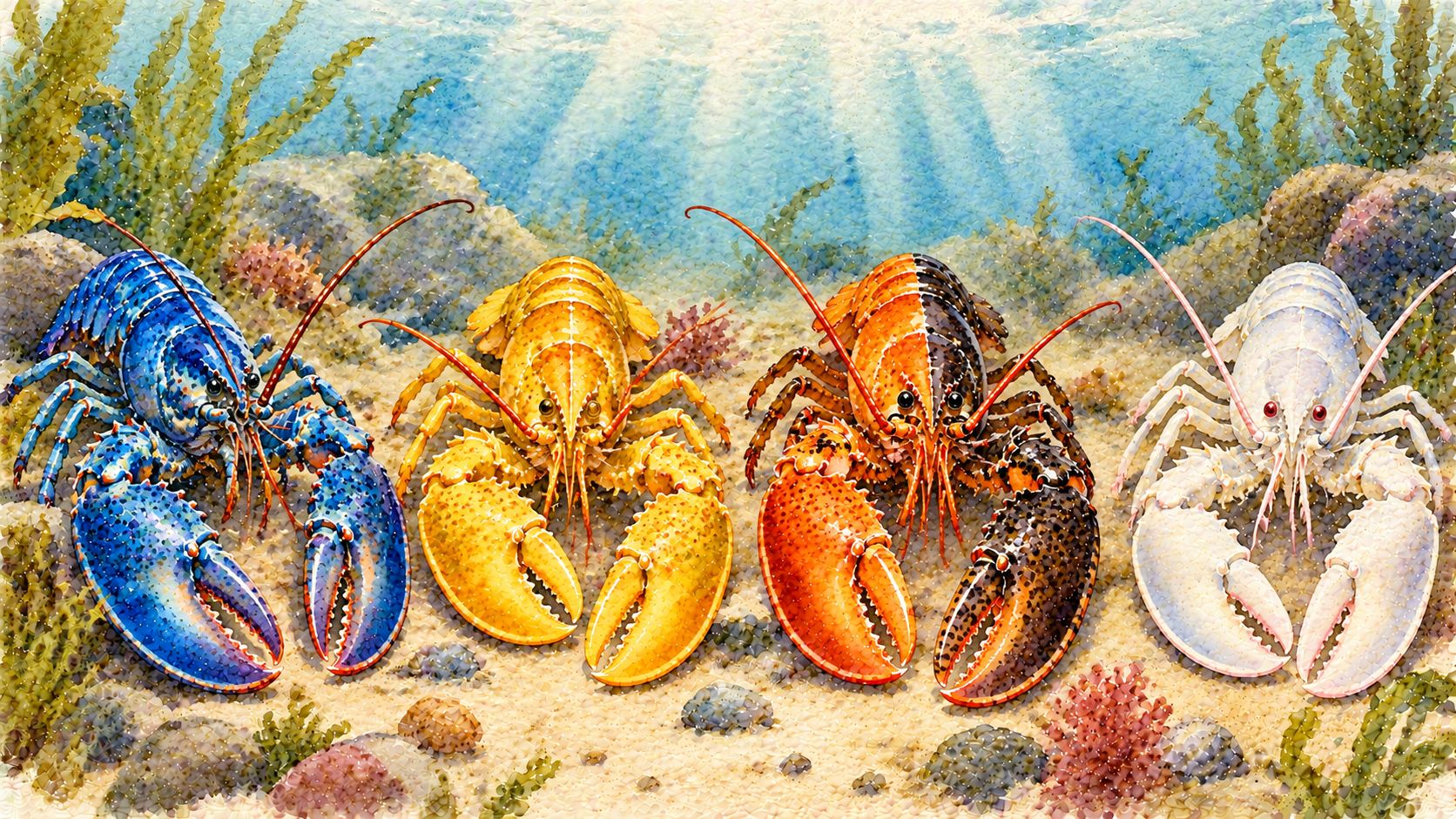
Every now and then, fishermen catch lobsters in astonishing colours. A bright blue lobster, caused by a genetic difference that makes it produce extra pigment-binding protein, is often said to be about a 1 in 2 million catch. Yellow lobsters are thought to be about 1 in 30 million, and "split-coloured" lobsters, with each half a different colour, are estimated at around 1 in 50 million. Rarest of all are white or albino lobsters, sometimes called "crystal" lobsters, estimated at around 1 in 100 million. These odds are rough estimates, but these unusual lobsters are certainly very rare.
Spiny lobsters can make a loud rasping sound by rubbing the base of their antennae, which helps scare away predators.
In early America, lobsters were so plentiful that they were seen as cheap food for poor people and prisoners. Today, they're considered a luxury.
Lobsters are related to crabs, shrimp and prawns, and they all belong to a group called crustaceans.
Spiny lobsters are an important catch for fishermen along India's coasts, and many are exported live.
In some countries, including Switzerland and the UK, laws now recognise that lobsters can feel pain, and have changed the rules on how they must be treated.
Sources and Further Reading
- ICAR-Central Marine Fisheries Research Institute (CMFRI)
- NOAA Fisheries
- Gulf of Maine Research Institute
- Guinness World Records
- Encyclopaedia Britannica
- National Geographic
Frequently asked questions
Why do lobsters turn red when cooked?
A lobster's shell contains a red pigment that is bound to proteins, making it look dark in the sea. Heat breaks these proteins apart, revealing the bright red colour.
How rare is a blue lobster?
Blue lobsters are often estimated to be about 1 in 2 million, caused by a genetic difference. Yellow, split-coloured and albino lobsters are even rarer.
Do lobsters have blue blood?
Yes. Lobsters have blue blood because it uses copper, rather than iron, to carry oxygen.
Are lobsters immortal?
No. Lobsters can live for many decades and keep growing, but they are not immortal. Moulting becomes harder as they age.
Are there lobsters in India?
Yes. Spiny lobsters, also called rock lobsters, live off India's coasts, including Gujarat, Kerala and Tamil Nadu, and are an important fishery.
Can lobsters regrow their claws?
Yes. If a lobster loses a claw or leg, it can grow a new one over several moults.