25 Kangaroo Facts: Hops, Pouches and Outback Secrets
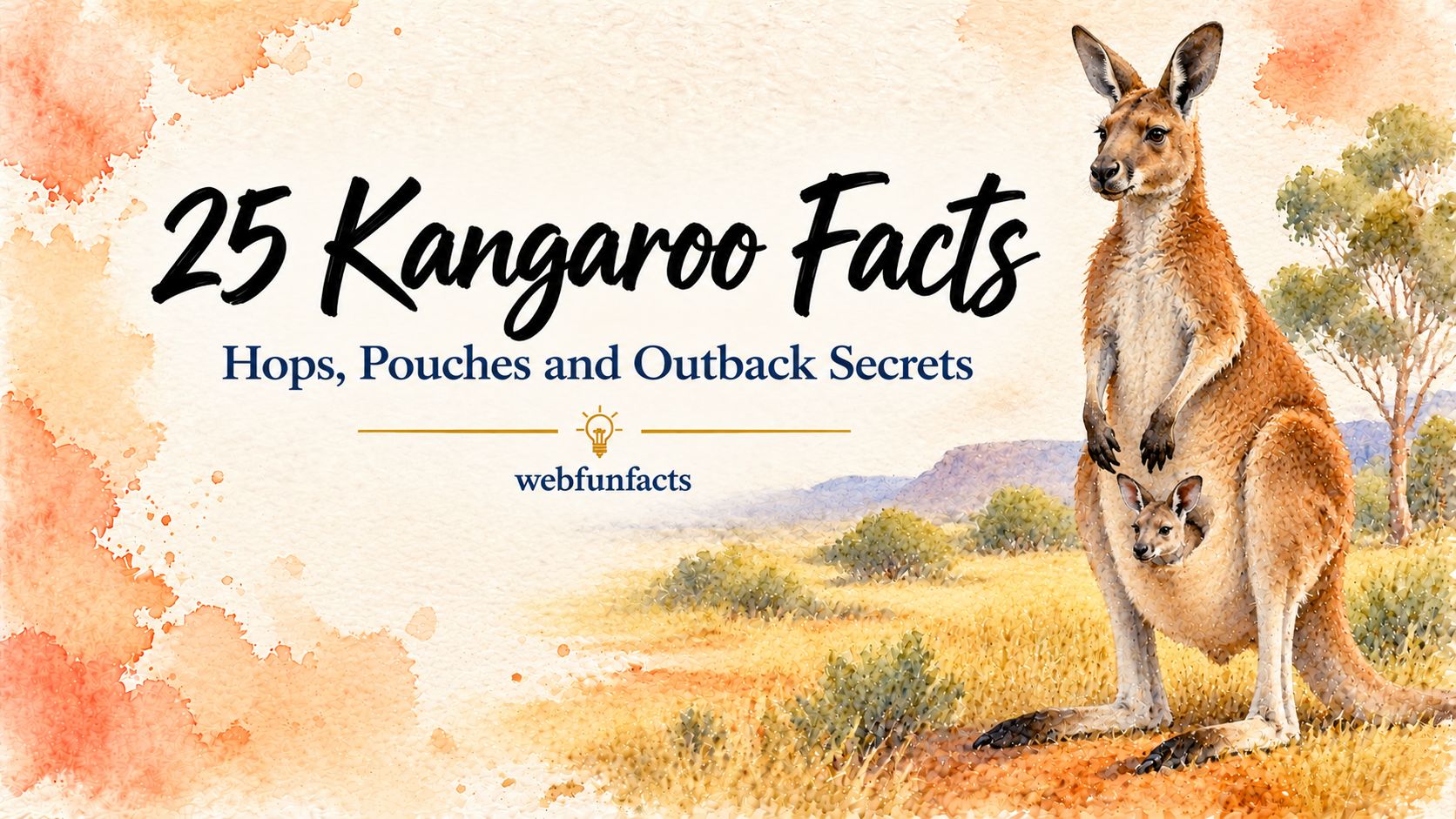
Few animals are as instantly recognisable as the kangaroo. With its powerful hind legs, thick tail and famous pouch, it has become a living emblem of Australia, bounding across grasslands, scrub and desert in loose groups that can number from a handful to dozens of animals.
Yet there is far more to kangaroos than hopping. They can put a pregnancy on hold, feed two youngsters different milks at once, walk using their tail as an extra limb and even live in trees. Here are 25 fascinating facts about these remarkable marsupials.
Kangaroo Facts
Kangaroos are marsupials, mammals whose young are born tiny and finish developing in a pouch. They belong to the family Macropodidae, a name meaning "big foot".
The word "kangaroo" usually refers to the four largest species: the red kangaroo, the eastern grey, the western grey and the antilopine kangaroo. Smaller relatives are called wallabies and wallaroos.
The red kangaroo is the largest living marsupial. Big males can stand roughly 1.8 metres tall and weigh around 85–90 kg, while females are much smaller.
Hopping is surprisingly energy-efficient. Stretchy tendons in the hind legs store and release energy like springs, so at moderate speeds a hopping kangaroo uses little extra energy as it speeds up.
Large kangaroos can reach speeds of roughly 50–60 km/h in short bursts and cover several metres in a single bound, though they usually cruise far more slowly.
On the ground, kangaroos move both hind legs together. In water, however, they kick each leg separately and are capable swimmers.
When moving slowly while grazing, kangaroos use "pentapedal" walking: they plant their tail and forepaws on the ground and swing both hind legs forward. Research suggests the tail provides a large share of the push.
A newborn kangaroo is about the size of a jelly bean, around 2 cm long and weighing less than a gram. It arrives after a pregnancy of only about a month.
Blind and hairless, the newborn crawls unaided through its mother's fur into the pouch, where it latches on to a teat and stays attached for weeks.
A Mother Kangaroo Can Pause a Pregnancy
Female kangaroos can mate again soon after giving birth, but the new embryo often stops developing at a very early stage. This pause, called embryonic diapause, can last for months while the older joey grows in the pouch. When that joey leaves, or if it is lost, the waiting embryo resumes development. As a result, a mother can at times care for three young at once: a joey at foot, a baby in the pouch and a dormant embryo. Remarkably, she can even produce two different kinds of milk from separate teats, each suited to a youngster's age.
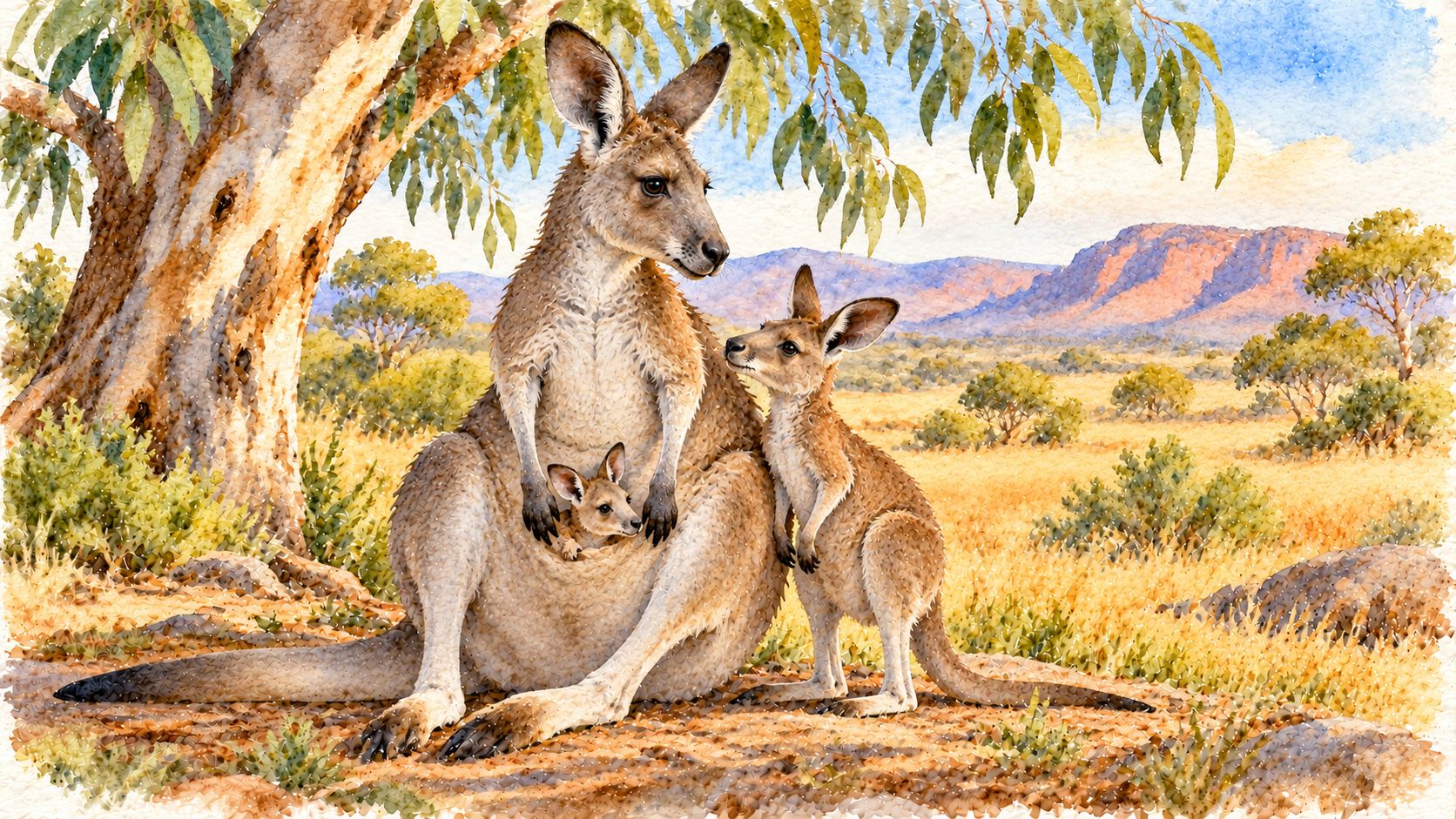
Joeys usually leave the pouch for good at around 7 to 11 months old, depending on the species, but may keep suckling for some time afterwards.
Male kangaroos are often called boomers, females does or flyers, and young ones joeys. A group is most commonly called a mob.
Rival males "box" by grappling with their forearms and delivering hard kicks with their hind feet while balancing on their tail. Their claws are sharp, and kicks can seriously injure people.
Kangaroos are herbivores, mainly grazing on grasses and other plants. Their chambered stomach ferments tough plant matter, somewhat like a cow's.
Studies suggest kangaroos produce much less methane per unit of food than cattle and sheep, partly because of differences in their gut microbes, an area scientists are still researching.
Their molar teeth move slowly forward along the jaw over a lifetime. Worn front molars eventually drop out as fresh ones move into place behind them.
Kangaroos do sweat while exercising, but at rest they cool down mainly by panting and licking their forearms, where blood vessels lie close to the skin and evaporating saliva carries heat away.
Kangaroos are most active around dawn, dusk and night, spending hot afternoons resting in shade.
Research published in 2015 found that several kangaroo species tend to favour their left forelimb for tasks such as grooming and feeding.
Some Kangaroos Live in Trees
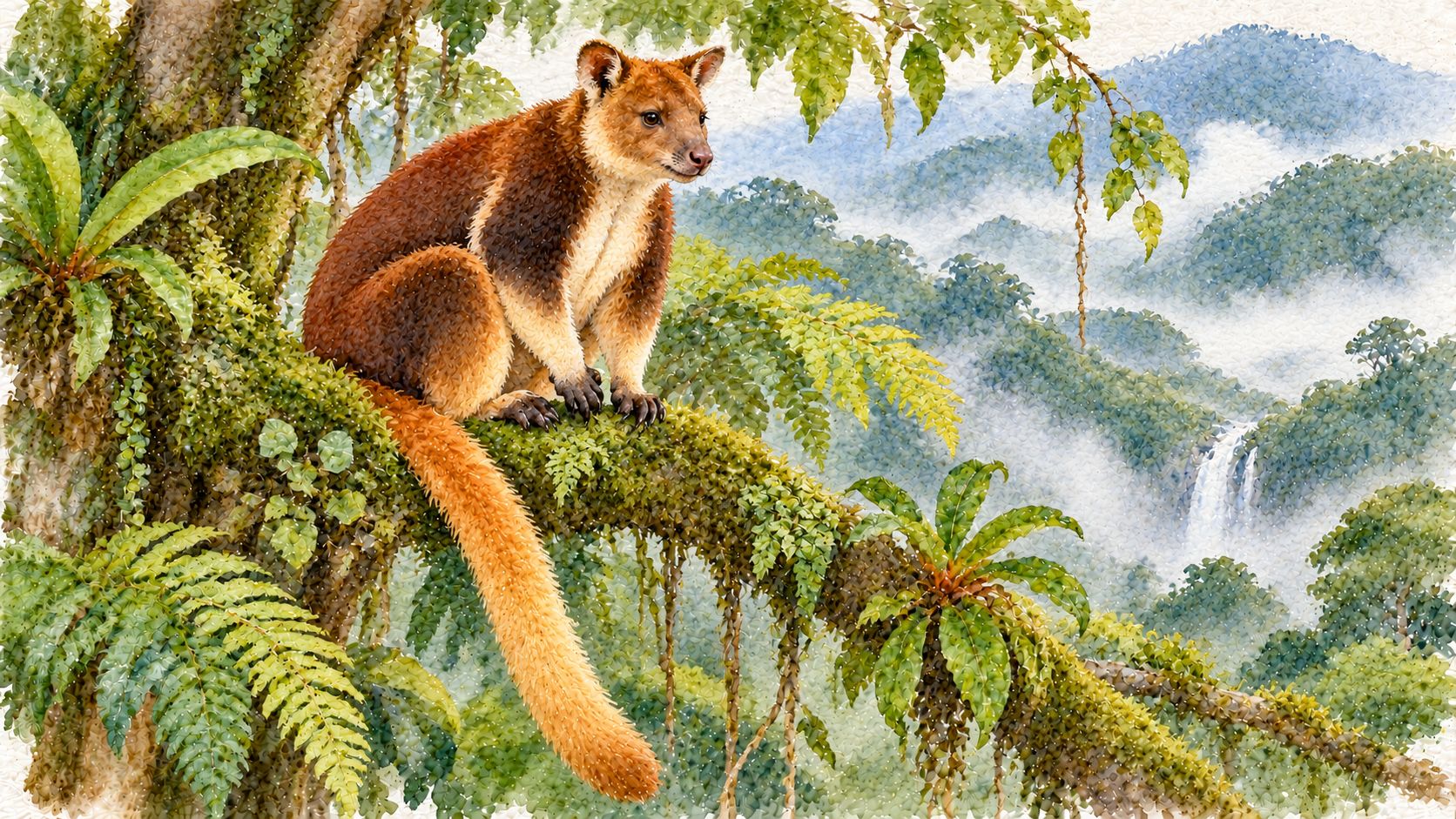
Not every kangaroo bounds across open plains. Tree kangaroos, a group of more than a dozen species, live in the rainforests of New Guinea, with two species found in far north-eastern Queensland. Their ancestors are thought to have lived on the ground before returning to the treetops. They have shorter, broader hind feet with rough pads, strong curved claws and long tails that help them balance, and they can hop along branches or walk on all fours. Sadly, hunting and forest loss have pushed several species into danger, and some are listed as endangered or critically endangered on the IUCN Red List.
The name comes from "gangurru", a word in the Guugu Yimithirr language of north Queensland, recorded by James Cook's expedition in 1770. The popular story that it means "I don't understand" is a myth.
Australia's kangaroo numbers are usually estimated in the tens of millions and can rise or fall sharply with rainfall and drought. In good years, they may outnumber the country's people.
Collisions with vehicles are common, especially around dawn and dusk, which is why many rural Australians fit sturdy "roo bars" to the front of their cars.
Kangaroos can rotate their ears independently to pick up sounds from different directions, helping them spot danger early.
A kangaroo and an emu support the shield on Australia's coat of arms, showing how closely the animal is tied to national identity.
Sources and Further Reading
- Australian Museum
- Encyclopaedia Britannica
- IUCN Red List
- San Diego Zoo Wildlife Alliance
- Smithsonian's National Zoo
- National Geographic
Frequently asked questions
Can kangaroos walk?
Yes. At slow speeds they use a five-limbed walk, supporting themselves on their tail and forepaws while swinging both hind legs forward.
How big is a baby kangaroo at birth?
A newborn joey is only about 2 cm long and weighs less than a gram, roughly the size of a jelly bean.
What is a group of kangaroos called?
A group of kangaroos is most commonly called a mob.
Do kangaroos live outside Australia?
In the wild, kangaroos and their close relatives are found in Australia and New Guinea, where most tree kangaroo species live.
Where does the word "kangaroo" come from?
It comes from "gangurru", a Guugu Yimithirr word recorded in 1770. The "I don't understand" story is a myth.
What do kangaroos eat?
Kangaroos are herbivores that mainly graze on grasses, along with leaves and other plants depending on the species.