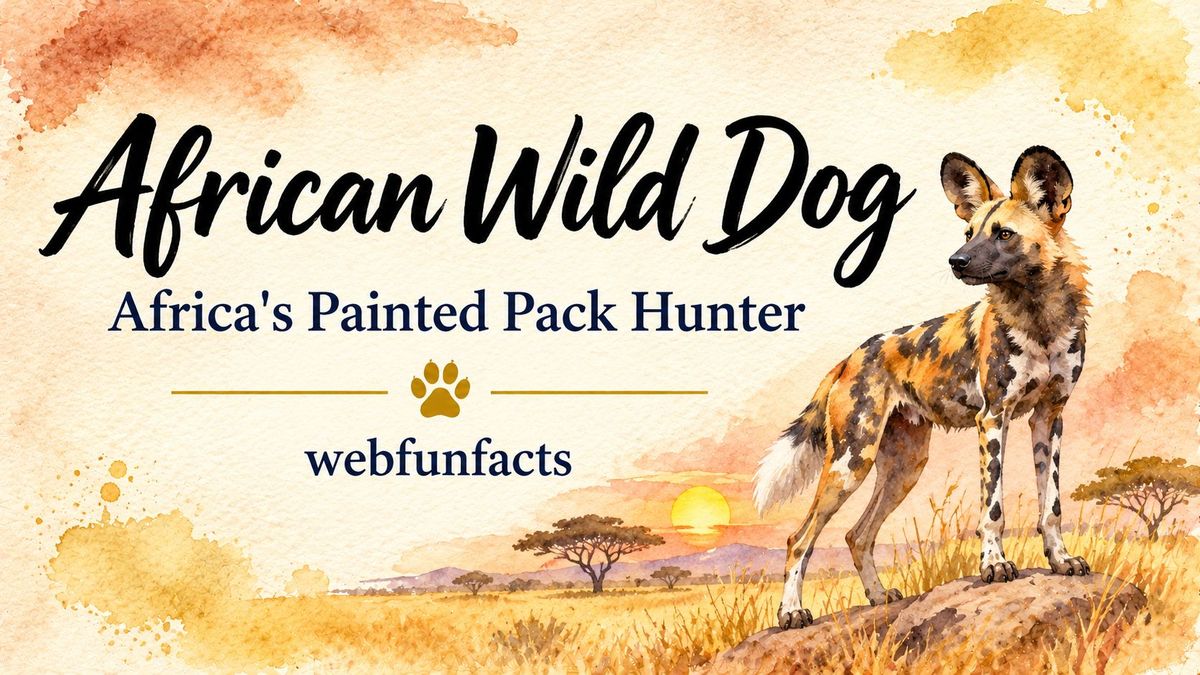
The African wild dog is one of the most remarkable and most endangered predators in Africa. With its patchwork coat of black, tan and white, its huge rounded ears and its tireless, team-based hunting style, it looks and behaves unlike any other carnivore on the continent. Its scientific name, Lycaon pictus, means "painted wolf," and it is also widely known as the painted dog.
For many years, this animal had a bad reputation among farmers and hunters, who saw it as a vicious pest. We now know that it is a deeply social, cooperative animal that cares for its sick and its young, and that it is one of the most successful hunters in the world. In this complete guide, you will learn what an African wild dog is, how to recognize it, where it lives, what it eats, how its pack works, how it raises its pups and why it urgently needs protection.
Quick answer: The African wild dog (Lycaon pictus) is a highly social, pack-hunting canid with a mottled coat of black, brown, yellow and white. It weighs about 18 to 36 kg (40 to 79 lb), lives in sub-Saharan Africa, and hunts antelope by endurance chasing. It is listed as Endangered by the IUCN, with only roughly 6,000 to 7,000 individuals left in the wild.
African Wild Dog at a Glance
| Feature | Details |
|---|---|
| Scientific name | Lycaon pictus |
| Class | Mammalia |
| Order | Carnivora |
| Family | Canidae |
| Body length | About 2.5 to 3.7 feet (75 to 112 cm), plus tail |
| Tail length | About 1 to 1.4 feet (30 to 41 cm) |
| Shoulder height | About 24 to 30 inches (60 to 75 cm) |
| Weight | About 40 to 79 pounds (18 to 36 kg) |
| Lifespan | Around 10 to 12 years in the wild; sometimes longer in zoos |
| Diet | Medium-sized antelope and other hoofed animals |
| Habitat | Savanna, open woodland, grassland and semi-arid areas |
| Range | Scattered areas of southern and eastern Africa |
| Other names | Painted dog, painted wolf, Cape hunting dog |
| Conservation status | Endangered (IUCN) |
What Is an African Wild Dog?
The African wild dog is a wild canid, a member of the family that includes wolves, foxes and jackals. It is the only living species in the genus Lycaon, so it has no really close relatives. While it looks somewhat like a wolf, it is a separate lineage that split away from other canids millions of years ago.
Its name "painted wolf" refers to its coat, which has an irregular pattern of dark brown, black, yellow and white patches. No two individuals have exactly the same markings, so researchers can recognize each animal by its pattern, much like a fingerprint.
Packs, Not Loners
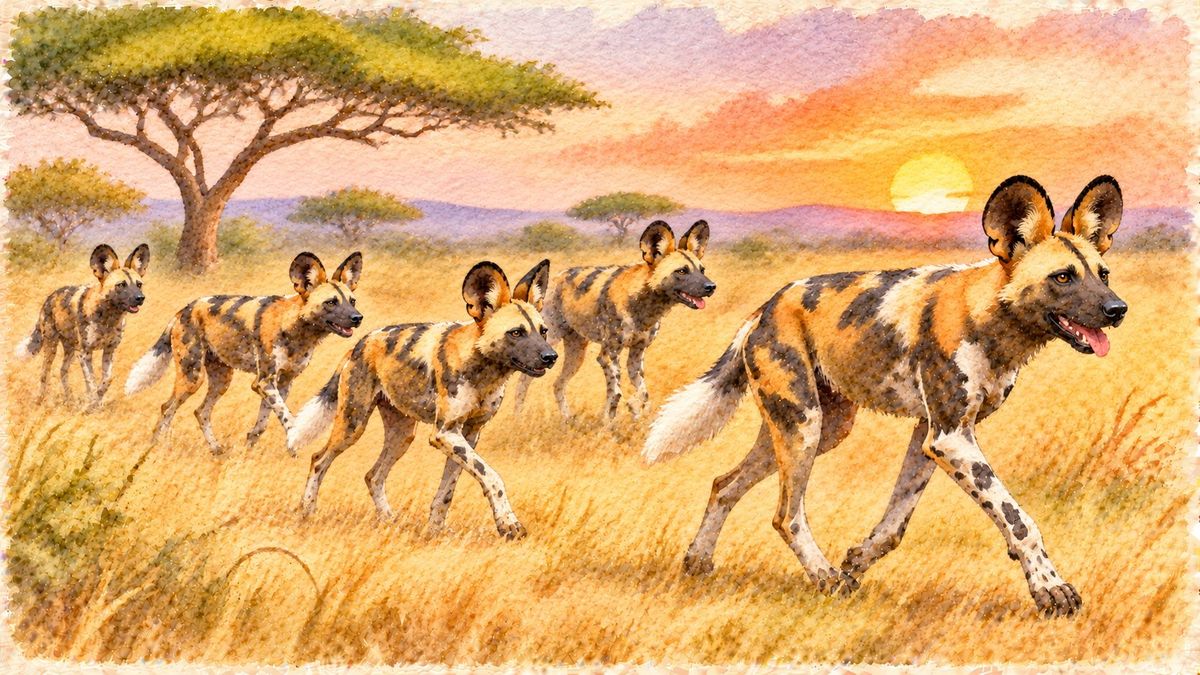
What makes the African wild dog truly special is its social life. It lives in cooperative packs, and almost everything it does, from hunting to babysitting, is done as a team. Studies show that it is one of the most efficient hunters among all large carnivores, and a large part of that success comes from teamwork.
What Does an African Wild Dog Look Like?
African wild dogs are tall, lean and long-legged, built for running long distances rather than for brute force.
Size and Shape
An adult stands about 24 to 30 inches (60 to 75 cm) tall at the shoulder and weighs roughly 40 to 79 pounds (18 to 36 kg). The body is slim and athletic, with a deep chest, a narrow waist and long legs. Males and females are similar in size.
The Painted Coat
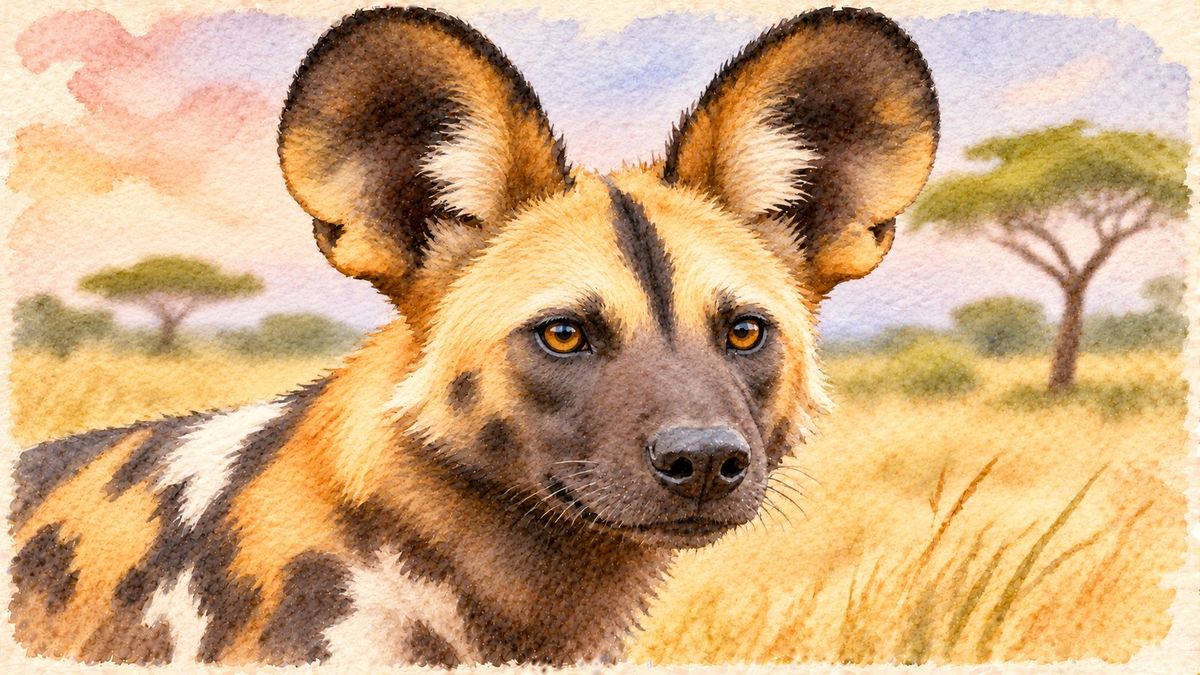
The short, sparse fur is a mix of black, tan, brown, yellow and white. The face usually has a dark muzzle, and a black stripe runs up the forehead. The coat patterns are unique to each animal, and they can be different on the left and right sides of the same animal.
A White-Tipped Tail
The bushy tail normally ends with a white tip, which acts like a flag. Pack members can see it easily while running through tall grass, helping them to keep together during a chase.
Ears and Teeth
The ears are large, round and upright, and they give the animal excellent hearing. They also help it lose heat in hot weather. The teeth are strong and specialized for slicing meat, and the African wild dog has among the strongest bite force relative to size of any large carnivore.
Feet
Unlike most other canids, African wild dogs have only four toes on each foot. They do not have the small extra toe on the front legs, called a dewclaw. This helps give them a bit more speed and efficiency when running.
Where Do African Wild Dogs Live?
African wild dogs once ranged across most of sub-Saharan Africa. Today they are found in only a few scattered areas, mostly in southern and eastern Africa. Major strongholds are in:
- Botswana, especially the Okavango Delta region
- Zimbabwe, Zambia and Namibia
- Tanzania, including the Selous (Nyerere) ecosystem
- South Africa, such as Kruger National Park and reintroduced populations in private and public reserves
- Mozambique and Kenya, in smaller numbers
Their preferred habitats include:
- Open savanna and grassland
- Light woodland and bushveld
- Semi-arid scrub
- Mountainous areas in some regions
They tend to avoid dense forest and true desert. African wild dogs need large areas, as a single pack can use hundreds or even thousands of square kilometers, which makes them especially vulnerable when habitat is fragmented.
What Do African Wild Dogs Eat?
African wild dogs are carnivores that hunt mainly medium-sized antelope.
Main Prey
Their favorite prey includes:
- Impala
- Thomson's gazelle and other gazelles
- Kudu
- Springbok
- Young wildebeest and zebra
- Smaller animals, such as hares, warthog piglets and birds when larger prey is scarce
How They Hunt
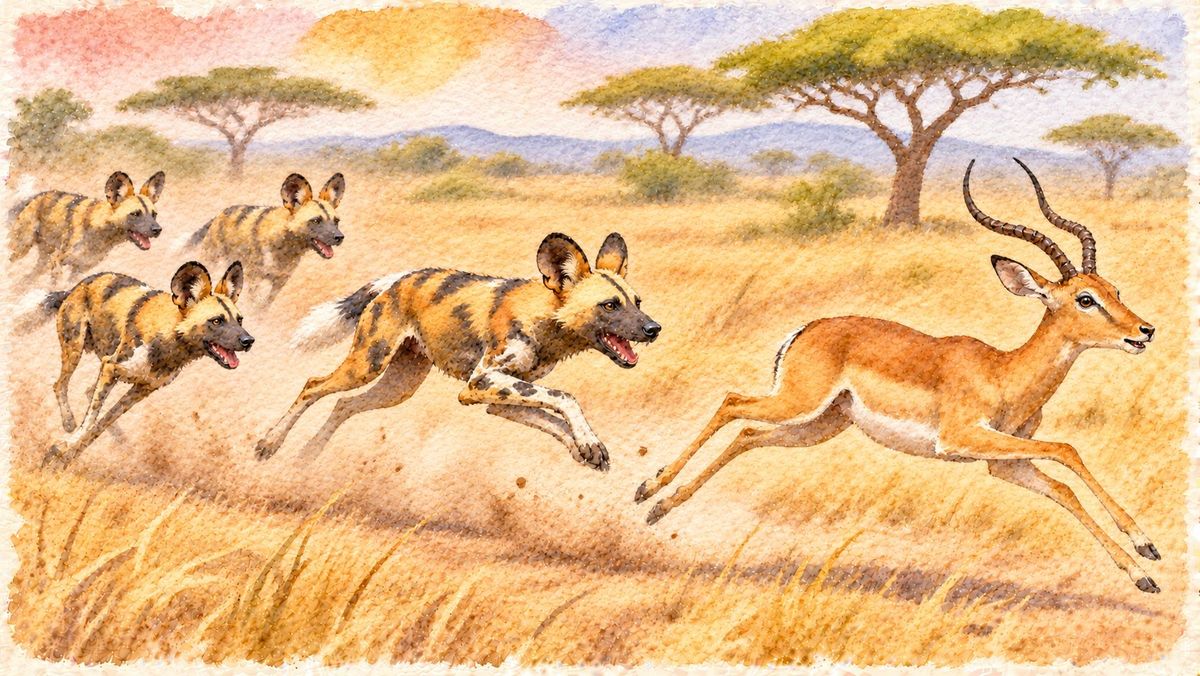
African wild dogs hunt in daylight, usually in the early morning and late afternoon, which avoids competition with lions and hyenas. Unlike cats, which rely on stealth and a short burst of speed, wild dogs use stamina. The pack approaches a herd, picks a target and starts a chase. They can reach speeds of about 60 km/h (37 mph) in short bursts and can keep the pursuit going for several kilometers.
The pack works together, with some dogs running directly behind the prey and others cutting corners or taking over when the leaders tire. Studies suggest that wild dogs may succeed in a majority of their hunts, a much higher success rate than that of lions or leopards.
Sharing Food
After a kill, wild dogs eat quickly, because lions and hyenas often steal their meals. They share with pack members that did not take part in the hunt, including pups, injured animals and older dogs. Adults regurgitate meat for the pups, and everyone gets a turn to feed.
Do African Wild Dogs Drink Water?
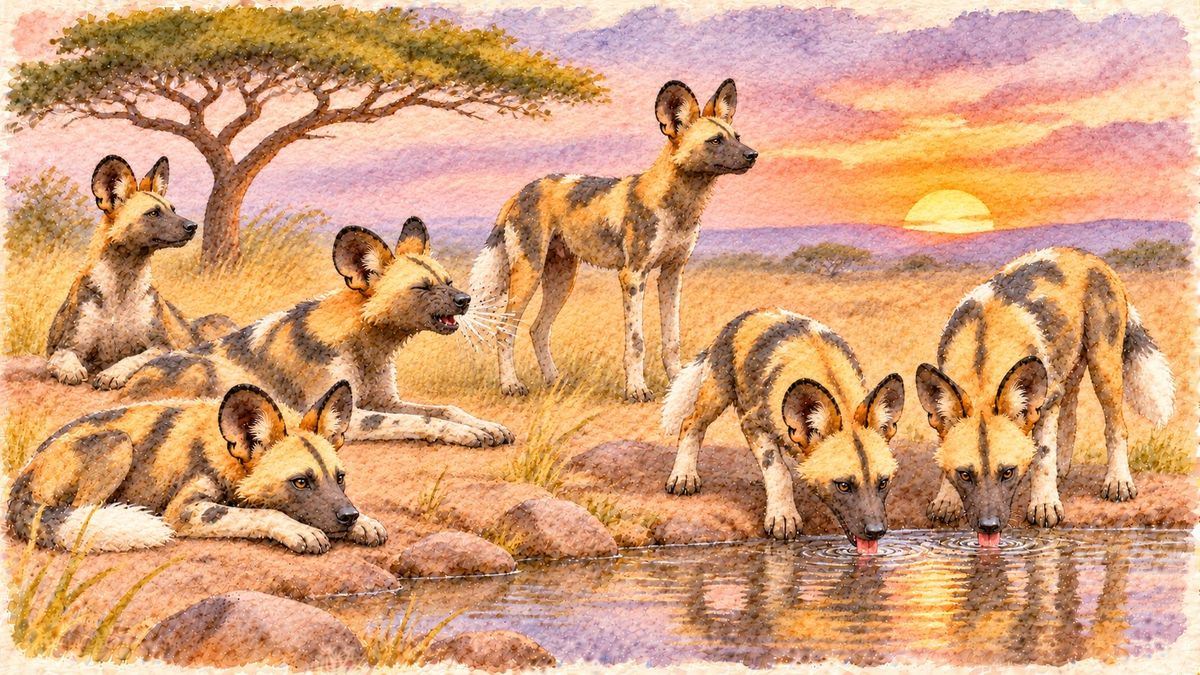
They drink when water is available and often visit rivers and waterholes, but they also get a lot of moisture from their prey.
African Wild Dog Behavior and Lifestyle
Pack Life
A typical pack contains about six to twenty adults and yearlings, although some packs are larger and some are smaller. Each pack is led by a dominant breeding pair, and the rest of the pack usually consists of relatives. Unlike many mammals, young males usually stay in the pack in which they were born, while young females leave to join other packs.
Cooperation and Care
African wild dogs are famous for their caring behavior. They help injured or sick pack members by bringing them food. They also act as babysitters for the pups, and they share the work of guarding the den.
Voting by Sneezing
Researchers have discovered that wild dogs seem to "vote" before setting out on a hunt by making short sneezes. When enough pack members sneeze, the group goes. In packs where the dominant dogs begin the gathering, fewer sneezes are needed than in a pack in which a lower-ranking dog starts.
Communication
Wild dogs communicate with a wide range of sounds, including twittering, chirping and squeaking calls, as well as a long-distance "hoo" call used to find each other. They also use body language and scent.
African Wild Dog Reproduction and Pups
Usually only the dominant pair breeds in each pack, and the rest help raise the young.
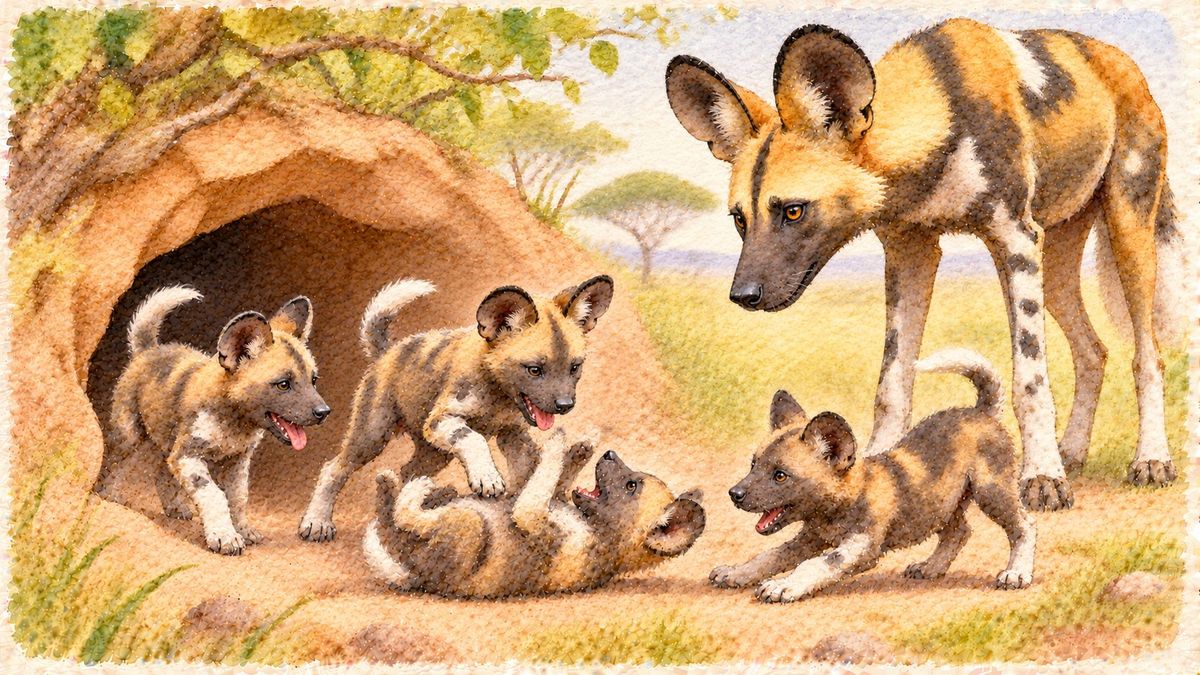
After a gestation period of roughly 70 days, the female gives birth in an underground den, often an old aardvark burrow. Litters are large, often around 10 pups and sometimes more than a dozen, which is among the biggest of any canid.
The pups are born blind and helpless, and they stay in the den for about the first three weeks. At around three to four weeks old, they begin to emerge and eat meat that adults bring back. All pack members help to feed and protect them. Pups join the hunt at around ten to twelve months, and they reach adulthood in about their second year.
How Long Do African Wild Dogs Live?
In the wild, African wild dogs typically live around 10 to 12 years, although many die younger from disease, accidents, lions and human threats. In zoos, some animals live a little longer.
Predators and Threats
Adult African wild dogs have few natural predators, but they compete with larger carnivores:
- Lions: The main killers of adult wild dogs, and also a major cause of lost pups.
- Spotted hyenas: They steal kills and may attack dens.
- Leopards and other predators: Occasionally take pups or injured animals.
To stay safe, wild dogs hunt in daylight, move over wide areas and live in strong groups that can defend themselves.
Why African Wild Dogs Are Important
African wild dogs play an important part in African ecosystems.
- Controlling herbivore numbers: By hunting antelope, they help keep populations in balance.
- Removing weak animals: They tend to catch the sick, young and old, which helps keep prey herds healthy.
- Shaping the food web: Their presence affects the behavior of other predators and prey.
- Signs of a healthy wilderness: Because they need so much space, areas with wild dogs are usually large, well-managed and healthy ecosystems.
- Tourism and conservation value: Wild dogs are a highlight for safari visitors and bring income to protected areas.
Are African Wild Dogs Endangered?
Yes. The African wild dog is listed as Endangered on the IUCN Red List. Once found in dozens of countries, it has disappeared from most of its former range. Current estimates suggest roughly 6,000 to 7,000 individuals, and the number of breeding adults is much smaller.
The main threats include:
- Habitat loss and fragmentation: As land is converted to farming and settlements, packs lose the huge areas they need.
- Conflict with people: Farmers sometimes kill wild dogs to protect livestock.
- Snares and traps: Many wild dogs are caught in wire snares set for other animals.
- Roads: Traffic kills dogs that cross busy roads.
- Disease: Rabies and canine distemper can spread from domestic animals and wipe out whole packs.
- Competition with other predators: Lions and hyenas can limit pack growth.
How Are People Helping?
Conservationists around the world are working to protect the species:
- Setting up protected corridors so that packs can move between reserves
- Vaccinating animals around reserves to reduce disease risk
- Removing snares and supporting anti-poaching patrols
- Reintroducing wild dogs to places where they have been lost, such as parts of South Africa and Mozambique
- Teaching local communities about the value of wild dogs and helping reduce conflict
Fun Facts About African Wild Dogs
- Their name means "painted wolf." The Latin name Lycaon pictus describes their patchy coat.
- Every coat is unique. No two wild dogs share the same pattern.
- They vote by sneezing. Sneezes help packs decide when to hunt.
- They are great hunters. They often succeed in most of their hunts.
- They share food. Even sick and injured pack members are fed.
- They have four toes. Most canids have five on the front feet.
- Pups eat first. At a kill, adults often let the pups feed before taking their own share.
- They need huge areas. A single pack may roam over thousands of square kilometers.
Frequently Asked Questions
What is an African wild dog? The African wild dog (Lycaon pictus) is a wild, pack-hunting canid with a patchy black, tan and white coat. It lives in sub-Saharan Africa and is also called the painted dog.
Where do African wild dogs live? They live in scattered areas of southern and eastern Africa, in savanna, grassland and open woodland, with major populations in Botswana, Zimbabwe, Tanzania, Zambia and South Africa.
What do African wild dogs eat? They eat mainly medium-sized antelope such as impala, kudu and gazelles, along with smaller animals when larger prey is scarce.
How many African wild dogs are left? Estimates suggest only about 6,000 to 7,000 individuals remain in the wild, and fewer than 2,000 of them are mature adults.
Are African wild dogs dangerous to humans? African wild dogs are very shy and rarely approach people. Attacks on humans are extremely rare, but wild animals should always be observed from a safe distance.
Are African wild dogs endangered? Yes. They are listed as Endangered by the IUCN because of habitat loss, conflict with people, snares, roads and disease.
Final Thoughts
The African wild dog is proof that teamwork can be the most powerful strategy in nature. With its painted coat, huge ears and cooperative way of life, it is one of Africa's most extraordinary predators, and one of its most vulnerable. Protecting wide-open landscapes, reducing snares and conflict, and supporting conservation projects can give this remarkable "painted wolf" a chance to keep running across the African plains for generations to come.