25 Lizard Facts: Sun-Loving Reptiles With Surprising Skills

Lizards are one of the most successful groups of reptiles on the planet, found in deserts, rainforests, mountains and even our own homes. From tiny chameleons smaller than a fingertip to powerful monitor lizards, they come in an amazing variety of shapes, sizes and colours.
Many lizards have clever tricks for surviving, such as dropping their tails, sticking to walls or gliding between trees. Here are 25 fact-checked lizard facts, including some remarkable species found right here in India, from house geckos to flying lizards.
Lizard Facts
There are more than 7,000 known species of lizards, making them the largest group of living reptiles, and new species are still being described every year.
Lizards live on every continent except Antarctica, where it is far too cold for them to survive.
Lizards and snakes belong to the same reptile group, called Squamata, and scientists consider snakes to have evolved from lizard ancestors.
Lizards are ectotherms, often called cold-blooded. They bask in the sun to warm up and shelter in shade or burrows when it gets too hot.
One of the smallest known lizards is a nano-chameleon from Madagascar, described in 2021, whose males have bodies only about 13–14 millimetres long.
The largest lizard is the Komodo dragon of Indonesia, which can reach about 3 metres long. It is one of several venomous monitor lizards.
Most lizards have movable eyelids, which helps tell them apart from snakes. However, many geckos have no movable eyelids and instead lick their clear eye scales to keep them clean.
Some lizards have no legs at all. Legless lizards such as glass lizards look like snakes but usually have eyelids and external ear openings.
Most lizards lay eggs, but some skinks and other species give birth to live young, especially in cooler climates.
Tails That Break Off and Grow Back
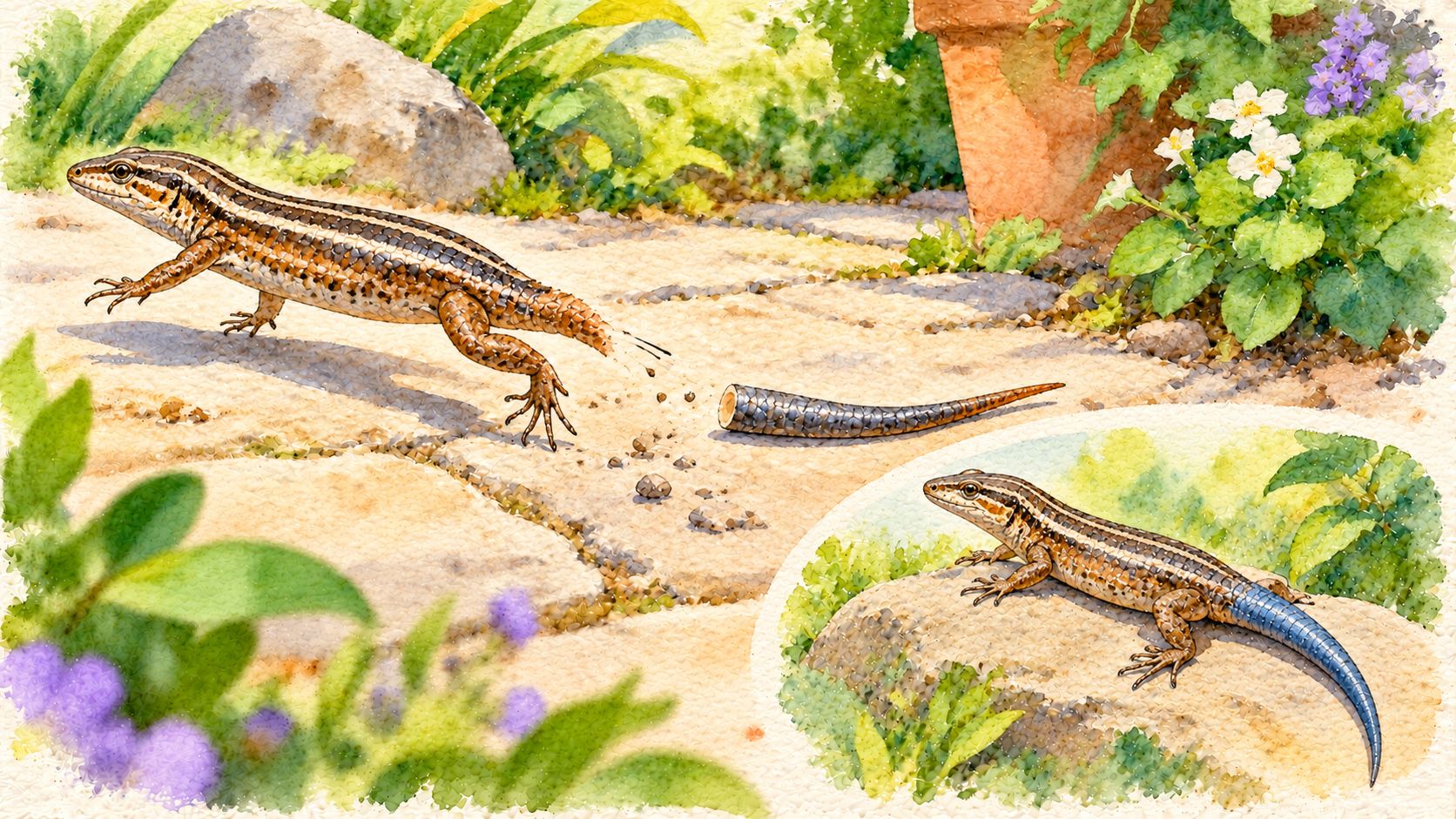
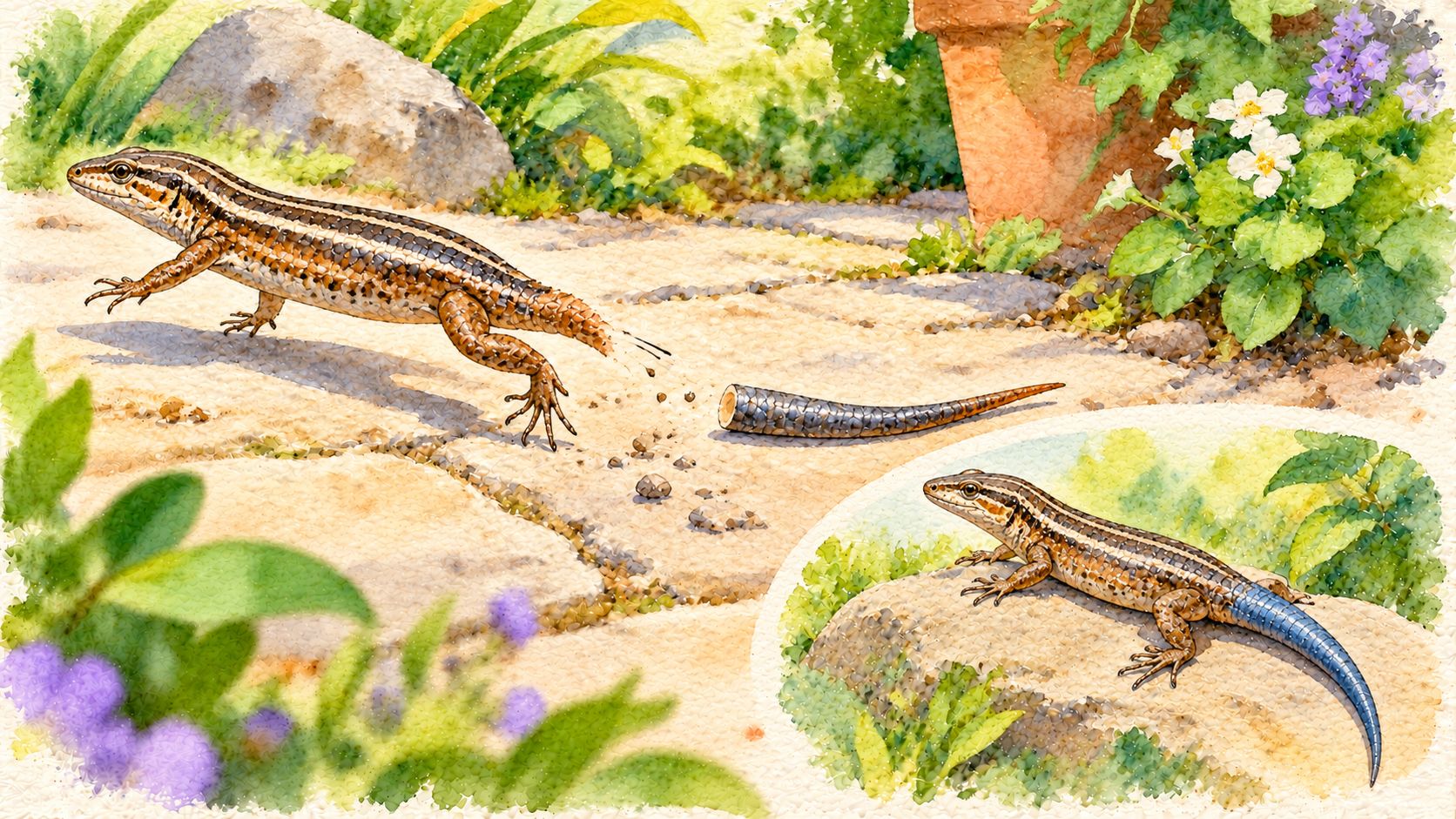
Many lizards can deliberately shed part of their tail when grabbed by a predator, a defence called autotomy. The tail breaks at special weak points and keeps wriggling for a while, distracting the attacker while the lizard escapes. Muscles and blood vessels close quickly to limit blood loss. Over the following weeks or months, a new tail grows back, but it is not an exact copy. The regrown tail has a rod of cartilage instead of bony vertebrae and is often shorter or differently coloured. Losing a tail costs energy, so lizards use this trick only when necessary.
Geckos can climb walls and even walk upside down on ceilings, thanks to millions of microscopic hairs on their toe pads that grip surfaces using weak molecular forces.
Many geckos are vocal. House geckos make chirping or clicking calls, which is unusual among lizards.
Chameleons change colour mainly by adjusting tiny crystals in their skin cells that reflect light differently, and they use colour for signalling mood and temperature control as much as for camouflage.
A chameleon can shoot out its sticky tongue at tremendous speed to catch insects, and in some species the tongue can stretch longer than the chameleon's body.
Chameleons can move each eye independently, looking in two directions at once before focusing both eyes on prey.
Many lizards have a "third eye", called the parietal eye, on top of the head. It cannot form images but senses light and helps regulate daily rhythms.
The marine iguana of the Galápagos Islands is the only lizard that feeds in the sea. It dives for seaweed and sneezes out extra salt through special glands near its nose.
A few lizards, including some whiptail lizards of North America, are all-female species that reproduce without males.
India's Gliding Flying Lizards
India is home to flying lizards of the genus *Draco*, which do not truly fly but glide gracefully between trees. Along their sides, they have flaps of skin supported by long, movable ribs. When a lizard leaps from a tree trunk, it spreads these flaps like wings and can glide many metres to another tree. The southern flying lizard lives in the forests of the Western Ghats, while other *Draco* species are found in north-east India. Males also flash a brightly coloured throat flap, called a dewlap, to signal to rivals and attract females.
The Indian garden lizard, or oriental garden lizard, is common across India. Breeding males often develop a bright red head and throat, which earned it the misleading nickname "bloodsucker", although it does not drink blood.
The Indian chameleon is found in parts of peninsular India and Sri Lanka, where it uses its gripping feet and curling tail to move slowly through bushes and trees.
Some lizards have dramatic defences. Certain horned lizards of North America can squirt blood from their eyes to put off predators such as coyotes.
The thorny devil of Australia can collect water through tiny channels between its scales, which carry moisture towards its mouth.
Basilisk lizards of Central and South America can run across the surface of water for short distances by slapping the water with their large hind feet.
Sources and Further Reading
- The Reptile Database
- Encyclopaedia Britannica
- National Geographic
- Natural History Museum London
- Zoological Survey of India
- Bombay Natural History Society (BNHS)
Frequently asked questions
How many types of lizards are there?
Scientists have described more than 7,000 species of lizards, and the number keeps growing as new ones are discovered.
Can lizards really regrow their tails?
Many can. The new tail grows back over weeks or months but has cartilage instead of bone and often looks different.
Are lizards venomous?
A few are known to be venomous, including the Gila monster, beaded lizards and monitor lizards such as the Komodo dragon. House lizards are not dangerous to people.
How do geckos stick to walls?
Their toe pads are covered with millions of tiny hairs that cling to surfaces using weak molecular attractions.
Do flying lizards really fly?
No. Flying lizards of the genus *Draco* glide between trees using skin flaps supported by their ribs.
Why does the garden lizard's head turn red?
Male Indian garden lizards develop red colouring during the breeding season to impress females and warn rivals.
More Fun Facts