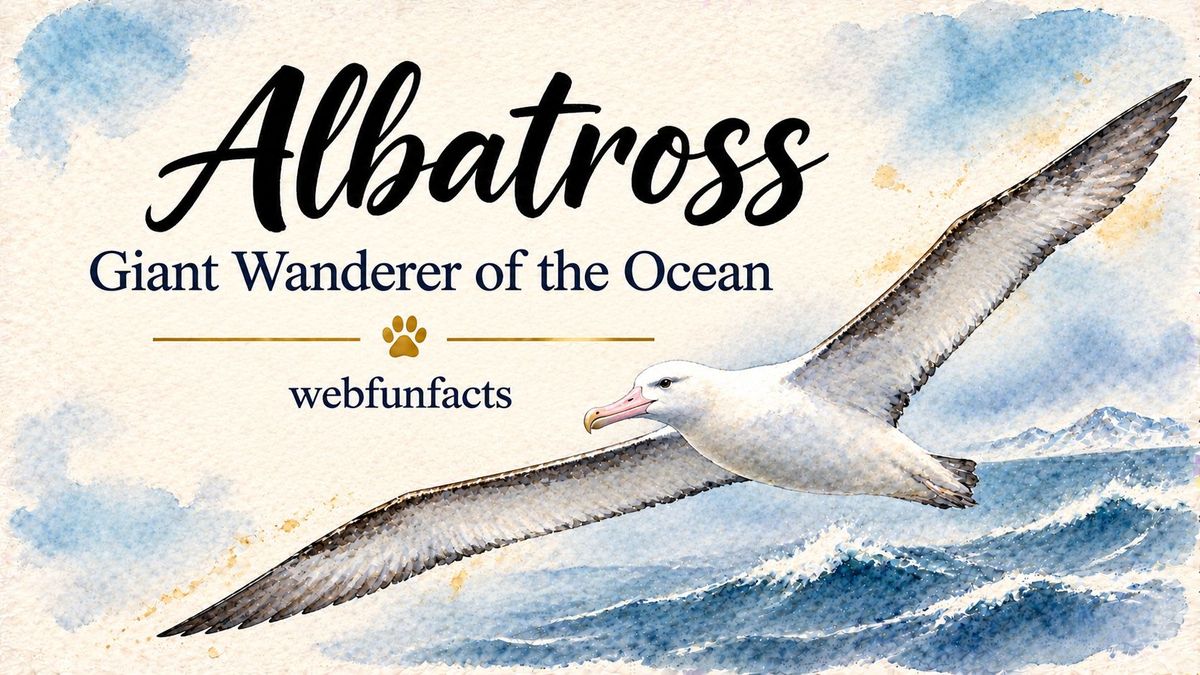
The albatross is the great wanderer of the sea. With the longest wingspan of any living bird, it can glide over open ocean for hours without flapping, covering thousands of kilometers in a single trip. Sailors once considered these birds omens of good fortune, and writers and poets have long used the albatross as a symbol of freedom, endurance and the wild ocean.
Albatrosses spend most of their lives far from land, coming ashore only to breed. They mate for life, perform elaborate dances and raise a single chick over many months. Sadly, they are also among the most threatened groups of birds in the world. In this complete guide, you will learn what an albatross is, how big it gets, where it lives, what it eats, how it raises its young, how long it lives and why so many species need our help.
Quick answer: Albatrosses are large seabirds in the family Diomedeidae, with roughly 21 to 22 species found mainly in the Southern Ocean and North Pacific. The wandering albatross has a wingspan of up to about 3.5 m (11.5 ft), the longest of any living bird. They eat squid, fish and krill, can live more than 50 years, and mate for life. Many species are threatened, mostly by fishing bycatch, invasive predators and plastic.
Albatross at a Glance
| Feature | Details |
|---|---|
| Scientific name | Family Diomedeidae (for example, wandering albatross, Diomedea exulans) |
| Class | Aves (birds) |
| Order | Procellariiformes (tube-nosed seabirds) |
| Family | Diomedeidae |
| Number of species | About 21 to 22, depending on the classification used |
| Wingspan | About 6.5 to 11.5 feet (2 to 3.5 m), depending on the species |
| Body length | About 2.5 to 4.5 feet (75 to 135 cm) |
| Weight | About 4.4 to 25 pounds (2 to 11 kg) |
| Lifespan | Often 40 to 50 years or more; some individuals live much longer |
| Diet | Squid, fish, krill and carrion |
| Habitat | Open ocean, nesting on remote islands |
| Range | Southern Ocean, North Pacific, and the Galapagos region |
| Conservation status | Varies by species; most are threatened or Near Threatened (IUCN) |
What Is an Albatross?
Albatrosses are among the largest flying birds on Earth. They belong to the order Procellariiformes, the "tube-nosed" seabirds, which also includes petrels, shearwaters and storm-petrels. Their nostrils are located in tubes on top of the bill, which helps them detect smells over the ocean. Scientists think that albatrosses use smell to find food, such as the scent of squid or krill, over huge distances.
The family Diomedeidae is generally divided into four groups:
- Great albatrosses (genus Diomedea): the largest, including the wandering and royal albatrosses
- Mollymawks (genus Thalassarche): medium-sized albatrosses such as the black-browed and shy albatrosses
- North Pacific albatrosses (genus Phoebastria): including the Laysan, black-footed, short-tailed and waved albatrosses
- Sooty albatrosses (genus Phoebetria): dark, slender birds of the southern oceans
Albatrosses are sometimes called "gooney birds," a nickname sailors gave to the Laysan and black-footed albatrosses because of their clumsy takeoffs and landings.
What Does an Albatross Look Like?
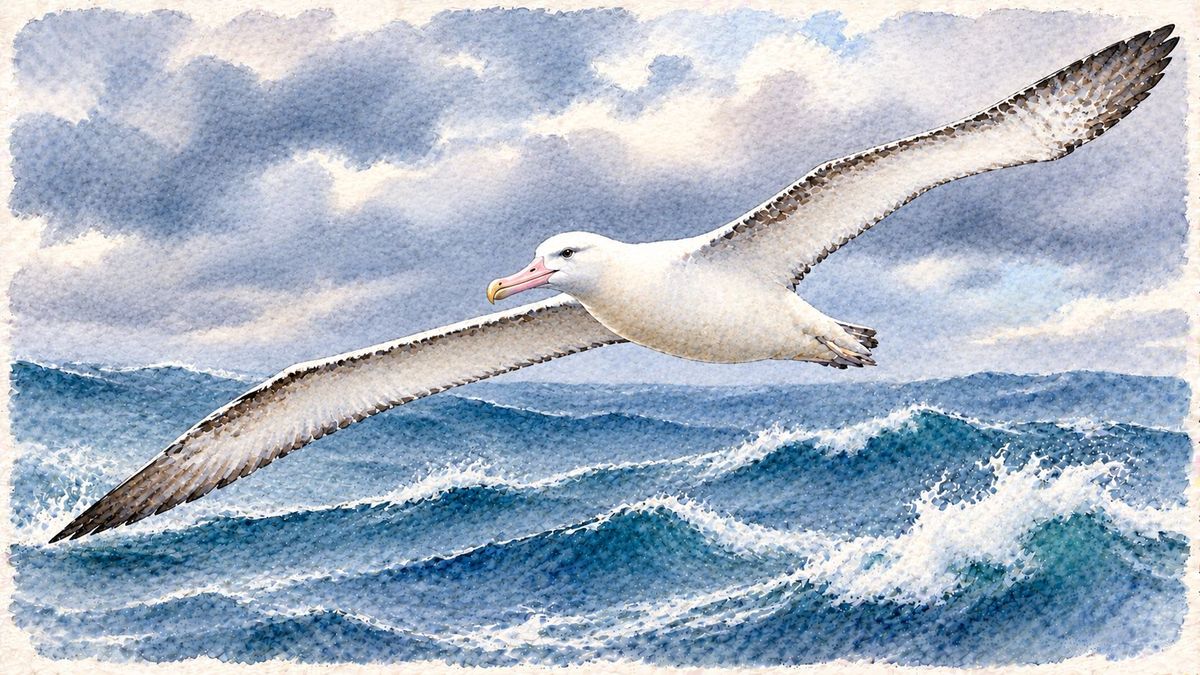
Albatrosses are built for long-distance gliding rather than flapping flight.
Size and Wingspan
The largest species, the wandering albatross, has a wingspan that can reach about 11.5 feet (3.5 m), and individuals have been reported at even slightly more. The southern royal albatross is nearly as large. Smaller albatrosses, such as the black-browed albatross, have wingspans of about 7 to 8 feet (2.1 to 2.4 m). Even the smallest species are impressive compared with most other birds.
Long, Narrow Wings
The wings are long and narrow, with a high aspect ratio similar to the wings of a glider. This design provides excellent lift with little effort. In addition, albatrosses have a locking mechanism in their shoulder that lets them hold their wings outstretched without tiring their muscles.
Plumage
Plumage varies by species. Wandering albatrosses become whiter as they age, with young birds mostly brown. Black-browed albatrosses have a white head and body, dark wings and a dark smudge around the eye. The Laysan albatross has a white head and body with a dark back and wings. Sooty albatrosses are dark brown overall.
Bill and Feet
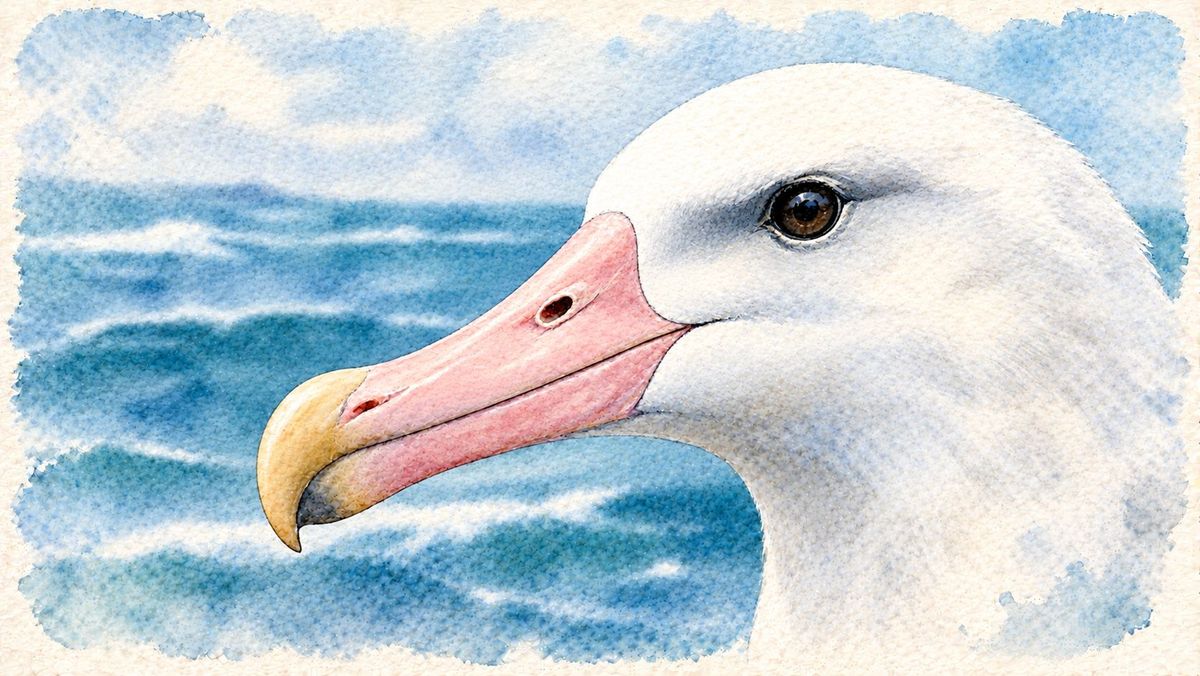
The bill is large, strong and hooked at the tip, and it is made of several plates, with tube-shaped nostrils on each side. The feet are webbed with three forward-facing toes and no hind toe, which makes landing and walking a bit awkward on land.
Where Do Albatrosses Live?
Most albatross species live in the Southern Hemisphere, in the cold and windy waters of the Southern Ocean that circle Antarctica. The "roaring forties" and "furious fifties" winds in this region are ideal for albatross flight. A few species live in the North Pacific, including the Laysan, black-footed and short-tailed albatrosses, and the waved albatross nests on the Galapagos Islands.
Albatrosses are strictly oceanic birds. They spend months or even years at sea, feeding and resting on the water. They come ashore only to breed, usually on remote islands free of land predators, such as:
- South Georgia, in the South Atlantic
- The Falkland Islands and Tristan da Cunha
- Macquarie Island, Campbell Island and the Chatham Islands near New Zealand
- Crozet and Kerguelen Islands in the southern Indian Ocean
- The Hawaiian Islands, including Midway Atoll
Tracking devices attached to albatrosses have revealed astonishing journeys. Wandering albatrosses can circle the globe around Antarctica, and breeding birds may travel thousands of kilometers to find food for their chicks.
How Do Albatrosses Fly?
Albatrosses use a technique called dynamic soaring. They glide downwind and then turn into the wind, using the difference in wind speed at different heights above the waves to gain lift. By swooping up and down over the waves in a repeating pattern, they can travel enormous distances without flapping their wings.
This is so efficient that an albatross's heart rate while flying is close to its resting heart rate, according to studies. They are less comfortable in calm weather, when there is not enough wind to soar. In very still conditions, albatrosses often sit on the water rather than fly.
What Do Albatrosses Eat?
Albatrosses are carnivores that feed on the surface of the sea or make shallow dives.
Main Foods
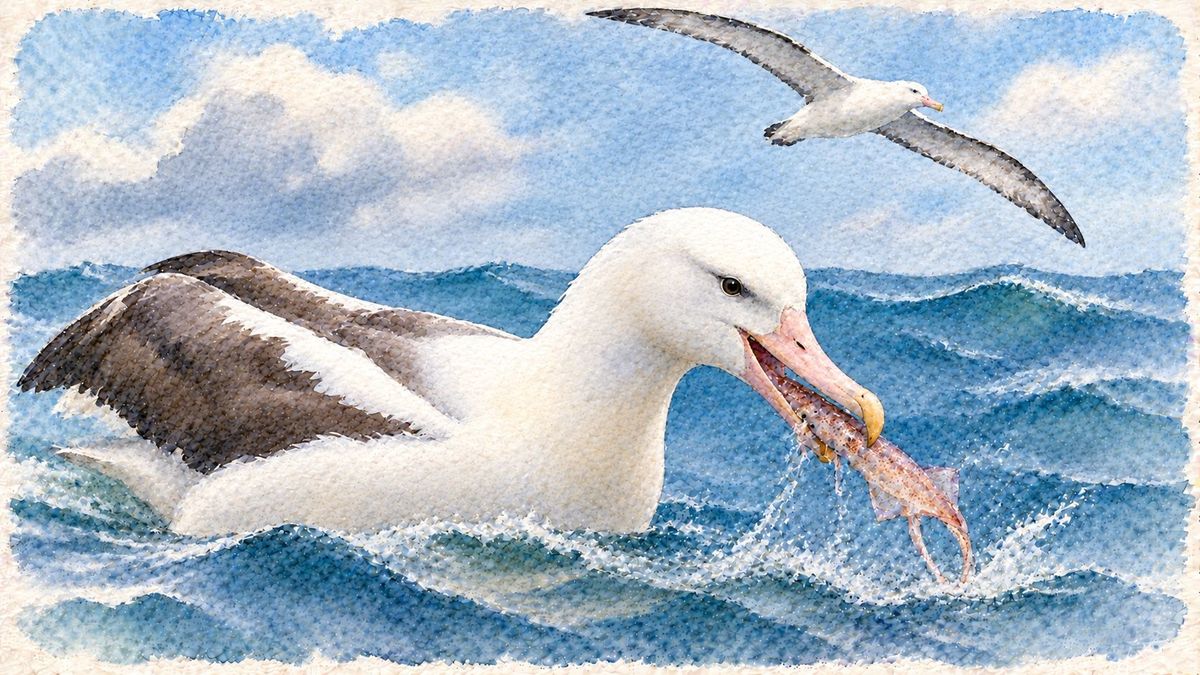
- Squid: the most important food for many species
- Fish: including lanternfish and small schooling fish
- Krill and other crustaceans: especially for smaller species
- Carrion: dead animals floating on the sea, and scraps from fishing boats
How Albatrosses Feed
Albatrosses locate food by sight and smell, then land on the water to seize it. Some species, such as black-browed and sooty albatrosses, can plunge a short distance beneath the surface. Many feed at night, when squid come up toward the surface. They swallow their food whole, and they store a stomach oil, rich in energy, that they feed to their chicks or use as fuel during long flights.
Albatrosses are also attracted to fishing vessels, where they scavenge on fish waste and bait. This habit unfortunately places them in great danger.
Albatross Behavior and Lifestyle
Life at Sea
Albatrosses spend most of their lives alone or in loose groups over open water. Young birds may spend several years at sea before returning to land for the first time. They rest on the sea surface, floating in the swell.
Courtship Dances
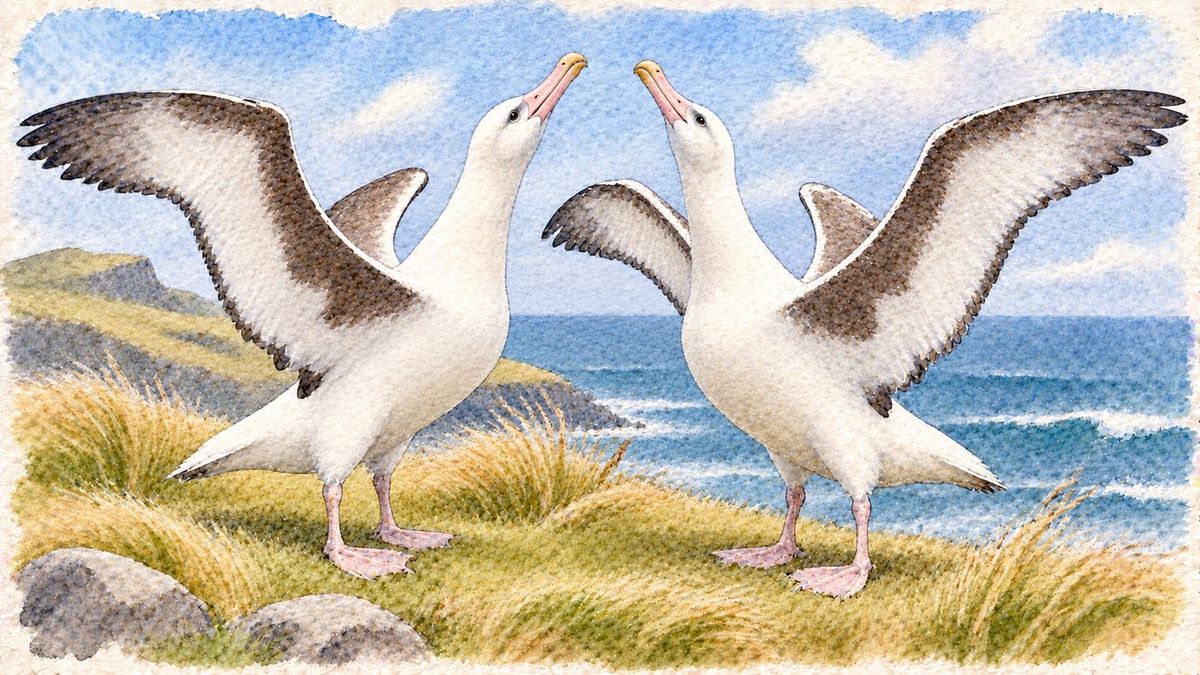
When albatrosses return to land, they perform some of the most spectacular courtship displays in the bird world. Pairs go through elaborate sequences of bowing, bill-clacking, sky-pointing, head bobbing and calling. Young birds learn the moves over several years, and each pair develops its own unique "dance."
Mating for Life
Albatrosses typically form long-term pair bonds that can last for decades. Because they breed only once every one or two years, keeping the same partner means they do not have to relearn a courtship routine each time. Occasionally pairs separate, but many remain together for life.
Sounds
At sea, albatrosses are mostly silent. On the nesting grounds, they make a variety of clacks, whistles, moans and groans, especially during courtship.
Albatross Reproduction and Babies
Albatrosses are slow breeders. They do not begin to breed until they are around five to ten years old, and in some species even later. The great albatrosses often breed only every other year because raising a single chick takes so long.
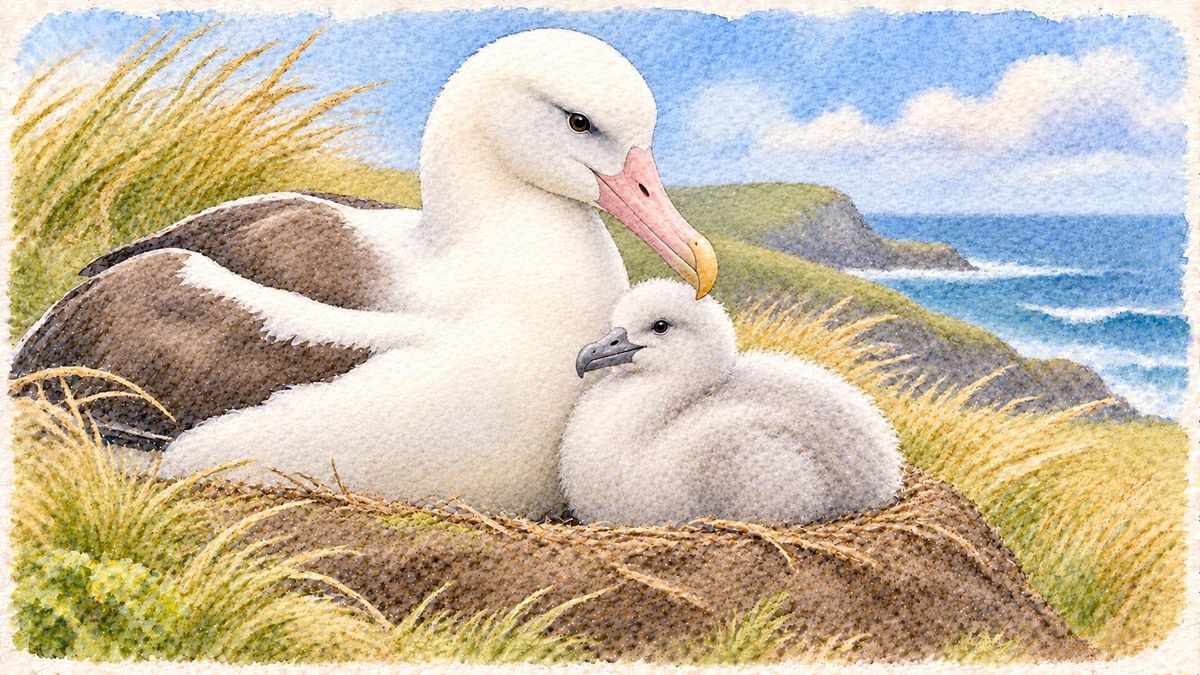
A pair lays just one egg per breeding attempt. Both parents take turns incubating it, which can take about 65 to 80 days depending on the species. The parents swap places after days or weeks, while the other heads out to sea to feed. When the egg hatches, the chick is brooded and fed regularly with regurgitated squid, fish and stomach oil.
Chicks grow slowly. Smaller species take around four to five months to fledge, while the great albatrosses can take around nine months. Once a chick fledges, it leaves the island and spends years at sea before returning to land. Young albatrosses have a high mortality rate in their first years, so a long life is crucial to raising enough offspring.
How Long Do Albatrosses Live?
Albatrosses are among the longest-lived birds. Many live 40 to 50 years or more. A Laysan albatross named Wisdom, first banded as an adult on Midway Atoll in 1956, has become famous as one of the oldest known wild birds in the world, and she has continued to nest in her seventies. Such extreme longevity is rare, but it shows how slowly these birds age.
Predators and Threats
Adult albatrosses have few natural predators, though sharks may take birds that land on the water and large gulls and skuas may take eggs and chicks. The biggest threats come from human activity.
- Longline fishing: Albatrosses are attracted to baited hooks and can be hooked and drowned. This is considered the greatest threat.
- Trawl fisheries: Birds may collide with cables or be caught in nets.
- Invasive predators: Rats, mice, feral cats and pigs on nesting islands attack eggs and chicks. In some places, house mice have attacked even large chicks.
- Plastic pollution: Parents sometimes mistake floating plastic for food and feed it to their chicks.
- Climate change: Warming seas, changing winds and rising sea levels can affect food supplies and nesting sites.
- Disease: Avian diseases have been reported at some colonies.
Why Albatrosses Are Important
- Ocean indicators: Because they feed on top of the marine food chain and travel widely, albatrosses show scientists how healthy the ocean is.
- Nutrient carriers: Their droppings and discarded food bring nutrients from the sea to island ecosystems.
- Cultural symbols: Albatrosses appear in stories, poems, songs and art around the world.
- Conservation flagships: Efforts to save albatrosses lead to cleaner, safer fishing methods that help turtles, sharks and other seabirds as well.
Are Albatrosses Endangered?
Many albatross species are in trouble. According to the IUCN, a majority of the roughly 22 species are listed as threatened or near threatened. For example, the wandering albatross is Vulnerable, the Tristan albatross is Critically Endangered, and the short-tailed albatross is Vulnerable after being brought back from the brink of extinction. A few species, such as the Laysan albatross, are listed as Near Threatened, and some mollymawks have improved in status after conservation work.
Conservation actions that are making a difference include:
- Using bird-scaring lines, weighted lines and night-setting on longline fishing boats
- Removing rats, mice and cats from nesting islands
- Protecting breeding sites and reducing human disturbance
- International agreements such as the Agreement on the Conservation of Albatrosses and Petrels (ACAP)
- Cleaning up plastic and reducing marine pollution
Fun Facts About Albatrosses
- Record wingspan: The wandering albatross has the longest wingspan of any living bird.
- Tube noses: Their nostrils are in tubes on top of the bill, helping them smell prey from afar.
- Locked wings: A shoulder lock lets them hold their wings out with minimal effort.
- Long-distance fliers: They can glide for hours with hardly a wingbeat.
- Lifelong partners: Most albatrosses mate for life.
- Wisdom the albatross: A Laysan albatross named Wisdom is believed to be over 70 years old and still breeding.
- One egg at a time: Albatrosses lay only a single egg each breeding attempt.
- Salt glands: They can drink seawater and remove the salt through a gland above the bill.
- A famous poem: Samuel Taylor Coleridge's poem The Rime of the Ancient Mariner made the albatross a lasting symbol in English literature.
Frequently Asked Questions
How big is an albatross? The wandering albatross has a wingspan of up to about 11.5 feet (3.5 m), the largest of any living bird. Smaller species have wingspans of about 6.5 to 8 feet (2 to 2.4 m).
Where do albatrosses live? Albatrosses live mostly in the Southern Ocean, with a few species in the North Pacific and one on the Galapagos Islands. They spend most of their lives at sea and come ashore only to breed.
What do albatrosses eat? Albatrosses eat squid, fish, krill and carrion. They feed mostly at the ocean surface and sometimes make shallow dives.
How long do albatrosses live? Many albatrosses live 40 to 50 years or more. Some, such as the famous Laysan albatross Wisdom, have been recorded breeding into their seventies.
Do albatrosses mate for life? Yes. Most albatrosses form long-lasting pair bonds, reuniting each breeding season to perform their courtship dance and share the care of their single chick.
Are albatrosses endangered? Many are. A majority of albatross species are listed as threatened or Near Threatened by the IUCN, mainly because of longline fishing, invasive predators, plastic pollution and climate change.
Final Thoughts
The albatross is one of nature's greatest travelers, a bird that can circle the planet on motionless wings and live for half a century or more. Yet this master of the ocean winds needs our help. Safer fishing practices, predator-free nesting islands and cleaner seas are already making a difference for some species. By protecting albatrosses, we protect the open ocean they depend on, and the wild wonder that these remarkable birds have inspired for centuries.