
The Treeing Tennessee Brindle is a hardy, sharp-nosed hunting dog from the hills and hollows of Appalachia and the Ozarks. Dressed in a striking brindle coat and blessed with a deep, musical bay, this dog was bred to chase squirrels, raccoons and other game up trees and hold them there until the hunter arrives.
Off the trail, the breed is friendly, loyal and easygoing, with a gentle devotion to its family. It is still fairly rare outside the rural South, but it has a passionate following among hunters and outdoor lovers. In this complete Treeing Tennessee Brindle guide, you will learn about its size, temperament, training, exercise needs, grooming, health, diet and history, so you can decide whether this classic American tree dog is right for you.

Treeing Tennessee Brindle at a Glance
| Trait | Details |
|---|---|
| Breed group | Foundation Stock Service (AKC); Scenthound (UKC) |
| Height | About 16 to 24 inches (41 to 61 cm) |
| Weight | About 30 to 50 pounds (14 to 23 kg) |
| Life expectancy | 10 to 12 years |
| Coat | Short, smooth and soft |
| Colors | Brindle, or black with brindle trim; small white markings allowed |
| Shedding | Moderate; heavier in shedding seasons |
| Energy level | Moderate to high; needs regular activity |
| Temperament | Friendly, brave, smart, loyal, independent |
| Good for | Active owners, hunters, rural and suburban homes |
| Origin | United States (Appalachia and the Ozarks) |
What Is a Treeing Tennessee Brindle?
The Treeing Tennessee Brindle is a medium-sized American cur, a type of all-purpose farm and hunting dog long valued in the rural South. Cur dogs were bred for practical work rather than looks: hunting small game, guarding the homestead and helping with livestock. This breed specializes in "treeing," which means tracking an animal by scent, chasing it until it climbs a tree, then staying at the base and baying until the hunter catches up.
The breed was organized in the 1960s and is closely related in type to the Mountain Cur and the Plott. It is recognized by the United Kennel Club and is recorded in the American Kennel Club's Foundation Stock Service, a program for breeds working toward full AKC recognition.
How Big Do Treeing Tennessee Brindles Get?
Adults usually stand about 16 to 24 inches (41 to 61 cm) tall at the shoulder, with males generally larger than females. Most weigh roughly 30 to 50 pounds (14 to 23 kg), although working lines can vary.
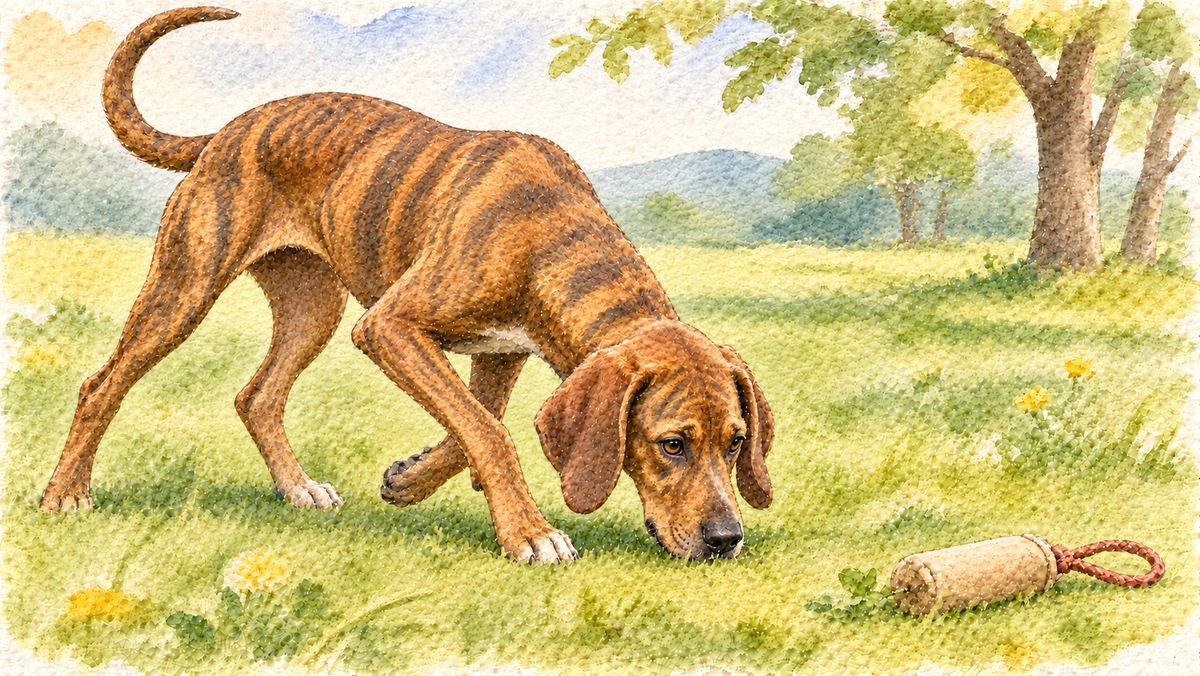
The build is athletic, muscular and well balanced, made for long days of running through rough terrain. The head is broad with a medium-length muzzle, dark brown eyes and medium-sized drop ears. The overall look is of a tough, agile and practical working dog with a kind expression.
Coat and Colors
The coat is short, smooth and soft to the touch, lying close to the body. It is easy to maintain and handles brush and brambles well.
As the name suggests, brindle is the signature color. The pattern features dark stripes over a lighter base, which can range from fawn to tan to reddish brown. Some dogs are black with brindle trim on the legs, face or chest. Small white markings on the chest and feet are acceptable.

Treeing Tennessee Brindle Temperament and Personality
The Treeing Tennessee Brindle temperament is a balance of hunting drive and gentle home manners. These dogs are often described as:
- Friendly but alert: They are usually warm and sociable with their family and ready to spring into action at a moment's notice.
- Brave: On the hunt, they are bold and determined, willing to follow a trail through tough country.
- Smart: They are quick to understand their job and can solve problems on their own.
- Loyal and easygoing: At home, many are relaxed, affectionate companions that enjoy being near their people.
- Independent: Their hunting background makes them self-reliant, which can make training a challenge.
- Vocal: Instead of a typical bark, they have a deep, singsong bay that carries a long way.
Some individuals can be naturally reserved or suspicious of strangers, so early socialization is important. Bored or anxious dogs tend to bay more, so plenty of activity helps keep the volume down.
Are Treeing Tennessee Brindles Good Family Dogs?
Yes, they can be good family dogs for active households that can meet their physical and mental needs. They are affectionate and loyal, and they usually do best with older children. They can live with younger kids who respect a dog's boundaries, but supervision is always important.
Treeing Tennessee Brindles and Other Pets
These dogs often get along with other dogs, especially if raised with them. However, their strong prey drive means they may chase cats, rabbits, poultry and other small animals. Early socialization can help, but homes with small pets should think carefully before adopting one.
Training a Treeing Tennessee Brindle
Training takes patience. The breed is intelligent and willing to work, but its independent streak and powerful nose mean it may decide a fresh scent is more interesting than your cue.
Here are some training tips for new owners:
- Start early. Begin socialization and basic manners as soon as your puppy comes home.
- Use positive reinforcement. Treats, praise and play work far better than harsh corrections.
- Work on recall. A reliable "come" is essential, but never trust a scent hound-type dog off leash in an unfenced area.
- Give it a job. Scent games, tracking and treeing-style games channel natural instincts in a positive way.
- Manage the bay. Reward quiet behavior and keep the dog busy to reduce boredom-driven baying.
Exercise Needs
Although its energy is often rated as moderate, the Treeing Tennessee Brindle is a working dog that needs plenty of daily activity and outdoor access. Long walks, hikes, runs and scent-tracking games are ideal. For many owners, hunting is the best outlet of all.
A securely fenced yard is strongly recommended, because this breed may bolt after an interesting scent. Never leave it off leash and unattended in open areas. Without enough exercise and mental stimulation, the dog may chew, dig or bay out of boredom.
Because of its loud voice and need for space, this breed is usually happier in suburban or rural settings than in city apartments. It prefers moderate to warm climates. A dog sweater can help in very cold weather, and in summer it should exercise during cooler hours with shade and water available.
Grooming
Grooming is easy. The short, smooth coat needs only basic care to stay healthy and shiny.
Do Treeing Tennessee Brindles Shed?
Yes, they shed moderately, with heavier shedding during seasonal coat changes. Frequent brushing helps control loose hair. They are not considered hypoallergenic.
Grooming Routine
- Brushing: Brush once or twice a week with a rubber curry brush or hound mitt, and more often in shedding seasons.
- Bathing: Bathe only when dirty to avoid stripping the coat's natural oils.
- Ears: Clean the drop ears regularly with vet-approved wipes, especially after hunting or swimming.
- Paws: Check paws often for cuts, scrapes and burrs after time outdoors.
- Nails: Trim nails every few weeks if they don't wear down naturally.
- Teeth: Brush teeth regularly or offer dental chews.

Treeing Tennessee Brindle Health and Lifespan
The Treeing Tennessee Brindle is considered a relatively healthy, hardy breed. Its typical lifespan is about 10 to 12 years, and some dogs live longer with good care. Owners should keep an eye out for:
- Ear infections: Drop ears can trap moisture and debris.
- Skin issues: Irritation can develop, especially in dogs that spend a lot of time outdoors.
- Weight gain: Extra pounds can put stress on joints.
- Joint problems: As in many active medium-size breeds, joint health is worth monitoring.
- Anal gland problems: Watch for scooting or excessive licking, which may mean the glands need attention.
Working dogs also face outdoor risks such as cuts, ticks and other parasites. Always work with your veterinarian to set up a routine of checkups, vaccinations, parasite prevention and dental care.
Feeding and Nutrition
The breed does best on a high-quality dog food with good protein, moderate carbohydrates and healthy fats. Choose a formula suited to life stage: puppy, adult or senior. Very active or working dogs may benefit from a performance or active-dog formula.
Most adults do well on two meals a day on a regular schedule. Portion sizes depend on age, weight and activity level, so follow the feeding guide on the package and ask your veterinarian. Keep treats to about 10 percent of daily calories to help prevent weight gain.
History of the Treeing Tennessee Brindle
Brindle cur dogs have been hunting in the Appalachian and Ozark Mountains for generations. Settlers depended on these versatile dogs to tree squirrels and raccoons, protect the farm and sometimes help with livestock. They were valued for their nose, grit and voice rather than their pedigree.
In the 1960s, the Reverend Earl Phillips, who wrote a column about hunting dogs, began gathering information on these brindle tree dogs from hunters across the region. His work led to the formation of the Treeing Tennessee Brindle Breeders Association in 1967, which aimed to preserve and standardize the type.
The breed was later recognized by the United Kennel Club and recorded in the AKC Foundation Stock Service. Despite the name, it is found across Appalachia and the Ozarks, not only in Tennessee. Today it remains a working dog first, prized by hunters for its sharp nose, clear voice and willingness to stay on the tree.

Treeing Tennessee Brindle vs Mountain Cur
People often compare these two breeds because they share Appalachian cur roots. The Mountain Cur is usually a bit larger and is known for a more silent trailing style and strong guarding instincts. The Treeing Tennessee Brindle tends to be smaller, is always brindle or black with brindle trim, and is known for its distinctive, musical bay on the trail and at the tree.
Is a Treeing Tennessee Brindle Right for You?
This breed could be a wonderful match if you:
- Enjoy hunting, hiking, running or long outdoor adventures
- Live in a suburban or rural home with a secure yard
- Want a loyal, affectionate dog with an easy-care coat
- Have time for daily exercise and training
- Can handle a loud, melodious bay
It may not be the best fit if you:
- Live in a small apartment or have close neighbors
- Keep cats, rabbits, chickens or other small pets
- Want a dog that is reliable off leash
- Prefer a quiet, low-activity companion
Finding a Treeing Tennessee Brindle Puppy
Because the breed is rare, finding a Treeing Tennessee Brindle puppy may take time. Contact the breed association and UKC breeders, and look for people who health-check their dogs, raise puppies with care and can talk honestly about energy and voice. Hound and cur rescue groups sometimes have adults looking for new homes, too.
Fun Facts About the Treeing Tennessee Brindle
- The breed's name describes its job (treeing), its home region (Tennessee) and its coat (brindle).
- It is technically a cur, not a hound, although it shares many hound-like traits.
- Its bay is often described as deep, clear and singsong.
- The breeders association was founded in 1967.
- It is especially skilled at hunting squirrels and raccoons.
- Despite the name, the breed is found throughout Appalachia and the Ozarks.
Frequently Asked Questions
How big do Treeing Tennessee Brindles get?
Adults usually stand about 16 to 24 inches tall at the shoulder and weigh roughly 30 to 50 pounds, making them a medium-sized breed.
Are Treeing Tennessee Brindles good family dogs?
They can be loyal, affectionate family dogs for active households, especially with older children. They need plenty of exercise and are not ideal with small pets.
How long do Treeing Tennessee Brindles live?
The typical lifespan is about 10 to 12 years with good care, a healthy diet and regular veterinary checkups.
Do Treeing Tennessee Brindles bark a lot?
They are vocal dogs with a loud, singsong bay rather than a typical bark. They tend to bay more when bored or anxious, so daily activity helps.
Is the Treeing Tennessee Brindle a hound or a cur?
It is a cur, a type of versatile American hunting and farm dog. It shares many traits with hounds, including a keen nose and strong voice.
Is the Treeing Tennessee Brindle AKC recognized?
It is not yet fully recognized by the AKC, but it is recorded in the AKC Foundation Stock Service and is recognized by the United Kennel Club.
Final Thoughts
The Treeing Tennessee Brindle is a true piece of American hunting heritage, combining a sharp nose, a ringing voice and a loyal, easygoing heart. It shines with active owners who love the outdoors and can offer space, exercise and patient training. If that sounds like your lifestyle, a Treeing Tennessee Brindle could be a faithful partner on the trail and at home.